REVIEW · FLORENCE
Combo Florence: Walking Tour with the the Accademia Gallery Tour
Book on Viator →Operated by Towns of Italy · Bookable on Viator
Florence reveals itself quicker when you have a plan. This combo pairs a focused guided walk through the city’s key squares with a skip-the-line Accademia Gallery visit to see Michelangelo’s David. You’ll also get the bigger story behind the sights, from Roman roots and medieval Florence to the Medici era.
I love how the route connects art and politics in plain language. You’ll spend real time in Piazza della Signoria and hear how the Medici family used banking and patronage to help shape Europe’s arts and sciences. I also like that the gallery part is built around skip-the-line access, not hoping you beat the crowd.
One thing to consider: you’re on your feet for about 3 hours with scheduled stops, so it’s not the best choice if you want long, slow wandering or lots of extra time for shopping and cafés in between.
In This Review
- Key highlights at a glance
- A 3-hour Florence combo that puts David in focus
- Price and what you actually get for $78.98
- Starting at the Accademia: your first cue on pacing
- Piazza del Duomo: cathedral square as your orientation anchor
- Piazza della Signoria and Palazzo Vecchio: where power shows in stone
- Palazzo Pitti stop: a quick Medici reminder, not a museum visit
- Piazza Santo Spirito: a calmer Oltrarno reset
- Ponte Vecchio: shops on a bridge and a built-in photo line
- Galleria dell’Accademia: getting to David without wasting the day
- How the guide ties Roman, medieval, and Medici threads together
- Earphones, group size, and why it affects comfort
- Rain or shine: what stays the same and what you should plan for
- Who this tour fits best
- Should you book this combo Florence tour?
- FAQ
- FAQ
- How long is the Florence combo tour?
- What does the tour include?
- Where does the tour start and end?
- What is the price per person?
- Do I need to buy Accademia tickets separately?
- Is the ticket mobile-friendly?
- Does the tour run in bad weather?
- How big is the group?
- Are children allowed?
- How flexible is cancellation?
Key highlights at a glance
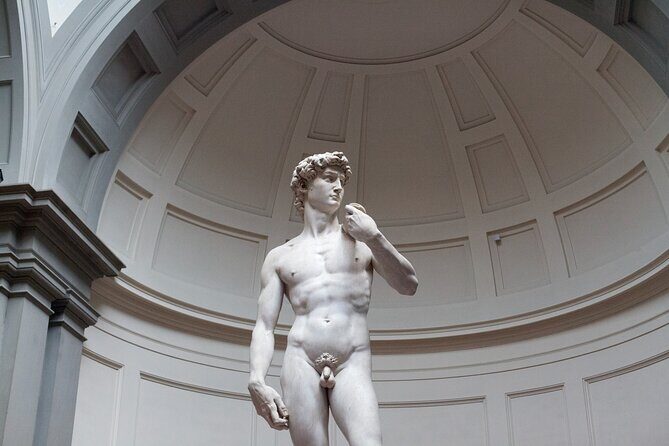
- Skip-the-line Accademia Gallery entry so you can get to David without the slow shuffle
- A guided Florence walking tour that ties landmarks to the Medici story
- Earphones for groups over five so you can actually hear the guide
- Small group size (max 25) for a more workable pace
- Mobile ticket for easier check-in
- Rain or shine operation so weather is less of a dealbreaker
A 3-hour Florence combo that puts David in focus
This is the kind of tour that makes sense if you want two wins in one go: orientation around Florence and a guaranteed look at the museum highlight. The walking tour is about 1.5 hours, and then you get about an hour inside the Accademia Gallery with a guided approach built around Michelangelo’s David.
The walking portion also covers why Florence matters beyond the Renaissance postcard version. You get the Roman origins and medieval legacy, then the Medici rise—how they gained power through banking and backed arts and sciences. That storyline helps you understand what you’re seeing instead of just ticking boxes.
And yes, the Accademia stop is the main event. You’re not spending your time negotiating ticket lines or playing guess-the-entry-time. You go in with skip-the-line tickets, and the guide steers you to the points that make the gallery visit worth your time.
You can also read our reviews of more walking tours in Florence

Price and what you actually get for $78.98
At $78.98 per person, this isn’t the cheapest way to see Florence. But it’s priced like a “time-saver plus guided meaning” tour: you’re paying for two guided experiences and the Accademia line-bypass.
Here’s where the value comes from:
- Guidance in the streets. Florence is packed with landmarks, and a good guide helps you connect the dots fast—cathedral square, civic power at Palazzo Vecchio, and the broader story of patronage.
- A museum visit built around one key masterpiece. David is the headline, but the tour also includes other masterpieces in the gallery, guided rather than random.
- Skip-the-line planning. The biggest financial risk on a Florence museum visit is wasting your trip time waiting outside. This combo reduces that risk.
The tour is also fairly popular. It tends to be booked about 55 days in advance on average, which is usually a sign that the schedule slots get taken.
Starting at the Accademia: your first cue on pacing
Your meeting point is the Galleria dell’Accademia di Firenze, Via Ricasoli 58/60. Since the tour starts and ends at the same location, you don’t get the stress of figuring out a second pickup point later. You also get a simple advantage: once the tour is done, you can head out right near where your museum day started.
This kind of start can also affect your day planning. By meeting near the Accademia, you avoid the problem of “I’ll do the museum after the walk” and then realizing the museum queue eats your schedule.
Also, the tour includes licensed English-speaking guiding for both parts. If language matters to you while you’re reading stone and symbolism, that’s a real practical benefit.
Piazza del Duomo: cathedral square as your orientation anchor
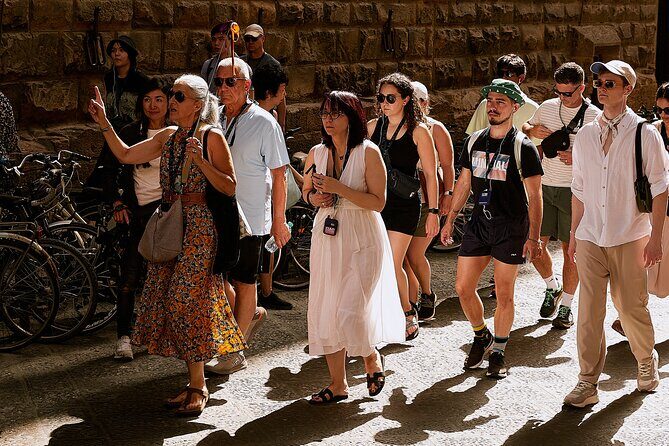
Stop 1 is Piazza del Duomo, the Cathedral Square. You get about 30 minutes here, and it’s the right first stop because it gives you visual orientation. The entire area revolves around the Florence Cathedral, known as the Duomo, and the square works as a natural introduction to why this city became such a magnet for artists and architects.
This isn’t just a “look up at the big building” moment. The tour context ties the cathedral area to Florence’s long story—moving beyond Renaissance fame into earlier layers and the city’s evolving identity. If you’ve ever felt like Florence looks impressive but hard to place historically, this is where the tour starts giving you a mental map.
Possible drawback? This stop can involve a lot of standing and looking around an active center. If you prefer quiet museum-style pacing right away, you might want to mentally switch into sightseeing mode quickly and keep your expectations realistic.
Piazza della Signoria and Palazzo Vecchio: where power shows in stone
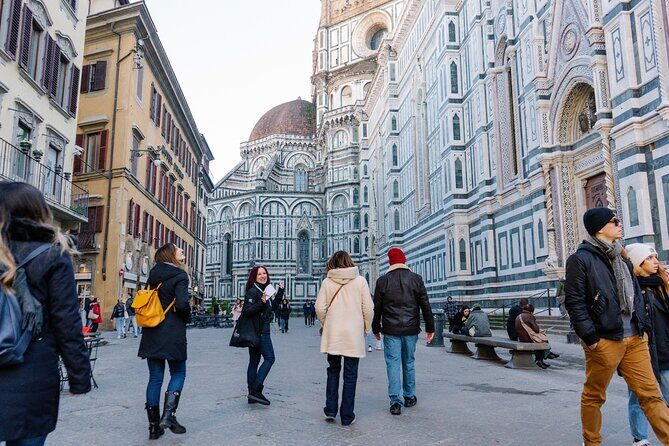
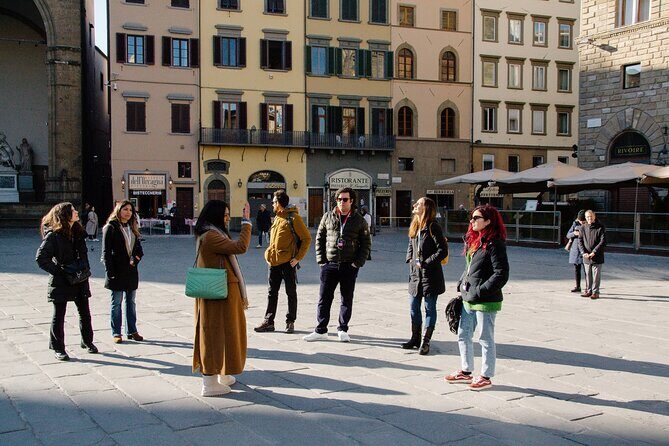
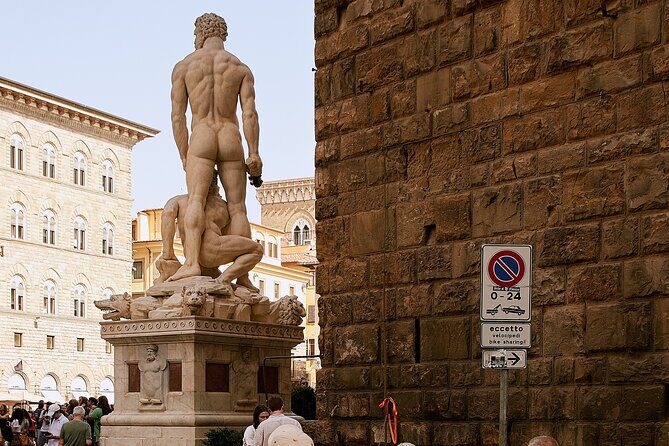
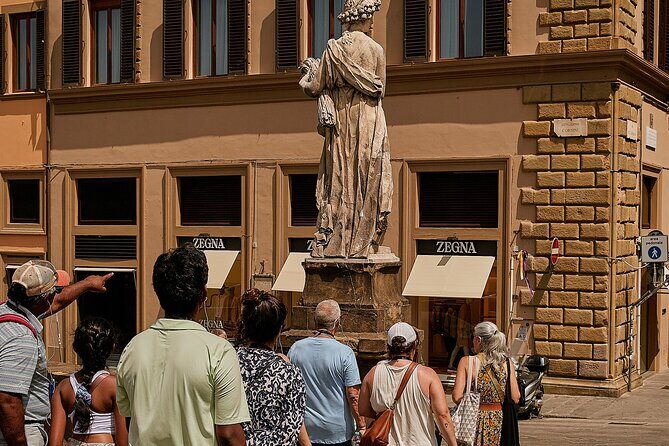
Stop 2 is Piazza della Signoria, a key civic square with major architecture around it. The center of this scene is Palazzo Vecchio, described as a medieval fortress turned town hall, plus a bell tower that helps the whole place feel grounded in authority.
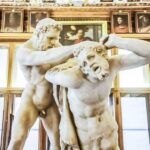
One of the best parts of this stop is that the tour doesn’t treat the square as decoration. You’ll also get time to look at the Loggia dei Lanzi, an open-air sculpture setting. The guide highlights works including Perseus with the Head of Medusa by Cellini and The Rape of the Sabine Women by Giambologna.
And here’s a detail that helps you connect past and present: the square includes a replica of Michelangelo’s David marking where the original once stood. Even before you reach the Accademia, this kind of reference point makes David feel more “placed in Florence’s story” and less like a standalone museum object.
You can also read our reviews of more museum experiences in Florence


Palazzo Pitti stop: a quick Medici reminder, not a museum visit
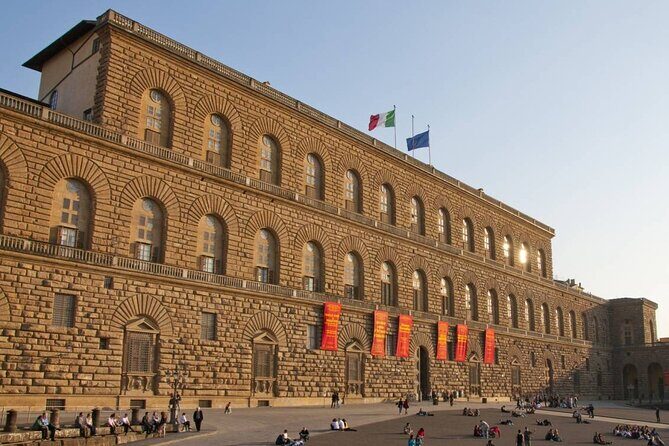
Stop 3 is Palazzo Pitti on the south side of the Arno River. The tour frames it as an opulent Renaissance palace that began for banker Luca Pitti in the 15th century and later became tied to the powerful Medici family as their residence.
The key practical catch: admission isn’t included. That means you’re likely getting a shorter exterior-focused experience or a quick orientation look rather than a full palace interior visit. If you were hoping the tour would include Pitti Palace as a full museum stop, you’ll need to know this upfront.
Still, as a “story stop” it works. It reinforces the Medici thread you’ve been hearing throughout the walk: money, influence, and support for art and ideas.
Piazza Santo Spirito: a calmer Oltrarno reset
Stop 4 is Piazza Santo Spirito in the Oltrarno district, with about 20 minutes. This is where the tour slows down a bit and gives you a more relaxed Florence contrast.
The tour description highlights that Santo Spirito has a more authentic feel than some of the city’s more monumental squares. That matters because Florence can feel overwhelming if every stop is “big wow, big crowd, big lines.” A calmer square break helps your brain reset between architectural landmarks and museum time.
If you want a practical mini-tip here: treat this as your moment to look around without a checklist. It’s the kind of square where you can watch daily life and get a feel for the neighborhoods beyond the postcard center.
Ponte Vecchio: shops on a bridge and a built-in photo line
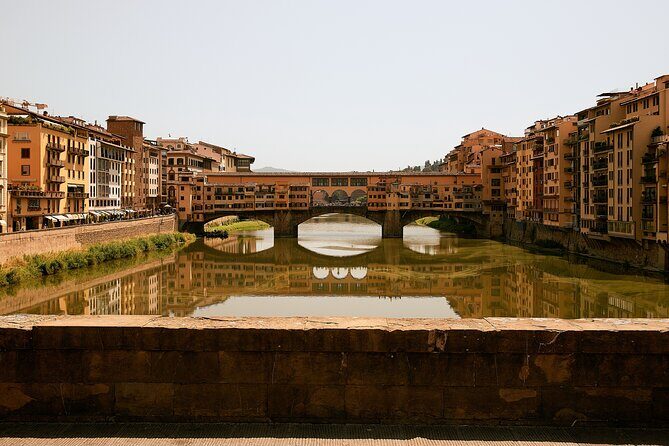
Stop 5 is Ponte Vecchio, the Old Bridge crossing the Arno. You’re given about 20 minutes, and the tour emphasizes what makes it iconic: medieval stone arches and shops built along the edges.
This is one of those Florence spots where the architecture and the rhythm of the place mix together. The bridge isn’t just a crossing; it’s part of the city’s visual identity. Even if you’ve seen pictures, seeing it in motion helps. And because it’s a bridge, you get different angles quickly as you walk through the area.
Potential drawback: popular bridges can mean crowds and photo bottlenecks. If your goal is exact framing for pictures, you may need patience. The tour time here is limited, so don’t plan on lingering for perfect shots for too long.
Galleria dell’Accademia: getting to David without wasting the day
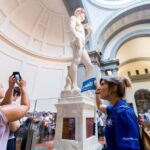
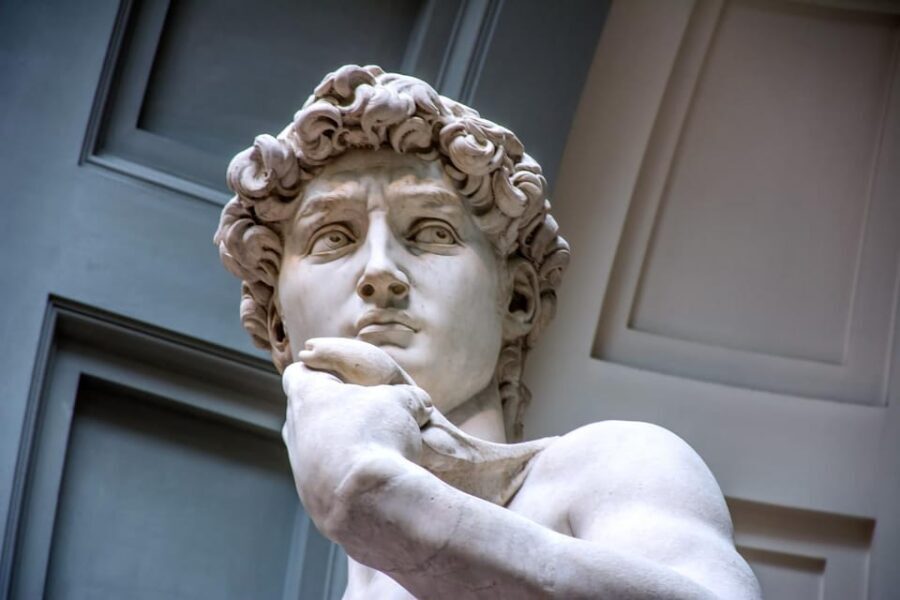
Stop 6 is Galleria dell’Accademia, and this is where the combo earns its name. You get about 1 hour in the gallery with admission included, plus a guided focus.
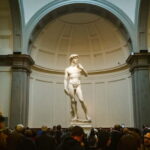
The center of the visit is Michelangelo’s David. The tour is designed to bring you to it efficiently. That’s where the skip-the-line tickets matter most. In Florence, museum queues can eat hours. Here, the planning aims to protect your time.
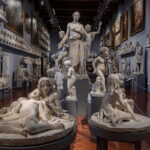
The guide also shows you other masterpieces in the Accademia collection. So you’re not just standing in front of David for a quick photo and leaving. You get a guided approach that helps you notice details and understand what you’re looking at, which makes the hour feel more substantial.
What you should expect inside: lots of time spent looking up close at major works, plus listening while the guide points out the artistic and historical significance tied to Florence’s creative era.
How the guide ties Roman, medieval, and Medici threads together
A walking tour lives or dies on how well the guide turns “places” into “meaning.” In this case, the guide approach is very story-driven. You’ll hear about Florence’s Roman origins and its medieval legacy, and then you’ll move into how the Medici gained power through banking and patronage.
That storyline matters because so many Florence landmarks are linked to civic identity and elite support. When you understand that, you start seeing the city differently. Palazzo Vecchio becomes more than an old building. The squares become stages where power gets displayed. Even the sculpture choices in the Loggia dei Lanzi start to make sense as part of a cultural message.
Also, at least one guide experience stood out for me: Marta was described as excellent and clearly passionate about Florentine history. The biggest practical takeaway from a guide like that is speed: she helps you sort out what’s worth your attention and what’s just background noise.
Earphones, group size, and why it affects comfort
This combo keeps group size reasonable: maximum of 25 travelers. Smaller groups tend to mean fewer delays at bottlenecks, better flow through the streets, and more manageable pacing in the museum.
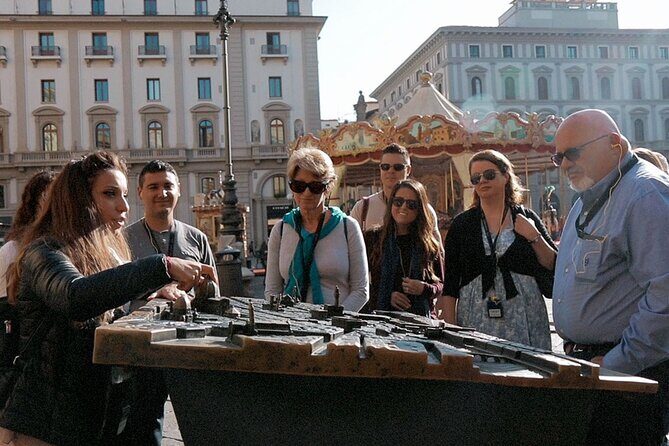
And if your group gets larger than five people, the tour provides earphones. That’s a small thing, but it changes the experience a lot in a city with lots of ambient noise. You don’t have to lean in and strain. You can hear the guide clearly and keep moving.
That also helps you enjoy the walk. Florence street corners are packed with people, and it’s easy to lose the story when you’re fighting traffic noise.
Rain or shine: what stays the same and what you should plan for
The tour runs on rain or shine. That’s good news if your Florence dates are shaky. But it also means you should dress with flexibility in mind: you’ll still be outdoors for parts of the walking route.
In practice, rain can change how long you want to linger at a photo spot or how easy it is to read details on architecture from a distance. The tour schedule doesn’t appear to shrink because of weather; it’s designed to keep going.
So treat it like this: the plan stays intact, but your comfort level depends on what you wear and how you handle standing.
Who this tour fits best
This combo tour works especially well if you meet one of these goals:
- You want a guided Florence walk that actually connects history to the landmarks
- You care about seeing Michelangelo’s David without spending your day in museum lines
- You like a structured route with enough time in each stop to take in what matters
It’s also a solid pick for first-time visitors, because the walking portion helps you get your bearings quickly across major squares and across the Arno.
If you’re the kind of traveler who wants hours of solo time at one spot, you might find the schedule a bit tight. But if you prefer “high value per hour,” this combo is built for that.
Should you book this combo Florence tour?
If you want a smart way to see Florence’s key highlights plus David in one smooth block of time, I’d say yes—particularly because of the skip-the-line Accademia tickets and the guided storytelling that links the Medici era to the city’s visual culture.
If your top priority is spending lots of unstructured time in museums or you’re planning to add extra stops nearby on your own, you might choose a more flexible museum-only approach. But if you’re trying to make the most of a limited schedule, this combo is a strong value: guided street sights first, then a guided Accademia visit that gets you to the main masterpiece efficiently.
FAQ
FAQ
How long is the Florence combo tour?
It lasts about 3 hours.
What does the tour include?
You get a licensed English-speaking guide for the walking tour and the Accademia Gallery, earphones for groups of more than five people, a 1.5-hour guided walking tour, and skip-the-line tickets for the Accademia Gallery with a guided tour.
Where does the tour start and end?
Both the start and end point are at the Galleria dell’Accademia di Firenze, Via Ricasoli 58/60, 50129 Firenze FI, Italy.
What is the price per person?
The price is $78.98 per person.
Do I need to buy Accademia tickets separately?
No. Accademia admission is included, along with skip-the-line tickets.
Is the ticket mobile-friendly?
Yes, the tour uses a mobile ticket.
Does the tour run in bad weather?
It runs rain or shine.
How big is the group?
The tour has a maximum of 25 travelers.
Are children allowed?
Children/teens under 18 must be accompanied by at least one adult, or they may be excluded without refund if the requirement isn’t met.
How flexible is cancellation?
Free cancellation is available up to 24 hours before the experience start time for a full refund. If you cancel within 24 hours, the amount paid isn’t refunded.
You Might Also Enjoy


More Walking Tours in Florence
More Tours in Florence
- The Best tour in Florence: Renaissance & Medici Tales – guided by a STORYTELLER
★ 5.0 · 12,316 reviews

More Tour Reviews in Florence
- Tuscany Day Trip from Florence: Siena, San Gimignano, Pisa and Lunch at a Winery
★ 5.0 · 21,634 reviews - The Best tour in Florence: Renaissance & Medici Tales – guided by a STORYTELLER
★ 5.0 · 12,316 reviews