REVIEW · FLORENCE
Florence: Accademia & City Tour with Optional Uffizi Gallery
Book on GetYourGuide →Operated by The Tour Guy · Bookable on GetYourGuide
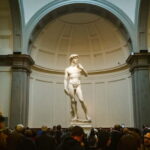
One look at Michelangelo’s David, and Florence clicks. This tour mixes skip-the-line Accademia access with a guided walk past top sights like the Duomo and Ponte Vecchio, and it can add an optional Uffizi visit if you want more Renaissance art. The big win is the combo: you get context fast, not just photos, but a possible drawback is that you’ll see the Duomo and baptistery from the outside/doors only, so don’t expect to go in.
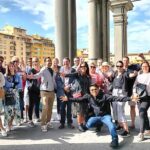
I also like that it keeps the group small (max 18) and the pace is built around photo stops with a real guide steering the story. Guides such as Diletta, Francesca, and Allesandra come up often in feedback, and the common thread is how they point out details people miss on their own, from sculpture moments to architectural clues. If you’re someone who wants long museum wandering with no structure, you might feel a little “scheduled,” especially on busy days.
Either way, this is a smart way to spend a half day in Florence: you’ll hit the must-sees, you’ll understand what you’re looking at, and you’ll still have energy left for gelato and exploring afterward.
In This Review
- Key things that make this tour worth your time
- From David to street corners: what this tour actually feels like
- Skip-the-line Accademia: getting to David faster
- Michelangelo’s David: why the guide changes the experience
- Florence’s big landmarks on foot: Duomo exterior, Dante’s House, and more
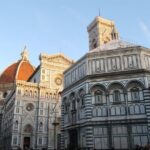
- Santa Maria del Fiore (Duomo) and Baptistery doors
- Piazza della Signoria and Loggia dei Lanzi
- House of Dante and Dante’s district
- Ponte Vecchio and its “jeweler’s box” history
- Smaller moments you’ll be glad you didn’t skip
- The optional Uffizi upgrade: when it makes sense to add it
- Timing and pacing: how to plan your day in Florence
- Group size and guide style: why small helps
- Price value: is $62 a good deal?
- Who should book this Florence Accademia + city highlights tour?
- Should you book it? My practical take
- FAQ
- FAQ
- What does the Accademia portion include?
- Will I be able to enter the Duomo?
- Is the Uffizi Gallery visit included?
- How long is the tour?
- What group size should I expect?
- What should I bring?
- Is luggage allowed?
- Is it wheelchair accessible?
Key things that make this tour worth your time
- Skip-the-line to Accademia with a guided museum visit, not just a ticket
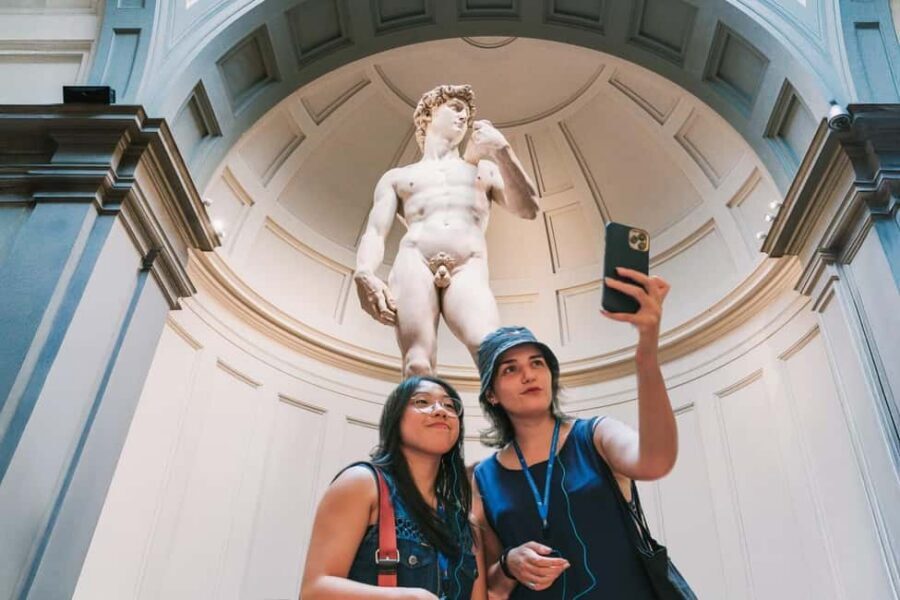
- Michelangelo’s David photo stop built around how the galleries flow
- Duomo complex exterior + Baptistery doors only, with guiding explanations
- Small group size (up to 18) for a more personal walking experience
- Optional Uffizi upgrade for when you want the big art names again
From David to street corners: what this tour actually feels like
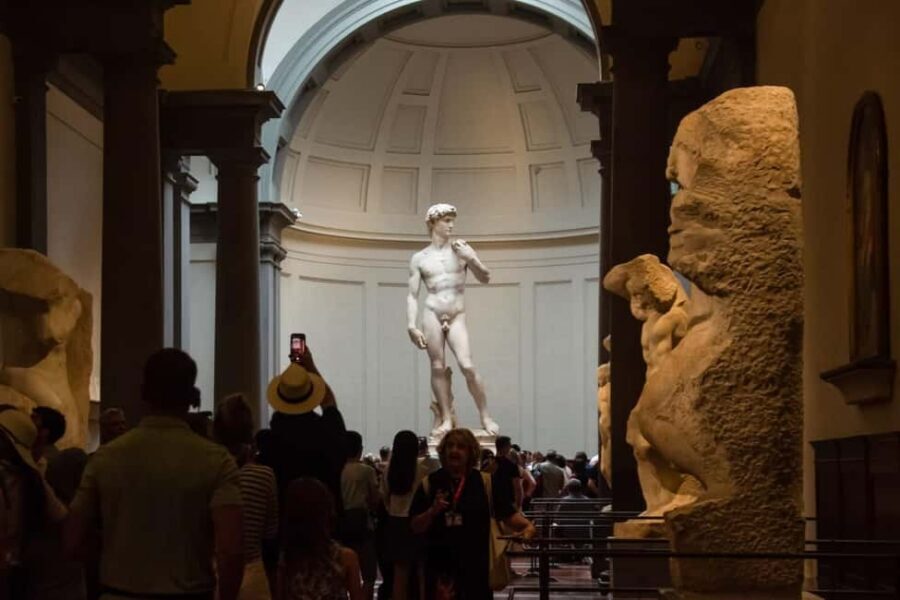
This tour is designed for people who want Florence to make sense quickly. You start with the one art stop almost everyone comes for—Michelangelo’s David at the Accademia Gallery—then you pivot into a guided walk that strings the city together like a story you can follow on foot.
That mix matters. Florence is full of masterpieces, but it’s also a city where the meaning hides in small things: a square name, a palace facade, the reason a bridge survived when other parts of town changed. A good guide helps you connect the dots so you don’t just “see” Florence—you understand it.
The flow is also practical. After the Accademia, you keep moving through central Florence with photo stops at major landmarks, plus a few stops where the details count more than the postcard view.
You can also read our reviews of more city tours in Florence
Skip-the-line Accademia: getting to David faster
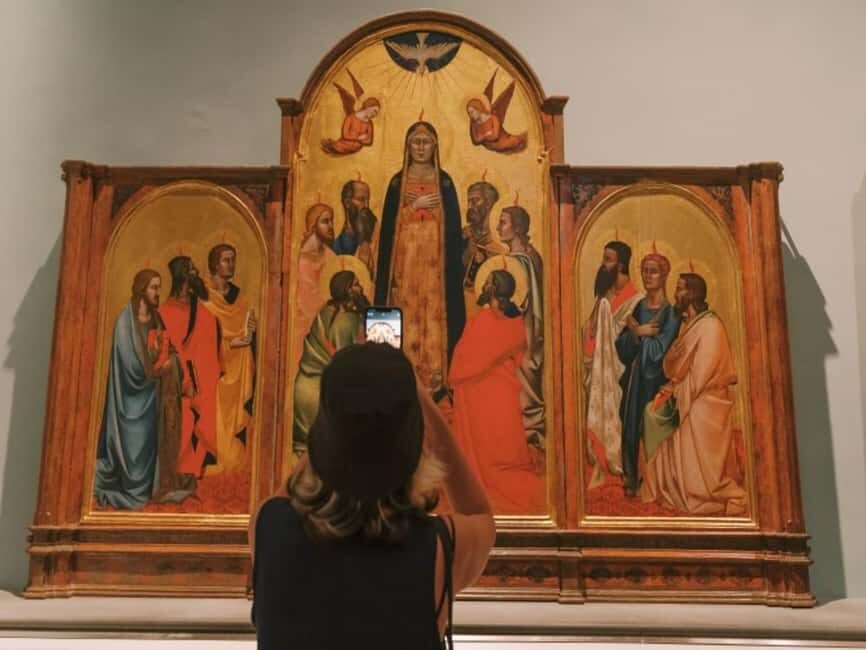
The biggest practical advantage here is skip-the-line entry to the Accademia Gallery, with the entrance fee included. In Florence, lines can eat your time, and museum lines can also drain your patience before you even start.
Once inside, you get a guided Accademia visit (about 45 minutes) and then time to focus on David. That structure helps in two ways: you learn what to look for, and you aren’t rushing through the most famous piece like it’s a quick errand.
A short note on expectations: this is a museum visit with guidance, not a deep study course. It’s paced to keep you moving through the rest of Florence the same day.
Michelangelo’s David: why the guide changes the experience
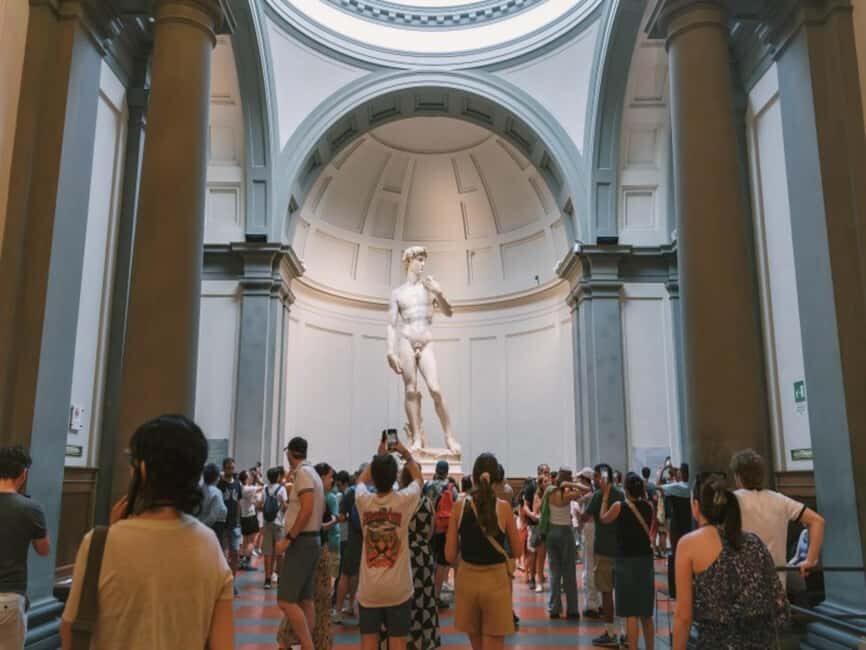
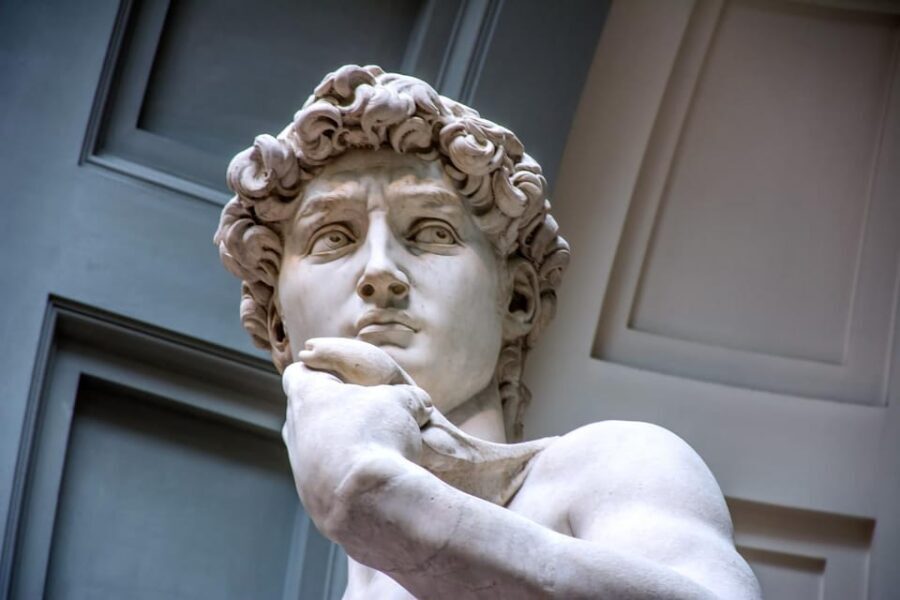
Michelangelo’s David is famous for a reason, but staring at it can still feel like staring at something you’ve already seen in textbooks. This is where the guide earns their place.
You’ll get a focused visit that brings David to life through explanation and context, and then you’ll have a dedicated photo stop (about 15 minutes) to look at the statue again from a more personal angle. That combo—short guided orientation plus your own time—works well because it gives you a “first look” and then a “real look.”
If you’ve ever seen a museum crowd and thought, I’ll never understand this in 30 minutes, this is the fix. The guide is there to point out what matters, and the timing gives you room to absorb it instead of just walking past it.
Florence’s big landmarks on foot: Duomo exterior, Dante’s House, and more
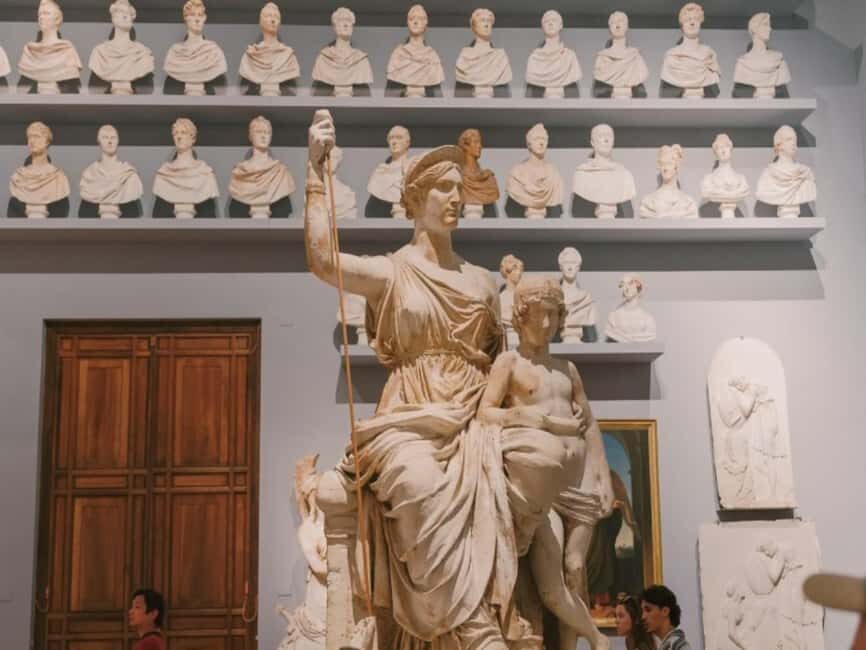
After the Accademia, you head into central Florence with a guide who talks through what you’re seeing as you go.
Here are the stops that shape the tour, and what each one is good for:
Santa Maria del Fiore (Duomo) and Baptistery doors
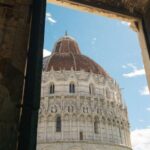
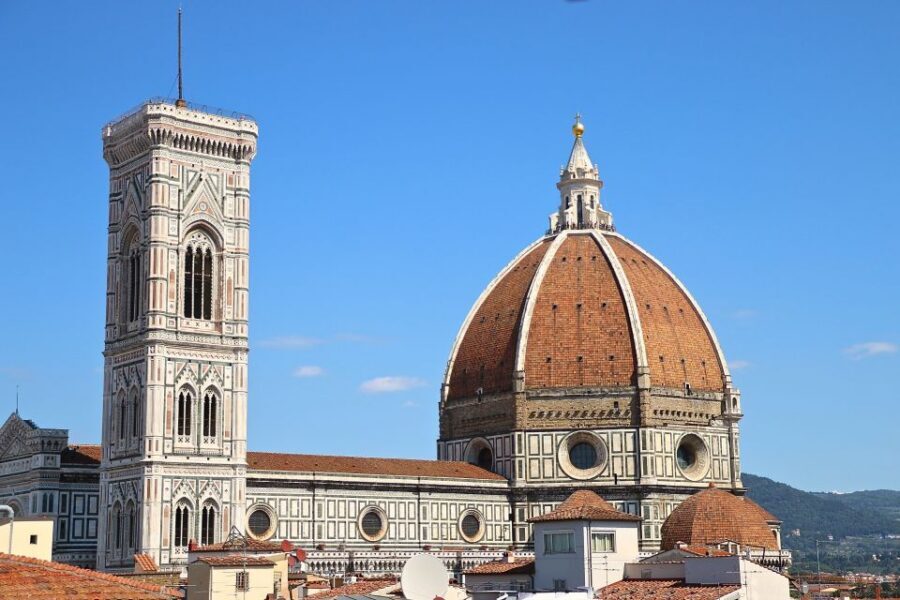
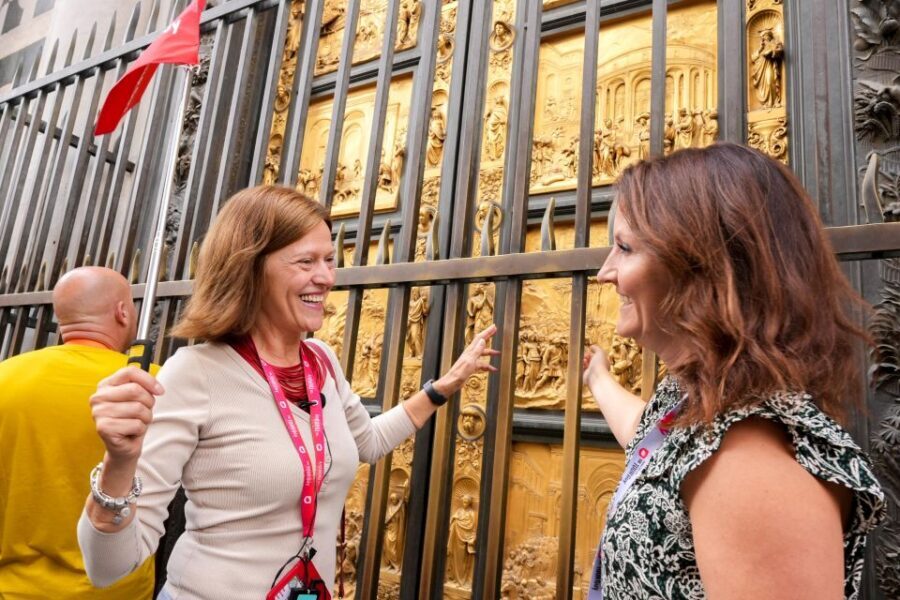
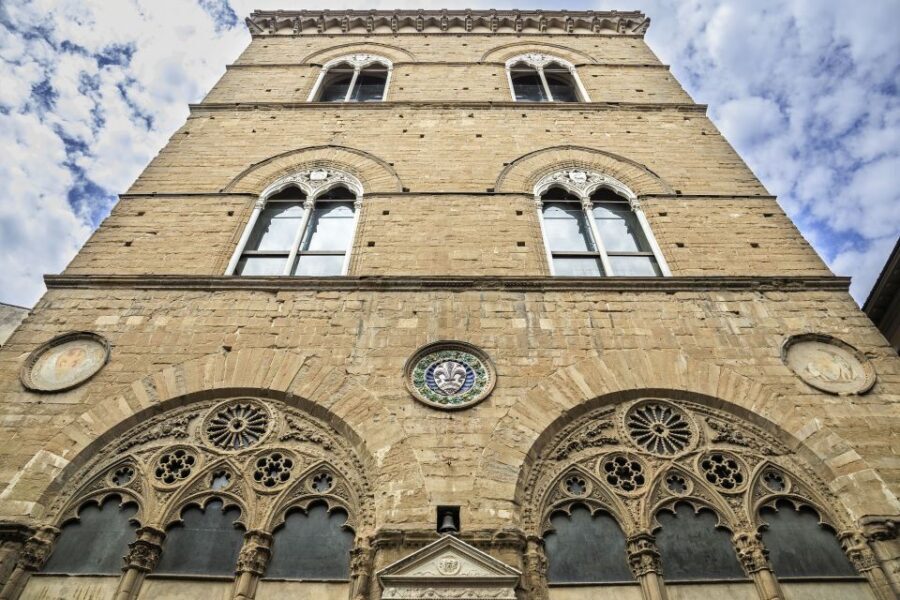
You get the Duomo complex exterior plus a close look at the Baptistery doors—and this is an important limit. You’re not going inside for this tour, so if you dream of climbing, entering chapels, or spending time in the cathedral interior, you’ll need a separate visit.
Still, the outside can be more than enough if someone explains what you’re looking at. The guide’s commentary makes the facade and adjacent structures feel less like random stone and more like a coherent masterpiece cluster.
You can also read our reviews of more museum experiences in Florence


Piazza della Signoria and Loggia dei Lanzi
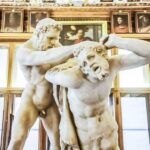
From there, the tour moves into the city’s open-air “stage.” You pass Piazza della Signoria, a key square for Florence’s political and cultural identity. You also stop by Loggia dei Lanzi, where you’ll see famous sculptures up close.
This is one of those areas where a guide helps you avoid the tourist trap of thinking the square is only for photos. It’s where Florence’s public art and civic story overlap.
House of Dante and Dante’s district
Florence has a way of making literature feel physical. You’ll visit the House of Dante area (as a photo stop), plus you’ll hear how Dante is tied to the city in a specific neighborhood sense.
If you’re the type who likes that extra layer—who lived where, where stories were set, what inspired famous writing—this stop gives you that connection without turning the day into a literature seminar.
Ponte Vecchio and its “jeweler’s box” history
Then comes Ponte Vecchio, Florence’s most famous bridge. You’ll learn why it survived where other changes might have erased similar spaces, and you’ll get time to look at it properly as the day ends.
This bridge works as a finale because it’s both scenic and historically legible: you see what’s there, and you understand why that particular street-level economy shaped the area.
Smaller moments you’ll be glad you didn’t skip
The tour isn’t only about the headline names. Several stops matter because they add realism and texture to Florence.
One of them is the Mercato del Porcellino area, where you’ll stop at the well-known “bronze boar” zone. Even if you don’t obsess over the local rituals, it’s a practical break in the walk and a strong photo moment.
You’ll also pass Palazzo Medici Riccardi for a photo stop, which helps ground the Renaissance story in real buildings you can still stand in front of.
And you’ll get a “food Florence” moment too. During the walk, the guide points out street food and talks about a classic Florentine dish: trippa. They even suggest bringing a little cash so you can grab a treat like gelato or trippa if the chance lines up.
The optional Uffizi upgrade: when it makes sense to add it
The optional add-on is Uffizi Gallery, with Uffizi entry and a guided tour included when you select that upgrade.
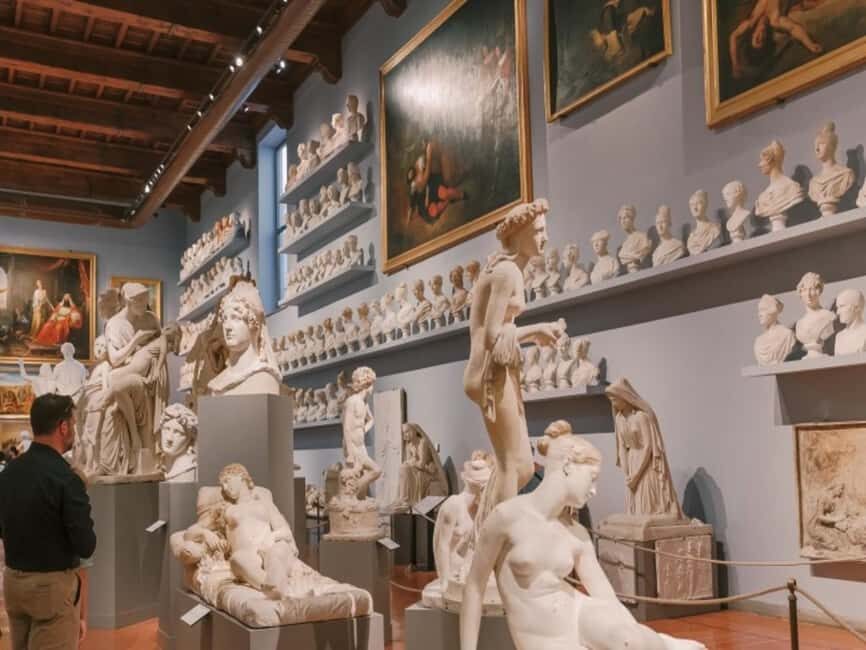
This matters because the Uffizi isn’t just “more art.” It’s one of those museums where timing and route can make a huge difference. A guided component helps you choose what to prioritize instead of spending energy deciding room-by-room with a map.
In the tour flow, the Uffizi stop shows up after you’ve already seen the Duomo exterior, Dante’s area, Piazza della Signoria, and Ponte Vecchio. That gives you a useful warm-up: by the time you reach the Uffizi, you’ll understand more of what the Renaissance art is responding to—city power, patronage, and the visual language of Florence.
One practical consideration: once you add the Uffizi, your day can stretch toward the upper end of the stated duration range.
Timing and pacing: how to plan your day in Florence
The listed duration is 3 to 7 hours, depending on timing and whether you add the Uffizi. That wide window is normal for Florence tours because museum entry slots and ticket times can shift the order slightly.
The itinerary uses a mix of guided segments and photo stops. That’s usually a good thing, because Florence sightseeing is hard when you’re trying to keep moving and also get photos. The stops give you little “breathing windows” without derailing the whole day.
You’ll also be walking between stops, so plan for:
- Comfortable shoes (seriously)
- Being ready to stand for short explanations
- Keeping your pace steady in the same central area of Florence
One more key rule: no luggage or large bags. If you’re traveling with bulky luggage, you’ll need to store it elsewhere before joining the tour.
Group size and guide style: why small helps
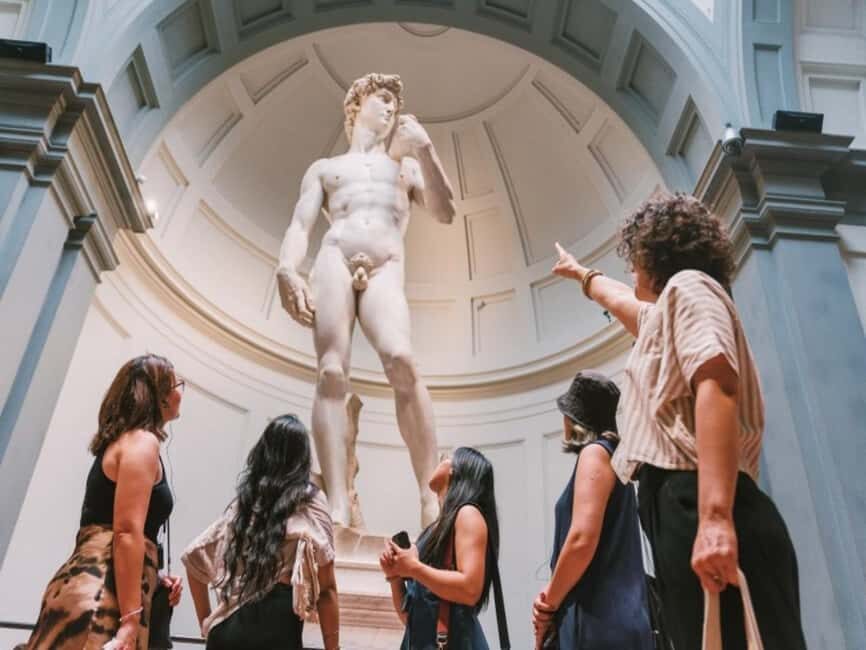
The group is limited to 18 people max, which makes a difference. Big groups tend to flatten the experience: you get swept along, you hear less, and you spend more time waiting for the group to catch up.
With a small group, you can actually follow the story. Plus, guides like Diletta, Francesca, and Allesandra come across in the guidance style: they take time with explanations, they answer detailed questions, and they point out small visual cues that are easy to miss.
Even when the museum entry feels hectic, the guide’s role becomes the difference between wandering and learning.
Price value: is $62 a good deal?
At $62 per person, the value depends on what you’re trying to cover in one shot.
Here’s what your money is doing:
- Skip-the-line access to the Accademia Gallery
- An Accademia guided tour
- A professional English-speaking guide for Florence highlights
- A guided route through major landmarks like the Duomo area, Piazza della Signoria, and Ponte Vecchio
- And if you pick the optional upgrade: Uffizi entry + guided tour
Even without doing any math, you can feel the logic: you’re paying for time saved (skip-the-line), guided interpretation (that “what am I looking at” factor), and ticketed museum access bundled into a single day. For Florence, where lines and standalone tickets can cost time and energy, this combo is often a better deal than trying to stitch it together yourself.
So yes—$62 can be a strong value if you want both the art and the city story in one guided block.
Who should book this Florence Accademia + city highlights tour?
This fits best if you:
- Want Michelangelo’s David without losing patience to lines
- Like the idea of a guided walking route that connects monuments into a story
- Prefer a small group over big-bus chaos
- Are curious about Florence’s culture beyond just the obvious photos
It may be less ideal if you:
- Want to go inside the Duomo itself (this tour is outside only)
- Hate museums with time limits and a set structure
- Travel with large bags (luggage is not allowed)
- Need wheelchair access (it’s listed as not suitable for wheelchair users)
Should you book it? My practical take
If you want an efficient, high-impact Florence day, I’d book this—especially if you’re also considering the Uffizi upgrade. The pairing works: Accademia gives you the emotional art hit, then the city walk teaches you how the Renaissance shaped the streets you’re standing on.
Book it if you’re the type who likes explanations while you look, and if you’d rather spend your time learning than waiting in lines.
Skip it only if your priorities are different—like if you specifically want cathedral interiors, long museum free-time, or total flexibility with no guided structure.
FAQ
FAQ
What does the Accademia portion include?
You get skip-the-line Accademia entry and a guided tour of the gallery, including time focused on Michelangelo’s David.
Will I be able to enter the Duomo?
No. On this tour you see the outside of the Duomo and the Baptistery doors only.
Is the Uffizi Gallery visit included?
The Uffizi is included only if you select the optional upgrade. With the option, you get Uffizi entry plus a guided tour.
How long is the tour?
The duration is listed as 3 to 7 hours, depending on the selected option and the available starting times.
What group size should I expect?
The tour is a small group, with a maximum of 18 people.
What should I bring?
Bring passport or ID, and comfortable shoes.
Is luggage allowed?
No. Luggage or large bags are not allowed.
Is it wheelchair accessible?
It is listed as not suitable for wheelchair users.
You Might Also Enjoy


More City Tours in Florence

More Tours in Florence
- The Best tour in Florence: Renaissance & Medici Tales – guided by a STORYTELLER
★ 5.0 · 12,316 reviews

More Tour Reviews in Florence
- Tuscany Day Trip from Florence: Siena, San Gimignano, Pisa and Lunch at a Winery
★ 5.0 · 21,634 reviews - The Best tour in Florence: Renaissance & Medici Tales – guided by a STORYTELLER
★ 5.0 · 12,316 reviews