REVIEW · FLORENCE
City Sightseeing Florence Hop-On Hop-Off Bus Tour
Book on Viator →Operated by Sightseeing Experience · Bookable on Viator
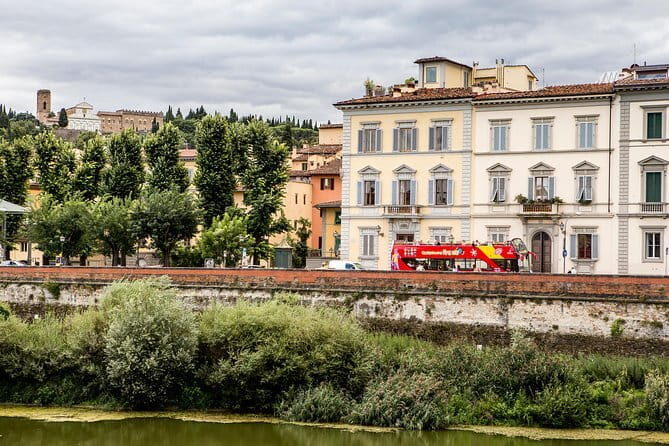
Two routes make Florence sightseeing simple. The Line A and Line B panoramic circuits give you a quick city orientation and the chance to hop off for major stops like Santa Croce, Porta Romana, and Piazzale Michelangelo. I also love the real-time app that tracks the buses and helps you plan your walk between stops. One drawback: during busy times or bad weather, the open-top ride and the gaps between buses can test your patience.
At about $24.94 per person, it’s priced like a flexible half-day ticket, but it’s built for longer stays with 1-, 2-, or 3-day passes that allow unlimited travel during your chosen period. Think of it as a moving base camp: ride, listen, hop off, wander, and then come back when you’re ready.
In This Review
- Key takeaways before you climb aboard
- Line A vs Line B: which route fits your Florence mood?
- Timing and hop-on strategy for a smooth day (without chasing buses)
- Line A stop-by-stop: from Porta Romana to Santa Croce and up to Michelangelo
- Line B to Fiesole: the hilltop route with Piazza Mino and San Domenico
- Winter schedule note: what happens when Line B slows down
- Audio in English, Wi‑Fi onboard, and the Sightseeing Experience app
- Open-top comfort and rainy-day planning
- Price and value: when $24.94 feels like a win
- Practical tips to avoid the most common headaches
- Find the stops with the app, not vibes
- Build a buffer for waits
- Use the visitor center if you’re stuck
- Choose your “view time” when skies are best
- Should you book this Florence hop-on hop-off bus?
- FAQ
- How long is the Florence hop-on hop-off bus tour?
- What are Line A and Line B?
- Are there 1-, 2-, or 3-day passes?
- What’s included with the ticket?
- Are food and drinks included?
- What time does the service start?
- Can I cancel for a full refund?
Key takeaways before you climb aboard
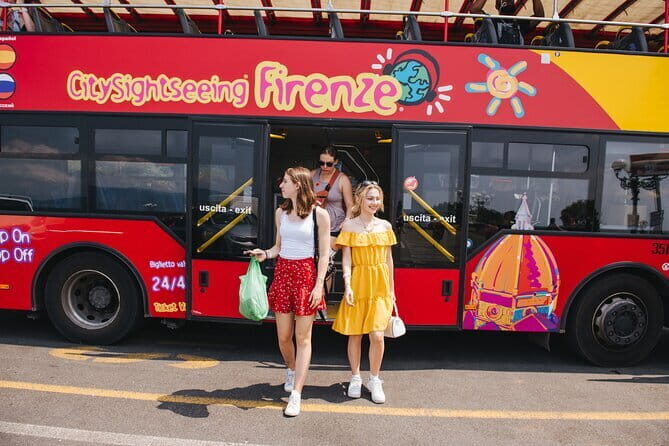
- Two panoramic routes so you can pick a broad city sweep (Line A) or a hillier day out (Line B)
- Real-time positioning in the app plus stop addresses and suggested walking directions
- Big viewpoint payoff at Piazzale Michelangelo, with Line B aimed at Fiesole-area views
- Onboard Wi‑Fi and audio in English to keep the ride useful, not just scenic
- Seasonal weekday limits on Line B in winter months, which can change your plan
- Open-top comfort is weather-dependent, so pack for rain if your dates are iffy
Line A vs Line B: which route fits your Florence mood?
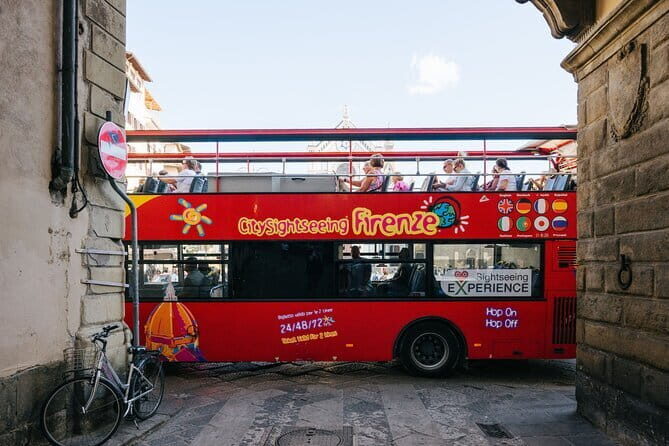
This is the kind of hop-on hop-off tour where the choice of route really matters. Line A is the more wide-ranging loop. It has 13 stops and 12 points of interest built into the route design, including Basilica of Santa Croce, Palazzo Pitti, Piazzale Michelangelo, Porta Romana, Teatro Verdi, and even the Stazione di Firenze Santa Maria Novella area. In plain terms: Line A helps you map Florence—where things are, which neighborhoods feel close or far, and how the center connects to the rest of the city.
Line B is the more “look outward” option. It also uses open-top panoramic riding, but the points of interest focus on Piazza Mino, Museo Del Calcio, Certosa Di Firenze, and Piazzale Michelangelo. The highlight here is getting out toward the hill viewpoints, including the Fiesole-side stops. If you want dramatic skyline views without doing a long uphill trek, Line B is your friend.
How I’d choose:
- If you’re in Florence for the first time and want maximum orientation fast, start with Line A.
- If you already feel oriented and want a view day, add Line B—especially if you care about the hilltop panorama.
You can also read our reviews of more city tours in Florence
Timing and hop-on strategy for a smooth day (without chasing buses)
The first departure listed is 9:00 am. That start time is handy because it puts you out early—before midday crowds thicken the stops and before the streets get especially slow.
Even though departures are described as frequent, hop-on hop-off services in historic cities can still get crowded, and there can be longer waits between buses at certain stops. The fix is simple: don’t treat a stop like a guaranteed “arrive anytime” spot. Treat it like a schedule you actively manage.
Here’s the tactic that works well in practice:
- Use the app to check where the bus is before you walk to a stop.
- When you hop off for a visit (like Santa Croce or a viewpoint), decide your return time before you wander too far.
- If you’re traveling as a group, pick a re-board plan that doesn’t depend on everyone being at the same spot at the exact same minute.
If you plan with that mindset, the hop-on part stays fun instead of stressful.
Line A stop-by-stop: from Porta Romana to Santa Croce and up to Michelangelo
Line A is the loop I’d use to build a mental map of Florence. You’ll start at Piazzale Galileo (Stop 1) and then move through a sequence of neighborhood stops before hitting Florence’s best-known landmarks and viewpoints.
Here’s how the stops feel from a sightseeing point of view:
Piazzale Galileo (Stop 1)
Good as an early “get your bearings” launch point. Sitting high on the bus helps you see how the city funnels from the center out into surrounding districts.
Viale Machiavelli / Villa Cora (Stop 2)
This is one of those stops that feels like it’s for people who like variety: a more residential, hillside edge to the city. It’s a nice place to hop off if you want a breather from major landmarks.
Petrarca Porta Romana (Stop 3) / Porta Romana (Stop 12)
These stops anchor the tour on the south side. Porta Romana is also one of the route’s named points of interest, so it’s a logical place to hop off if you want to explore streets with a less “postcard center” vibe.
Piazza Torquato Tasso (Stop 4)
A central square stop that can work well as a “mid-route reset.” If you’re using Line A to orient yourself, squares like this are useful because they’re easy to navigate back toward.
Leopolda – Parco della Musica (Stop 5)
A transition stop that can be helpful if you’re aiming to connect to parts of town beyond the core monuments.
Piazza della Indipendenza (Stop 6)
Another practical stop for breaking up the ride. Even if you don’t immediately jump into a specific ticketed attraction, it can help you move between zones without getting stuck in traffic.
Largo Alinari, 8 (Stop 7)
A named address stop that makes finding your way back easier. When you’re tired, that kind of clarity matters.
Via Pier Capponi – Libertà (Stop 8)
This stop keeps the route moving through the city’s breadth. If you want to stretch your legs for photos or a short stroll, it’s a natural place to do it.
Viale Bernardo Segni (Stop 9)
Use this if you want a lighter, less “must-see landmark” moment. It’s more about rolling through neighborhoods.
Corso dei Tintori, 40 (Santa Croce) (Stop 10)
This is one of the clearest “hop off, walk, and actually enjoy” points on Line A. Santa Croce is specifically named as a key area for the route, and this stop is built to drop you near it.
Lungarno Serristori (Stop 11) and Piazza Ferrucci / Michelangiolo Bastioni (Stop 12)
These help funnel you toward the viewpoint zone. As you approach the top, you can start thinking about timing—when you want clear skies and when you’re okay with partial views.
Piazzale Michelangelo (Stop 13)
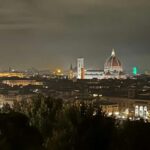
This is the big-picture finale for Line A. If you do one “sit and look” stop in Florence, make it this one. It also pairs well with having the bus as your easy return plan afterward.
Line A reality check:
Line A gives you a lot of options, but it won’t place you right at every single attraction door. It’s best when you use the bus to reach the areas and then do the real wandering on foot from those anchor points.
Line B to Fiesole: the hilltop route with Piazza Mino and San Domenico
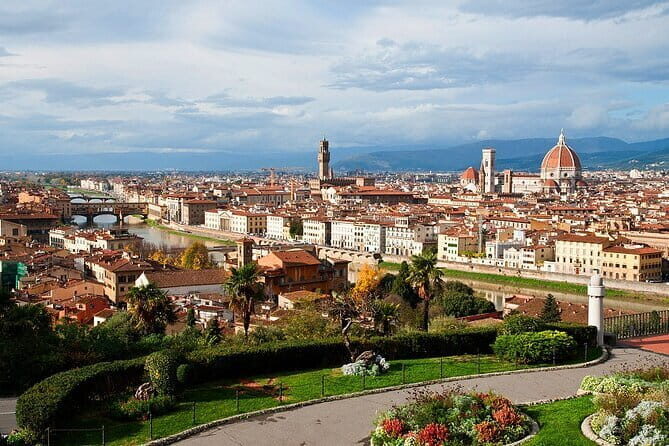
Line B is designed for the view payoff, and it includes the key Fiesole-area theme. Your loop includes stops like Piazzale Michelangelo, Museo del Calcio, San Domenico, and Piazza Mino da Fiesole.
Important note: the stop list includes Demidoff as suspended until further notice (Stop 3 on the Line B sequence). If you see a suspended tag in the app or at a stop, don’t waste time trying to wait there—use the app to adapt.
Here’s the flow:
Piazzale Galileo (Stop 1)
Another starting point that keeps things easy for orientation.
Piazzale Michelangelo (Stop 2)
Line B still hits Michelangelo, which is great if you want to compare views or revisit later in the day.
Demidoff – suspended until further notice (Stop 3)
If it’s suspended on your date, simply plan to skip it and go to the neighboring stops instead.
Via Ghibellina, 85 (Stop 4) and Lungo l’Affrico, 40 (Stop 5)
These are the “you’re getting out of the center” steps. Even without a specific ticket attraction right at the stop, they put you in the right direction for hill views.
Piazza San Bartolomeo al Gignoro / Museo del Calcio (Stop 6)
This is a concrete named interest: Museo Del Calcio. If sports museum curiosity hits you (or you’re with kids), this is your obvious stop.
San Domenico (Stop 7) and Fiesole Piazza Mino (Stop 8)
These are the heart of the hilltop idea. This is where Line B feels less like city touring and more like viewpoint touring—Florence spreads out, and you get that dramatic sense of place from above.
Piazza S. Domenico, 14 / Via Di San Domenico, 15 (Stop 9)
A second San Domenico-area stop. Having more than one drop point in the same zone is useful because it reduces foot misery when you’re trying to get back to the bus.
Stazione Leopolda (Stop 10) and Viale Vasco Pratolini / Piazza Tasso (Stop 11)
These add a practical “get back to the city flow” element. They can help you connect your sightseeing with easier walking or public transit.
Porta Romana (Stop 12)
The loop returns you to a key hub, so you’re not stranded far from everything.
Winter schedule note: what happens when Line B slows down
One detail worth planning around: from 3rd November, 2025 to 31st March 2026, Line B is suspended Monday to Friday. It’s active every day with limited service from 20 December to 6 January.
If your trip falls in that window and you’re sightseeing on weekdays, don’t build your whole plan around Line B. Assume you may mostly have Line A for the full sightseeing sweep, unless your dates line up with the limited-service period.
The upside: this also makes it easier to choose. In winter weekdays, focus on the broader circuit and prioritize your “must-see” hops on Line A.
- Tuscany Day Trip from Florence: Siena, San Gimignano, Pisa and Lunch at a Winery
★ 5.0 · 21,634 reviews

Audio in English, Wi‑Fi onboard, and the Sightseeing Experience app

The tour leans on an easy combo: English audio plus a smartphone assistant.
Included perks:
- Free Wi‑Fi onboard
- Mobile ticket
- The Sightseeing Experience app with real-time bus position
- A free walking tour included in the app in five languages
- Assistance at the Sightseeing Experience Visitor Center inside the ticketing area in SMN Train Station
In real life, audio tours work best when you use them for orientation, not when you expect every sentence to match exactly what you’re staring at. On an open-top bus, you’re constantly moving your gaze between streets, river views, facades, and distant domes. Use the narration to understand what you’re seeing, then hop off and validate it with your own eyes.
Also, the onboard setup includes staff attention to getting audio working properly. If your headphones or channel feels off, ask quickly once you’re on board. That small fix saves time and frustration later.
Open-top comfort and rainy-day planning

Florence can give you perfect weather—or rain that’s rude and unpredictable. Since it’s an open-top double-decker bus, you’re exposed.
What to expect if it rains:
- Seats can get wet.
- Side panels may roll down, which helps, but it can cut visibility.
My practical advice is boring but effective: bring a compact poncho or a small umbrella that doesn’t turn into a wind sail. If you know you’ll be outside for viewpoint time, plan for being a little damp and still happy about it.
And if the day is truly miserable, remember the big value of this tour: you can sit, listen, and relocate without committing to long uphill walks between separate ticketed attractions.
Price and value: when $24.94 feels like a win
At $24.94 per person, you’re paying for a mix of things:
- Transport that drops you at sightseeing hubs
- Audio guidance in English
- Flexibility to hop off and take your time
- Support tools like onboard Wi‑Fi and the app’s real-time tracking
So is it “worth it”? It usually is when you do two things:
- You pick your priority areas first (Santa Croce, Porta Romana, Piazzale Michelangelo are built-in anchors).
- You don’t try to do everything nonstop. Hop off, spend 45–90 minutes, then return when you’re ready.
Where the value can shrink is when you only ride one short segment and skip the places that make the pass make sense. If you’re paying for flexibility, you’ll get your money back only by using that flexibility.
If you’re considering a 1-, 2-, or 3-day pass, the idea is straightforward: longer passes are for slower sightseeing days, repeats of viewpoints, and “I changed my mind” moments. But the right choice depends on how many times you genuinely plan to ride, not how many days you’re staying in town.
Practical tips to avoid the most common headaches
This kind of tour can be fantastic—or quietly annoying—depending on how you approach stops.
Find the stops with the app, not vibes
Bus stops can be hard to spot in dense old-city streets. Your best move is to use the app’s real-time location and stop addresses with suggested walking directions. You can also find stops on Google Maps.
Build a buffer for waits
If there are fewer buses running on your day, you may spend more time waiting at stops. That’s not a reason to skip the tour; it’s a reason to plan return times and avoid the “we’ll just see when the bus comes” approach.
Use the visitor center if you’re stuck
If you’re confused about tickets or where to start, go for help at the Sightseeing Experience Visitor Center inside the ticketing area in SMN Train Station. It’s the kind of shortcut that pays back fast if you’re short on daylight.
Choose your “view time” when skies are best
Piazzale Michelangelo is a payoff stop. If you can time it for clearer skies, you’ll feel like you cheated the schedule. If not, still go—just don’t expect crisp skyline perfection in all weather.
Should you book this Florence hop-on hop-off bus?
I’d book it if you want an easy way to orient yourself and you like the freedom to choose what you explore on foot. Line A is especially useful for first-timers because it connects major anchors like Santa Croce, Porta Romana, and Piazzale Michelangelo in one rideable framework. Line B is ideal when you want hilltop views and Fiesole-area scenery.
I’d think twice if:
- You’re traveling on weekday dates when Line B may be suspended (winter schedule window).
- You hate waiting or you’re relying on the bus to perfectly match a tight, non-flexible plan.
- The weather forecast looks rough and you don’t want to deal with open-top comfort.
If you go in with a plan—use the app, hop off at the named anchors, and build buffer time—the bus becomes a practical tool for Florence, not a roulette game.
FAQ
How long is the Florence hop-on hop-off bus tour?
The duration is listed as approximately 2 hours.
What are Line A and Line B?
Line A is a panoramic route with 13 stops and 12 points of interest. Line B is another panoramic route with 12 stops and four points of interest.
Are there 1-, 2-, or 3-day passes?
Yes. The pass is available in 1-, 2-, or 3-day options, and it’s valid for unlimited travel during that chosen period.
What’s included with the ticket?
Your ticket includes the hop-on hop-off tour, free Wi‑Fi onboard, and the Sightseeing Experience mobile app for real-time bus position. There’s also a free walking tour in five languages inside the app, plus assistance at the Visitor Center inside the ticketing area in SMN Train Station.
Are food and drinks included?
No. Food and drinks are not included.
What time does the service start?
The listed start time is 9:00 am.
Can I cancel for a full refund?
Yes. You can cancel for a full refund up to 24 hours in advance of the experience start time. If you cancel less than 24 hours before, the amount paid is not refundable.
You Might Also Enjoy

More City Tours in Florence

More Tours in Florence
- The Best tour in Florence: Renaissance & Medici Tales – guided by a STORYTELLER
★ 5.0 · 12,316 reviews

More Tour Reviews in Florence
- Tuscany Day Trip from Florence: Siena, San Gimignano, Pisa and Lunch at a Winery
★ 5.0 · 21,634 reviews - The Best tour in Florence: Renaissance & Medici Tales – guided by a STORYTELLER
★ 5.0 · 12,316 reviews