REVIEW · FLORENCE
Florence: Fast Track Uffizi Gallery Guided Tour
Book on GetYourGuide →Operated by Enjoy Rome · Bookable on GetYourGuide
Big art, tight time.
This fast-track, small-group Uffizi visit is a smart way to hit Florence’s top Renaissance museum without spending half your day waiting in line. You’ll step into the 16th-century setting that became a museum in 1865, then get a guided path through the works people actually come here for.
I especially like two things: the guide storytelling (how art changes across Florence’s Renaissance timeline) and the fast-track entry that helps you spend your limited museum hours on the paintings. One watch-out: in peak season, even with priority entry, you may still face a short wait, so plan a little buffer for nerves and crowds.
The heart of this tour is that it keeps you moving, but it’s also not a slow, leisurely stroll. If you’re the type who needs total quiet, or you hate crowds, you may find the pace slightly intense for a museum this big.
In This Review
- Key highlights to know before you go
- Uffizi fast-track: what you save (and what you don’t)
- Getting started: meet your guide by Leonardo da Vinci’s statue
- The art museum in a former palace: what you’re stepping into
- Vasari’s architecture: seeing the design behind the galleries
- Renaissance highlights: Botticelli, Michelangelo, and friends
- The payoff of radio headsets in crowded rooms
- What the outdoor courtyard adds (and why it’s not just scenery)
- Small group size: the sweet spot for a big museum
- How long is enough? Making 1.5 hours feel worth it
- Price and value: is $91.91 worth it?
- Practical tips so the tour actually goes smoothly
- Who should book this Uffizi fast-track tour
- Should you book this tour or go on your own?
- FAQ
- How long is the Florence Uffizi Fast Track guided tour?
- Is this a small group tour?
- Does the tour include skip-the-line entry?
- Where do I meet the guide?
- What languages are the guides available in?
- Are radio headsets included?
- What should I do about liquids and bags?
- Is hotel pickup included?
- Should you book this tour or not?
Key highlights to know before you go
- Skip-the-line, separate entrance to get in faster than regular ticket lines
- Small group (max 9) so the guide can actually guide you
- Radio headsets so you don’t strain to hear in busy galleries
- Botticelli’s Birth of Venus and other headline names like Michelangelo
- Giorgio Vasari’s architectural design and the Uffizi’s “palace-meets-museum” vibe
- A story-driven route that connects the art to the Renaissance context
Uffizi fast-track: what you save (and what you don’t)
The Uffizi is one of those museums where demand is always high. So the biggest win here is practical: you get fast-track entry through a priority line, not a random shuffle in the main crowd. That matters because your time in Florence is usually limited, and the Uffizi is huge.
Still, be realistic. The experience notes that in high season you may experience a short wait even with fast-track. In other words, you’re reducing waiting time, not teleporting past the entire universe of ticket-holders.
This tour also runs about 1.5 hours, which is exactly the sort of time window that works well in Florence. It’s long enough to get real meaning from the art, but short enough that you still have energy afterward to explore at your own pace.
You can also read our reviews of more guided tours in Florence
- The Best tour in Florence: Renaissance & Medici Tales – guided by a STORYTELLER
★ 5.0 · 12,316 reviews
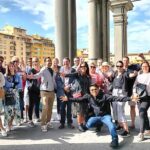
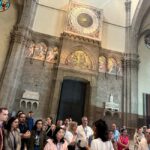
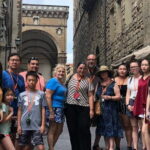
Getting started: meet your guide by Leonardo da Vinci’s statue
Your tour begins outside the museum area, at a very specific spot: in front of Leonardo da Vinci’s statue. The guide will be holding a white flag that says ENJOY ROME. That detail is more useful than it sounds. The Uffizi entry area can be confusing when you’re trying to spot a group quickly, so having a clear landmark helps you avoid the start-of-tour panic spiral.
At the end, the tour finishes back at the same meeting point, which is convenient if you’re planning your next stop on foot.
You won’t have hotel pickup or drop-off, so make sure you can reach the meeting area on your own. In Florence, that’s usually easy—just leave yourself enough time to find the spot without rushing.
The art museum in a former palace: what you’re stepping into
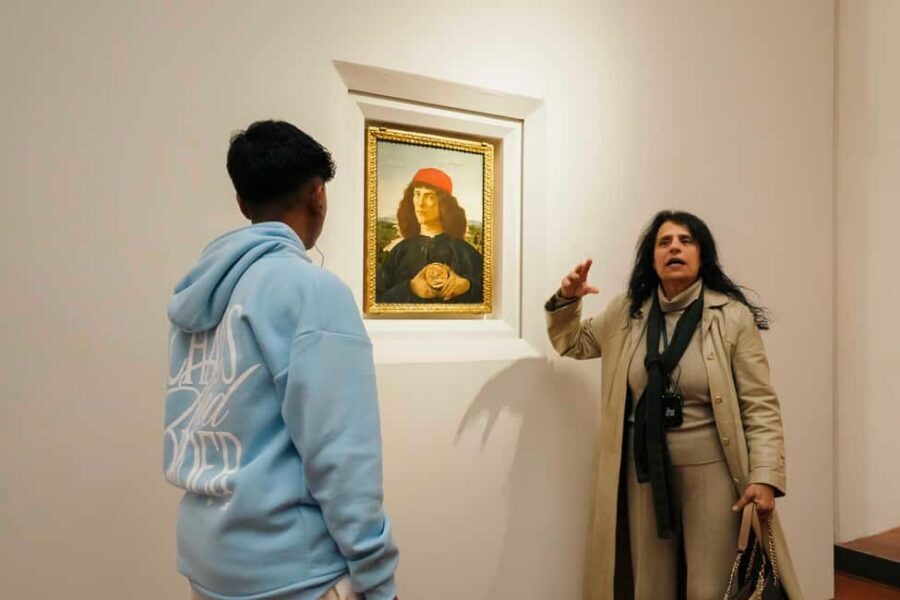
One of the most interesting parts of this experience is how the building itself becomes part of the story. You’re not just entering a gallery room—you’re entering a place with a timeline.
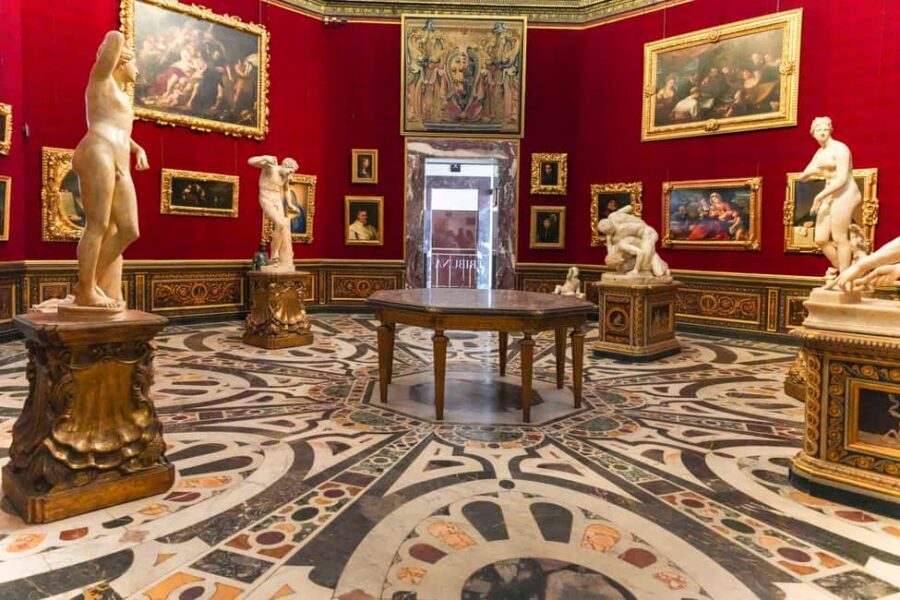
The Uffizi site began construction from 1560 to 1581, designed by Giorgio Vasari, and it later became a museum in 1865 after being handed to Florence by the Medici family. On this tour, you’ll get help turning that into something you can actually picture: how a working palace space became one of the earliest modern museums and why its design fits the museum’s role today.
This matters because the Uffizi is not just art on walls. It’s a structured building made to move you. When you understand that, the experience feels more coherent, less like you’re wandering from room to room.
Vasari’s architecture: seeing the design behind the galleries
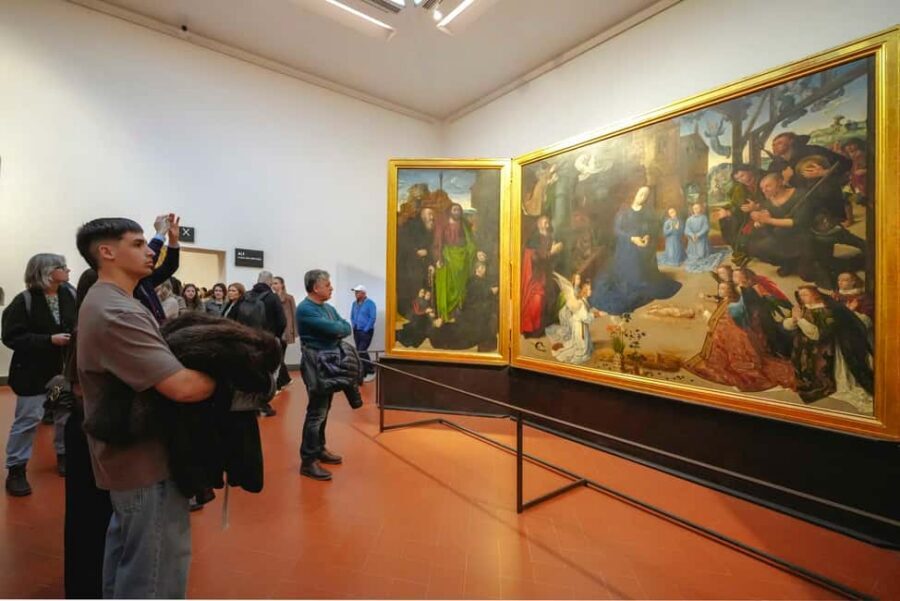
Vasari’s architectural brilliance shows up in how the museum feels as you move through it. You’ll get to experience the Uffizi as a 16th-century design that still shapes how people flow through the collection.
The tour description also highlights the Uffizi’s long courtyard overlooking the Arno River and a signature semi-enclosed courtyard decorated with sculptures linked to major artistic figures. Even if you’re focused on painting, it helps to notice the “bones” of the place—because the Uffizi’s layout affects where your attention lands and how you connect different works.
One practical bonus: when your guide points out what to look for in the building, you get more “museum” per minute. In a short tour, that’s the difference between seeing art and understanding the space around it.
Renaissance highlights: Botticelli, Michelangelo, and friends
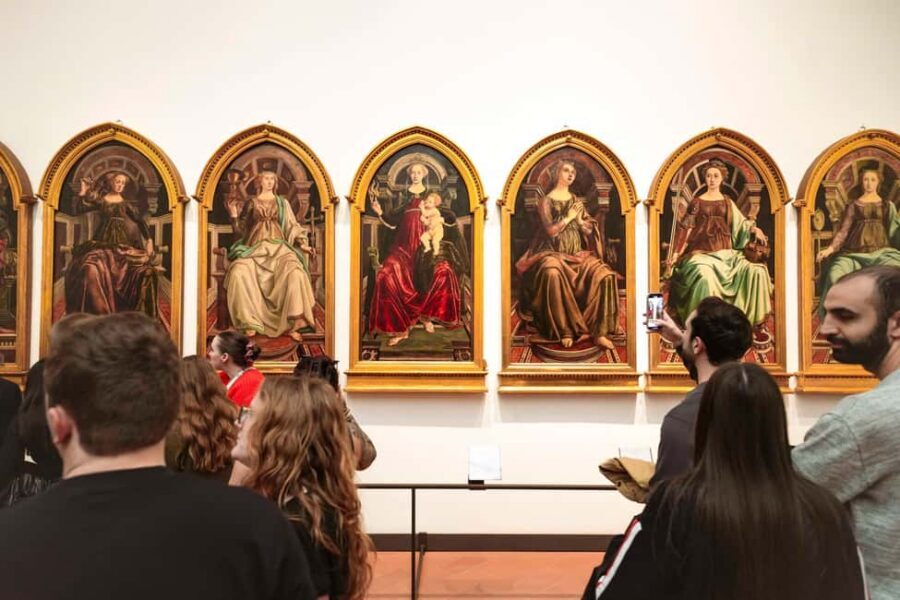
Yes, you’re coming for the headliners. But the value here is that the tour is built around how the masterpieces connect—not just where they are.
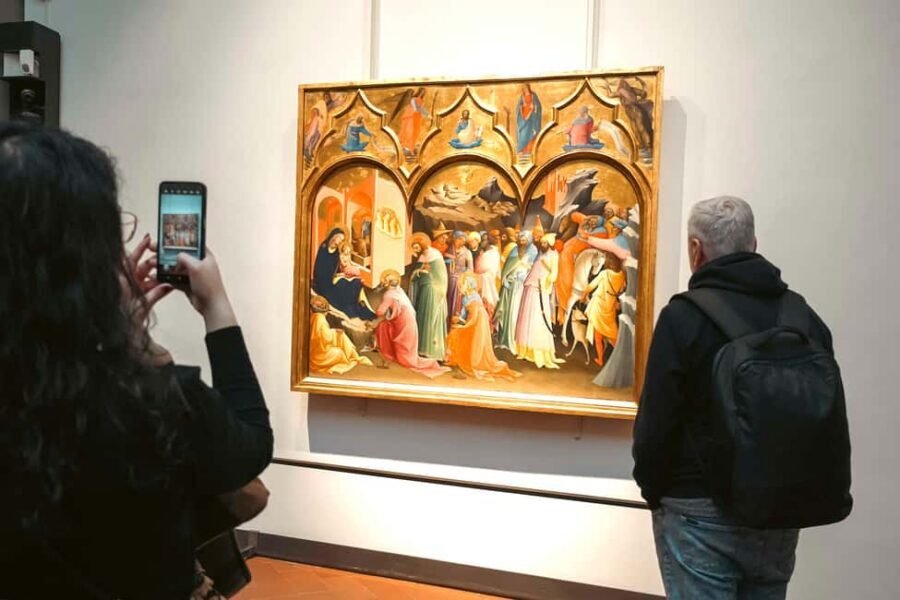
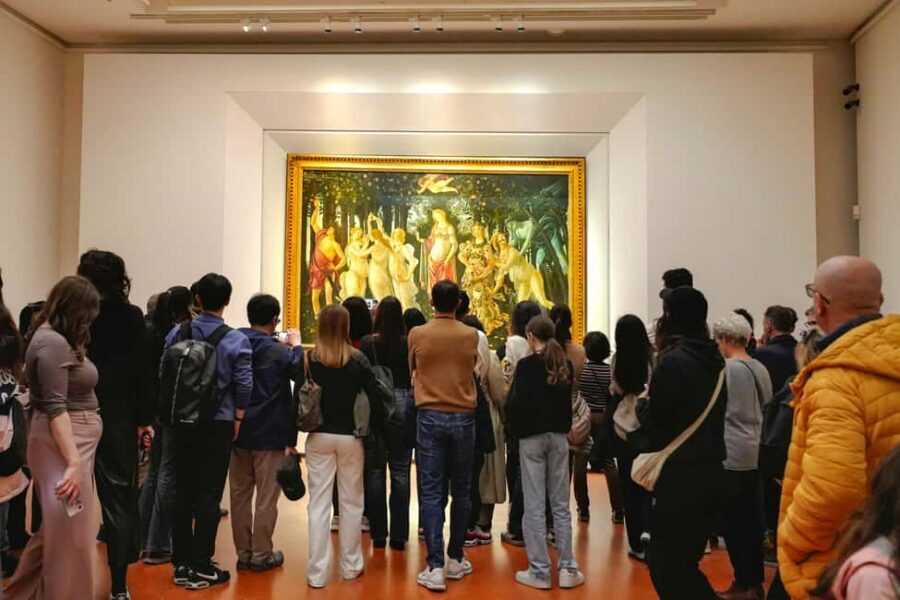
You’ll see or at least be positioned to focus on major works by famous artists including Botticelli (with special attention to The Birth of Venus), along with Michelangelo, and other Italian names such as Giotto, Cimabue, Leonardo da Vinci, and Raffaello. Even in 1.5 hours, having a guided route helps you hit the works that most define Florence’s Renaissance style.
Here’s what I’d take from the way the guide-led format is described: you’re not just reading wall labels. You’re getting stories behind the art—how ideas evolved, why Florence’s artists mattered, and what you’re actually looking at when you think you already know the painting.
And it’s not one-note explanation. The tour also includes context about the Uffizi’s transformation from palace to museum, which helps you see the collection as a curated outcome, not a random pile of famous works.
You can also read our reviews of more museum experiences in Florence

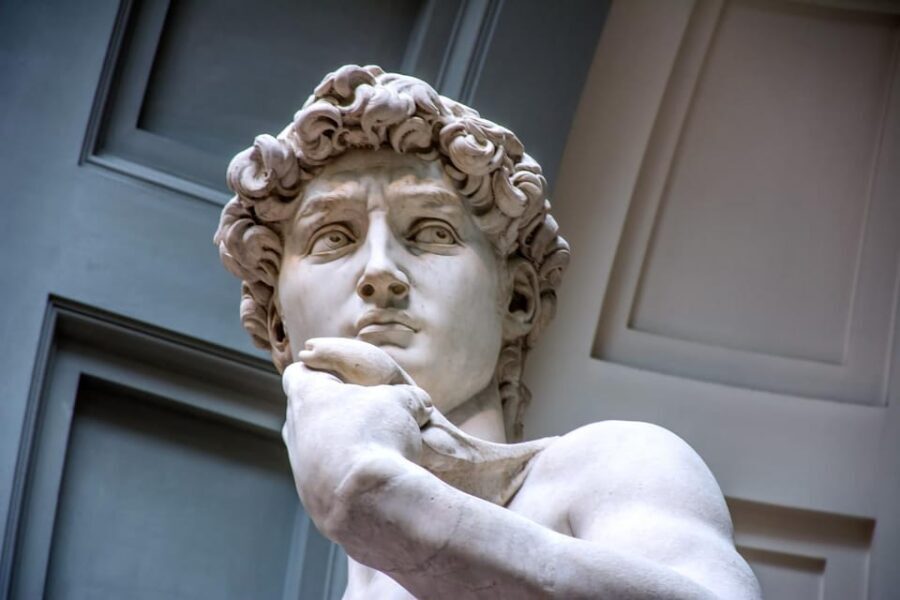


The payoff of radio headsets in crowded rooms
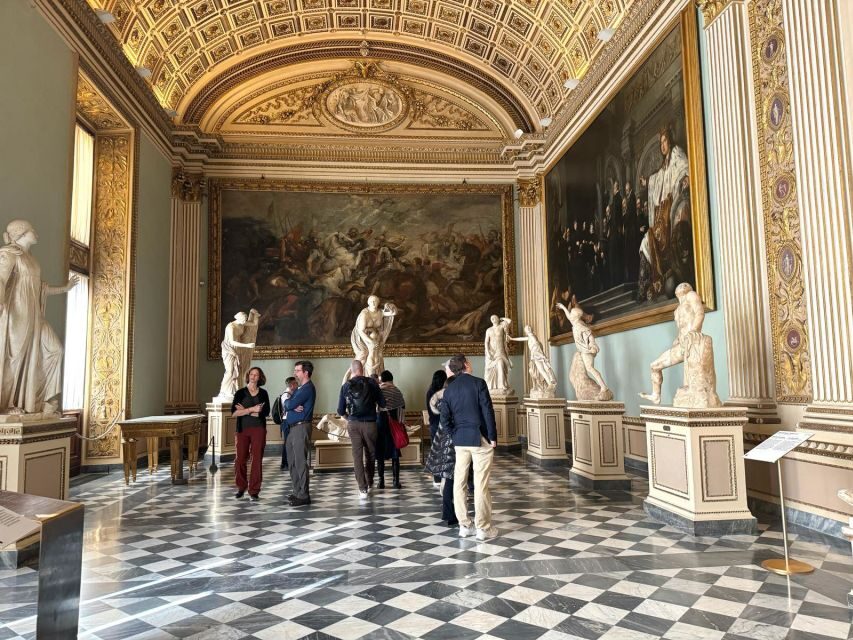
A small detail that makes a big difference: you get radio headsets so you can clearly hear your guide. The Uffizi can be loud, and it’s easy to miss key points when you’re straining over other visitors. These headsets keep the tour’s narration usable, even when rooms get busy.
It also helps the guide keep the group together. When you’re traveling with a small group, you still want quick coordination, and the headset setup makes the whole experience smoother.
If you’ve ever had a “half-heard” museum tour, you’ll appreciate how much better this format feels.
What the outdoor courtyard adds (and why it’s not just scenery)
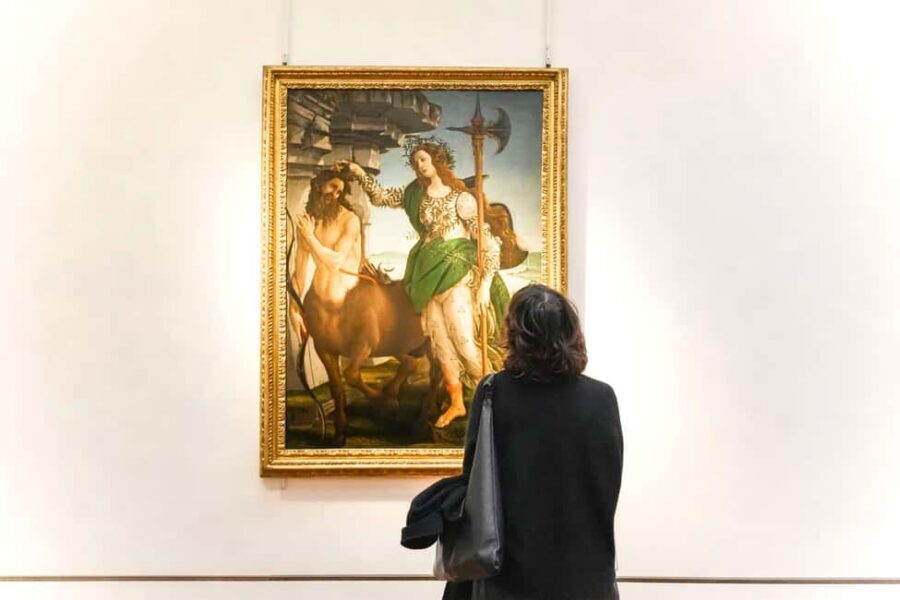
The Uffizi experience isn’t only indoor. The tour description points you toward the museum’s semi-enclosed courtyard with sculptures, and how it links the gallery to Piazza della Signoria.
This matters because it grounds the museum in Florence’s real geography. You’re not treating the Uffizi like a sealed-off box. You’re connecting it to the city’s center, where political power and public life shaped the art world.
If you’re thinking ahead to your day, this connection helps you plan your next walk. The Uffizi isn’t a dead-end stop. It’s a bridge back into Florence’s street life.
Small group size: the sweet spot for a big museum
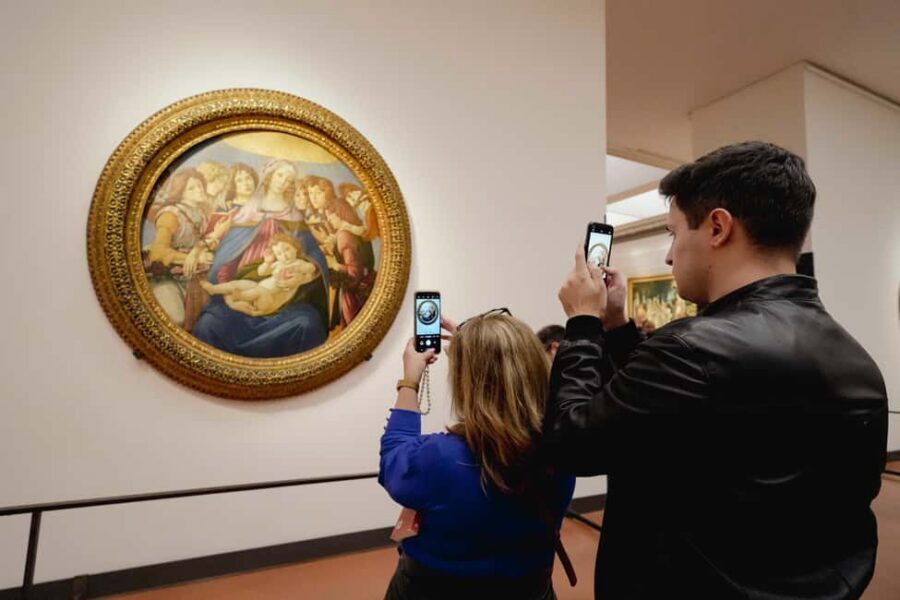
This is limited to 9 participants, which is exactly the right size for a guided art hit. In a group that small, you’re less likely to get lost behind someone who stops for selfies, and you’re more likely to get the guide’s attention when you’re trying to understand what you’re seeing.
The guiding approach also comes across in the way the tour is described: you’re led right to pieces that tell a story in a logical sequence. In short, you spend less time asking yourself what to look at next and more time looking at the art with purpose.
There’s also a nice practical side effect. With fewer people, it’s easier for the guide to adjust the pace to the room’s energy.
How long is enough? Making 1.5 hours feel worth it
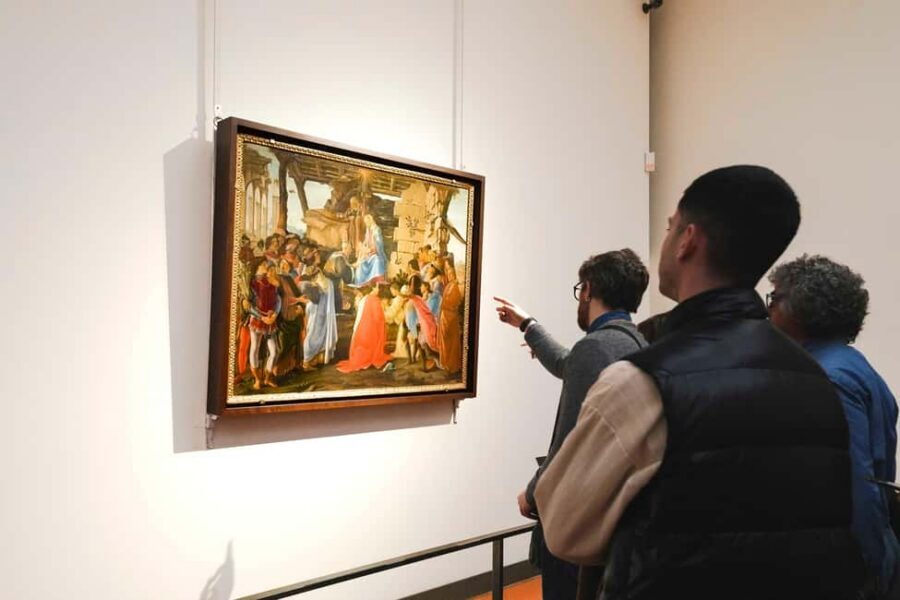
One and a half hours is a tight window. So I like that this tour is designed around the idea of smart coverage, not trying to see everything.
The tour ends after the guided portion, and then you’re free to explore at your own pace. That structure is a good match for the Uffizi because you might want to linger on one room after the guide leaves, or you might want to zoom in on a specific artist you care about more than others.
The key is to treat this tour like a strong map and a set of “must-see” targets. If you try to use it as your only Uffizi visit, you’ll miss a lot. If you use it as your orientation plus your biggest highlights, it’s a high-value use of time.
Price and value: is $91.91 worth it?
At $91.91 per person for a 1.5-hour guided visit, this isn’t a cheap add-on. But it can be a good value if you care about making your time count.
Here’s what you’re paying for:
- Fast-track entry, meaning less waiting in the Uffizi’s line chaos
- A live guide in Spanish, French, or English
- Reservation fees included
- Radio headsets, which actually improve the quality of the tour
If you were to DIY the Uffizi, you’d save money on the guide—but you’d also lose the story thread that helps you understand why the art looks the way it does and how Renaissance art evolves across artists like Botticelli, Michelangelo, and the earlier painters.
I think the price makes sense most for visitors who:
- have limited time in Florence
- want the headline masterpieces without missing key context
- don’t want to wrestle with planning and routing in a massive museum
If you’re traveling with all the time in the world and you love reading every label slowly, you might prefer a lower-cost self-guided approach. But for a time-crunched itinerary, this is built to deliver results.
Practical tips so the tour actually goes smoothly
The rules are simple, but they matter. The experience notes:
- Don’t carry any bottles or liquid with you
- Backpacks must be left in the cloakroom
- Bring passport or ID card for children
Also, expect a touch of waiting in high season even with priority entry. That’s normal in Florence and helps you stay calm at the start.
One more “do this, not that” tip: wear comfortable shoes. You’ll be moving through multiple spaces in a guided format, and you don’t want tired feet to steal the fun.
Who should book this Uffizi fast-track tour
This tour is a great fit if you:
- want a small group experience rather than a mass tour
- prefer having someone connect the dots between artists and style
- only have about a morning or afternoon slot to spend at the museum
- want an easy, guided way to see Botticelli’s Birth of Venus and other top names
It may be less ideal if you:
- hate crowds and fast pacing
- need long, quiet time in each room
- have complicated mobility needs, since the details include both wheelchair accessible and also notes it is not suitable for people with mobility impairments
- If that applies to you, I’d confirm directly before booking so you understand exactly what works for your situation.
Should you book this tour or go on your own?
I’d book this tour if you’re trying to get the Uffizi’s biggest impact without losing hours to lines. The combination of fast-track entry, small-group size, and headsets makes it feel like a well-run “greatest hits” lesson—one you can then build on with free time afterward.
Go on your own instead if you’re the kind of visitor who wants full control over pace, or you’re planning a much longer Uffizi day where you can follow your interests room by room. The Uffizi rewards that approach, but it needs time.
If your schedule is tight, this fast-track guided format is a strong choice. You’ll walk out with a clearer sense of the Renaissance—and with more paintings in your day than you’d likely see without help.
FAQ
How long is the Florence Uffizi Fast Track guided tour?
The tour duration is about 1.5 hours.
Is this a small group tour?
Yes. It’s limited to 9 participants.
Does the tour include skip-the-line entry?
Yes. You’ll enter through a priority line and use a separate entrance for fast-track access.
Where do I meet the guide?
Meet your guide in front of the Leonardo da Vinci statue. Look for a guide holding a white flag with ENJOY ROME written on it.
What languages are the guides available in?
The live guide is available in Spanish, French, and English.
Are radio headsets included?
Yes. Radio headsets are included so you can hear the guide clearly.
What should I do about liquids and bags?
Please do not carry any bottles or liquid. Backpacks must be left in the cloakroom.
Is hotel pickup included?
No. There is no hotel pickup and drop-off.
Should you book this tour or not?
If you’re short on time and want the Uffizi’s top Renaissance highlights with clear context, this is a solid buy. The fast-track entry, small-group format, and headset setup help you actually enjoy the art instead of spending your focus on logistics. If you’re a slow museum walker with flexible time, you might prefer a self-guided plan—but for most Florence itineraries, this one makes sense.
You Might Also Enjoy



More Guided Tours in Florence
- The Best tour in Florence: Renaissance & Medici Tales – guided by a STORYTELLER
★ 5.0 · 12,316 reviews


More Tours in Florence
- The Best tour in Florence: Renaissance & Medici Tales – guided by a STORYTELLER
★ 5.0 · 12,316 reviews



More Tour Reviews in Florence
- Tuscany Day Trip from Florence: Siena, San Gimignano, Pisa and Lunch at a Winery
★ 5.0 · 21,634 reviews - The Best tour in Florence: Renaissance & Medici Tales – guided by a STORYTELLER
★ 5.0 · 12,316 reviews