REVIEW · FLORENCE
Florence: Pasta Class with Wine, Limoncello and Dessert
Book on GetYourGuide →Operated by Experience in Florence · Bookable on GetYourGuide
Fresh pasta beats a museum day. This class turns a historic Florence palace near Ponte Vecchio into a working kitchen where you roll, shape, and cook traditional pasta by hand, guided end-to-end by pros. I especially like the hands-on pace and the warm, inclusive vibe that makes the whole thing feel like a real Italian meal, not a demo.
I also love how the meal is built around what you make: ravioli, tortelli, and fettuccine all end up on the table together, with sauces handled at the right moment (a slow-simmered tomato base plus a fresher butter-and-sage finish). On top of that, you sip an organic Tuscan wine (Dalle Nostre Mani) and wrap up with a limoncello shot and dessert.
One consideration: this experience has diet limits. The info supports some diets, but it also says they can’t accommodate vegan, gluten-sensitivity, or lactose intolerance, and it’s not suitable for people with mobility impairments.
In This Review
- Key highlights to know before you go
- A historic Florence kitchen steps from Ponte Vecchio
- The 3-hour flow: from apron to plate
- What you make: ravioli, tortelli, and fettuccine by hand
- Ravioli: the filling-and-seal lesson
- Tortelli: similar technique, different feel
- Fettuccine: the rolling payoff
- Sauce strategy: hours of simmer, minutes of finesse
- Organic Tuscan wine, limoncello, and dessert at the same table
- Who this Florence pasta class suits best (and who should skip it)
- Families and mixed groups
- Beginners and non-cooks
- People who might struggle
- The value question: what you really get in 3 hours
- Practical tips to make the class easier (and more fun)
- Final call: should you book this Florence pasta class?
- FAQ
- How long is the Florence pasta class?
- What pasta types will I make?
- Where is the meeting point?
- Is the instructor taught in English?
- Is wine and limoncello included?
- What dietary needs can be accommodated?
Key highlights to know before you go
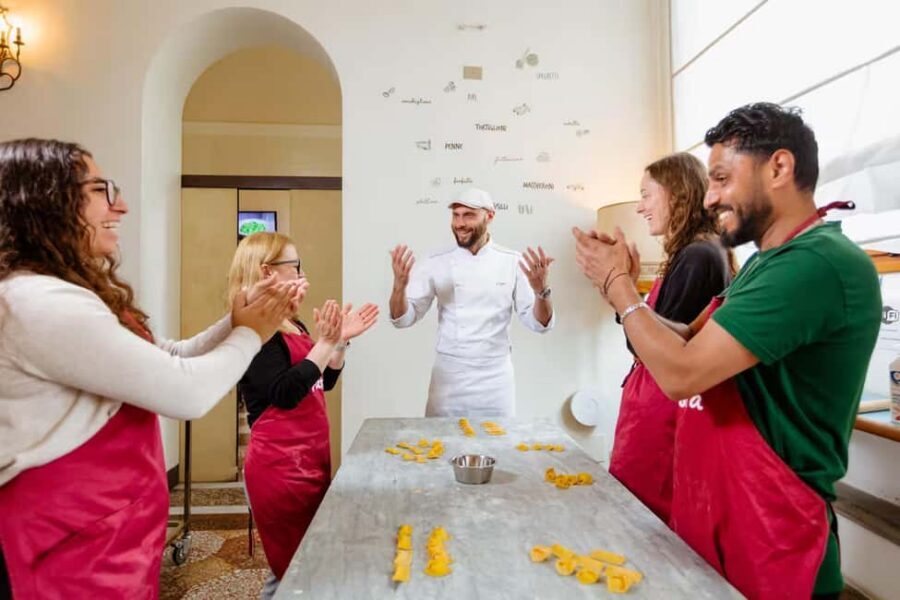
- Historic address by Ponte Vecchio: Lungarno Guicciardini, 17r, putting you close to Florence’s most walkable sights.
- Three pasta shapes from scratch: You’ll make ravioli, tortelli, and fettuccine, not just one format.
- Sauce timing is the secret: Tomato sauce simmers hours ahead, while delicate ravioli/tortelli sauces are prepared right before serving.
- Eat what you cook, family-style: Everything gets cooked and shared together at a big table.
- Wine plus the limoncello finish: Organic Tuscan wine is included, then the class ends with limoncello and dessert.
- Instructors bring personality: In reviews, teachers like Camilla, Alessandra, Lucrezia, and Giacomo are repeatedly praised for keeping everyone involved.
A historic Florence kitchen steps from Ponte Vecchio
This pasta class is staged in a historic palace setting right on Lungarno Guicciardini, a short walk from Ponte Vecchio. That location matters more than it sounds. You’re not just learning technique; you’re doing it in a space that feels like Florence—old stone, central energy, and a true “you’re part of the scene” atmosphere.
When you arrive, you go straight to the cooking school rather than waiting for pickup. Plan to be there a bit early—arriving about 5 minutes before check-in is the move—because the class start is the start. Once you’re inside, you’ll get organized fast: you’ll be putting on your apron and getting access to the tools you need (rolling and shaping equipment), so you’re working while the experience is still building.
You can also read our reviews of more cooking classes in Florence
The 3-hour flow: from apron to plate
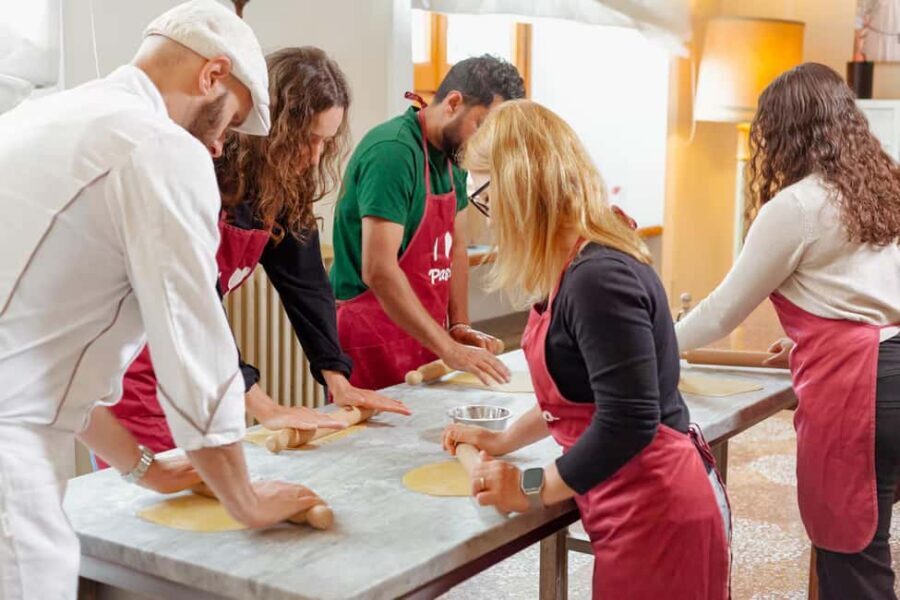
The class runs about 3 hours, and it’s paced so beginners don’t feel lost while more confident cooks still get challenged. I like this format because it keeps momentum: you’re kneading, rolling, and shaping rather than waiting around.
It typically starts with a short introduction that plays like a mini “cinema” moment, setting the context for what you’re about to make. Then it’s hands-on almost immediately. You’ll work with egg and flour to get your dough right, learn how to roll it thin enough for filling, and practice shaping so the final pasta doesn’t fall apart when it hits the pot.
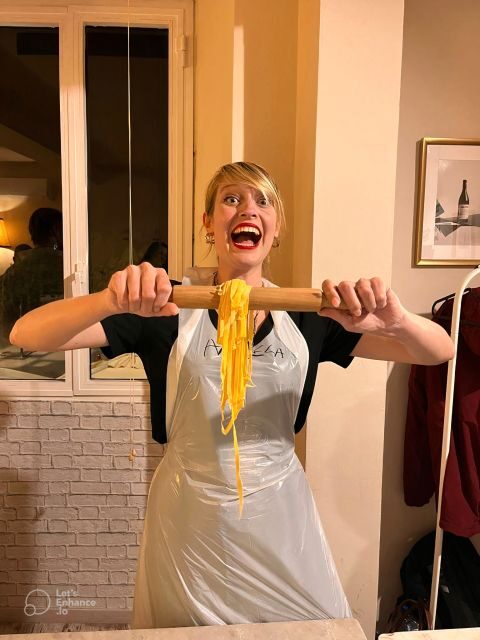
Then the class shifts from making to sharing. Each participant prepares their own pasta, and the group cooks together in the same pot to share like you’d see in an Italian home. You’re not just watching the teacher do everything; you’re contributing to the meal you’ll eat.
What you make: ravioli, tortelli, and fettuccine by hand
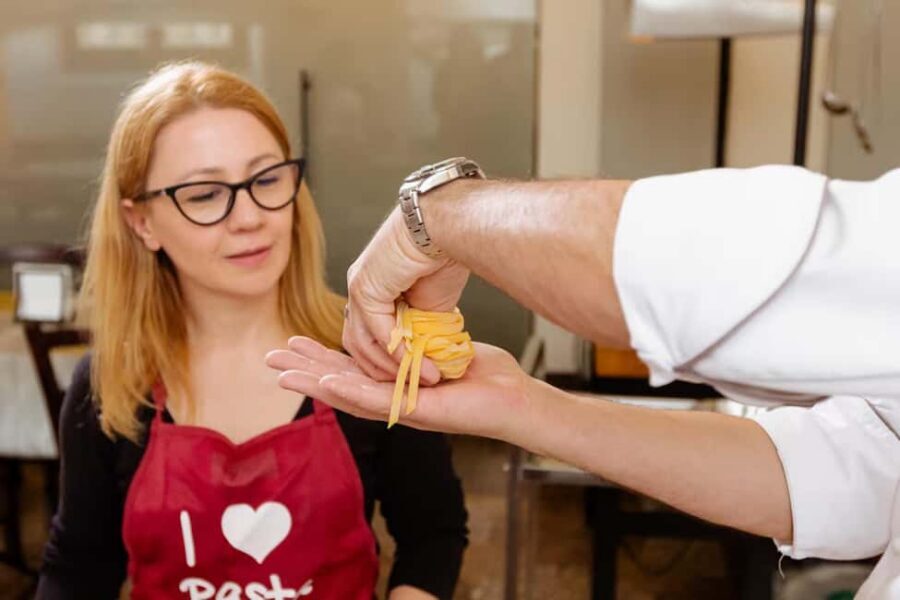
You’ll create three pasta types, which is a big deal in a single 3-hour slot. Here’s why that matters for you: learning one shape teaches technique, but learning three teaches flexibility. You start to understand how dough thickness, sealing, and shaping change depending on what you’re making.
Ravioli: the filling-and-seal lesson
Ravioli is the most “assembly” focused portion of the class. You’ll shape and fill, then learn how to close the pasta so it stays intact. In reviews, instructors are praised for being attentive during the shaping stage, which is exactly where most first-timers need help.
Tortelli: similar technique, different feel
Tortelli usually feels slightly more forgiving than ravioli, depending on the exact style you’re making. You still work on rolling and forming, but you’ll likely notice how small changes in shape affect how the finished pasta cooks and plates.
You can also read our reviews of more wine tours in Florence
- Tuscany Day Trip from Florence: Siena, San Gimignano, Pisa and Lunch at a Winery
★ 5.0 · 21,634 reviews

Fettuccine: the rolling payoff
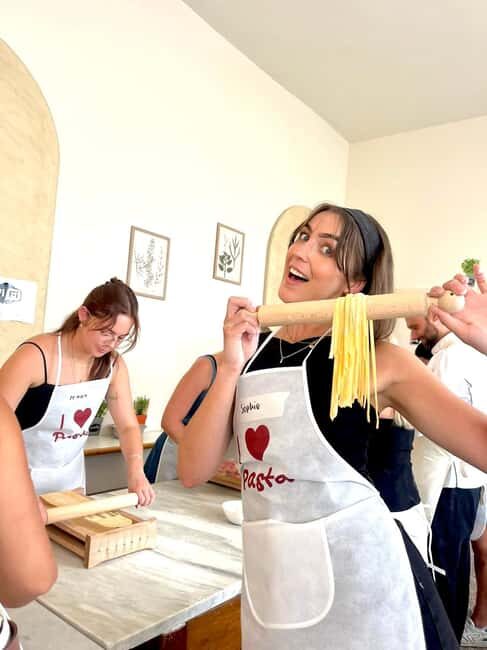
Fettuccine is the payoff for rolling skills. Once you’ve worked the dough, you see the transformation when it becomes ribbon pasta. In a class that includes wine and a shared meal at the end, fettuccine is a nice grounding point because it’s easier to recognize instantly as “real homemade pasta.”
Across the board, the instructors keep the process guided. Reviews repeatedly highlight teachers using family-passed tips, with names like Alessandra and her grandmother’s (Nonna) methods coming up. That kind of coaching helps you recreate the results later, not just survive the class.
Sauce strategy: hours of simmer, minutes of finesse
A common cooking-class trick is to pre-do everything, so the eating feels good but the learning feels limited. This one takes a smarter approach: you see different sauce timings and learn why pasta is served at the right moment.
The class uses a signature tomato sauce that simmers for hours in advance. That’s there for depth—tomato needs time to get round and flavorful. You get that old-school taste without having to wait through a full day of prep.
Then for ravioli and tortelli, you watch a more delicate finish: the instructor prepares butter and sage sauce right before cooking/serving. This is the part that feels most “live,” because it’s quick and aromatic. It also explains a key lesson: sauces aren’t all the same in how they’re treated. Some want slow time, some want fast attention.
Everything ends up cooked and served together in a shared format. That adds comfort and makes the meal feel communal instead of split into separate plates like a cafeteria.
Organic Tuscan wine, limoncello, and dessert at the same table
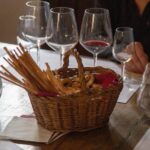
One of the smartest parts of this experience is that the “fun drinks” are integrated, not tacked on. You’ll have wine tasting included, and the featured wine is described as organic Tuscan wine produced naturally (Dalle Nostre Mani). That’s a nice step beyond the typical red-and-white pour.
Alcohol is served only to legal drinking age participants, so if you’re traveling with mixed ages, you can still enjoy the food and vibes. And even when wine is involved, the focus stays on the pasta itself.
Then comes the limoncello shot to close the class in true Florence style. It’s bright, citrusy, and it works as a palate reset after rich sauces and egg-based pasta. Dessert rounds out the ending, and reviews mention it as a sweet cap that doesn’t feel like an afterthought.
If you like pairing experiences with food, this is a clean package. You learn the pasta part, and you still get the cultural finish: Tuscan wine and limoncello right alongside your meal.
Who this Florence pasta class suits best (and who should skip it)
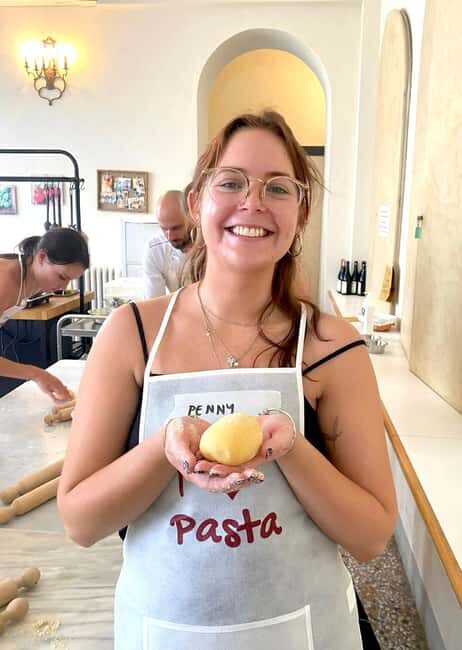
This class is built for a wide range of groups: individuals, couples, groups of friends, families, students, and corporate teams. Reviews back that up with examples ranging from parents and kids to couples on honeymoons.
Families and mixed groups
If you’re traveling with kids, you’ll want an activity that doesn’t feel like a lecture. Multiple reviews mention children being fully involved, which tells me the instructors know how to keep everyone engaged.
Beginners and non-cooks
Even if you’ve never handled dough before, the class is structured so you can follow along. Reviews include first-timers who were surprised at how doable it felt with clear instructions and a hands-on setup.
People who might struggle
Skip this if:
- you have mobility impairments, because it’s not suitable for mobility needs listed by the operator
- you need gluten-free accommodation (the info states they can’t accommodate gluten-sensitivity)
- you need lactose intolerance support (they state they can’t accommodate lactose intolerance)
- you need a vegan option (the info states they can’t accommodate vegan, even though it also lists vegan as a possible dietary option—so confirm carefully with the provider)
If dietary needs are important to you, take extra time to message the operator before booking. The written info contains a clear contradiction on vegan/lactose/gluten, so your safest move is to get a direct confirmation.
The value question: what you really get in 3 hours
Price isn’t listed here, so I can’t tell you if it’s a bargain on your exact date. But I can tell you what makes the experience feel “worth it” for most people.
You’re getting:
- instructors’ guidance for the full pasta-making process
- all cooking equipment and ingredients
- a full meal based on what you made
- organic wine tasting plus limoncello
- dessert at the end
That mix changes the math. You’re not paying just for a technique lesson; you’re paying for a meal with drinks included, plus the equipment and ingredients that you’d otherwise buy to recreate this at home.
Reviews also mention added touches like a take-home recipe book, plus a welcome drink at arrival in some sessions. Those perks are small, but they increase the chance you’ll remember the class and actually cook again later.
Group size can make or break a cooking class, and here it sounds like it’s often small. One review notes a group of about 10, with everyone engaged. Small groups usually mean more attention during tricky steps like sealing ravioli or rolling dough evenly.
Practical tips to make the class easier (and more fun)
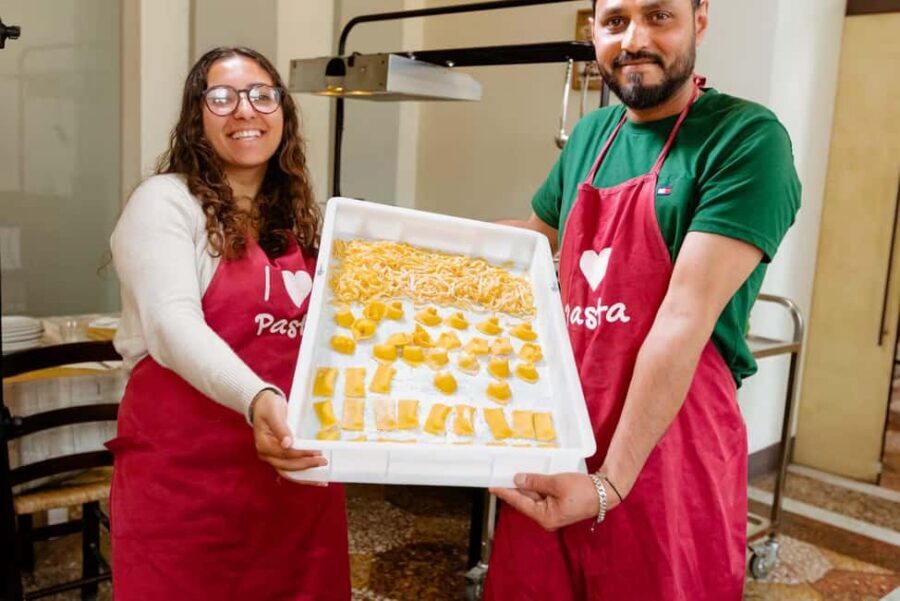
You’ll have the best time if you show up ready to work. Wear comfortable clothes that can handle flour and rolling motions. Bring a sense of humor too; dough has a way of turning “perfect” plans into messy learning.
A few practical points based on the way the class is run:
- Expect to spend real time at the station. This is active, not just tasting.
- Arrive about 5 minutes early so you don’t lose momentum when check-in starts.
- If you have allergies, tell the provider in advance. The operator notes limitations around nut allergies.
- Don’t plan a tight sightseeing schedule right before class. You’re walking from the Ponte Vecchio area to the palace, but you’ll want time to settle in.
If you’re the type who likes to take notes, watch the instructor during the sauce finish. That’s where flavor timing lives. Tomato sauce is already rolling in the background, but the butter-and-sage moment is quick, and seeing it once helps you understand how to reproduce it later.
Final call: should you book this Florence pasta class?
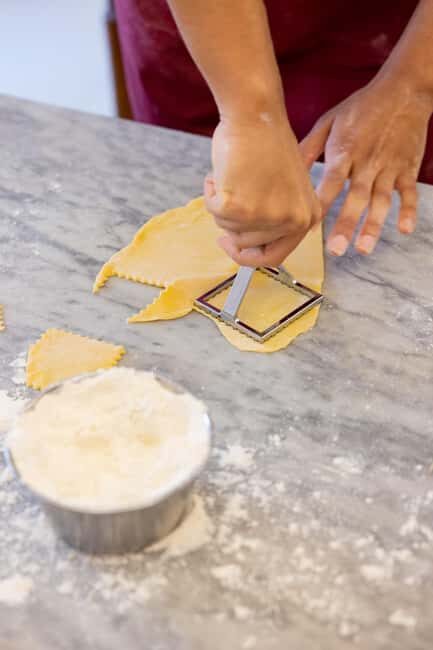
Book it if you want a hands-on Florence experience that ends with a proper meal: three pasta types, shared family-style, plus organic wine tasting and limoncello. It’s a great fit for couples, friends, and families who like doing something with their hands, not just looking at art.
Skip it if your travel priorities include strict dietary requirements like vegan, gluten-free, or lactose intolerance, or if mobility access is an issue. For everyone else, this is one of the more “Florence-in-a-night” activities you can choose—because you leave with dough skills, sauce timing, and a dinner you helped create.
FAQ
How long is the Florence pasta class?
It lasts about 3 hours.
What pasta types will I make?
You’ll make ravioli, tortelli, and fettuccine by hand.
Where is the meeting point?
You should go directly to the cooking school at Lungarno Guicciardini, 17r, 50125 Firenze FI, Italy.
Is the instructor taught in English?
Yes, the instructor is listed as English.
Is wine and limoncello included?
Wine tasting is included, and you’ll also have a limoncello shot. Alcohol service follows legal drinking age rules.
What dietary needs can be accommodated?
Vegetarian and some other diets are listed as options, but the operator also states they cannot accommodate vegan, gluten-sensitivity, and lactose intolerance. Nut allergies are also noted as not accommodated, so you should confirm your specific needs before booking.
You Might Also Enjoy

More Wine Tours in Florence
- Tuscany Day Trip from Florence: Siena, San Gimignano, Pisa and Lunch at a Winery
★ 5.0 · 21,634 reviews
More Cooking Classes in Florence
- Cooking Class and Lunch at a Tuscan Farmhouse with Local Market Tour from Florence
★ 5.0 · 4,831 reviews

More Tour Reviews in Florence
- Tuscany Day Trip from Florence: Siena, San Gimignano, Pisa and Lunch at a Winery
★ 5.0 · 21,634 reviews - The Best tour in Florence: Renaissance & Medici Tales – guided by a STORYTELLER
★ 5.0 · 12,316 reviews