REVIEW · FLORENCE
Florence: Pitti Palace and Palatina Gallery Ticket and Tour
Book on GetYourGuide →Operated by FLORENCEPASS · Bookable on GetYourGuide
Two hours in the Medici palace, then art lingers. This guided visit into the Palatine Gallery inside Palazzo Pitti makes the Renaissance feel personal, because you’re seeing it through the eyes of the people who lived there. I especially like the way the tour helps you move room to room without getting lost in the palace’s sheer scale and decoration, and you also skip the ticket line.
The best part is the art selection and the storytelling. If you happen to get a guide in the style of Maurizio or Camila, you’ll hear clear historical and even political context tied directly to what you’re looking at, with highlights like Caravaggio and Rubens. One thing to consider: this is mostly standing and walking for the full 110 minutes, and there aren’t built-in breaks, so comfortable shoes matter.
In This Review
- Key highlights worth aiming for
- Palazzo Pitti and the Palatine Gallery: why this palace museum works
- Piazza Pitti meeting point and how to avoid the first hassle
- 110 minutes with a live English guide: what the pacing feels like
- The Medici palace story: how the tour makes the rooms add up
- What you’ll actually see: Caravaggio, Rubens, and more
- Frescoes, stucco, and Renaissance “set design”
- After the guided tour: use your ticket in other Pitti Palace museums
- Price and value: is $80 per person worth it?
- Who this tour fits best (and who might want to rethink it)
- Small rules that matter once you’re inside
- Should you book this Palatina Gallery tour?
- FAQ
- Where do I meet the guide for the Palatine Gallery tour?
- How long is the tour?
- Does the tour include entry and skip-the-line access?
- Is flash photography allowed inside the museums?
- Can I bring large bags or luggage into Palazzo Pitti?
- What else can I do with my ticket after the guided part?
Key highlights worth aiming for
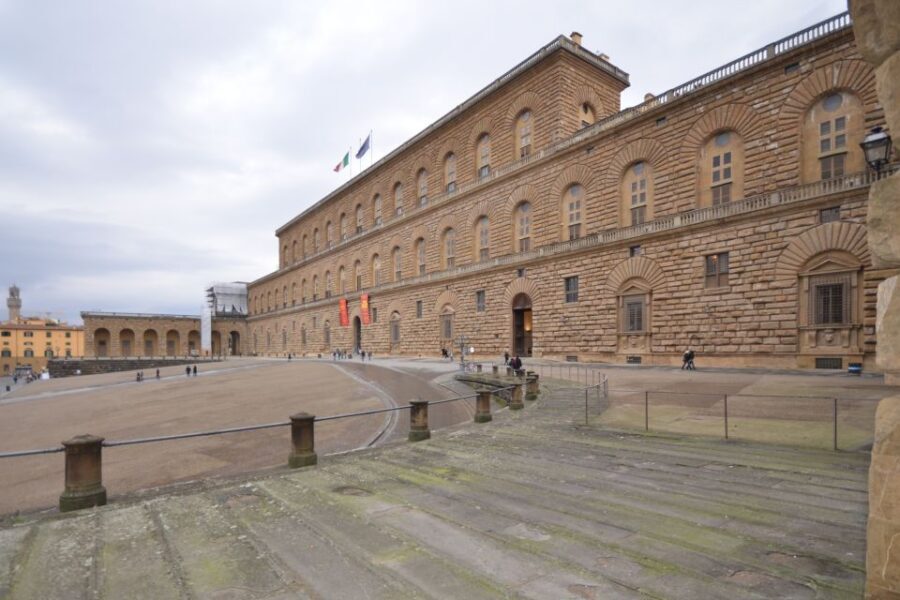
- Pitti Palace setting: a former grand-dukes residence, not a generic museum box
- Master-painting hits: Caravaggio plus major European names like Rubens
- Renaissance room theater: frescoes and stucco details you’ll notice more with a guide
- Palace structure in plain language: you learn how the rooms connect to Medici power and taste
- Use your ticket after the tour: you can keep exploring other Pitti Palace museums on your own
Palazzo Pitti and the Palatine Gallery: why this palace museum works

Palazzo Pitti feels like a statement. It’s the kind of place where art isn’t just displayed, it’s used to show status, taste, and influence. Touring the Palatine Gallery here is a smart choice because the building and the collection tell the story together.
You’ll also get a quicker path to meaning. Instead of treating each painting like a separate “art stop,” your guide ties works to the palace setting and to the Medici context. That changes how you look at details: symbols, lighting choices, and even why certain schools of painting mattered.
You can also read our reviews of more tours and experiences in Florence

Piazza Pitti meeting point and how to avoid the first hassle
Meeting up is simple. You gather at Piazza Pitti, outside Palazzo Pitti, at the central and main entrance. The tour is designed to start on time, and the big practical win is skip-the-ticket-line entry, which can save you time in a place that gets crowded.
If you’re the type who hates wasting vacation minutes, this matters. In Florence, lines and timing can drain your energy fast, and a guided entry helps you get inside while your attention is still fresh.
110 minutes with a live English guide: what the pacing feels like
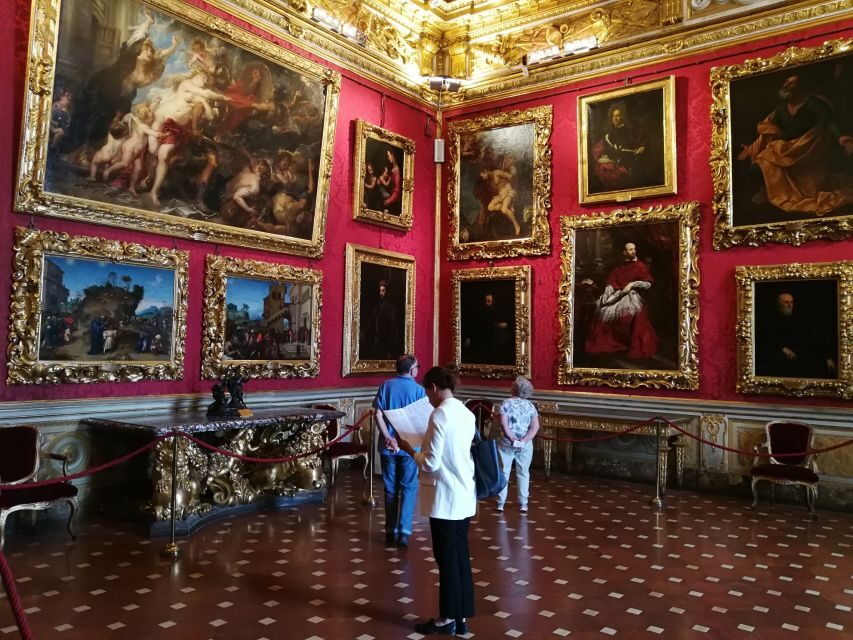
This tour runs about 110 minutes and is led by a live English guide. Expect a guided route through the Palatine Gallery that moves across multiple rooms with enough explanation to help you see what you’d otherwise miss.
The pacing is typically “focused, not rushed.” You don’t just get dates and titles; you get context you can use while you stand in front of a work. One review detail that stands out: the tour uses an audio setup that helps you hear in busy rooms. That’s a real quality-of-life factor in art museums, where voices can get swallowed by crowds and echo.
Practical note: this is still a palace museum. Even with a guided route, you’ll spend most of the time on your feet. If you’re planning to bring older family members, or you know you need seating, build the rest of your day around this experience.
The Medici palace story: how the tour makes the rooms add up

The Palatine Gallery is set in rooms that were part of a grand-dukes residence. That matters because your eye stops treating the paintings like isolated objects. Instead, you start noticing how the spaces work—how the decoration frames the art and how the palace layout suggests a designed experience.
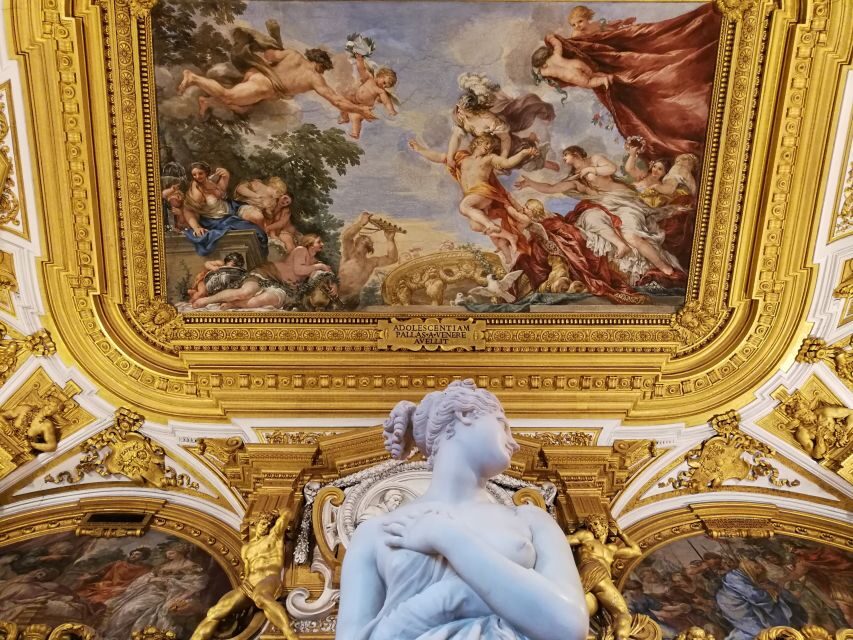
Your guide also points out the Renaissance frescoes and stucco work that cover walls and ceilings. These aren’t just pretty background. They’re part of how power was performed—how wealth and cultural ambition were made visible.
A nice extra layer: between major rooms, you’ll get help interpreting transitional elements and architectural “dividers,” so the palace doesn’t feel like a maze. It becomes a sequence with logic.
What you’ll actually see: Caravaggio, Rubens, and more
The Palatine Gallery is a major painting gallery in Florence—often described as the most important after the Uffizi—so you’re not going to be stuck with weak “filler” rooms. The tour focuses your attention on standout works and key artists.
From what you can expect to cover, you’re in the orbit of major European names, including:
- Caravaggio (often a highlight for dramatic lighting and intense realism)
- Rubens (a contrast in energy and compositional style)
- Works connected to artists you’ll recognize from wider European art history conversations, like Tiziano and Raffaello
The best way to experience this is to pay attention to how your guide compares styles. Even when you already know famous names, it’s helpful to understand technique choices—how painters handled light, movement, and emotion. That’s when the tour feels less like a lecture and more like a “how to look” session.
One more thing: several guides in the program are praised for answering questions and bringing historical and political context into the art. That’s valuable because it turns the gallery into a living timeline instead of a list of masterpieces.
You can also read our reviews of more museum experiences in Florence



Frescoes, stucco, and Renaissance “set design”

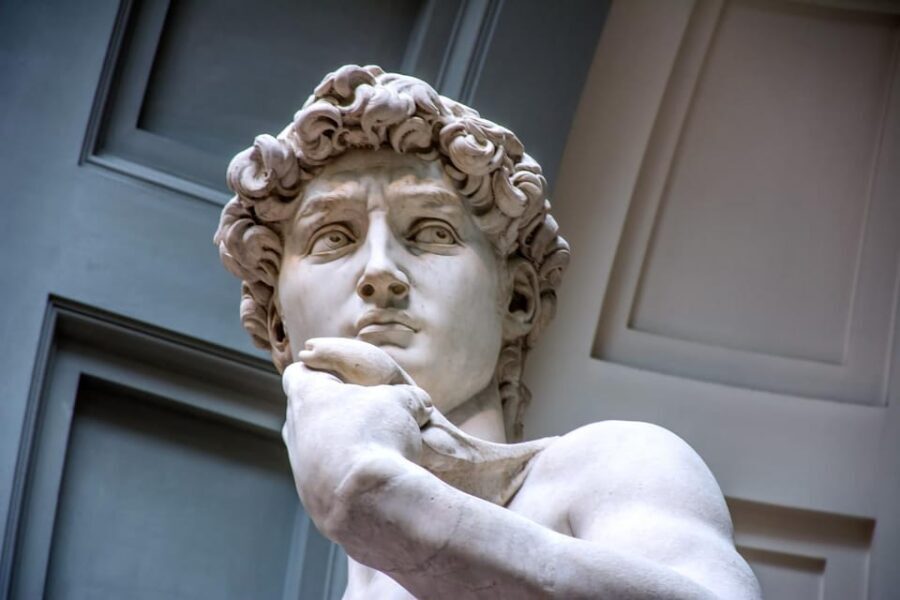
Paintings get the headlines, but in Palazzo Pitti, the rooms themselves are a big part of the show. Your tour includes time in spaces decorated with Renaissance frescoes and stucco work. The guide helps you notice how these details set mood and communicate wealth.
This is where a guided visit pays off. It’s easy to walk past ceiling details when you’re focused on the next painting. With interpretation, you start seeing recurring motifs, the craftsmanship, and how the palace decoration complements the art collection.
If you like art history, this section will feel like a bridge between “what you see” and “why it looks the way it does.”
After the guided tour: use your ticket in other Pitti Palace museums
Once the guided section is done, you can stay and explore at leisure with your ticket. Two add-on options highlighted for your next steps:
- Treasure of the Grandukes on the ground floor
This is the kind of stop that broadens the palace story beyond paintings.
- Galleria d’Arte Moderna on the top floor
Here you can look at Italian art from the 18th and 20th centuries, which gives you a wider timeline than the Renaissance-only view.
You’ll also want to know this: the museum tickets provided by the local partner are valid for all Pitti Palace museums, so you’re not locked into only one wing. It’s a good way to shape your afternoon if you’re pacing yourself across Florence’s big sights.
Price and value: is $80 per person worth it?

At $80 per person, you’re paying for three things: a guide, entry, and time saved through skip-the-line entry. The “value” question is really about whether you want help translating what you’re seeing.
If you’re the type who loves art but doesn’t want to spend half your time hunting for meaning, this tour is strong value. The guides are repeatedly praised for turning art into understandable stories—often including historical and political context. That’s exactly what makes a guided museum ticket justify its price.
If you’re more “I’ll read the labels and go at my own pace,” you might feel the cost more. In that case, you could get a similar collection experience by visiting on your own. But you’ll likely miss the technique cues and the palace-to-painting connections that a guide gives you for free.
My practical take: if you can afford a guided visit in Florence, this is one worth budgeting for.
Who this tour fits best (and who might want to rethink it)
This experience is a great match if you:
- want a structured route through one of Florence’s biggest painting stops
- like when art history includes context, not just names and dates
- want to see Renaissance palace decoration as part of the story, not as wallpaper
It may be less ideal if you:
- need frequent seated breaks during long museum walks
- prefer reading at your own pace with minimal narration
- have very limited mobility and would benefit from more pause time than a single 110-minute loop allows
And for what it’s worth, the tour is listed as wheelchair accessible, which is an important positive if you need that option.
Small rules that matter once you’re inside
These are the kinds of “don’t get stopped at the door” details that keep your day smooth:
- No luggage or large bags in the museum spaces
- All large items (like rucksacks and big umbrellas) must be left in the cloakroom
- Flash photography is not allowed, while non-flash photography is allowed
So pack like a museum guest. If you keep your bag minimal, you won’t waste time at the cloakroom.
Should you book this Palatina Gallery tour?
Book it if you want more than seeing famous paintings in famous rooms. This tour turns Palazzo Pitti into a coherent story—Medici power, Renaissance room design, and major European artworks linked together in a way that’s easy to follow. At $80 for 110 minutes, the guide adds value fast because you’re not just looking; you’re learning how to look.
Skip it or consider a self-guided approach if you dislike guided groups, want lots of rest breaks, or only care about a couple of artworks. In that case, you may prefer wandering at your own pace and reading labels.
If you want the most efficient “understand what you’re seeing” experience at Pitti, this is one of the better ways to spend your time in Florence.
FAQ
Where do I meet the guide for the Palatine Gallery tour?
Meet your guide at Piazza Pitti, outside Palazzo Pitti, at the central and main entrance.
How long is the tour?
The duration is about 110 minutes.
Does the tour include entry and skip-the-line access?
Yes. It includes an entry ticket and skip the ticket line.
Is flash photography allowed inside the museums?
No flash photography is allowed. Non-flash photography is allowed in the museums.
Can I bring large bags or luggage into Palazzo Pitti?
No. Luggage or large bags are not allowed in the museum. Large items like rucksacks and big umbrellas must be left in the cloakroom.
What else can I do with my ticket after the guided part?
After the guided tour, you can stay and browse. Your ticket is valid for all Pitti Palace museums, including the Treasure of the Grandukes on the ground floor and the Galleria d’Arte Moderna on the top floor.
You Might Also Enjoy

More Tickets in Florence


More Tours in Florence
- The Best tour in Florence: Renaissance & Medici Tales – guided by a STORYTELLER
★ 5.0 · 12,316 reviews



More Tour Reviews in Florence
- Tuscany Day Trip from Florence: Siena, San Gimignano, Pisa and Lunch at a Winery
★ 5.0 · 21,634 reviews - The Best tour in Florence: Renaissance & Medici Tales – guided by a STORYTELLER
★ 5.0 · 12,316 reviews