REVIEW · FLORENCE
Medici Legends & Renaissance Wonders: Florence Small Group Tour
Book on Viator →Operated by All Around Florence · Bookable on Viator
Medici Florence in 105 minutes is a smart shortcut. This small-group walk strings together the city’s big-name sights with the Medici family lens, so you don’t just look—you understand why these buildings mattered. I like that the group is capped at 15 and that you get a whisper system, which helps when you’re talking through noisy streets.
Two things really sell this tour. First, you start at San Lorenzo, then work your way across the cathedral square and down toward the Arno, so you get your bearings fast. Second, the stories focus on how the Medici used art, architecture, and church connections to shape Florence’s image—and your stop-by-stop “why” adds up.
One caution: the stops are short (about 5 minutes each), and admission tickets are not included for major interiors like the Medici sites and the Uffizi. Also, if you’re expecting a tightly focused Medici museum-style experience, this route is an overview that uses the Medici thread—not a full museum day.
In This Review
- Key things to know before you go
- How the Medici Lens Changes the Florence You Think You Know
- The Route: A 12:15 Walk from San Giovanni to Ponte Vecchio
- San Lorenzo to Medici Chapels: Where Family, Faith, and Image Intersect
- Palazzo Medici Riccardi: Banking Power in Stone
- The Duomo Square Route: Santa Maria del Fiore, Baptistery, Giotto, and Brunelleschi
- Palazzo Vecchio and Piazza della Signoria: Civic Florence, Not Just Church Florence
- Ponte Vecchio and the Arno: A Bridge You Can Read
- Pitti Palace and the Uffizi: Big Medici After the Walk
- Guides, Pace, and Audio: What Your 105 Minutes Actually Feels Like
- Price and Value: Is $119.77 Worth It?
- Should You Book the Medici Legends & Renaissance Wonders Tour?
- FAQ
- How long is the Florence Medici small group tour?
- How much does it cost per person?
- What group size is this tour limited to?
- What language is the tour offered in?
- Are admission tickets included for the stops?
- Where does the tour start and end?
- Does the tour include a sound system?
- Is free cancellation available?
Key things to know before you go
- Small group (max 15) for easier listening and questions
- Whisper system helps in the street noise (still, stand near the guide if you rely on audio)
- Medici storytelling connecting basilicas, libraries, palaces, and civic squares
- Major Florence highlights in one line: Duomo complex, Giotto’s tower, Ponte Vecchio
- Tickets not included for several stops, so plan what you want to enter on your own
- From San Giovanni area to Ponte Vecchio, ending where you’ll naturally want to continue exploring
How the Medici Lens Changes the Florence You Think You Know
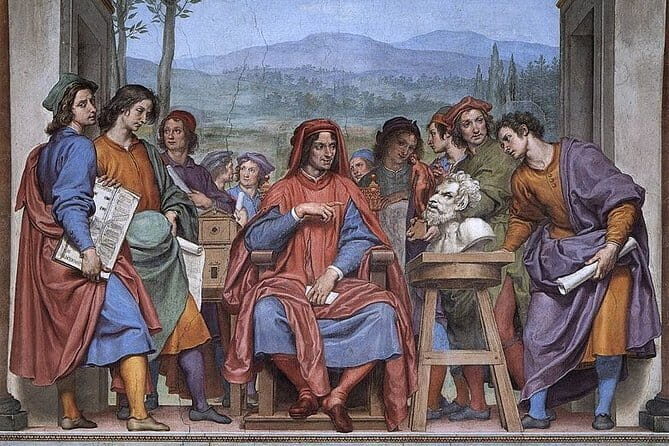
Most Florence tours either scream art history or sprint through “must-sees.” This one tries something smarter: it treats Florence like a power story, with the Medici acting as the main character. You’ll see famous places—then you’ll hear how the Medici used religion, banking, and high culture to gain legitimacy. That makes even the quick exterior moments more satisfying.
I also like the structure. You’re not wandering city blocks trying to connect dots. The route takes you from the Medici’s spiritual and family roots to the civic heart, then down to the most famous bridge in town. It’s a classic “understand the city’s logic” walk.
The practical payoff: if you’re short on time, this tour can help you decide what deserves a second visit. After you’ve heard the Medici connection to a building, you’ll know whether you should spend your limited hours going inside—or just enjoy it as architecture and symbolism.
You can also read our reviews of more tours and experiences in Florence.
- Tuscany Day Trip from Florence: Siena, San Gimignano, Pisa and Lunch at a Winery
★ 5.0 · 21,634 reviews
The Route: A 12:15 Walk from San Giovanni to Ponte Vecchio
The tour meets near Caffè Scudieri Firenze, at Piazza di San Giovanni, 19R (about as central as you can get for a first-day Florence start). It begins at 12:15 pm and ends at Ponte Vecchio. The endpoint can shift slightly within the area, but you’ll finish right by the bridge shops—perfect for continuing your day on the river.
Expect a walking pace that feels designed for orientation. Each stop is brief, so the guide’s job is to give you a clear “before/after” picture: what the place was, who used it, and what to look for in the details. If you want long sits in chapels or an unrushed museum visit, plan those separately.
One more thing to keep in mind: you’ll be outside a lot in a busy sightseeing zone. The tour uses a whisper system, but street noise can still drown out bits if you’re far from the guide. If you use hearing aids or you’re sensitive to audio, position yourself toward the front and try to catch the guide before moving through the densest intersections.
San Lorenzo to Medici Chapels: Where Family, Faith, and Image Intersect
The walk begins at Basilica di San Lorenzo. This is one of Florence’s largest churches and sits right in the main market district. The big hook here is burial: it’s the resting place of key Medici family members, from Cosimo il Vecchio through Cosimo III. In other words, you’re not only seeing church architecture—you’re seeing a physical statement of lineage and power.
Next up is the Biblioteca Medicea Laurenziana (Laurentian Library). The Medici pope Clement VII supported its creation, and the message was clear: the Medici wanted to be seen as educated and ecclesiastical—no longer just merchants. Even if you’re not going into the stacks, the architecture and the “why it was built” talk helps you see the library as propaganda for status. The guide also spotlights that Michelangelo designed key architectural features, and the result is often described as Mannerism—an art style that bends rules on purpose.
Then you move to the Cappelle Medicee—the Medici Chapels. This area was built between the 16th and 17th centuries as expansions tied to Brunelleschi’s earlier church framework. The focus is celebration: the chapels are an architectural billboard for the Medici as patrons and Grand Dukes. The standout connection here is the Sagrestia Nuova (New Sacristy), designed by Michelangelo. It’s exactly the kind of stop where you’ll want to know what you’re looking at—because the sculptures and layout are doing political work, not just devotional work.
Drawback to note in this first stretch: several of these major stops list admission as not included. So you’ll get a strong orientation, but you may still decide on your own whether to enter for more time inside.
Palazzo Medici Riccardi: Banking Power in Stone
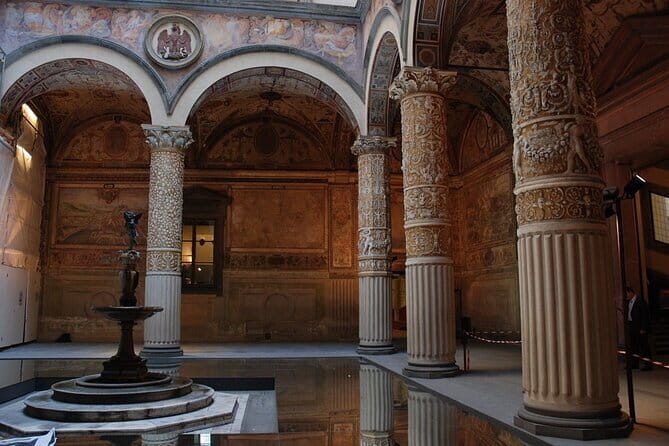
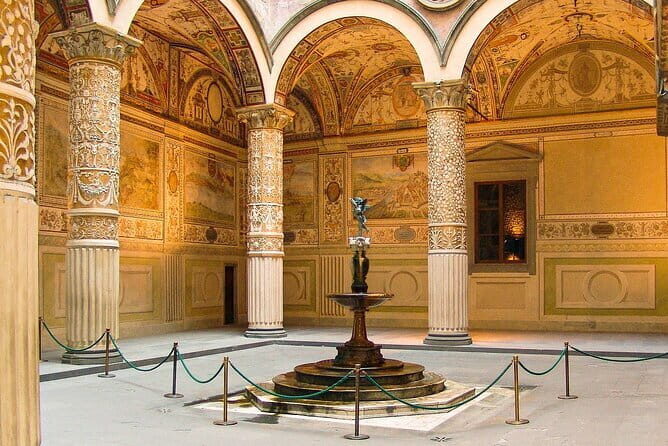
After the chapels and the library, the route lands at Palazzo Medici Riccardi. This is the residence project associated with Cosimo de’ Medici, head of the banking family, built between 1444 and 1484. The point of this stop is to show you how wealth turned into permanence. Banking money didn’t just buy comfort; it funded a built identity—courtyards, façades, and a public-facing presence.
Even in a short visit, it helps to keep one lens in your head: the Medici weren’t only building for themselves. They were building to persuade Florence that their rule was legitimate, cultured, and inevitable.
Practical tip: the streets here can feel narrow and busy around midday. If your group forms up at each stop, you’ll likely be moving in tight clusters. That’s normal, but it means you’ll get more out of the stories if you let the guide settle the group before you start wandering for photos.
The Duomo Square Route: Santa Maria del Fiore, Baptistery, Giotto, and Brunelleschi
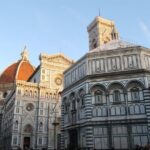
Now comes the “Florence postcard” portion: Piazza del Duomo and the cathedral complex. You’ll hit the Duomo (Cattedrale di Santa Maria del Fiore) area first, then return for additional orientation later in the route.
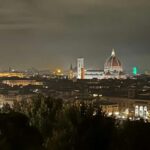
The cathedral itself was begun in 1296 in Gothic style, with design linked to Arnolfo di Cambio. You’ll also hear why the whole complex is a UNESCO World Heritage Site, and why people come for this exact block: it’s not one building, it’s a whole visual system. Expect the façade colors (white, green, and pink marble) to be a big part of the discussion.
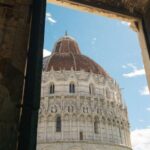
Across the square is the Battistero di San Giovanni (Florence Baptistery). This is one of the oldest structures in the city, built between 1059 and 1128 in Florentine Romanesque style. The guide’s framing usually connects it to how Florence used religious spaces to anchor identity. It also gives you a good “compare and contrast” moment: Romanesque vs. Gothic vs. later architectural ideas in the same neighborhood.
You’ll also stop by Campanile di Giotto. This tower is a showpiece of Florentine Gothic style with design attributed to Giotto, plus sculptural decoration and polychrome marble. Even if you can’t study every panel, the key value is learning how to read the tower as a crafted object, not just a landmark you glance at.
One of the tour’s most memorable architecture moments is the Cupola del Brunelleschi. The dome is described as a long-standing architectural mystery and historically the largest dome in its world. The tour highlights that it remains the largest brick dome ever constructed. Again, you may not get long interior time, but you’ll leave knowing why the dome is such a big deal—especially if you’re trying to understand how Renaissance engineering changed what was possible.
What to watch for: this is where you’ll feel the time-limit most. The guided stops are short, so if the Duomo complex is your top priority, plan a separate entry ticket day—or at least build in time to return later.
- Tuscany Day Trip from Florence: Siena, San Gimignano, Pisa and Lunch at a Winery
★ 5.0 · 21,634 reviews

Palazzo Vecchio and Piazza della Signoria: Civic Florence, Not Just Church Florence
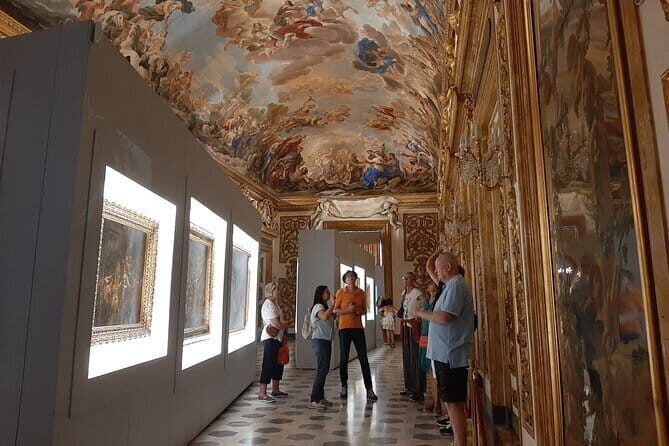
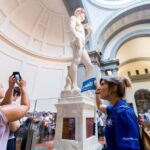
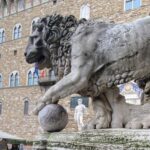
After the cathedral square, the walk shifts from religious symbolism to civic power. You’ll reach Palazzo Vecchio, Florence’s town hall—part palace, part fortress. It overlooks the square and ties into the larger story of how Florence governed itself. You may also get orientation around a copy of Michelangelo’s David in the square area and the Loggia dei Lanzi with its statues.
Then the group moves through Piazza della Signoria, an L-shaped square right in front of the palace. This is the place where public life happens: meetings, gatherings, and art that’s meant to be seen in the middle of everyday movement. If you’re learning Florence as a system, this is one of the easiest stops to connect with how the city wanted to project control and culture at the same time.
Value for you: once you’ve heard the Medici angle, Piazza della Signoria helps you understand the tension—and the overlap—between ruling families, civic space, and public art. You’ll start noticing how government buildings double as visual messaging.
If you’re photographing: keep your eyes up. The square offers more than one “frame.” A quick turn changes what you capture, and you don’t need to chase long lines to get good pictures.
Ponte Vecchio and the Arno: A Bridge You Can Read
Next is Ponte Vecchio, the medieval bridge over the Arno River. This stop isn’t just about the view. It’s about how use changed over time: shops were originally occupied by trades like butchers, tanners, and farmers, but today the storefronts are known for jewelers and art dealers. That evolution tells a story about Florence shifting from raw commerce to luxury branding.
You’ll also get a practical gift here: finishing near Ponte Vecchio means you’ve ended in a natural “continue from here” zone. If you want gelato, riverside walking, or a change of pace, you’re already positioned to do it.
Quick consideration: the bridge area can be crowded. If you want space for photos or a slow look, go a little off the busiest center line and take your time once the group moves on.
Pitti Palace and the Uffizi: Big Medici After the Walk
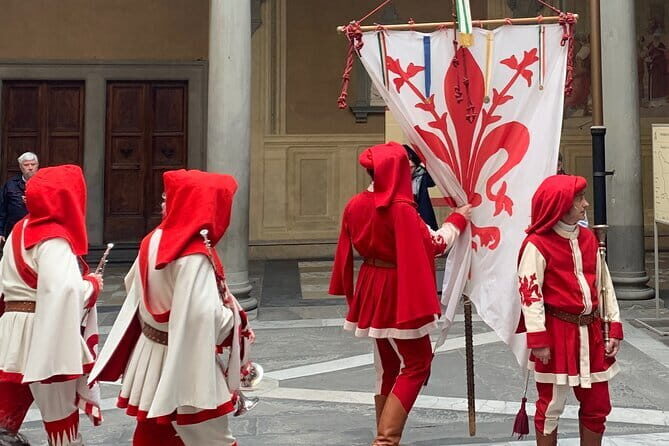
The final stretch brings you toward Palazzo Pitti, which the Medici purchased in 1549. It became the main residence for ruling families of the Grand Duchy of Tuscany and grew into a treasure house as later generations added paintings, plates, jewelry, and other luxury items. Even with limited time, this stop helps you understand the Medici shift from earlier power-building to long-term residence and collecting.
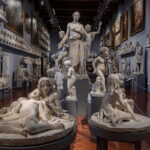
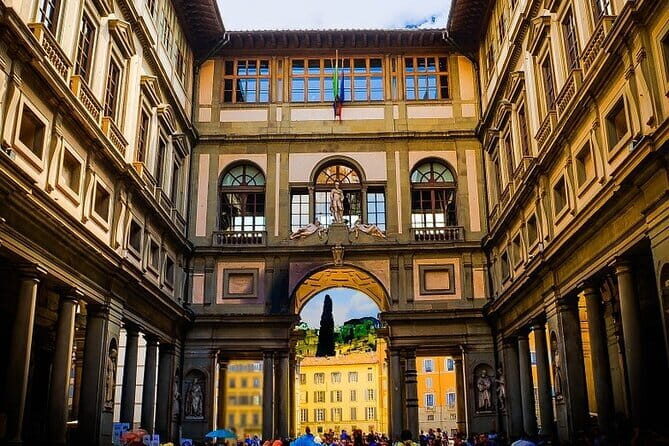
After that, the route reaches the Gallerie degli Uffizi area. The Uffizi is one of Italy’s most important and best-known painting museums. The tour framing points you to what you’ll find inside—names tied to the Renaissance like Michelangelo, Leonardo da Vinci, Raphael, and Botticelli—and notes that the museum spans paintings from the 12th century up through the 16th. You may not spend much time in the museum itself on this tour, and admission isn’t included, so if Uffizi is a must-do for you, you’ll want a separate ticket strategy.
This pairing—Pitti as residence and Uffizi as collection—makes the Medici storyline feel complete. You see where influence lived, then where it was displayed.
Best use of this moment: decide on your next step. If you’re willing to spend real time in one museum, pick the one you care about most. The guided walk gives you the map of meaning; you supply the hours.
Guides, Pace, and Audio: What Your 105 Minutes Actually Feels Like
This tour is led by a licensed guide and uses a whisper system. In practice, that means you should be able to follow the stories even while walking. Still, street noise is real—especially near the Duomo and around major intersections. If you’re wearing hearing aids, bring them and position yourself closer to the guide when the group pauses.
The guide experience seems to be a big part of why people love the tour. Names come up in past groups like Manuel, Martina, Amanda, and Giacomo, and the common thread is storytelling: guides connect crests, buildings, and political motives into a narrative you can remember later. If you’re the type who likes a tour that teaches you how to look, that’s where this shines.
One more pacing note: because each stop is short, the guide’s job is to give you the “starter kit.” You’ll likely leave with enough context to explore on your own—less time “figuring out what this is,” more time deciding what you want to see longer.
Price and Value: Is $119.77 Worth It?
At $119.77 per person for about 1 hour 45 minutes, you’re paying for three main things: a licensed guide, a small group (max 15), and the whisper system. That’s valuable when you want Florence’s major sites linked into one coherent story instead of a list you shuffle through.
The main cost wrinkle is that admission tickets are not included for the stops listed. So your true spending depends on what you want to enter. If you’re happy with exterior orientation and light interior visits on your own schedule, this price can feel like a good shortcut. If you plan to enter most of the major sites right away, you’ll add ticket costs on top.
I’d call it best value for: first-timers, people with limited time, and anyone who likes history told through architecture and power—especially if you plan at least one return visit later.
Should You Book the Medici Legends & Renaissance Wonders Tour?
Book it if you want to get your bearings fast and understand Florence through a Medici storyline—from burial grounds and libraries to civic squares and the Arno. The small group size and whisper system make it easier to actually hear the explanation, not just jog between photos.
Skip it or plan to pair it with other activities if you want a long, ticket-heavy day inside museums and chapels. This walk gives strong context, but the stops are brief, and several key entrances require tickets you buy separately.
One practical strategy: do this early in your Florence trip (it’s a route that sets up better choices later). Then use what you learn to pick which places deserve your paid time inside.
FAQ
How long is the Florence Medici small group tour?
It runs for about 1 hour 45 minutes (approx.).
How much does it cost per person?
The price listed is $119.77 per person.
What group size is this tour limited to?
The maximum group size is 15 travelers.
What language is the tour offered in?
The tour is offered in English.
Are admission tickets included for the stops?
No. Admission tickets are not included for the listed sights (and tips are also not included).
Where does the tour start and end?
It starts at Caffè Scudieri Firenze, Piazza di San Giovanni, 19R, 50123 Firenze FI, Italy, and ends at Ponte Vecchio (within the indicated area).
Does the tour include a sound system?
Yes, it includes a whisper system.
Is free cancellation available?
Yes. You can cancel up to 24 hours in advance for a full refund.
You Might Also Enjoy

More Tours in Florence
- The Best tour in Florence: Renaissance & Medici Tales – guided by a STORYTELLER
★ 5.0 · 12,316 reviews
More Tour Reviews in Florence
- Tuscany Day Trip from Florence: Siena, San Gimignano, Pisa and Lunch at a Winery
★ 5.0 · 21,634 reviews - The Best tour in Florence: Renaissance & Medici Tales – guided by a STORYTELLER
★ 5.0 · 12,316 reviews