REVIEW · FLORENCE
Michelangelo’s David & More: Early Entry Guided Tour
Book on GetYourGuide →Operated by BellaVita tour · Bookable on GetYourGuide
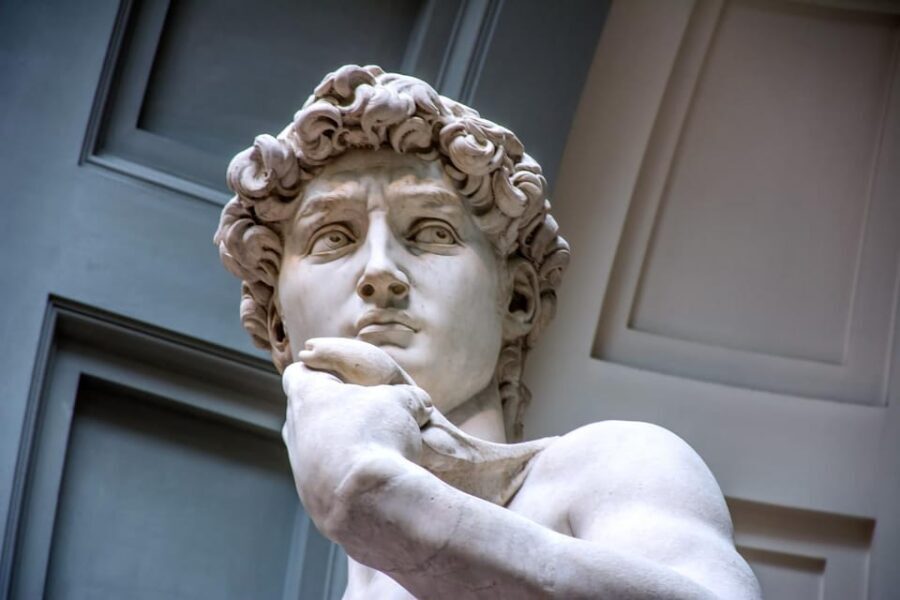
A statue can change your morning. This early-entry, small-group tour gets you to Michelangelo’s David before the crowd rhythm kicks in, with a licensed guide to explain what you’re seeing. You also get the bonus of other key works in the same visit, so the hour feels focused instead of rushed. One thing to keep in mind: no backpacks or large bags are allowed, so travel light.
What I like most is the chance to see David up close while you still have space to look. I also like that you’re not only staring at the finished masterpiece—you’ll get context for the unfinished story in the gallery, including Michelangelo’s Prisoners sculptures. The trade-off is simple: the tour is only about 1 hour, so it’s best for people who like a brisk, well-led plan over wandering on your own.
If you’re okay arriving on time and traveling light, this is a strong way to get real value out of Accademia. And based on past tour feedback, the setup for listening is taken seriously—audio equipment is reported to work smoothly, which matters when you’re in a big room.
In This Review
- Key highlights worth planning around
- Starting at Piazza delle Belle Arti: how the morning runs
- Why the “early entry” timing changes what you see
- Michelangelo’s David: what your guide helps you notice
- A quick reality check on the viewing experience
- The unfinished Prisoners: seeing Michelangelo’s process
- Giambologna’s Rape of the Sabine Women (plaster): style and contrast
- Renaissance paintings: the “other half” of Accademia
- Tour flow and what the hour feels like
- Audio and listening comfort
- Price and value: what $78 actually covers
- What to pack (and what not to)
- Kids and IDs
- Who this early David tour suits best
- Should you book Michelangelo’s David & More?
Key highlights worth planning around
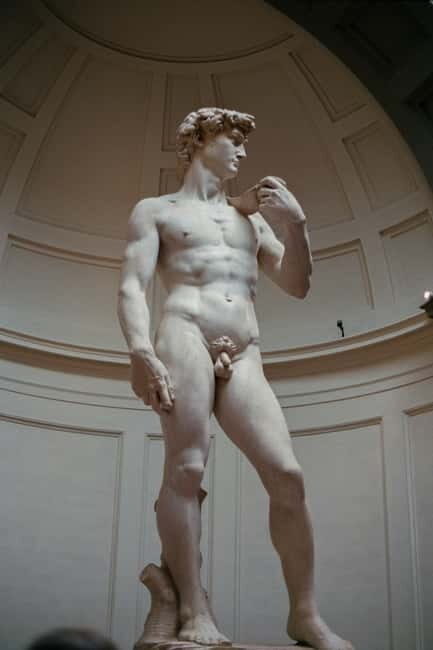
- Early entry into Accademia so David feels less like a photo stop and more like a real encounter
- David at close range with a guide focused on meaning, not just dates
- Michelangelo’s Prisoners to see the unfinished side of genius
- Giambologna’s Rape of the Sabine Women (plaster) so you can compare sculptural styles in context
- Renaissance paintings included in the same guided circuit
- Live English guide + clear audio that helps you keep up without straining
Starting at Piazza delle Belle Arti: how the morning runs
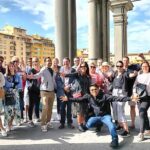
This tour starts in Florence at Piazza delle Belle Arti. Your guide meets you out front, and you’re told to look for the BellaVita tour sign. Plan to arrive about 15 minutes early. That buffer is worth it because you’ll spend less time juggling your place, your tickets (since this is a skip-the-line style tour), and your bags right when you’re trying to settle in.
The schedule is straightforward: you meet, you go into the Accademia Gallery, and you come back to the same meeting point afterward. There are no transfers, no long bus rides, and no complicated route maze. That’s a big part of the value for this kind of “museum highlight” experience—you’re paying for focused time with a guide, not paying for travel friction.
One practical note: the tour is English, and it’s designed as an exclusive small group format. Small groups matter here because Accademia can feel chaotic if you’re trying to read labels or track a guide at the same time. With fewer people, you’re more likely to get answers to the questions that pop up while you’re standing in front of big works.
You can also read our reviews of more guided tours in Florence
- The Best tour in Florence: Renaissance & Medici Tales – guided by a STORYTELLER
★ 5.0 · 12,316 reviews
Why the “early entry” timing changes what you see
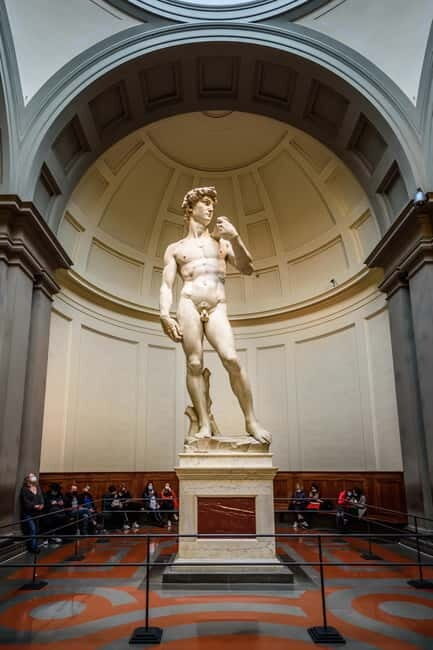
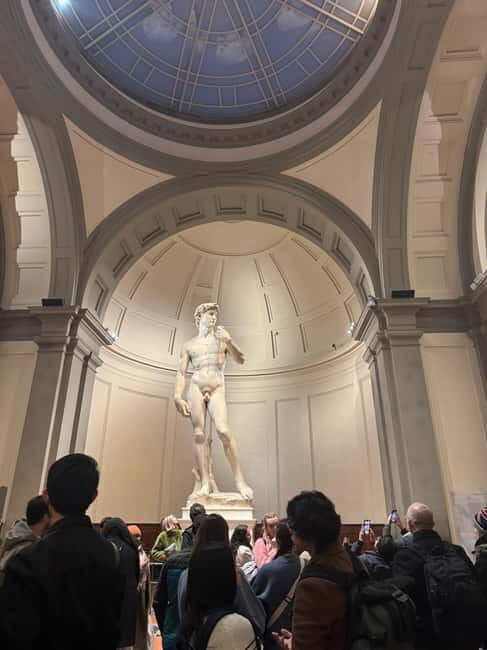
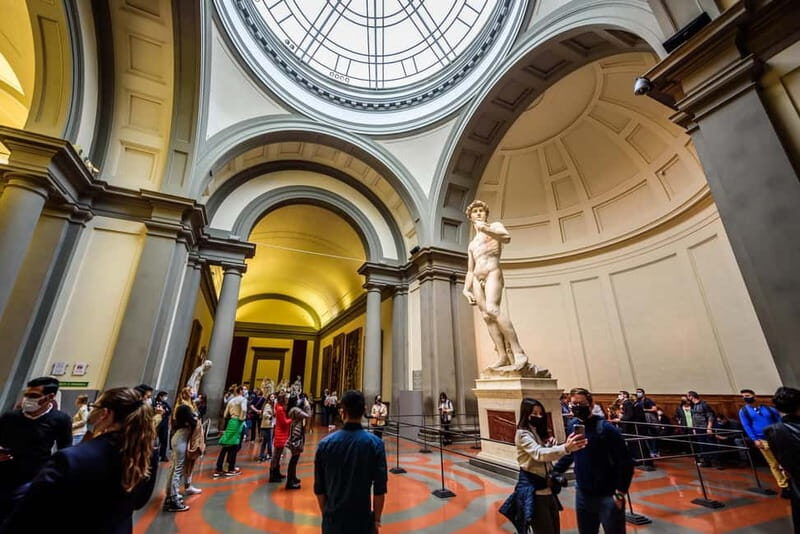
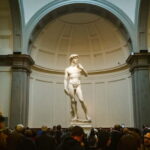
Accademia is famous, which means it’s busy. The whole point of an early starting time is that you get to see Michelangelo’s David before the biggest wave of visitors forms. In practice, that means you can actually look—at the proportions, at the stance, at the surface details that you usually miss when you’re squeezed for space.
Even if you’ve seen David in photos, the real work is understanding what you’re looking at. An early-entry slot helps because your attention doesn’t get competed away by a crowd flow. You can pause where you want, and you can listen without constantly shifting sideways to make room.
If you’re choosing between “cheaper self-guided” and “guided with early access,” this is where the cost comparison starts to make sense. You’re not only buying a ticket. You’re buying time and a better viewing window.
Michelangelo’s David: what your guide helps you notice
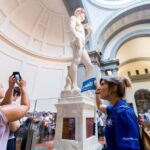
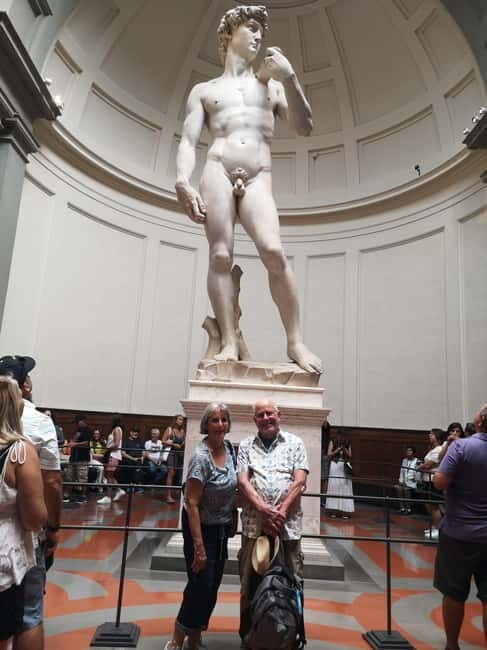
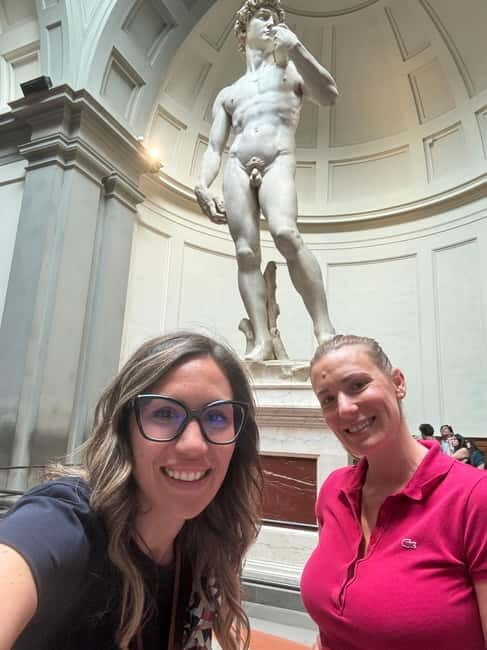
The main stop is Michelangelo’s David. This is listed as a guided portion of the tour for about 1 hour total, and David is the anchor point. The key idea isn’t just that it’s famous. It’s that the guide helps you interpret it.
David sits at a crossroads of art and power. Your guide will talk through what made it different—how Michelangelo’s approach to the human form changed expectations for sculpture. Standing in front of it, you’re likely to think about strength and control, but the best part of a guided visit is that your guide points you toward what’s behind those impressions.
Look for the guide’s emphasis on why David became such a landmark work. The tour description flags that David changed art forever and remains a symbol of strength and beauty, but the practical takeaway is this: you’ll understand the work beyond its reputation. You’ll also get a better sense of the Medici influence in Florence, since the guide connects David to the world of artists, patrons, and politics that shaped what got made and why.
A quick reality check on the viewing experience
You’re going to be close enough to really look. But you’re also in a controlled museum space, so don’t plan on total “alone time.” The advantage of early entry is that the crowd pressure is lower, and your small group format gives you more breathing room than the typical tour scrum.
The unfinished Prisoners: seeing Michelangelo’s process
One of the most interesting parts of the tour is that you don’t stop at the finished icon. You’ll also see Michelangelo’s unfinished Prisoners sculptures. For many people, this is the moment when the visit stops being just a checklist and starts feeling like a window into making art.
Unfinished work can be hard to appreciate without guidance. The tour keeps it approachable by focusing on the story behind the sculptures—what you’re looking at, why the unfinished state matters, and how it connects back to Michelangelo’s genius. Instead of treating Michelangelo like a magician who produced a perfect result instantly, you start seeing him as someone wrestling with form and carving decisions.
This kind of stop is valuable because it teaches you a better way to look at museum art. It shifts your brain from wow to understand. If you’ve ever felt like you were staring at objects but not getting the meaning, this is the section that usually fixes that feeling.
- Tuscany Day Trip from Florence: Siena, San Gimignano, Pisa and Lunch at a Winery
★ 5.0 · 21,634 reviews

Giambologna’s Rape of the Sabine Women (plaster): style and contrast
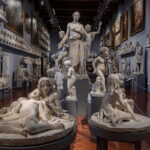
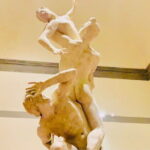
The itinerary also includes Giambologna’s Rape of the Sabine Women in plaster. That detail matters. It tells you you’re not only seeing sculptures from one creator or one moment. You’re also getting comparison—how different artists handle movement, anatomy, and storytelling in three dimensions.
Plaster versions also help you think like a sculptor. Even without getting technical, the material gives you a different visual reading than a finished marble or stone surface. Your guide’s job here is to help you see the stylistic choices rather than just the subject matter.
This is one of those stops that can be skipped by visitors who only care about David. But it’s also a great chance to broaden your Florence art understanding in an hour-long visit without turning the tour into a marathon.
Renaissance paintings: the “other half” of Accademia
After the sculpture focus, the tour includes Renaissance paintings. That’s a smart choice for two reasons.
First, it keeps your visit balanced. Accademia is often reduced to sculpture fame, but a guided circuit that also includes paintings helps you connect eras and themes across the gallery. Second, it gives your eyes a break. After standing in front of monumental sculpture, shifting to paintings can reset your attention and help you absorb more instead of burning out.
The tour doesn’t just send you from one room to the next. The guide is there to connect what you see to the bigger story—artists, patrons, and the Florence environment that shaped the Renaissance “machine.”
Tour flow and what the hour feels like
Here’s how the tour tends to play out in a practical sense:
- You start at Piazza delle Belle Arti, meet the guide, and get oriented fast.
- You head into the Accademia Gallery for a guided look centered on David, then followed by the Prisoners, Giambologna’s plaster work, and then the Renaissance paintings.
- At the end, you return to the meeting point (Piazza delle Belle Arti).
Because the whole guided experience is about 1 hour, you should expect a “best of” rhythm. It’s designed for people who want clarity and an organized route rather than hours of wandering and indecision.
Audio and listening comfort
One of the standout points from tour feedback is that the microphone and headset worked without issues. That matters more than you might think. Museum rooms can be echoey, and a guide’s voice can get lost if audio isn’t reliable. With clear sound, the tour feels easier to follow, and you get more from every minute you pay for.
Price and value: what $78 actually covers
The price is $78 per person. For a Florence museum visit, that’s not the “budget” option. So here’s what you’re really paying for:
- A licensed professional guide who explains what you’re looking at
- Skip the ticket line, which saves time you’d otherwise spend waiting
- Early access, which improves your viewing experience of David
- A small group setup that helps you ask questions and move at a human pace
If you’re the type who reads labels for an hour and still feels like you missed the point, the guided structure is usually worth it. If you only want quick photos and don’t care about context, you might find the cost harder to justify.
Think of it this way: self-guided time in Accademia is flexible, but you’re responsible for building your own understanding. This tour gives you that structure in a single hour.
What to pack (and what not to)
Accademia has rules, and this tour enforces them clearly. Here’s what you should plan on:
- No flash photography
- No backpacks
- No large bags / oversize luggage
- In the museum, only water is allowed
- Follow the rule list about prohibited items and keep it simple
Also, your meeting point instructions are clear: arrive early, look for the BellaVita tour sign, and go in without big carry-ons. If you’re someone who tends to carry a daypack everywhere, this is where you can get tripped up. Travel light is the easiest way to make the experience stress-free.
Kids and IDs
If you’re bringing someone under 18, they need to show an ID (a picture of the ID is okay). That’s the kind of rule that can cause last-minute problems, so plan ahead.
Who this early David tour suits best
This is a great fit if you:
- Want David to be more than a photo
- Like a planned route with a guide instead of guessing your way through
- Prefer a small group format that makes questions easier
- Value early access to reduce crowd pressure
It’s also a good match for first-time Florence visitors who want one high-impact museum experience without building an entire day around logistics.
If you hate guided tours, don’t want to stay near the guide, or you’re traveling with a large bag you can’t avoid, you’ll probably find the restrictions and group rhythm annoying. In that case, you might be happier with a different format.
Should you book Michelangelo’s David & More?
I’d book it if your goal is to see Michelangelo’s David with real context and to make the most of a single-hour window. The early entry helps you enjoy the artwork without fighting the heaviest crowds, and the tour’s mix—David, Prisoners, Giambologna’s plaster work, and Renaissance paintings—covers more than just the headline sculpture.
I’d think twice if you’re traveling with backpacks or large luggage, or if you’re the type who needs lots of solo time with no structured flow. With that said, if you can travel light and show up on time, this is one of the more cost-effective ways to turn Accademia into an actually meaningful experience.
If you want a Florence morning that feels focused and guided—but not stuffy—this early-entry David tour is a solid choice.
You Might Also Enjoy


More Guided Tours in Florence
- The Best tour in Florence: Renaissance & Medici Tales – guided by a STORYTELLER
★ 5.0 · 12,316 reviews

More Tours in Florence
- The Best tour in Florence: Renaissance & Medici Tales – guided by a STORYTELLER
★ 5.0 · 12,316 reviews

More Tour Reviews in Florence
- Tuscany Day Trip from Florence: Siena, San Gimignano, Pisa and Lunch at a Winery
★ 5.0 · 21,634 reviews - The Best tour in Florence: Renaissance & Medici Tales – guided by a STORYTELLER
★ 5.0 · 12,316 reviews