REVIEW · FLORENCE
Palazzo Vecchio Tales – into Medici’s secrets and mythology simbols
Book on Viator →Operated by Florence Tour-Tale · Bookable on Viator
Medici secrets live behind these walls. I love having a licensed local guide who can connect Palazzo Vecchio’s art and politics to Medici power, and I love the skip-the-line reservation tied to your date and time. Do wear layers if you visit in winter; parts of the museum can feel unheated, and there are few chances to sit during the explanation.
In about 1 hour 45 minutes, you’ll move from the Michelozzo courtyard with 1500s frescoes (including Austrian-style scenes) to the grand Salone del Cinquecento, then into Medici rooms packed with portraits, historical references, and myth symbols. The narration is the main event here, and one guide named Daniele is singled out for storytelling that also answers real questions.
If you like your Florence with a guide who reads the room like a puzzle, this is a smart pick. If you need frequent breaks and lots of seating, plan for standing and warm clothing.
In This Review
- Key Things You’ll Notice on This Palazzo Vecchio Tour
- Palazzo Vecchio Tales and Why the Symbols Matter
- Piazza della Signoria Start: Quick Access to a Big Site
- The Michelozzo Courtyard: Frescoes With a Purpose
- Salone del Cinquecento: One Hall, Several Transformations
- Medici Family Rooms: Portraits, Historical Scenes, and Myth Allegories
- Macchiavelli’s Personal Office and Political Thought Rooms
- Guide Daniele, Good Questions, and the Value of the Narration
- Price and Logistics: What Your Money Really Covers
- What to Expect During the 90-Minute Flow (and How to Prepare)
- Should You Book Palazzo Vecchio Tales?
- FAQ
- Is this a private tour?
- Where does the tour start and end?
- How long is the Palazzo Vecchio visit?
- What language is the tour offered in?
- What’s included, and do I need to buy a museum ticket separately?
- Can I cancel for free?
Key Things You’ll Notice on This Palazzo Vecchio Tour
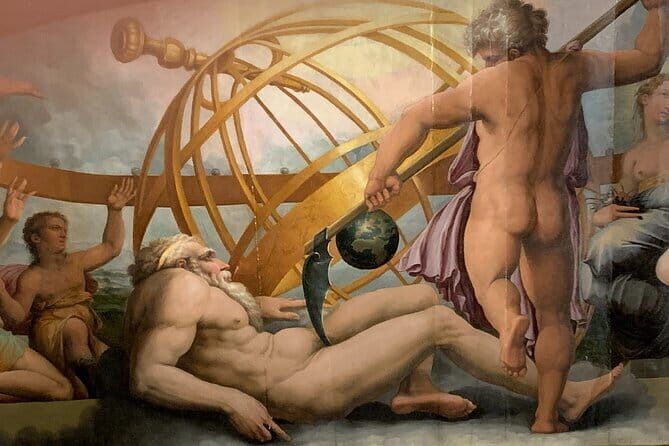
- Michelozzo courtyard frescoes with 1500s decoration, including Austrian-themed imagery
- Salone del Cinquecento and the story behind how this great hall changed over time
- Medici family rooms filled with portraits, historical event scenes, and allegories of myth gods
- Donatello’s Giuditta and Oloferne as a focal artwork in the family suite
- Niccolò Macchiavelli’s personal office shown as part of the rooms tied to European political thought
Palazzo Vecchio Tales and Why the Symbols Matter
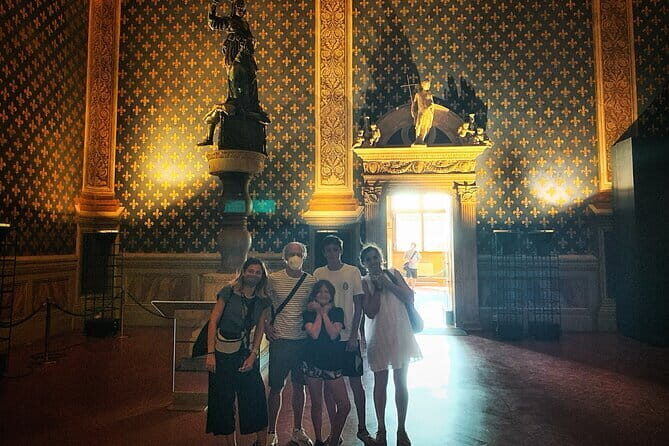
Palazzo Vecchio can feel like overload fast. You walk in, you see statues, walls, big rooms, famous names—and then it turns into a blur if you don’t have a guide who can explain the logic behind it all.
That’s where this tour earns its keep. The goal isn’t just to point at famous objects. You’ll connect what you’re seeing—myth symbols, portraits, political imagery—to what the Medici were trying to say with their power. You get a guided path through the building’s “message system,” so the museum stops feeling like decoration and starts feeling like communication.
One thing I really like is that the tour covers both the public face and the private, symbolic language. You start in courtyard space and a monumental hall, then move into the family rooms where images and allegories do the talking. And then you reach an especially interesting shift: political thought, with Niccolò Macchiavelli’s personal office included in the flow.
If you like understanding not only what is famous, but why it was shown, you’ll get more out of these rooms than you would reading them alone.
You can also read our reviews of more tours and experiences in Florence.
- Tuscany Day Trip from Florence: Siena, San Gimignano, Pisa and Lunch at a Winery
★ 5.0 · 21,634 reviews
Piazza della Signoria Start: Quick Access to a Big Site
You meet back at Piazza della Signoria, and the activity ends there too. That matters because it keeps your Florence day simple. This is one of those spots where it’s easy to build confusion if you don’t know exactly where you’ll gather.
Also, the tour is offered in English, and it’s set up as a private tour/activity—only your group participates. That usually means the guide can pace the explanations to the group you’re with, rather than rushing everyone through. You also get radios and headphones, which is a practical win in a museum setting where your voice can disappear fast.
The tour is listed at about 1 hour 45 minutes, which is a good length for Palazzo Vecchio. Long enough to cover key rooms and make sense of the symbolism, short enough that you’re not stuck for half a day.
The Michelozzo Courtyard: Frescoes With a Purpose
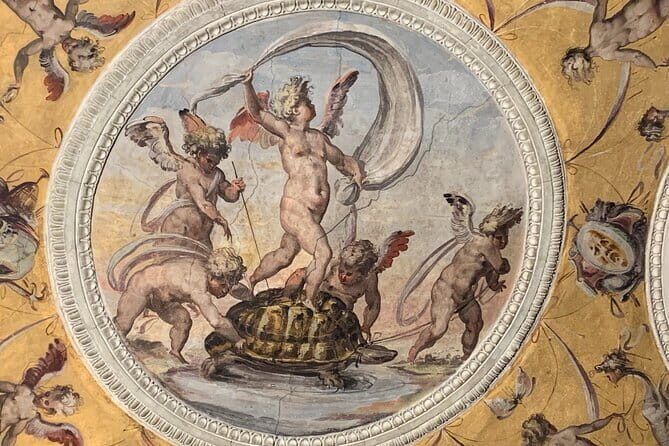
The tour begins in the Michelozzo’s courtyard, and this is not just a pretty stop. You’ll spend time in a courtyard decorated with 1500s frescoes, and the guide explains why the fresco scenes include Austrian-style imagery.
This is a great example of how the tour thinks. Instead of treating the frescoes as wallpaper, you’re asked to notice what the images might be doing. Why Austrian scenes in a Medici space in Florence? That kind of question turns your looking into reading. You start noticing details instead of only the overall look.
The courtyard setting also helps you get your bearings. It’s easier to understand the layout of the building once you’ve seen the open space first. And it sets the tone: this palace uses art and symbolism as a political tool.
One practical consideration: a recent note from winter visitors is that the museum can be unheated. While the courtyard itself may feel more exposed, the major rooms you go into can feel cold. If you’re visiting in colder months, dress for temperature swings. A thin layer plus something warm tends to work better than trying to guess.
Salone del Cinquecento: One Hall, Several Transformations
Next you’ll go to the Salone del Cinquecento, described as magnificent and tied to multiple transformations. In practical terms, this means you won’t just look around at a big room and move on.
You’ll understand how this hall’s role shifted. The guide’s job is to give you the timeline logic so you can recognize why the room’s meaning changes depending on the period you’re looking at. Big rooms in old palaces often get repurposed, reinterpreted, or reused as power changes hands. When you hear that story, the hall stops being only architecture and starts being a stage.
If you enjoy visual scale and want context fast, this is a strong stop. It’s also where the tour’s pacing usually clicks. You’ll get the big highlight, then you’ll move into smaller, more symbolic spaces in the Medici suites.
Medici Family Rooms: Portraits, Historical Scenes, and Myth Allegories
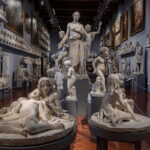
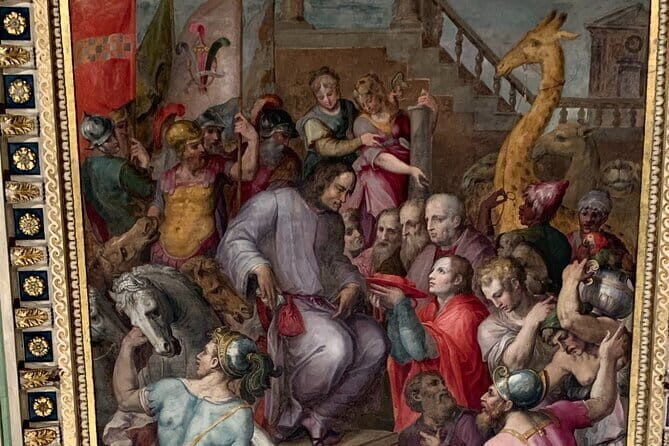
After the hall, the tour moves into the family rooms, where you’ll see a dense mix of imagery: portraits, representations of historical events, and allegories tied to mythological gods.
This section is the heart of the Medici message. Portraits here aren’t just faces. They’re part of who belongs in power and how that power should be understood. Historical event scenes add a second layer—Florence is being placed into a larger story, not only a local one. And then the myth allegories bring in a third level: symbolic references that can be moral, political, or both.
You’ll also have a clear anchor artwork in this area: Donatello’s Giuditta and Oloferne. When the guide points out how the room’s other symbolism frames or amplifies the artwork, it helps the object land in your mind as part of a larger system rather than a standalone masterpiece.
One more point: these rooms can be busy with details. That’s exactly why the radios and headphones matter. Even if you’re positioned well, museum acoustics can be strange. Better audio helps you keep up without straining your attention.
- Tuscany Day Trip from Florence: Siena, San Gimignano, Pisa and Lunch at a Winery
★ 5.0 · 21,634 reviews

Macchiavelli’s Personal Office and Political Thought Rooms
The tour doesn’t stop at art history. It also walks you into rooms connected to the history of European political thought, including Niccolò Macchiavelli’s personal office.
This part is valuable because it flips your reading mode. Up until now, you’re tracing symbolism and image-based messaging. Here, you’re also reminded that politics isn’t only visual branding. It’s ideas, strategy, and power as a system.
Even if you know Macchiavelli only by reputation, seeing a personal office connected to the broader theme gives you a physical sense of the man’s working world. The guide’s framing matters here. It connects the rooms you saw earlier—myths, portraits, power imagery—back to the kind of thinking that shaped political debate in Europe.
If you like your sightseeing to have an argument behind it, this stop will likely be one of your favorites.
Guide Daniele, Good Questions, and the Value of the Narration
The reviews you can’t ignore here are about the guide quality. One guide named Daniele is described as a master storyteller who brought the Medici era to life, with enough clarity to answer questions and add detail.
That kind of guiding is what turns a palace tour from a checklist into a conversation. You’re not just receiving facts. You’re getting interpretation—and you’re allowed to ask questions without feeling like the guide is rushing to the next room.
Also, the tour includes radios and headphones. That’s not fancy; it’s practical. It lets you hear without stepping close enough to block other people, and it reduces that frustration of missing the one explanation that actually ties the whole experience together.
Price and Logistics: What Your Money Really Covers
At $150.19 per person for about 1 hour 45 minutes, you’re paying for a guided experience with a few important built-in advantages.
What’s included:
- Guided visit with a licensed local guide
- Radios and headphones
- Skip-the-line reservation for a specific date and time
What’s not included:
- The museum ticket, which you pay directly to the museum on the same date as your tour
So the value equation is not only the tour price. It’s tour + museum entry. Still, compared to doing Palazzo Vecchio on your own, the included guide and the reserved entry time can be a big help if you want to avoid wasting your limited sightseeing time.
One more real-world note: the tour is booked on average about 37 days in advance. That’s a gentle signal that popular times can fill up. If your schedule is tight, booking earlier usually gives you more choices.
What to Expect During the 90-Minute Flow (and How to Prepare)
This is a moving tour through several major spaces: courtyard, a monumental hall, then multiple family rooms and political-thought rooms. You should expect more standing than sitting. A winter comment you should take seriously is that parts of the museum can be unheated and there aren’t many opportunities to sit while the guide talks.
So for comfort:
- Bring a warm layer if you’re going in colder months
- Plan on staying on your feet for much of the tour
- Use the headphones properly so you can focus on the explanations rather than fighting background noise
You’ll also want to arrive ready to listen. This kind of tour works best when you’re not trying to multitask with photos constantly. Instead, take notes mentally: when the guide explains symbolism, you’ll likely spot patterns again later as you move through rooms.
If you enjoy Florence art but want context that connects the Medici to mythology and politics, this one fits well.
Should You Book Palazzo Vecchio Tales?
Book it if you want Palazzo Vecchio with a guide who can explain what the images are saying, not just what they are. You’ll get the key spaces in a short amount of time, and you’ll leave with a clearer idea of how Medici power used portraits, historical references, and myth allegories as messaging.
Skip it (or at least reconsider) if you hate standing in cold rooms or if you need frequent seating breaks. This tour is built for walking and listening.
If you’re the kind of person who enjoys small interpretive details—like why 1500s frescoes include Austrian-style scenes, or how Donatello and myth allegories fit into Medici room themes—this will feel like money well spent.
FAQ
Is this a private tour?
Yes. It’s listed as a private tour/activity, and only your group will participate.
Where does the tour start and end?
The meeting point is Piazza della Signoria in Florence, and the experience ends back at the same meeting point.
How long is the Palazzo Vecchio visit?
It’s scheduled for about 1 hour 45 minutes (approx.).
What language is the tour offered in?
The tour is offered in English.
What’s included, and do I need to buy a museum ticket separately?
The tour includes a guided visit with a licensed local guide, radios/headphones, and a skip-the-line reservation for a specific date and time. The museum ticket is not included, and you pay it directly to the museum on the same day.
Can I cancel for free?
Yes. Free cancellation is available up to 24 hours in advance for a full refund.
You Might Also Enjoy

More Tour Reviews in Florence
- Tuscany Day Trip from Florence: Siena, San Gimignano, Pisa and Lunch at a Winery
★ 5.0 · 21,634 reviews - The Best tour in Florence: Renaissance & Medici Tales – guided by a STORYTELLER
★ 5.0 · 12,316 reviews