REVIEW · FLORENCE
Pitti Palace, Palatina Gallery and the Medici: Arts and Power in Florence.
Book on Viator →Operated by FlorencePass · Bookable on Viator
Medici power lives in painted rooms. This guided stop at Pitti Palace and the Palatine Gallery turns Florence’s big names into a real story of patronage, politics, and art-making.
I especially like two things: the tour is built for timed entry and small-group pace (max 14), so you don’t get lost in museum chaos. I also like the big-artist focus—Raphael, Caravaggio, Titian, Pietro da Cortona, and Rubens—with explanations that help you look closer and understand what you’re seeing (and in past groups, guides such as Camilla and Cristiano have brought extra depth).
One consideration: this is more about the art the Medici collected than a full, room-by-room feel for daily Medici life, and you’ll mostly enjoy the Boboli Gardens from the windows rather than as a garden visit.
In This Review
- Key takeaways before you go
- Pitti Palace and the Palatine Gallery: why this museum feels different
- Getting in fast: timed entry, small group pace, and earsets
- Piazza de’ Pitti to Palazzo Pitti: the power story starts outside
- Inside the Palatine Gallery: rooms arranged for impact, not dates
- The Medici angle: how art became power on paper and in paint
- Masterworks on your route: Raphael, Caravaggio, Titian, and more
- What you can actually see from the windows
- How the tour ends: keep exploring without re-joining a crowd
- Timing it in your Florence day (and why 2 hours feels right)
- Price and value: what you pay for besides the ticket
- Who should book this tour (and who might want a different approach)
- Should you book this Pitti Palace and Palatine Gallery tour?
- FAQ
- How long is the Pitti Palace and Palatine Gallery tour?
- What language is the tour offered in?
- Is this a small group tour?
- Do you provide headsets for the group?
- Is the timed entry ticket included?
- Does the tour include a visit to the Boboli Gardens?
- Which major artists are featured during the tour?
- What documents do I need for entry?
- Can children join?
- What’s the cancellation policy?
Key takeaways before you go
- Timed-entry start at Palazzo Pitti helps you avoid long lines and get to the good stuff faster
- Small group (max 14) keeps the tour from feeling like a human pinball machine
- Earsets for groups of 4+ make it easier to keep up inside quieter rooms
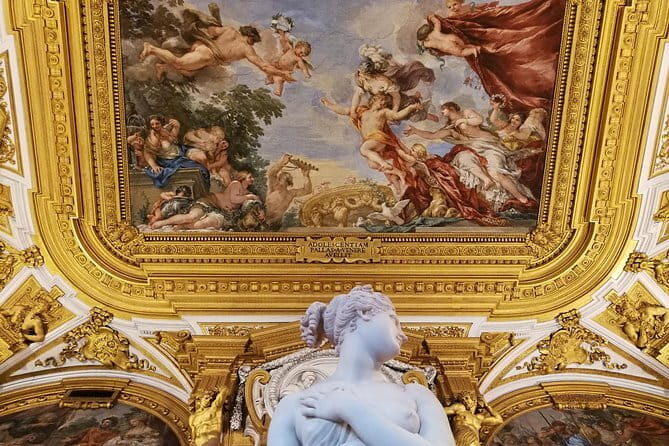
- Palatine Gallery layout isn’t chronological—you’ll experience the collection as it was curated for impact
- Masterworks by Raphael, Caravaggio, Titian, Pietro da Cortona, and Rubens anchor the tour
- Window views include Santo Spirito and a look toward the Boboli Gardens
Pitti Palace and the Palatine Gallery: why this museum feels different
If you’ve been thinking that Florence’s art museums can blur together, Pitti has a way of changing that. The palace setting matters. You’re not just looking at paintings—you’re looking at the kinds of rooms the Medici used to represent status, taste, and control.
This tour also treats the Palatine Gallery like a curated experience, not a textbook. The rooms are arranged for aesthetic value rather than a strict timeline, so you’ll move through shifts in style and mood as the collection intended. That makes your visit feel more like walking through a statement than checking boxes.
You can also read our reviews of more museum experiences in Florence

Getting in fast: timed entry, small group pace, and earsets
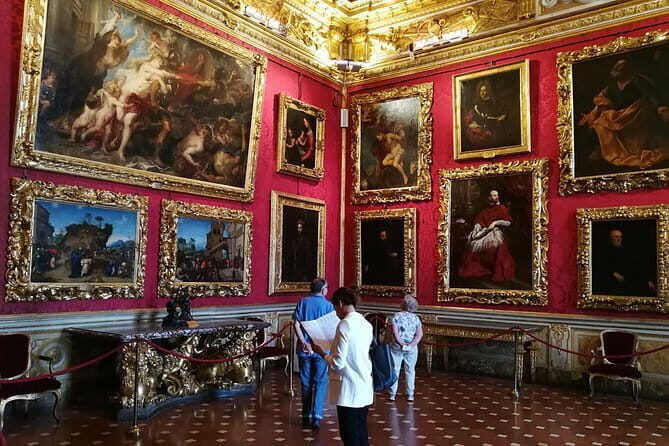
The biggest practical win here is the timed entry ticket. You meet at Palazzo Pitti (Piazza de’ Pitti, 1) and head straight inside with your slot, which helps you skip the slow grind at the busiest entrances.
Inside, the small-group size (up to 14) changes the feel fast. You get more back-and-forth than big-bus tours, and you’re not forced to crane your neck around a crowd just to read a few brushstrokes.
If your group is at least 4 people, you’ll use earsets, which is a big deal in a palace full of echo. It means you can focus on the art instead of competing with room acoustics and your own guesswork.
Piazza de’ Pitti to Palazzo Pitti: the power story starts outside
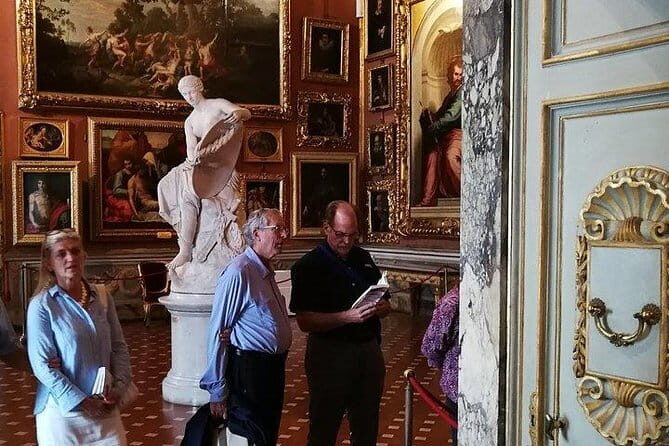
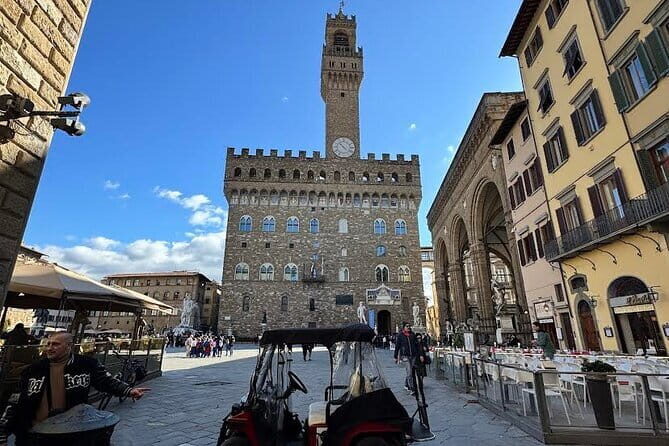
You don’t just teleport from street to museum. The tour begins around Piazza Pitti Palace, where you get a quick orientation. That matters because the palace exterior is grand, but it can also look oddly severe if you don’t know what you’re looking at.
Then you move into the Palazzo Pitti, described as the biggest palace built in Florence. Even if you’ve read about the Medici before, stepping inside helps the scale click. It’s easier to understand how a family could use architecture as branding—rooms weren’t only for living; they were for signaling authority.
Inside the Palatine Gallery: rooms arranged for impact, not dates
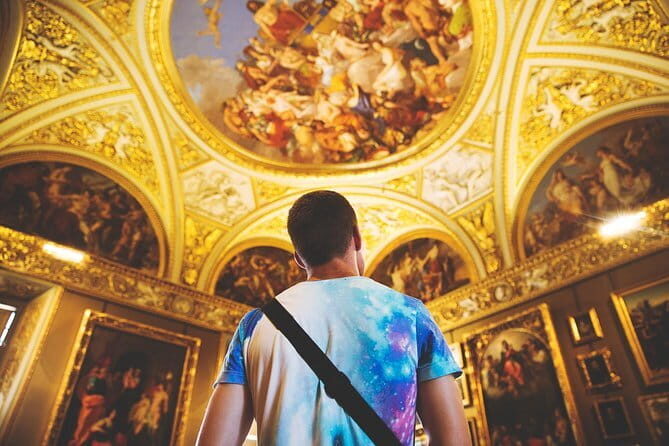
Here’s where the tour really earns its keep: the Palatine Gallery. You’ll spend around 1.5 hours moving room to room through hundreds of paintings across the palace apartments.
And the key detail is how it’s organized. The collection isn’t arranged chronologically. Instead, rooms are set up for visual and artistic effect, so one room can hit you with a certain style, then the next shifts the mood. For you, that means you’ll spend less time asking, what period is this, and more time noticing color, subject choices, and what the Medici seemed to value.
This approach also makes the guide’s job easier and your learning more practical. Rather than trying to force a timeline onto everything, the guide can point out what each work is doing—composition, drama, technique—while linking it back to the Medici story.
The Medici angle: how art became power on paper and in paint
This tour title says arts and power, and that’s exactly the point. The Medici didn’t just collect art. They used it. Paintings helped them project cultivated taste, wealth, and political reach.
You’ll hear how the Medici took over the palace in the 16th century and held it until their fall from power in the 18th century. That arc gives your visit context. You start to see the collection as something that was maintained through changing tastes, changing rulers, and changing politics.
Even if you mainly care about the artwork, the Medici angle helps you read it with more confidence. You can ask smarter questions as you look: why this subject, why this painter, why display it here?
- Tuscany Day Trip from Florence: Siena, San Gimignano, Pisa and Lunch at a Winery
★ 5.0 · 21,634 reviews



Masterworks on your route: Raphael, Caravaggio, Titian, and more
This is not a slow walk through walls of anonymous portraits. The tour highlights major names—Raphael, Caravaggio, Titian, Pietro da Cortona, and Rubens—and it’s built to show you what makes each one tick.
You’ll get more than a name and a date. The guide’s explanations connect the work to technique and storytelling. That’s where your museum experience changes from passive to active. You’re not only admiring; you’re learning how to see.
A quick practical tip: don’t try to memorize every canvas. Instead, pick a few you feel pulled toward—maybe the lighting in a religious scene, maybe the intensity of figures, maybe the way a painter uses color to guide your eye. The tour structure gives you a chance to do that without feeling rushed.
What you can actually see from the windows

Between rooms, the palace works in unexpected ways. You’ll catch views from the windows, including Brunelleschi’s Santo Spirito Basilica and the Boboli Gardens.
This is useful even if you’re not planning a long garden detour on the same day. It gives you spatial context. You’re standing in one world, looking out toward the next, and you can decide what fits your schedule.
One caution: these are views, not a included walk through the gardens. If your heart is set on Boboli itself, you’ll want a separate ticket and time slot.
How the tour ends: keep exploring without re-joining a crowd
The tour concludes back in the gallery area, so you’re not cut off and shepherded out immediately. You’ll leave with the floor plan in your head, which helps a lot if you want to continue on your own.
That’s a smart setup. The Palatine Gallery is large and packed with paintings, and doing it without help can feel like drinking espresso through a firehose. Here, you’ll get your bearings first, then you can choose what to linger over.
Timing it in your Florence day (and why 2 hours feels right)
This runs about 2 hours. That’s a good length for a major palace-art stop because it balances looking time with guided context.
If you’re planning other sights the same day, I’d treat Pitti as a centerpiece visit. It’s powerful, and it can drain your attention if you stack too many “big museums” back-to-back. Give yourself breathing room afterward—walk, snack, and let the images settle.
Also, book early if you can. The tour is commonly scheduled about 37 days in advance on average, which is a sign demand is real.
Price and value: what you pay for besides the ticket
The price is $82.27 per person, and it includes a lot more than just entry. Your timed ticket for Pitti Palace and Palatine Gallery is included, plus an experienced licensed English-speaking guide, a small-group format (max 14), and earsets if your group needs them.
It’s useful to know that Palazzo Pitti’s entry is listed as €19. Your tour price wraps the guide experience and timed entry together, which is where the value tends to show up. In a palace this size, a good guide can save you from spending the visit stuck in overwhelm.
If you’re the type who only wants to read labels at your own pace, a guided tour might feel like extra cost. But if you like to understand why things are arranged the way they are—and what the Medici were doing with their collection—this setup usually pays off.
Who should book this tour (and who might want a different approach)
This tour fits best if you like:
- Major art names and want help focusing on what matters
- A Medici context without turning it into a dry lecture
- A palace setting where architecture and politics matter as much as paintings
It might feel less ideal if you want:
- A heavy emphasis on the Medici’s day-to-day life inside the palace
- A garden visit as part of the same program (the gardens are shown from viewpoints, not included as a ticket)
In other words, think of this as a guided art-and-power reading of Pitti. If you want pure garden time, schedule that separately.
Should you book this Pitti Palace and Palatine Gallery tour?
Yes—if you want an efficient, high-impact way to see the Palatine Gallery and understand why the Medici’s collection mattered. The combination of timed entry, small-group pacing, and a guide-led walk through the artwork makes this much easier to enjoy than trying to figure out the palace layout on your own.
Book it especially if you care about art details and stories tied to specific painters. If you’re chasing only Medici history or you want Boboli Gardens as part of the package, adjust your expectations and plan those pieces separately.
FAQ
How long is the Pitti Palace and Palatine Gallery tour?
It lasts about 2 hours (approximately), with around 1 hour 30 minutes spent in the Palatine Gallery.
What language is the tour offered in?
The tour is offered in English.
Is this a small group tour?
Yes. It has a maximum of 14 participants.
Do you provide headsets for the group?
Earsets are provided for groups of 4+ participants.
Is the timed entry ticket included?
Yes. Your timed entry ticket for the Pitti Palace and Palatine Gallery is included, and you bypass the lines at the main entrance.
Does the tour include a visit to the Boboli Gardens?
No. You’ll get views of the Boboli Gardens from the windows, but the gardens themselves are not listed as included.
Which major artists are featured during the tour?
The tour highlights works by Raphael, Caravaggio, Titian, Pietro da Cortona, and Rubens.
What documents do I need for entry?
You must present a valid passport or ID document that matches the name provided at booking.
Can children join?
Children must be accompanied by an adult, with a minimum age of 6 years.
What’s the cancellation policy?
Free cancellation is available up to 24 hours in advance for a full refund.
You Might Also Enjoy
More Museum Experiences in Florence

More Tour Reviews in Florence
- Tuscany Day Trip from Florence: Siena, San Gimignano, Pisa and Lunch at a Winery
★ 5.0 · 21,634 reviews - The Best tour in Florence: Renaissance & Medici Tales – guided by a STORYTELLER
★ 5.0 · 12,316 reviews