REVIEW · FLORENCE
Private Florence Oltrarno Art and Crafts Walking Tour
Book on Viator →Operated by CAF Tour and Travel · Bookable on Viator
Forget the postcards; watch things made.
This private Oltrarno walk takes you off Florence’s main rails and puts you beside craftspeople as they work, not just as they sell. I love how the neighborhood feels local—quiet streets, small studios, and real people doing real jobs. You’ll also get a private guide who keeps the pace human and makes it easy to ask questions instead of rushing through stops.
Two things I especially like: you see crafts in layers (printing/engraving, silver and enamel, paper marbling), and you get at least one true hands-on moment with paper marbling colors. The one possible drawback is that a portion of the time is still tied to church sights, and some workshop visits can feel like you’re walking through sales spaces. So if you want only nonstop making-and-molding, set expectations for a mixed rhythm.
The other thing to consider is entry. The Santo Spirito complex and the wooden crucifix carved by Michelangelo at age 17 require an on-site ticket, which is not included—so budget extra and plan for a stop where you’ll likely pause for ticketing.
In This Review
- Key Things You’ll Notice on This Oltrarno Craft Tour
- Why Oltrarno Crafts Beat Another Standard Florence Walk
- From Piazza Pitti to Workshops: The Tour’s Smart Starting Move
- Silver and Enamel Jewelry: Watching Process, Not Just Product
- Paper Marbling Hands-On: The Only Part You’ll Actually Do
- Piazza Santo Spirito and Brunelleschi’s Church Stop
- The Michelangelo Wooden Crucifix at Age 17
- The End Workshop: Atelier Models or a Backup Artisan Stop
- Time, Price, and Value: Is $204.27 a Good Deal?
- How to Get the Most from Your Private Guide
- Who This Tour Suits Best (and Who Should Think Twice)
- Should You Book It?
- FAQ
- How long is the Private Florence Oltrarno Art and Crafts Walking Tour?
- What does it cost per person?
- Is this a private tour?
- Where does the tour start and end?
- What’s included in the price?
- Are entrance fees included for Santo Spirito?
- Can I cancel for a refund?
Key Things You’ll Notice on This Oltrarno Craft Tour
- Private guide, local pace: You control the tempo with your own guide, not a herd.
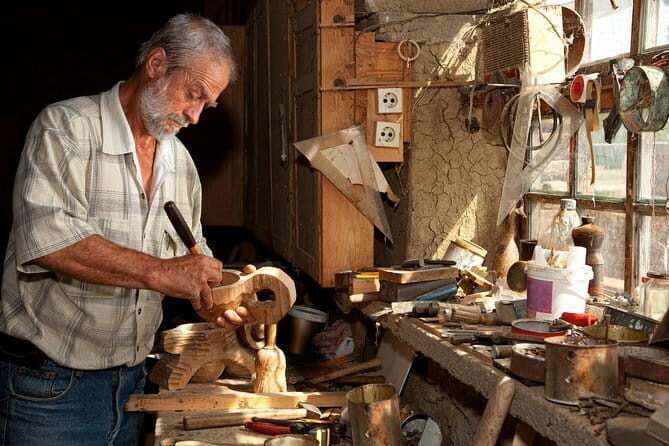
- Craft demos that feel practical: engravings/art prints, silver and enamel jewelry, and paper marbling.
- Hands-on paper marbling: mix and apply color to create the marble-like swirl effect.
- Santo Spirito is part of the story: Brunelleschi’s church plus Michelangelo’s wooden crucifix.
- Workshop visit at the end: an atelier focused on classical sculpture models and replicas, or a backup artisan stop.
- Some retail reality: workshops are often workspaces and shops, so you may see selling alongside making.
Why Oltrarno Crafts Beat Another Standard Florence Walk
Oltrarno is where Florence’s “how it’s made” culture still shows up in daily life. On this tour, the point isn’t to sprint from one famous landmark to the next. It’s to meet the people keeping older skills alive—skills you’d miss if you only follow the Duomo–Uffizi–Ponte Vecchio script.
You start on the big side of town (Piazza Pitti) but quickly drift into the quieter lanes where workshops are close enough that you can smell materials: metalwork, paper supplies, wood and tools. I like that you’re not asked to admire from behind glass the whole time. You’re watching craftspeople in action, and then you get a sense of what it takes to finish something well.
And because it’s private, it’s easier to get personal with questions. Want to know how silver enamel holds color? Ask. Curious how paper marbling color behaves before it settles? Ask again. One review mentioned a guide named Simona who was especially good at sharing city context and even helping track down a lapidary artist for a specific stone—exactly the kind of extra usefulness you’re hoping for from a local guide.
You can also read our reviews of more walking tours in Florence

From Piazza Pitti to Workshops: The Tour’s Smart Starting Move
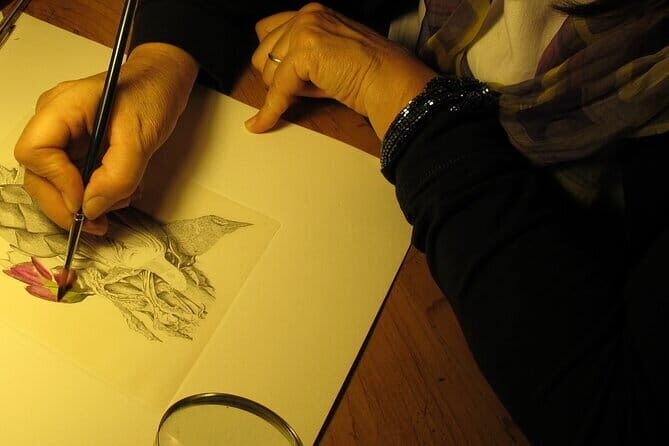
The tour begins at Piazza de’ Pitti, 24. From there, your guide leads you on foot into the Oltrarno zone, with stops that match the theme: traditional crafts with finished products you can actually see.
Stop 1 is anchored around the Palazzo Pitti area, with workshop visits that focus on engraving and art prints first. This matters because it gives you a base: you see fine detail creation early in the walk, then you travel through other crafts and notice the shared themes—precision, patience, and how much labor happens before anything looks easy.
What to look for here:
- The difference between a tool used to cut vs. a tool used to refine.
- How artisans talk about materials (paper choice, metal quality, color behavior).
- Finished works you can connect to what you just saw being made.
A practical note: Stop 1 is the longest block of your time on the tour. If you love hands-on processes, you’ll want to stay alert and pay attention here, because it sets the tone for the rest of the afternoon.
Silver and Enamel Jewelry: Watching Process, Not Just Product

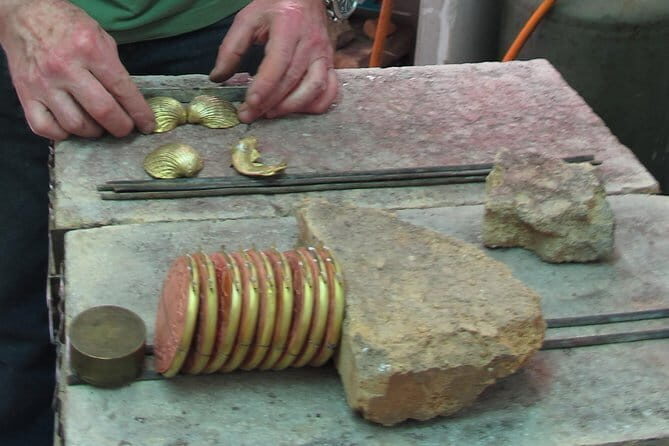
After the engraving/print start, you move to a nearby studio where jewelry is made from silver and enamel. This is one of those craft categories that can look simple in photos—but up close, it’s all timing and technique.
This part of the tour is good value because you’re not just receiving information; you’re getting stories alongside technique. The tour description notes that the silversmith shares entertaining anecdotes about life in Florence as a master craftsman. That blend—process plus personality—helps you remember what you saw instead of treating it like another quick stop.
When you’re watching, focus on:
- How the artisan handles small components without rushing.
- Any step where enamel is applied and then set/finished.
- The final details that show up only after careful work.
If you have a favorite material instinct—metal, paper, stone—this studio likely hits your interest fast. And if you don’t, that’s okay. The visual of careful construction tends to hook people quickly.
Paper Marbling Hands-On: The Only Part You’ll Actually Do

This is the step I think most people will remember long after Florence factoids fade. You’ll learn paper marbling, then try mixing and applying colors yourself to create the marble-like swirls.
Why this is worth your time:
- It turns the tour from viewing into participation.
- It gives you a feel for why the craft takes practice (color flow is not instant magic).
- You’ll end up with a mental model for how “random-looking” patterns still follow technique.
Even if your first attempt looks nothing like a perfect finished sheet, that’s normal. The goal is to understand the process. Watch how the artisan demonstrates color placement, timing, and how the swirl forms. Then try it once. Your guide should help connect what you’re doing to what you’re seeing in the finished works.
Practical tip: wear comfortable shoes and be ready for a bit of concentration. This isn’t a long class, but it’s more active than typical walking tours.
Piazza Santo Spirito and Brunelleschi’s Church Stop
After the craft work, the tour steps into Piazza Santo Spirito, an area with family restaurants, small shops, and artists’ studios. The vibe here is less about sightseeing and more about daily life—people walking, chatting, eating, and popping into local spaces.
Then you reach Basilica di Santa Maria del Santo Spirito, designed by Renaissance master Filippo Brunelleschi. This is a smart pairing with the craft theme. Florence’s artistic output wasn’t only in painting and sculpture; it was also in design thinking, material choices, and the way art and architecture supported one another.
What to do in the church:
- Spend a few quiet minutes looking at the interior as a whole, not just one object.
- Let your guide point out what makes this place distinct before you start scanning for the famous element.
The tour notes that you may also have the chance to discover the Santo Spirito monumental complex (cloister, refectory, chapter house, and sacristy). That visit requires an on-site admission ticket, so don’t be surprised if you pause briefly before entering parts tied to that ticket.
One consideration: if you’re traveling with very short attention spans, the church portion may feel slower than the workshop moments. I’d treat it as a break that also adds meaning to the craft theme.
You can also read our reviews of more private tours in Florence


The Michelangelo Wooden Crucifix at Age 17

Here’s the headline moment. The church’s grounds include the only existing wooden sculpture of Michelangelo, a crucifix he carved at age 17. The tour description is very direct about this: you’re there to see the wooden crucifix, and you’ll need that on-site ticket.
What makes this moment hit harder than a typical landmark photo stop is that it connects to the tour’s core idea: craft is not separate from genius. Carving wood demands technique, and seeing it in person makes the hand-work feel real.
When you’re looking at it:
- Take time to notice the carving details before you assume you’ve already “seen it.”
- Let your guide explain what you’re noticing in the material and form.
- If the area is busy, step slightly aside when you can and reset your view.
This is also the element that shows up most strongly as a highlight in the feedback I saw. If this crucifix is one reason you booked, you’re in the right place.
The End Workshop: Atelier Models or a Backup Artisan Stop
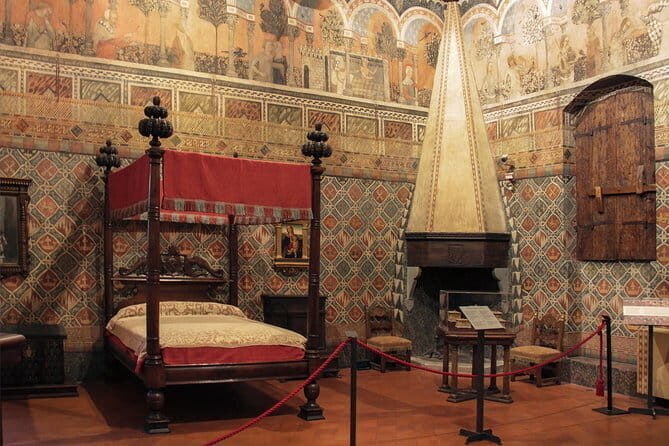
The tour finishes by bringing you into a famed sculpture workshop. The emphasis here is on models, molds, and replicas of classical art—stuff that explains how sculptures are studied and built, not just displayed.
The tour also makes one practical promise: if the atelier visit isn’t available, it will be replaced by an additional Florentine artisan workshop. That’s important for you to know, because it reduces the chance of a “missing stop.” It also means your final segment might vary slightly based on access.
What to pay attention to in the sculpture workshop:
- How plaster/replica forms help artists plan proportions.
- The relationship between model work and final sculptural detail.
- The way older techniques still guide what’s made today.
If you care about the behind-the-scenes side of art, this stop is especially satisfying.
Time, Price, and Value: Is $204.27 a Good Deal?
At $204.27 per person for about 3 hours, this tour sits in the “private experience” band. The right question isn’t whether it’s cheaper than a group bus tour. It’s whether you’re getting what private time buys you: better access, more focused stops, and more chance to ask questions.
Here’s where the value shows up:
- Multiple active workshop settings (not just one).
- A hands-on paper marbling activity.
- A church stop tied to a specific, high-profile wooden work by Michelangelo.
- A guide at your side for the full walk.
What you should factor into total cost: admission for the Santo Spirito monumental complex and crucifix is not included and is paid on-site. So your real spending is the tour price plus that ticket.
When this price makes sense:
- You want arts and crafts in a neighborhood context.
- You like process, not just photos.
- You’re okay with a mixed pace that includes church time.
When it may feel pricey:
- If you only want pure craft demos nonstop and dislike any church component.
- If you’re mainly shopping-focused and expect no retail interaction.
Demand also seems real: the tour is typically booked about 47 days in advance on average. If you’re aiming for a specific week, I’d book early rather than wait for vibes.
How to Get the Most from Your Private Guide
A private tour works best when you treat it like a conversation, not a checklist. Here are practical ways to make this one pay off:
- Ask your guide to explain what you’re seeing before you form opinions. Craft gets more interesting when you know what to look for.
- If you’re sensitive to shopping pressure, say so gently. Many workshops are also retail spaces, so you might see sales alongside process.
- Use the marbling experience to slow down. Ask what makes the swirls work, then compare your result to what the artisan showed.
- In the church, don’t rush the crucifix moment. This is the item people remember for a reason.
One review I saw praised the guide’s help finding a lapidary artist for a specific stone. That hints at something useful: if you show real interest (not just window shopping), a guide can often point you toward the next logical stop.
Who This Tour Suits Best (and Who Should Think Twice)
This tour fits you best if:
- You want Oltrarno crafts rather than only big-ticket sights.
- You enjoy seeing people do skilled work with their hands.
- You want at least one hands-on activity, not just observation.
- Michelangelo’s wooden crucifix is a must-see for you.
You might think twice if:
- You expect an all-workshops-only route and are frustrated by church stops.
- You strongly prefer museums over active studios.
- You dislike any environment where buying is possible.
That doesn’t mean the craft experience isn’t real. It just means the format is art-and-crafts plus a meaningful church anchor.
Should You Book It?
I’d book this tour if you want Florence craftsmanship with a local rhythm and you’re excited to see multiple artisan disciplines in one afternoon. The mix of silver/enamel, paper marbling hands-on, and the Michelangelo crucifix makes it a very specific experience—one that feels more personal than a standard highlights tour.
I’d hesitate only if your main goal is nonstop workshop watching with no church time, or if you get bothered by workshop shops where sales can be part of the environment. In that case, you may still enjoy it, but you’ll want to go in with clear expectations.
If you do book, aim to bring comfortable shoes and a curiosity-first attitude. This is the kind of tour where small questions can turn into great answers, and you’ll leave with a stronger sense of how art is actually made in Florence.
FAQ
How long is the Private Florence Oltrarno Art and Crafts Walking Tour?
It runs for about 3 hours (approx.).
What does it cost per person?
The price is $204.27 per person.
Is this a private tour?
Yes. It’s private, so only your group participates.
Where does the tour start and end?
It starts at Piazza de’ Pitti, 24, 50125 Firenze, Italy, and ends in Borgo San Frediano (Borgo S. Frediano, Firenze FI, Italy).
What’s included in the price?
A local professional guide is included. You’ll also use a mobile ticket.
Are entrance fees included for Santo Spirito?
No. The Santo Spirito Monumental Complex admission is not included and must be paid on the spot.
Can I cancel for a refund?
Yes. Free cancellation is available if you cancel at least 24 hours before the experience start time.
You Might Also Enjoy

More Walking Tours in Florence

More Tours in Florence
- The Best tour in Florence: Renaissance & Medici Tales – guided by a STORYTELLER
★ 5.0 · 12,316 reviews


More Tour Reviews in Florence
- Tuscany Day Trip from Florence: Siena, San Gimignano, Pisa and Lunch at a Winery
★ 5.0 · 21,634 reviews - The Best tour in Florence: Renaissance & Medici Tales – guided by a STORYTELLER
★ 5.0 · 12,316 reviews