REVIEW · FLORENCE
Florence: (French) Walking Tour with a licensed guide
Book on GetYourGuide →Operated by BellaVita tour · Bookable on GetYourGuide
One tight loop hits Florence’s biggest icons fast. You’ll cover the Duomo complex, the Baptistery, and Giotto’s Bell Tower, then move on to Piazza della Signoria for David and the marble fountain, finishing at Ponte Vecchio. I also like how the guide keeps things practical and human—history, yes, but tied to what you can actually see in front of you.
The main drawback to plan for: this is a short walking tour, and museum/monument entry tickets aren’t included. If you want to go inside places (or climb), you’ll need to add separate tickets.
In This Review
- Key things to watch for on this Florence walk
- Why this 1.5-hour Florence loop starts at Piazza della Repubblica
- Duomo complex: seeing Florence’s symbols as a single picture
- Brunelleschi’s Dome: the quick lesson that changes how you look
- Baptistery of Saint John and the Porta del Paradiso
- Piazza della Signoria: David, the palace, and why it matters
- Uffizi Gallery: orientation without the museum pressure
- Ponte Vecchio: how to enjoy the most famous bridge without feeling rushed
- Learning Medici and Renaissance ideas through street-level stops
- Value check: is $77 for Florence icons actually fair?
- What to bring and how to make the most of the walk
- Meeting point and what the experience feels like on the ground
- Who this Florence tour is best for
- Should you book this Florence walking tour with a licensed guide?
- FAQ
- What is the meeting point for the Florence walking tour?
- How long is the tour?
- What language is the guide?
- What major sights are included in the route?
- Is David included, and where do you see it?
- Are museum or monument entry tickets included?
- What is included in the price?
- What should I bring for the tour?
Key things to watch for on this Florence walk
- Duomo complex flow: you see the cathedral area as one connected story, not random landmarks.
- Porta del Paradiso attention: you learn what makes the Baptistery bronze doors famous and where to look.
- David outside Palazzo Vecchio: you get the political meaning behind the sculpture’s placement.
- Medici and Renaissance context: big names get explained through the street-level sites you’re standing in.
- Ponte Vecchio with focus: you don’t just cross it—you learn what to notice while you’re there.
- French guidance from BellaVita Tours: the tour is led live in French, by a licensed guide.
Why this 1.5-hour Florence loop starts at Piazza della Repubblica
A lot of Florence tours scatter you across the city. This one is tighter. You begin at Piazza della Repubblica, near the carousel, so you start with an easy orientation point and minimal transit time. In just 1.5 hours, you get a high-density Florence “greatest hits” route that helps you map the city for the rest of your trip.
Another thing I like: it’s built for walking in real urban conditions—crowds, storefronts, and turning corners. That matters in Florence, because the most useful “memories” are usually the ones tied to a viewpoint you can reproduce later.
You can also read our reviews of more walking tours in Florence
Duomo complex: seeing Florence’s symbols as a single picture
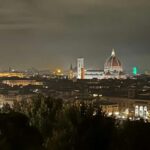
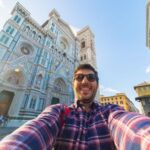
You’ll start with the Duomo complex and get a guided pass that connects the parts: the cathedral area, the dome, and the Baptistery. Even if you’ve seen photos, this is where the scale hits. Up close, details become obvious—structure, rhythm of surfaces, and the way buildings relate to the square spaces around them.
You’ll spend about 20 minutes here, then the tour continues with a shorter, focused segment on Brunelleschi’s dome area. The pacing is important. In a short tour, the goal isn’t to master architecture. The goal is to leave with a clear mental model: who built what, why it mattered, and what you should notice next time you return.
Practical note: entry tickets to museums aren’t included, so treat this as a guided viewing and orientation tour of the complex. If you want interior access, you’ll need to plan that separately.
Brunelleschi’s Dome: the quick lesson that changes how you look
When the tour shifts to Brunelleschi’s Dome, it’s not just a name drop. You’ll get the idea behind the dome’s significance and why it became such a reference point for Renaissance ambition. Standing near the cathedral area, that context makes the dome feel less like a postcard and more like a breakthrough.
This is one of the best parts of the itinerary because it trains your eyes. Once you know what you’re looking for, the dome stops being one big shape and becomes a set of clues: design choices, engineering confidence, and the Renaissance obsession with perfection and proportion.
If you’re the type who likes to understand what you’re photographing, you’ll appreciate this portion.
Baptistery of Saint John and the Porta del Paradiso
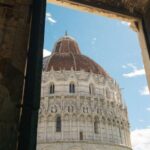
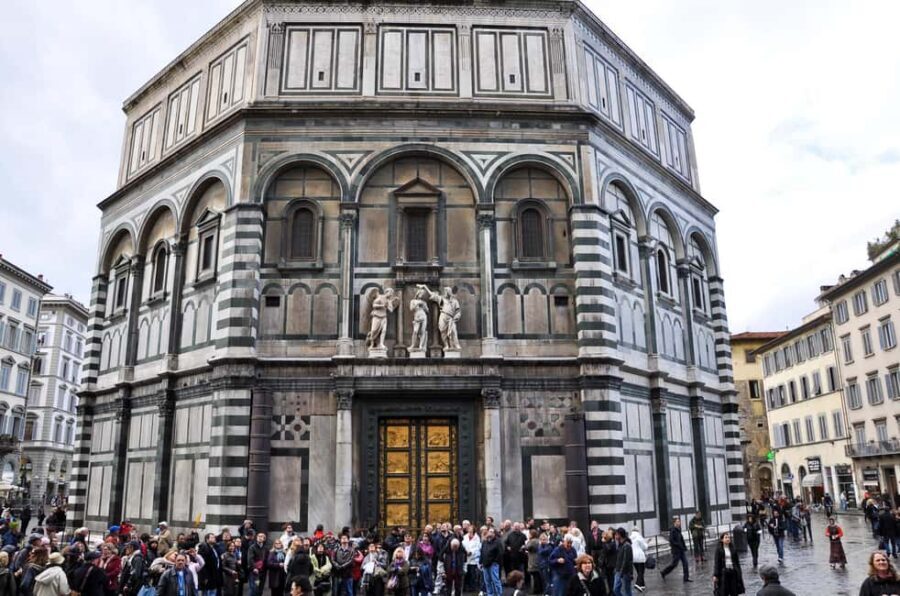
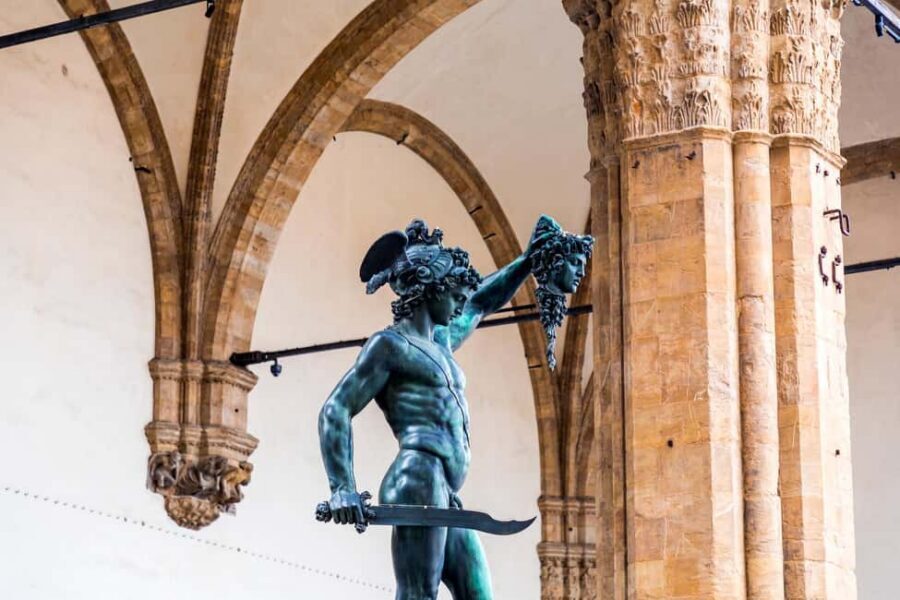
Next comes the Baptistery of Saint John, including time at the Porta del Paradiso (the famous bronze door). This is where your guide’s job really matters, because doors like this can look like decorative metal until someone points out what makes them historically and artistically important.
You’ll get about 10 minutes here, plus separate guided time focused on the door. The advantage of having that split is that you don’t just stand there. You learn what to notice, which is especially helpful in a busy public square where people move fast and it’s easy to miss the details.
If you want a super-satisfying photo, don’t rush. Pause for a second, then aim your camera from the same general angle a couple times. Small differences in framing can make a big difference with bronze doors and surrounding architectural lines.
Piazza della Signoria: David, the palace, and why it matters
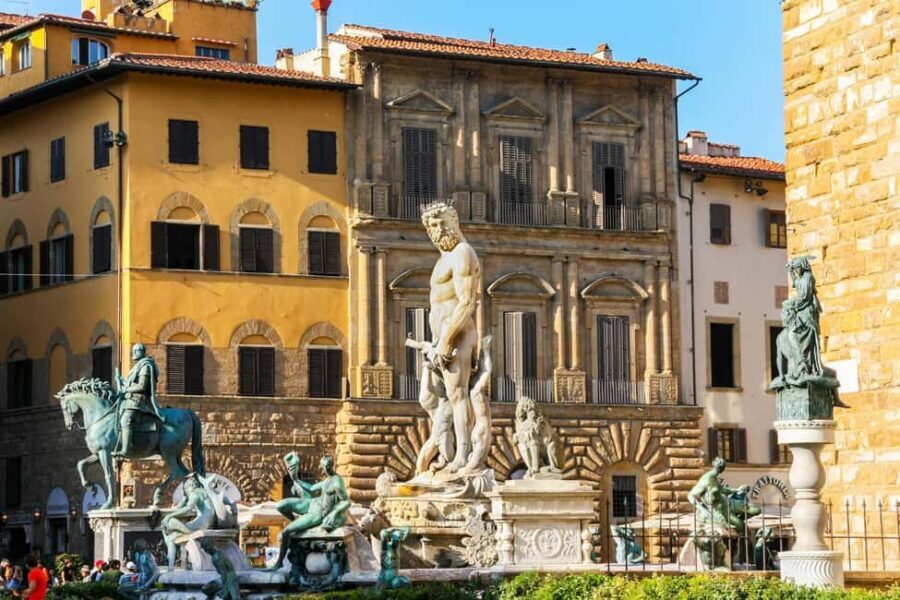
After the cathedral area, you’ll head toward Piazza della Signoria—one of Florence’s most important public squares. The tour focuses on what you can connect immediately: the setting, the statues, and the political story tied to them.
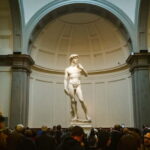
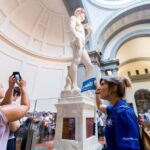
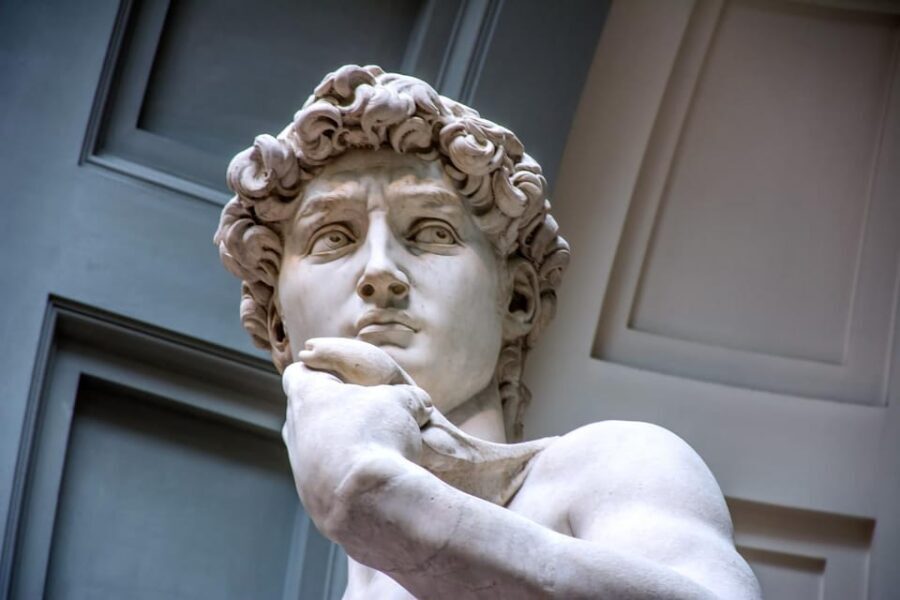
You’ll spend around 20 minutes here, including seeing David placed outside Palazzo Vecchio. What I like about this stop is that you don’t treat David as just a famous sculpture. You get the idea of why it’s positioned there, as a signal tied to the Republic’s resistance to Medici power. That explanation turns a well-known statue into a piece of civic messaging.
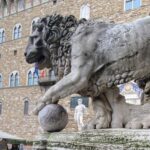
You’ll also look at the white marble fountain in the square. It’s the kind of detail many people walk past, but in a guided setting you start noticing how the square’s monuments create a shared visual language.
You can also read our reviews of more guided tours in Florence
- The Best tour in Florence: Renaissance & Medici Tales – guided by a STORYTELLER
★ 5.0 · 12,316 reviews
Uffizi Gallery: orientation without the museum pressure
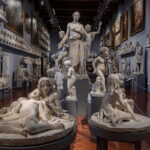
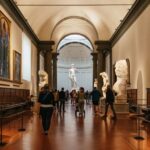
Your itinerary includes a brief visit connected to the Uffizi Gallery area. Since entry tickets aren’t included, you should expect an orientation-style stop rather than a full museum experience. That can actually be a good thing on day one: you get the location, the feel of the neighborhood, and a mental bookmark for when you want to commit time inside.
This is also a low-pressure moment in the route. After the heavier monument stops (Duomo, Baptistery), the Uffizi area gives you a chance to regroup, reset your walking pace, and keep your attention on the city itself—streets, sightlines, and how Florence funnels you toward key spaces.
If you’re planning a Uffizi visit later, this tour helps you arrive with context instead of trying to “figure it out” when you’re already tired.
Ponte Vecchio: how to enjoy the most famous bridge without feeling rushed
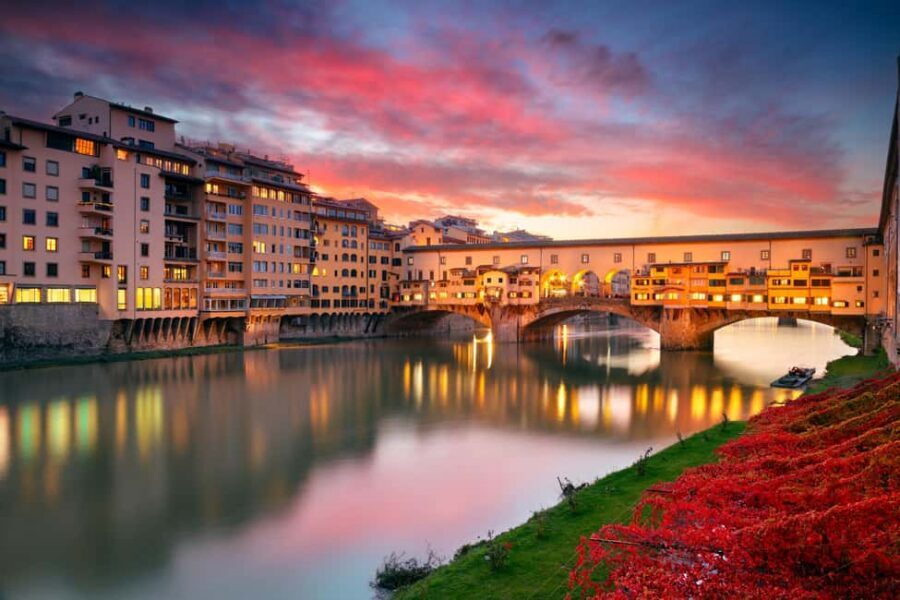
Then you get to Ponte Vecchio, the Old Bridge—Florence’s most famous crossing. The tour gives it about 20 minutes, which is a rare amount of time for a landmark that people usually sprint over.
This part is about learning how to read the bridge as a historic structure, not just a photo spot. You’ll have time to look at how the buildings relate to the bridge and how the passage itself shapes views of the river area.
Crowds can be intense here, so you’ll want comfortable shoes and patience. But having a guide means you’re not just standing there waiting for the perfect shot. You’re getting meaning, plus practical tips on where to stand for the best angles.
Learning Medici and Renaissance ideas through street-level stops
The tour promises Medici and Renaissance context, and that’s exactly what makes the walking route worth it. Florence is full of famous names, but they can become noise if you don’t connect them to locations. Here, the story gets anchored in the places themselves: cathedral-era ambitions, civic identity in Piazza della Signoria, and the long shadow of the Medici.
A plus I noticed in the guide style is the balance between big-picture explanations and small, specific details. Instead of overwhelming you with dates, the guide tends to connect events and artistic choices back to what you’re actually seeing. That approach makes it easier to remember the trip later when you’re flipping through photos.
Value check: is $77 for Florence icons actually fair?
At $77 per person for 1.5 hours, you’re paying for something you can’t easily DIY: a licensed, live guide who strings Florence’s landmarks into one coherent story. This is especially valuable for travelers who want a strong first day without committing to a full-day museum plan.
Here’s the balanced part: since entry tickets to museums aren’t included, you’re not getting full “inside access” value for every stop. But you are getting guided viewing and orientation at the most important external landmarks—plus explanation that makes those landmarks more than just scenery.
If your priority is quick understanding and efficient sightseeing, this price makes sense. If your priority is to spend hours inside interiors (or climb), you’ll likely want to pair this tour with separate ticketed experiences later.
What to bring and how to make the most of the walk
For a tour like this, comfort beats fashion. The essentials are simple:
- Comfortable shoes
- Camera
- Water
Florence walking can add up, and you’ll be moving between major squares. The tour is wheelchair accessible, but for everyone else, the best upgrade you can make is choosing shoes that handle uneven stone without complaint.
Also, have a plan for photos: start by capturing the wide views (Duomo complex and Ponte Vecchio), then go back for detail shots (Porta del Paradiso, David, fountain). A guide helps because you’ll know what details are worth the extra frames.
Meeting point and what the experience feels like on the ground
You’ll meet your guide near the carousel on Piazza della Repubblica. Look for the sign for BellaVita Tours with your name on it. That’s helpful in a city where similar meeting points are everywhere.
Once you start, the experience is straightforward: you move site to site, with short guided segments at each key stop. The short format is actually a feature—it keeps you energized and gives you a sense of accomplishment fast. And because the guide is leading in French, it’s a good fit if French is your comfort zone or if you enjoy following along with a consistent language throughout.
Who this Florence tour is best for
I think this tour hits the sweet spot for:
- First-time visitors who want the core monuments—fast
- People who learn better through explanation than through guidebooks
- Travelers who want Medici and Renaissance context tied to specific places
- Anyone who wants Piazza della Signoria and Ponte Vecchio without wasting a day figuring out a route
If you’re the type who wants long museum hours or detailed interior tours at each stop, this may feel short. But if you’re building a map of Florence in your head, it’s a strong starting move.
Should you book this Florence walking tour with a licensed guide?
Yes—if you want a tight, high-value route through Florence’s most recognizable sites with real context. The biggest reason to book is the combination of iconic landmarks and guidance that helps you connect the Medici and Renaissance story to where you’re standing.
Consider booking a ticketed museum add-on separately if you want interior access beyond guided viewing. And if you prefer long lingering at one place over quick hits, you might feel more satisfied with a longer tour format.
If your goal is to get your bearings fast and leave with a clear sense of what matters, this French-led BellaVita Tours walking tour is an easy recommendation.
FAQ
What is the meeting point for the Florence walking tour?
Your guide meets you near the carousel on Piazza della Repubblica. Look for the BellaVita Tours sign with your name.
How long is the tour?
The tour lasts 1.5 hours.
What language is the guide?
The live guide speaks French.
What major sights are included in the route?
You’ll see the Duomo complex area, Baptistery of Saint John (including Porta del Paradiso), Giotto’s Bell Tower and Brunelleschi’s dome area, Piazza della Signoria with David and the marble fountain, and Ponte Vecchio.
Is David included, and where do you see it?
Yes. You’ll admire David placed outside Palazzo Vecchio.
Are museum or monument entry tickets included?
No. Entry tickets to museums are not included.
What is included in the price?
The price includes a charming and professional guide and a walking tour of Florence’s historical centre.
What should I bring for the tour?
Bring comfortable shoes, a camera, and water.
You Might Also Enjoy

More Walking Tours in Florence
More Tours in Florence
- The Best tour in Florence: Renaissance & Medici Tales – guided by a STORYTELLER
★ 5.0 · 12,316 reviews
More Tour Reviews in Florence
- Tuscany Day Trip from Florence: Siena, San Gimignano, Pisa and Lunch at a Winery
★ 5.0 · 21,634 reviews - The Best tour in Florence: Renaissance & Medici Tales – guided by a STORYTELLER
★ 5.0 · 12,316 reviews