REVIEW · FLORENCE
Accademia Gallery Ticket and audio-guide
Book on Viator →Operated by CAF Tour and Travel · Bookable on Viator
David fans, this is the one. This is a prebooked Accademia Gallery ticket paired with a museum multilingual audio guide, so you can move through Florence’s most famous sculpture without spending your best hour wrestling the ticket desk. I like that you get time-entry built in, plus on-site help at the start so you’re not hunting down the right line.
I also like the practical structure: your assistant delivers the entrance ticket at the meeting point, and the experience is designed for a small group (up to 6). That means less standing around with strangers, and you can settle in fast—especially helpful when the gallery is packed.
One possible drawback: there’s no in-person guide for the full experience, so if you want live storytelling or a strict route, you’ll need to rely on the audio and your own pace.
In This Review
- Key things to know before you go
- What you’re really buying: a smooth Accademia entry plus museum audio
- Entering the Accademia without getting trapped at the ticket desk
- Your 3-hour plan inside: Michelangelo’s David and the sculptures around it
- Seeing the Renaissance paintings you might otherwise miss
- What the audio guide does well—and where you might want to adjust
- Timing tips for a packed museum (without turning it into stress)
- Price and value: is $56.60 worth it for you?
- Who this fits best (and who should choose something else)
- Should you book this Accademia Gallery ticket + audio?
- FAQ
- Is the audio guide available in multiple languages?
- Is this experience offered in English?
- How long does the visit take?
- Do I need an in-person guide to get in?
- Where do I get my ticket?
- What time do I need to arrive?
- Can the fixed entry time be changed after booking?
- Is there a group size limit?
- Are there any age rules for the audio guide?
- Is it easy to reach using public transportation?
- What’s the cancellation option for a refund?
Key things to know before you go
- Guaranteed entry time to help you avoid the worst ticket-office queues
- Ticket delivery at the meeting point with team assistance, not ticket-desk chaos
- Audio guide in multiple languages, ready for you to use as you walk
- Michelangelo first: David plus key sculptures and Renaissance highlights
- Small group limit (max 6) for a calmer start and easier movement
- Flexible cancellation with refund if you cancel far enough ahead (details matter)
What you’re really buying: a smooth Accademia entry plus museum audio
The Accademia can feel like a magnet for everyone in Florence. This experience helps you handle that pressure with a simple promise: your entry time is secured, and you get help right where you need it—so you can spend your energy looking at art, not figuring out logistics.
The big value here is the combo. You’re paying not just for admission, but also for the reservation fee and the “hands-on” start: a staff member meets you and delivers your ticket at the meeting point, helping you bypass the usual “where do I go?” stress.
You should know what you don’t get. This is not a live docent tour. You’ll use the audio and explore on your own. For many people, that’s exactly what they want. For others—especially if you like back-and-forth questions or a guided walking route—it can feel a little too hands-off.
You can also read our reviews of more tours and experiences in Florence

Entering the Accademia without getting trapped at the ticket desk
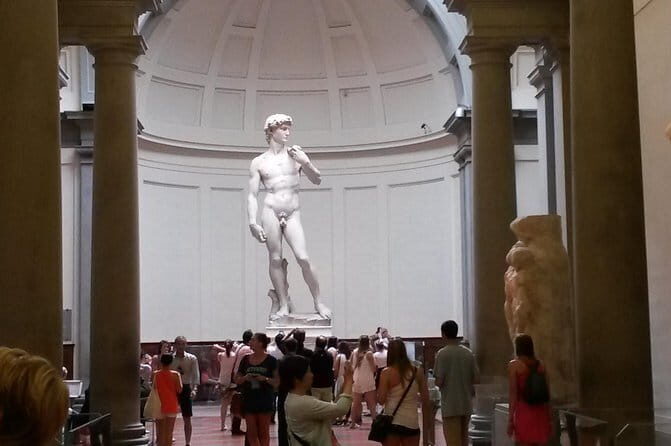
The Accademia’s lines can be brutal, and the ticket area is usually the bottleneck. This is why the prebooked time slot matters. Instead of waiting for generic opening chaos, you’re aiming for entry at a specific check-in window.
There’s also a very practical detail that makes a difference: you pick up your admission at the entrance area through on-site assistance. That means you’re not trying to “interpret” the ticket office while surrounded by crowd flow.
Still, I’d plan like a grown-up about timing. The rules say you must arrive at the meeting point at the stated check-in time. If you’re late, you may not be able to use the time-entry ticket, and there’s no refund or reschedule. So build in buffer time—especially if you’re using public transport or you’re walking in from a different part of the center.
Your 3-hour plan inside: Michelangelo’s David and the sculptures around it
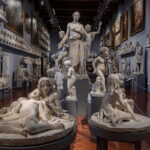
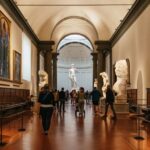
Once you’re in, the experience is built around one core idea: Michelangelo’s world is not just one statue. The visit centers on the Galleria dell’Accademia, where you’ll spend time with the masterpieces that made this museum essential for Renaissance lovers.
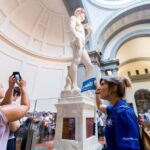
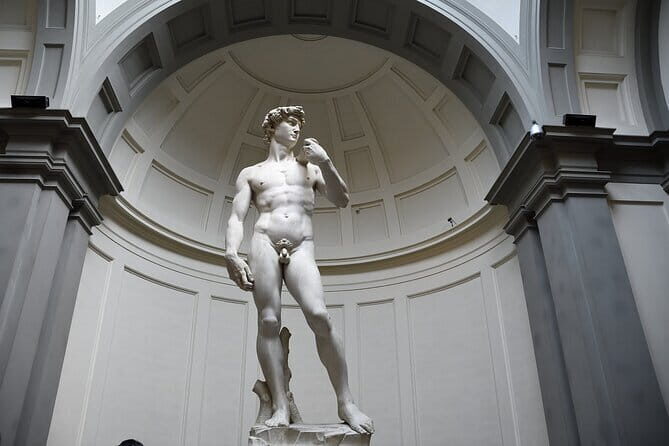
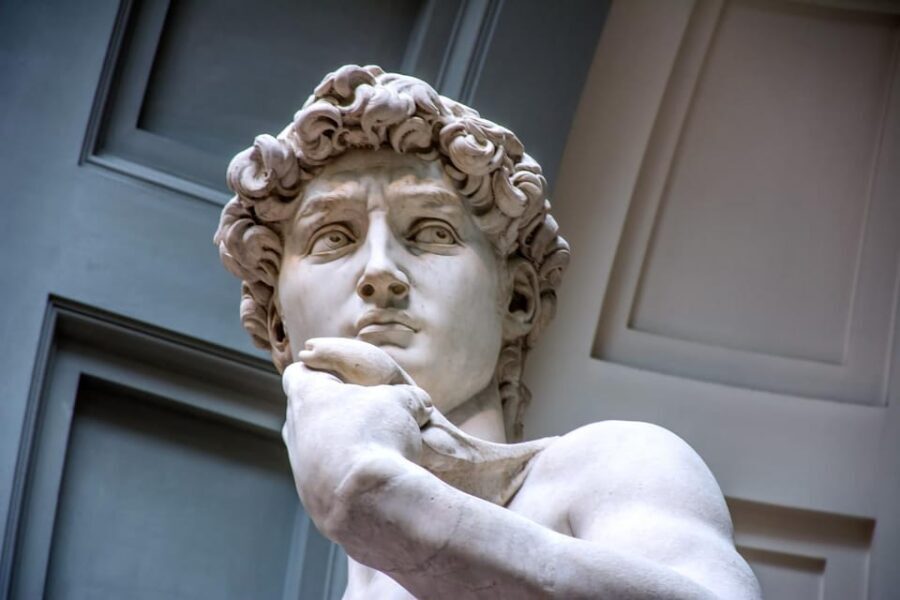
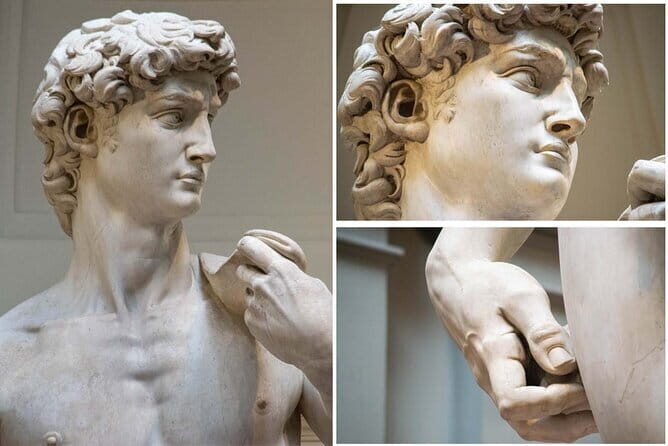
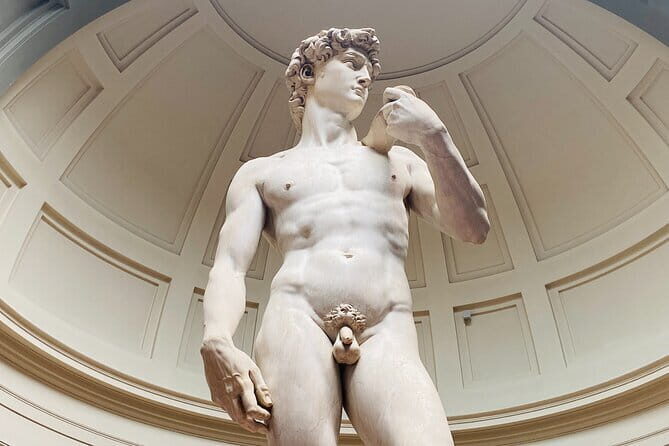
The headline is, of course, David. You’ll see the imposing figure carved from a huge block of rough marble over about three years, and you’ll be able to appreciate why it became such a symbol of Renaissance ideals. Up close, David doesn’t feel like a photograph come to life. It feels like a real body made with intention—sharp, tense, and somehow both human and monumental.
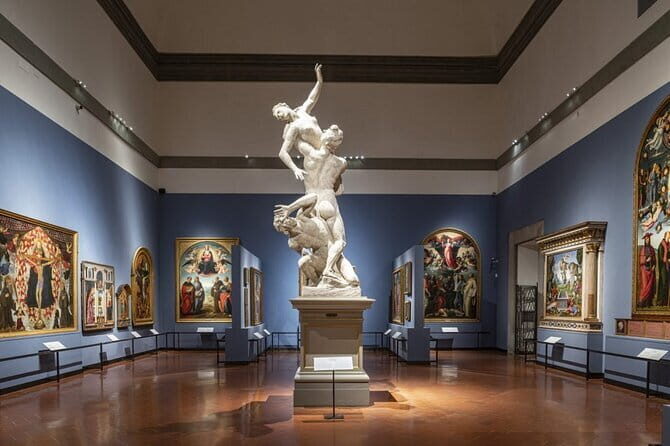
From there, you’ll also encounter other key works attributed to Michelangelo’s circle and early career themes, including I Prigioni, San Matteo, and the Palestrina Pietà. Even if you only know the basics, these sculptures help you understand something important: Michelangelo’s genius wasn’t only about finishing. It was also about thinking in forms, freeing figures from stone, and turning pressure into shape.
A self-guided audio visit shines here because you can linger. If you want extra minutes around one statue—looking at posture, hands, face—you can. If you’d rather move quickly to catch the whole set, you can do that too.
Seeing the Renaissance paintings you might otherwise miss
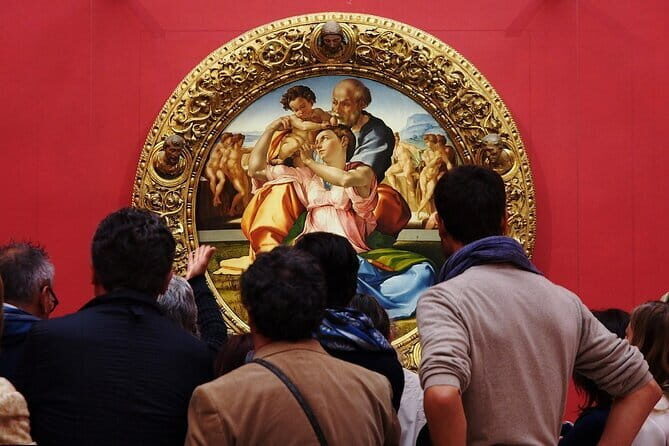
Most people come for sculpture, and that’s fair. But the Accademia’s painting collection is a big part of why the museum feels like more than one room with one famous moment.
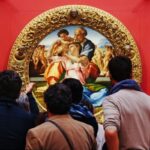
Your audio guide takes you through Florentine painting from the 15th to 16th centuries and the High Renaissance. The museum works you’ll encounter include pieces by Sandro Botticelli, Paolo Uccello, and Domenico Ghirlandaio. This is where you start to feel the visual language of the period: how artists used composition, gestures, and detail to communicate religious and civic themes.
Here’s my practical advice: don’t treat the paintings like background. Give them the same respect you give David. The audio commentary can help, but you’ll get more out of it if you slow down for the paintings long enough to actually read what’s happening in the scene.
One caution from real-world experience: the audio doesn’t always provide a perfectly obvious route. If you’re the type who wants each stop to line up with room numbers and a simple walking path, you might feel a little “lost” at first. If that happens, use a simple method: pick a direction, follow the flow of the rooms, and let the audio prompt you to pause where it matters.
What the audio guide does well—and where you might want to adjust
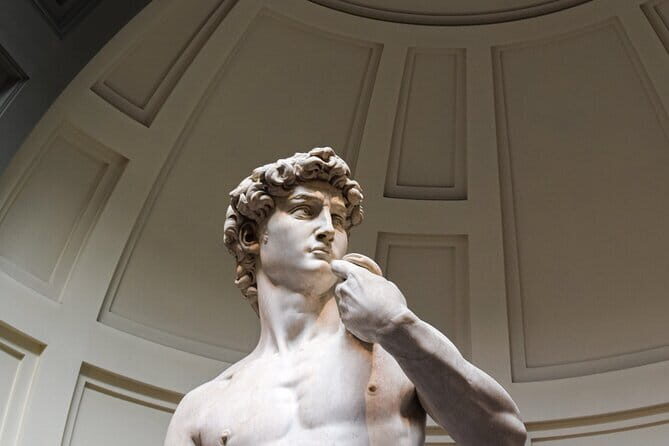
The audio guide is a central part of this experience. It’s available in multiple languages, and the commentary is designed to explain works you see as you go.
Where the audio helps the most is context. It can turn a statue into a story: why Michelangelo’s choices mattered, how the museum’s works connect, and what to pay attention to beyond the obvious wow factor. I especially like audio when it gives you a reason to look carefully, instead of only telling you what you already know.
But it’s not magic. Some people find the audio less helpful when it comes to navigation—like identifying exactly where you are in the museum layout. Others mention that the audio can include more music-related history than they expected.
So I’d go in with two expectations:
- Use the audio for meaning, not for a rigid step-by-step route.
- If you notice the commentary is spending more time on a theme you’re not craving, just keep walking and let the next artwork pull you back in.
And yes: in a crowded museum, having a calm way to listen matters. If you can, bring headphones that fit your style. If you can’t, you’ll still manage, but you might find yourself adjusting your position so you can hear over the noise.
You can also read our reviews of more guided tours in Florence
- The Best tour in Florence: Renaissance & Medici Tales – guided by a STORYTELLER
★ 5.0 · 12,316 reviews

Timing tips for a packed museum (without turning it into stress)
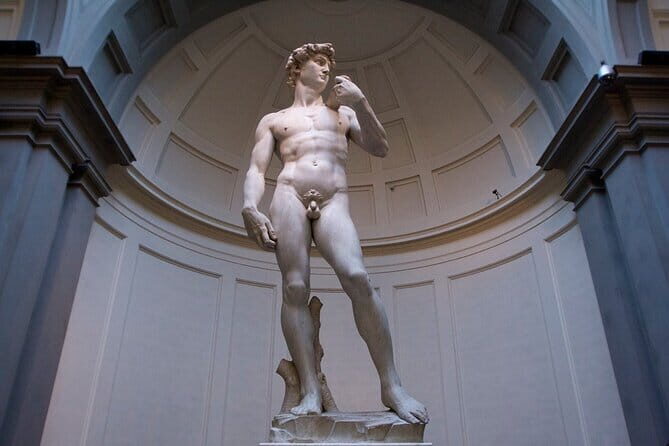
This visit is set up for about 3 hours. That’s enough time to see the main highlights at a comfortable pace, especially with an audio guide.
The best strategy is simple: arrive early enough that you’re not entering the museum when the day has already piled up. People often find the late-day crowds make everything harder: more noise, tighter circulation, and longer bottlenecks at points where you can stop and look. If you love art but hate waiting, pick an earlier time slot when you can.
Also, remember you’re required to meet at the check-in time. So don’t schedule your entire day like you’re on a movie set with perfect timing. Give yourself a little cushion, then let the gallery itself set the pace.
Lastly, wear comfortable shoes. The Accademia involves a lot of standing still, turning around, and moving through rooms where flow can get slow.
Price and value: is $56.60 worth it for you?
At $56.60 per person, this sits in the “pay for convenience” category. The good news is the price isn’t just admission. It includes:
- Entrance ticket and the museum reservation fee
- A guaranteed entry time
- Multilingual assistance at the meeting point
- Ticket delivered at the meeting point by an assistant
- Audio-guide commentary in your language
If you hate lines, this price can feel fair fast. You’re basically buying back your time and sanity. Skip-the-line style entry is often one of the best uses of vacation money, especially in a museum that can be hard to navigate quickly when crowds surge.
On the other hand, this is where I’d be honest. Because there’s no in-person guide, you’re not paying for a person to lead the story in real time. If you’re comfortable arranging your own tickets and audio, you might be able to do it cheaper by buying the museum ticket and audio separately. The trade is time: doing it DIY can be fine, but it can also put you right back into the line problem this booking is trying to avoid.
So the value question comes down to you:
- If you want low-stress entry and a ready-made start, this is a strong choice.
- If you’re budget-first and totally fine planning independently, you might prefer to DIY.
Who this fits best (and who should choose something else)
I’d say this is best for people who want a self-paced museum visit. The small group size (max 6) and the audio-first format make it a good fit if you like stopping to look, reading details slowly, and keeping your own rhythm.
It’s also a good option if you’re traveling in English and you want audio in your language while still getting help at the start. The meeting point assistance helps you get oriented quickly.
This is less ideal if you want a live guide who can explain everything, manage questions, and keep you on a tight walking plan. Since there’s no in-person guide included, you’ll rely on the audio and your own museum instincts.
Parents should also note the audio limit. The audio guide is not available for children under age 6, and children must be accompanied by an adult.
Should you book this Accademia Gallery ticket + audio?
Book it if you want the simplest path into a crowded museum: guaranteed time entry, ticket pickup support, and audio in your language so you can learn at your own pace. The Michelangelo focus is exactly what most people want here, and the added painting stops (Botticelli, Uccello, Ghirlandaio) help make the visit feel more complete than just a David photo moment.
Consider skipping or comparing alternatives if you’re budget-sensitive or if you strongly prefer a live guide with a structured route and real-time explanations. You should also plan carefully around the required check-in time, because being late can mean losing access for that fixed entry time.
If you’re flexible, go early, wear comfortable shoes, and give the audio guide a fair chance. This is one of those experiences where “not having a live guide” won’t bother you much—as long as you arrive ready to slow down for the art.
FAQ
Is the audio guide available in multiple languages?
Yes. The audio guide commentary is available in multiple languages, and you’ll use it in your own language.
Is this experience offered in English?
Yes. The experience is offered in English.
How long does the visit take?
It runs for about 3 hours.
Do I need an in-person guide to get in?
No. Admission and the audio guide are included, but an in-person guide is not included for this experience.
Where do I get my ticket?
You receive assistance at the meeting point, and your entrance ticket is delivered there by an assistant.
What time do I need to arrive?
You must arrive at the meeting point at the specified check-in time. If you’re late, you may not be able to use the time-entry ticket, and there’s no refund or reschedule.
Can the fixed entry time be changed after booking?
No. The museum ticket has a fixed entry time that cannot be changed after booking.
Is there a group size limit?
Yes. The experience has a maximum of 6 travelers.
Are there any age rules for the audio guide?
Children must be accompanied by an adult. The audio guide is not available for children under age 6.
Is it easy to reach using public transportation?
Yes. The meeting area is near public transportation.
What’s the cancellation option for a refund?
Free cancellation is offered. The details say you can cancel for a full refund if you cancel at least 24 hours before the experience start time.
You Might Also Enjoy



More Guided Tours in Florence
- The Best tour in Florence: Renaissance & Medici Tales – guided by a STORYTELLER
★ 5.0 · 12,316 reviews
More Tickets in Florence


More Tour Reviews in Florence
- Tuscany Day Trip from Florence: Siena, San Gimignano, Pisa and Lunch at a Winery
★ 5.0 · 21,634 reviews - The Best tour in Florence: Renaissance & Medici Tales – guided by a STORYTELLER
★ 5.0 · 12,316 reviews