REVIEW · FLORENCE
Accademia Gallery with David: Private Tour in Florence
Book on GetYourGuide →Operated by Be in Florence · Bookable on GetYourGuide
A giant like David doesn’t need hype. This private Accademia visit is a smart way to see the real payoff fast, with a guide who puts Michelangelo’s choices into plain words, plus priority access so you can get moving instead of waiting. I also like the walk-before-you-enter approach, because it helps you “read” Florence as you go. One thing to keep in mind: because the tour is timed, make sure you’re clear on what you want to see most, since there can be limited time to cover every corner once inside.
For $159 per person, you’re buying time, focus, and reduced stress. You get a private guide, a good audio system for clearer explanations, and time at the end to wander at your own pace through the larger museum. The museum itself can feel crowded, especially around David, so this is best when you want guided meaning, not just photos.
In This Review
- Key takeaways before you go
- Why the walk to Accademia is more than a warm-up
- Meeting point in Florence city center: choose the easiest starting spot
- Priority access at the Accademia: how you actually save time
- The David focus: what your guide makes you notice
- Unfinished statues: why the process is the real plot
- Medici musical instruments: the surprise extra you’ll remember
- Staying flexible at the end: your own pace matters
- Price and logistics: is $159 per person actually good value?
- What’s included and what you should plan yourself
- Languages and guide style: getting your questions answered
- Practical tips: how to make the 1.5 hours feel bigger
- Who this Accademia tour is best for
- Should you book this tour?
- FAQ
- How long is the private Accademia Gallery tour?
- Where does the guide meet you in Florence?
- Does this tour include priority entry?
- What’s included besides the museum tickets?
- What languages are available for the live guide?
- Is the museum visit wheelchair accessible?
Key takeaways before you go
- Walk first, museum later: you start with Florence context, not just a straight dash to the ticket line
- Priority entry via a separate entrance: less waiting, more time with David and the rest
- Michelangelo stories you won’t guess on your own: clear explanations of the statue and the genius behind it
- Unfinished sculptures matter here: you’ll see how the process explains the final result
- Medici musical instruments are included: a different side of the Medici court beyond painting and marble
- Private group pacing: you can rest when needed and ask questions without fighting the crowd
Why the walk to Accademia is more than a warm-up
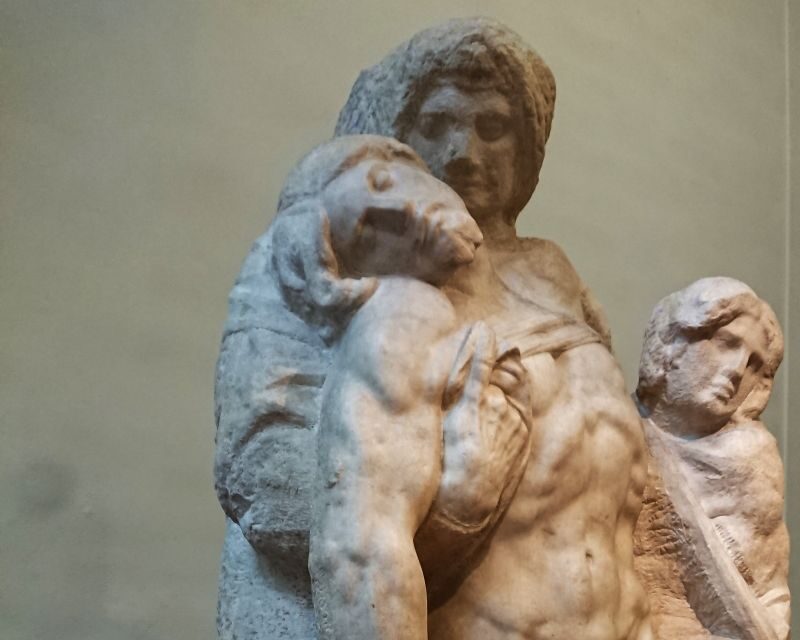
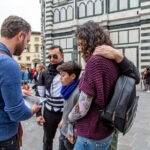
The best part of this tour is that it starts outside the museum, in central Florence. Instead of jumping straight into a room full of stone, your guide helps you get your bearings and points out places along the way where Florence’s story makes more sense. It’s the difference between seeing David and understanding why David felt so urgent to Florentines.
I like this approach because it turns your first minutes into momentum. You arrive with a framework in your head, so the museum doesn’t feel like random rooms and famous names. And since it’s private, you’re not stuck matching another group’s pace.
If you’re prone to fatigue, the walking section is also helpful because it gives you a chance to reset before the museum gets crowded. In one reported experience, the guide named Oxana was praised for being patient and allowing time to rest, including dealing with rain. That kind of flexibility can be a big deal on a day when weather or energy levels don’t cooperate.
You can also read our reviews of more private tours in Florence

Meeting point in Florence city center: choose the easiest starting spot
Your guide meets you in Florence city center, and you can meet at any location of your choice in the city center area. There’s also a set option: the column in piazza della Repubblica.
This matters because Florence meeting points can turn into a scavenger hunt if you’re tired or traveling with family. If you want the smoothest start, pick the simplest landmark for your hotel area. If you’re using public transport, picking a meeting spot near where you’ll already be standing saves time and stress.
Also, the tour is private, so you’re not fighting to find the group in a sea of people. Still, arrive a few minutes early. In real life, Florence streets and signage can slow you down, even when you’re prepared.
Priority access at the Accademia: how you actually save time
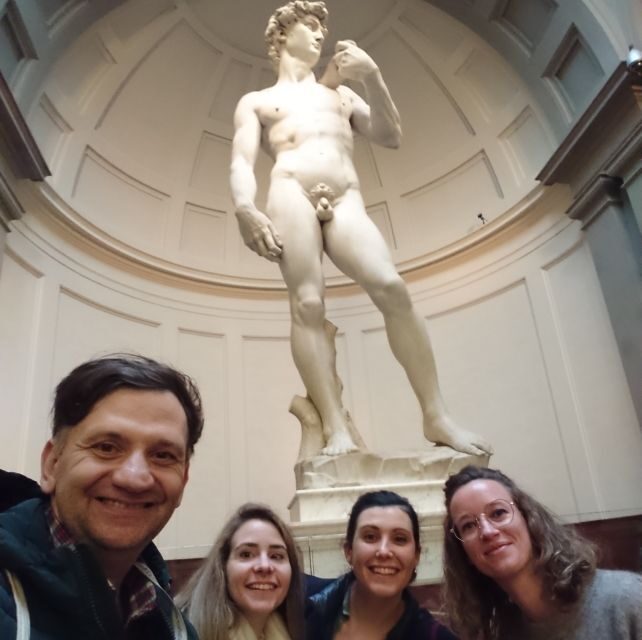
Once you reach the Galleria dell’Accademia, your entry is built to reduce the worst of the waiting. You get priority access through a separate entrance, and you also have an audio system that helps you follow the guide even when the room is noisy.
This is where the value shows up. At the Accademia, lines and crowd bottlenecks are part of the experience whether you like it or not. Priority access doesn’t magically make crowds disappear, but it can help you spend your limited time on what you came for.
One practical note: the museum can feel hectic around peak times. A reported standout from a past booking was how the guide helped with tickets when it was chaotic outside. That’s exactly the kind of support you’ll want on a busy day, especially if you’re traveling in a small group or with kids.
The David focus: what your guide makes you notice
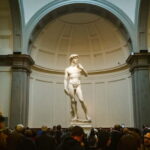
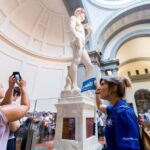
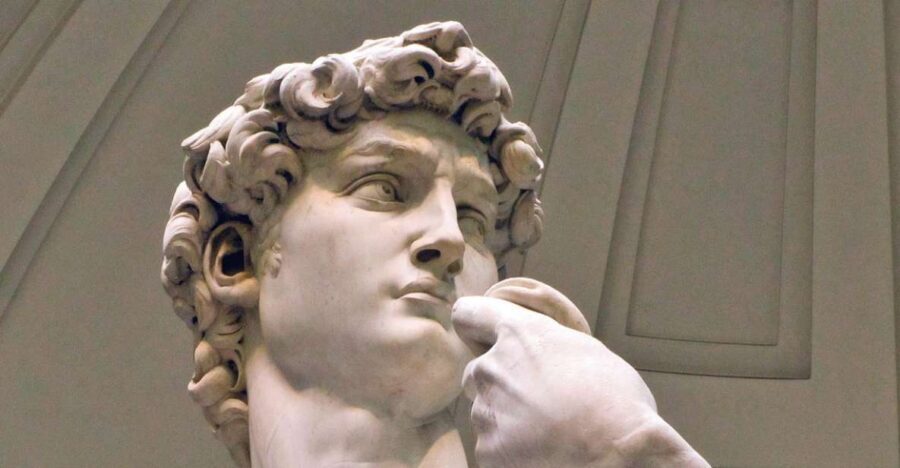
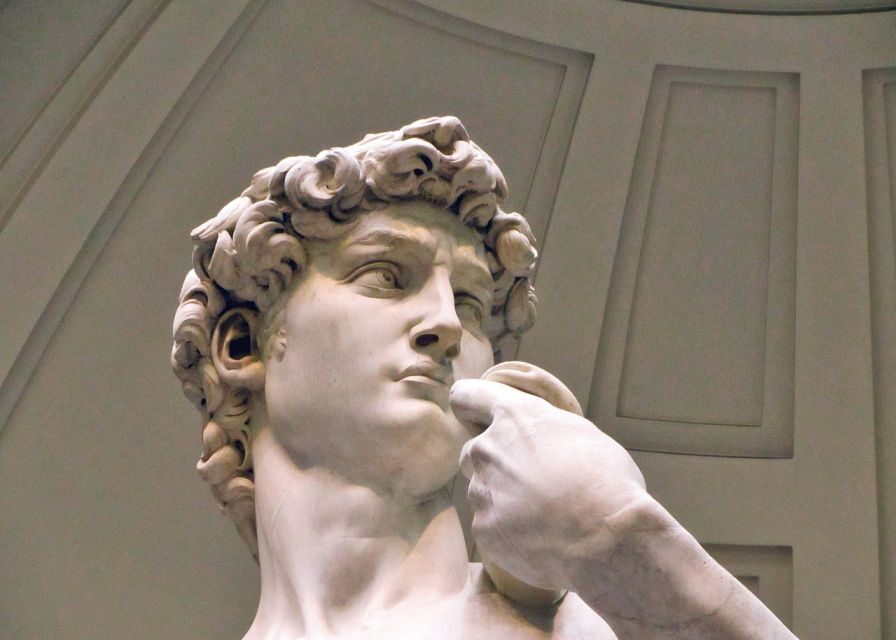
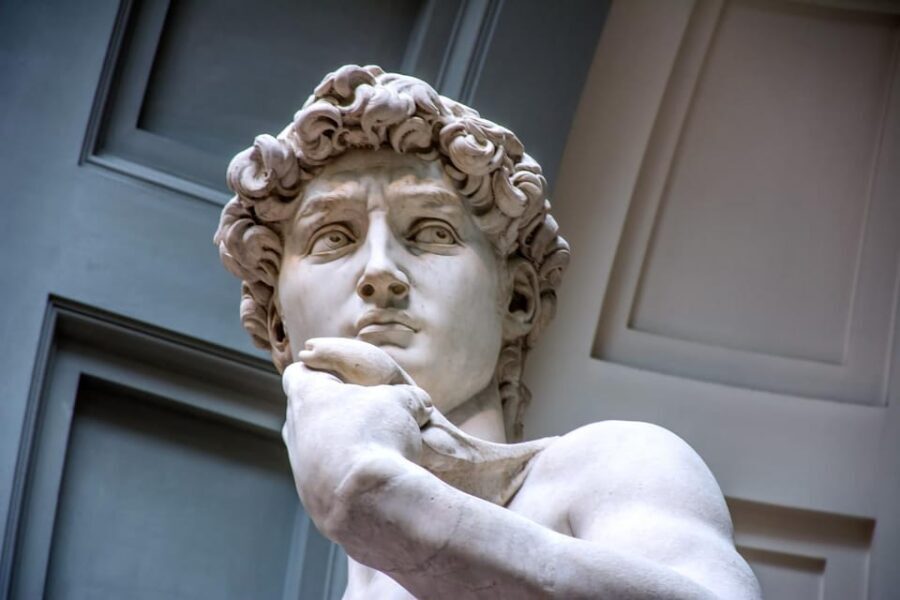
The heart of the tour is Michelangelo’s David. When you step into that space, you’ll immediately feel why it became a symbol for Florence. But the guide’s job is to make the statue more than an iconic photo.
Expect explanations about David’s harmonious beauty and how the work reflects Michelangelo’s genius. You’ll also get stories that connect the sculpture to Florence and its people across centuries, not just a list of facts. I find that the difference between a frustrating and satisfying museum visit is whether someone helps you “see” what you’re looking at.
This tour also aims to give you details about why David resonated for so long. Instead of treating David like a standalone masterpiece, you’ll learn how the statue fit into the cultural mindset of Florence.
And yes, it can still be crowded. The guide helps you manage that reality by pointing you toward what to look for first, rather than wasting time scanning for the obvious angles. If you’re sensitive to crowds, arriving as part of a guided flow can make the experience more bearable.
Unfinished statues: why the process is the real plot
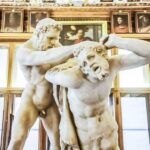
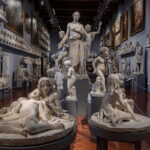
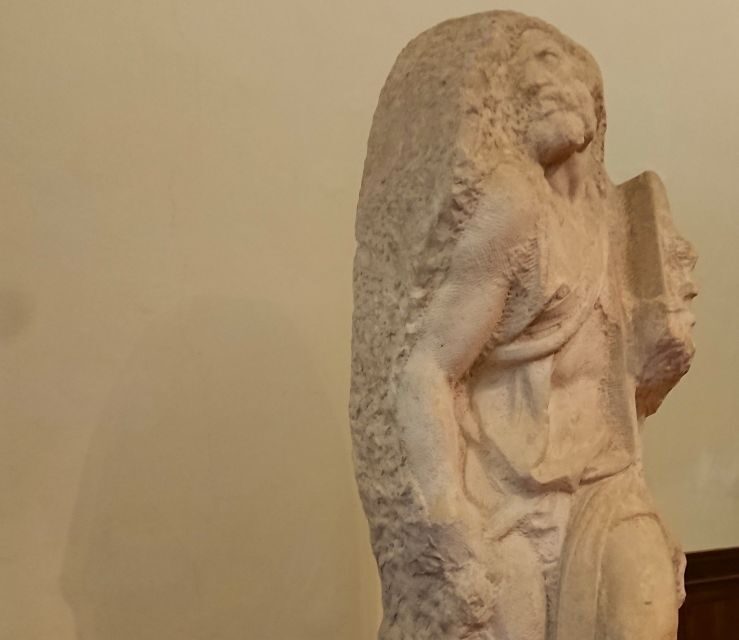
A major reason this tour works is the focus on Michelangelo’s unfinished sculptures. You’ll see the collection of unfinished statues and learn how Michelangelo found a passion for great sculpture even with the work in progress.
This is one of those museum experiences that changes how you think about “finished art.” When you look at the unfinished pieces, you start understanding the problem-solving side of genius: how an artist plans, tests, revises, and commits to form. You stop seeing stone as a final product and start seeing it as a working language.
It’s also a relief for people who get bored with pure spotlight viewing. If you only look for David’s perfect face and body, the museum can feel repetitive. But the unfinished sculptures give the visit a narrative: craft, decision, and the momentum of creation.
Time is limited, so if you’re the type who wants to read every sign, you might find yourself wanting more. Still, a guided route helps you hit the most meaningful areas within the 1.5-hour window.
You can also read our reviews of more museum experiences in Florence


Medici musical instruments: the surprise extra you’ll remember
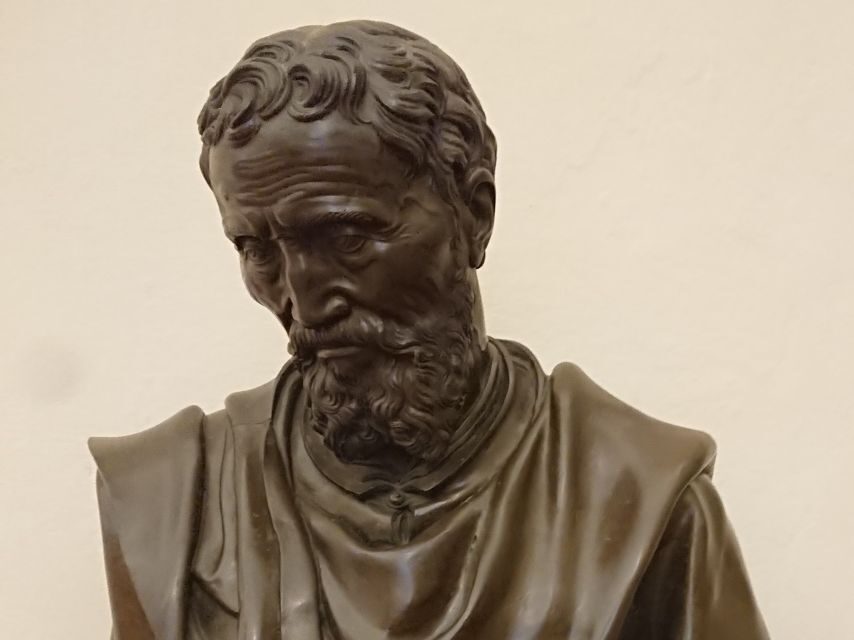
At the Accademia, the David-centered crowds can distract from everything else. This tour specifically includes access to the Medici collection of musical instruments.
That’s a smart inclusion because it adds dimension. The Medici weren’t just patrons of art on walls; they supported court life, performance, and culture. Seeing instruments in that context gives you a fuller picture of why Florence’s elite shaped taste and education.
Even if you’re not a music person, I think this section is valuable. It’s a reminder that museum greatness isn’t only about marble bodies. It’s also about sound, ceremony, and the everyday world that surrounded the masterpieces.
If you’re traveling with someone who gets tired of sculptures quickly, this musical stop can be the “okay, that’s interesting” moment that keeps everyone happy. It’s also a great way to break the emotional intensity of David.
Staying flexible at the end: your own pace matters
After the guided highlights, you get time to enjoy the rest of the collection at your own pace. That’s important because the Accademia isn’t a museum you can fully satisfy on a strict sprint.
Use this freedom wisely. If you loved David, go back once your eyes feel adjusted. If you’re more into process and craft, spend more time around the unfinished works. If the Medici instruments grabbed your attention, don’t rush past that area when the crowd shifts.
There is one practical caution based on an experience that didn’t fully go as hoped: in one booking, the guide ended earlier than the full scheduled time and the group didn’t cover an entire room. That doesn’t mean your tour will follow the same pattern, but it does suggest you should plan for a short, focused guided window. If you have must-see corners beyond David, ask about priorities so the guide can target the places that matter most to you.
Price and logistics: is $159 per person actually good value?
At $159 per person for about 1.5 hours, this is not a budget add-on. But it can still feel like good value if you want a guided interpretation, not just a ticket.
Here’s what you’re paying for:
- A private guide, not a group script
- Entrance tickets with priority access, which can save you from the worst waiting
- A high-quality audio system so you can hear the guide clearly
- A walk pickup in Florence city center, which reduces planning overhead
If you’re comparing against a standard guided ticket without priority entry, the math often improves quickly when the museum line is heavy. The audio system is also a real quality-of-life feature. At crowded museums, it’s common to miss key explanations because the guide is too far away or the room is too loud. This tour tries to prevent that problem.
The key trade-off is time. You’re only in for about 1.5 hours, so this is best for people who want the essentials explained clearly and then a relaxed wander afterward.
What’s included and what you should plan yourself
Included services cover the guide, museum entry with priority access, and hotel walk pickup in Florence city center (meeting options include piazza della Repubblica’s column). You’ll also have an audio system designed so you can hear the guide well.
Not included: food and beverage. So if you’re scheduling this around a meal, eat before you go or keep a snack plan. Museums are great, but they’re not ideal for hungry impatience. Also, the experience doesn’t mention lockers or refreshments, so I’d assume you’ll need to handle that on your own.
You should also know the basic museum rules listed for the activity: no glass objects and no weapons or sharp objects. That’s usually standard, but it’s still worth remembering if you’re carrying anything fragile.
Languages and guide style: getting your questions answered
This tour is offered with live guides in Arabic, English, French, Russian, and Spanish. If you’re choosing English versus another language, pick based on comfort for asking follow-up questions.
A guided visit works best when you can clarify what you’re seeing. David has anatomy details, symbolism layers, and artistic process questions that are easier to handle with back-and-forth conversation. That’s part of the appeal of a private group: you don’t have to wait for your turn.
And based on reported experiences, the guide quality can be strong in both knowledge and patience. One booking singled out Oxana for being informative and accommodating, including helping with resting needs and coping with rain. That kind of calm, practical approach tends to make art feel less like a rushed task.
Practical tips: how to make the 1.5 hours feel bigger
This is a short tour, so go in with a plan for what will matter most to you. If David is your only must-see, focus on that during the guided portion, then use the free time to return for a second look.
Wear shoes that can handle museum floors without fuss. You’ll be standing and moving, and Florence walking plus the museum’s indoor walking adds up. Also, bring a light layer. Museums can swing in temperature depending on crowd and ventilation.
Photography rules aren’t listed in the provided info, so I won’t assume anything. What I can suggest is to check your phone storage before you go. You’ll likely want to capture at least a couple of angles of David and the other highlights.
Finally, if you’re traveling with minors, the activity notes that parents should bring documents proving the age of minors. Don’t leave that to chance.
Who this Accademia tour is best for
This tour fits you if you want:
- A focused plan for seeing Michelangelo’s David and understanding why it matters
- A private guide who explains what you’re looking at, including unfinished works
- A museum visit that includes more than one famous sculpture, thanks to the Medici musical instruments
It’s also a good choice if you prefer reduced stress. Priority entry and a guide to manage logistics help a lot when the museum area gets crowded.
If you love museums but hate guided talking, you might prefer a self-guided ticket. This tour is built around interpretation and storytelling, so you’ll get the best value if you like hearing the context as you walk through.
Should you book this tour?
Book it if you’re short on time and you want David plus real context, not just a quick stop. The $159 price makes more sense when you factor in priority access, audio support, and the private guide attention you get in a very famous museum.
Skip it or consider a different format if you’re the type who wants to read every plaque at your own speed with no guidance. The 1.5-hour structure is tight, and while you’ll have some time at the end, you may not cover everything you’d like.
If you’re aiming for a high-impact first Accademia visit, this private setup is a strong bet: you get the big moment, the process behind it, and the Medici instruments that most people miss.
FAQ
How long is the private Accademia Gallery tour?
The duration is 1.5 hours.
Where does the guide meet you in Florence?
The guide meets you in Florence city center at your preferred location, or by the column in piazza della Repubblica.
Does this tour include priority entry?
Yes. You get entrance tickets with priority access and a separate entrance to skip the line.
What’s included besides the museum tickets?
You’ll have a private guide with an exclusive private-guided visit, entrance tickets, hotel walk pick-up in Florence city center, and a high-quality audio system.
What languages are available for the live guide?
Arabic, English, French, Russian, and Spanish.
Is the museum visit wheelchair accessible?
Yes, it is wheelchair accessible.
You Might Also Enjoy


More Private Tours in Florence

More Tours in Florence
- The Best tour in Florence: Renaissance & Medici Tales – guided by a STORYTELLER
★ 5.0 · 12,316 reviews

More Tour Reviews in Florence
- Tuscany Day Trip from Florence: Siena, San Gimignano, Pisa and Lunch at a Winery
★ 5.0 · 21,634 reviews - The Best tour in Florence: Renaissance & Medici Tales – guided by a STORYTELLER
★ 5.0 · 12,316 reviews