REVIEW · FLORENCE
Uffizi Gallery & optional Vasari Corridor Guided Tour
Book on GetYourGuide →Operated by Ciaoflorence Tours & Travel · Bookable on GetYourGuide
Secret corridors and famous paintings.
This Florence combo is interesting because you get two different kinds of storytelling: the Uffizi’s Renaissance masterpieces and the Vasari Corridor’s Medici-era secret passage. I like how the small group format keeps the visit moving and the guide’s attention focused. I also like the bonus views, especially from above the Arno toward Ponte Vecchio and the Oltrarno side of the city. One possible drawback: the Vasari Corridor part is shorter, and once inside the guide isn’t allowed to give the kind of detailed commentary you’ll hear in the gallery.
The Uffizi is big and easy to feel lost in. This tour helps you get your bearings fast and see why certain works mattered when Florence was the cultural center of Europe. You also end up with a built-in rhythm: art first, then the corridor walk, then a graceful finish near the Boboli Gardens.
In This Review
- Key things to love about this Uffizi and Vasari Corridor tour
- Where the tour starts: the Ciaoflorence meeting point on Via Cavour
- Uffizi Gallery guided time: seeing more by understanding what to look for
- The art stops that actually matter (and why the guide’s order is useful)
- Optional Vasari Corridor: a once-private route with rules (and magic anyway)
- Arno River and Ponte Vecchio views: why the corridor route feels different
- A clever design detail: how the corridor bypasses the Mannelli Tower
- Ending near Buontalenti Grotto in the Boboli Gardens
- Price and value: what you’re really paying for at $65.25
- Group dynamics and timing: what your 2–3 hours will feel like
- Who should book this Uffizi plus Vasari Corridor experience
- Practical tips to make the most of it
- Should you book it?
- FAQ
- What is the location of this tour?
- How long does the tour take?
- How much does the tour cost?
- Does the tour include the Vasari Corridor?
- Will I be able to hear and follow the guide?
- Where does the tour end?
- Is the tour accessible for wheelchair users?
- What information is needed for the Vasari Corridor tickets?
Key things to love about this Uffizi and Vasari Corridor tour

- Skip-the-line entry to the Uffizi helps you start without wasting prime sightseeing time.
- Small group size (up to 10) makes it easier to ask questions and hear your guide.
- Earphones included, which matters in a crowded museum.
- Optional Vasari Corridor access, with a guided outdoor walk when you choose it.
- High-level Florence views over the Arno, Ponte Vecchio, and into Oltrarno.
- Stops that connect Medici power, architecture, and art into one flowing experience.
Where the tour starts: the Ciaoflorence meeting point on Via Cavour
The whole experience begins at the Ciaoflorence Sales Office in Via Cavour 18. That address is more important than it sounds. If you’re early, you can calm your nerves, use the restroom nearby, and get ready for a museum entry that runs on schedule.
This is also the spot where you can confirm your group status and meet your guide for the day. The tour is run as a small group limited to 10 participants, and you’ll be given earphones, which makes a big difference at the Uffizi where acoustics and crowds can swallow voices.
One real-world note worth planning around: if the group timing shifts a bit on a busy day, it’s not unusual to see slight delays in museum access. You’ll still have a guided structure, but flexibility helps. The corridor schedule is especially complex because corridor access is capped.
You can also read our reviews of more guided tours in Florence
- The Best tour in Florence: Renaissance & Medici Tales – guided by a STORYTELLER
★ 5.0 · 12,316 reviews

Uffizi Gallery guided time: seeing more by understanding what to look for
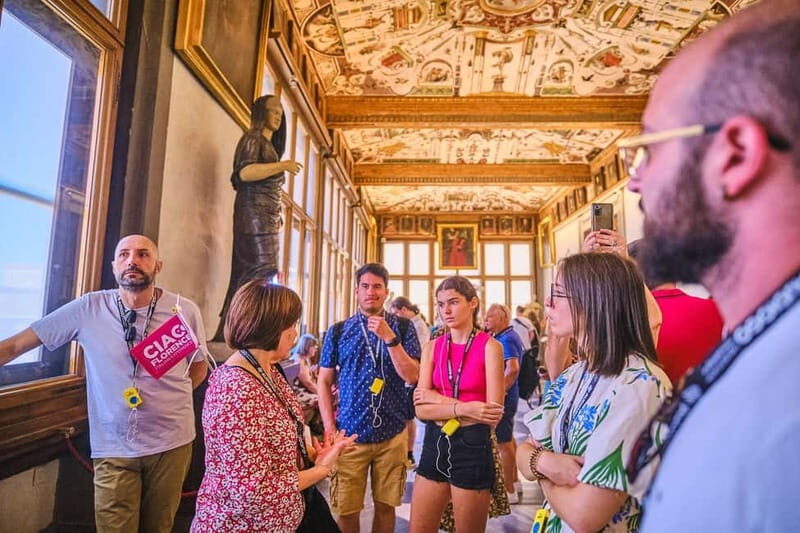
Your Uffizi portion is guided and designed to keep you from staring at plaques forever. You’ll meet the guide at the Uffizi Gallery itself and then move through selected works with explanations from a live guide in English or Spanish.
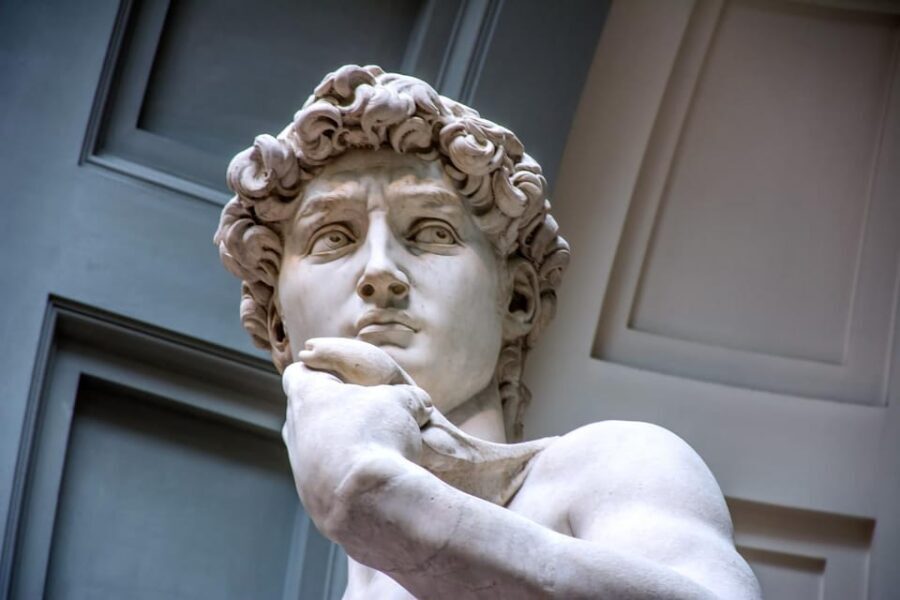
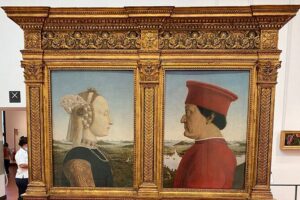
The Uffizi is famous for a reason: you’re looking at a concentration of Renaissance art where names like Leonardo da Vinci, Botticelli, Michelangelo, and Giotto show up. But fame doesn’t always help you see. The guide’s job is to connect the paintings to the people, the ideas, and the politics of Florence—so the works stop feeling like random masterpieces and start feeling like a system.
Two practical advantages you’ll feel during the tour:
- You don’t have to choose your own route. The museum is huge and easy to mis-time.
- You can ask questions without losing your place. In a small group, the guide can answer in context rather than waving you onward.
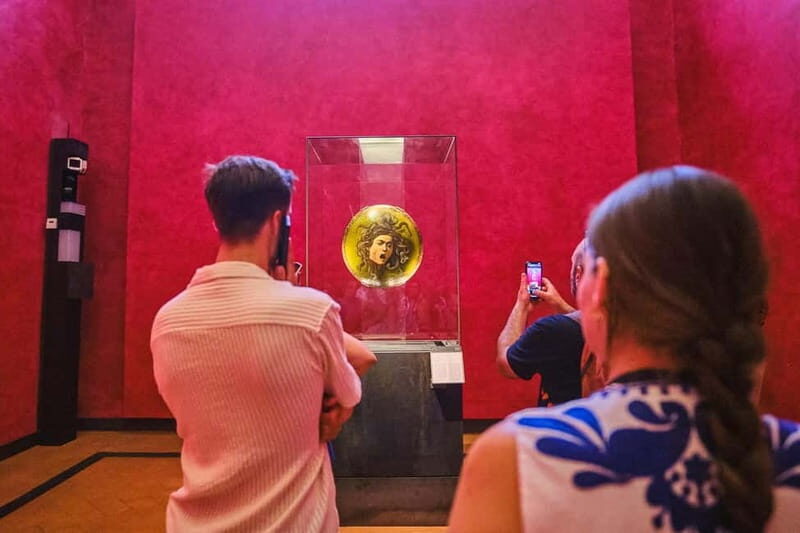
If you prefer museum wandering, you can still do it after the tour. One traveler even said they wished the visit covered a few extra works like Medusa, then pointed out they had time to explore on their own afterward. That’s a great way to think about this: use the tour to learn the big threads, then return to whatever catches your eye.
The art stops that actually matter (and why the guide’s order is useful)

The tour is built around Renaissance storytelling. You’ll spend time in the Uffizi, and the guide highlights works by major masters and explains the stories behind them. That’s the key word here: stories.
Why you should care about that? Because Renaissance art often rewards you for noticing details you’d otherwise skip:
- symbols that link to Medici patronage and status
- religious and myth themes that were understood in Florence at the time
- artistic techniques that explain why one painter influenced another
Instead of treating the gallery like a checklist, the guide helps you build a mental map. You start to recognize the patterns: myth versus devotion, public power versus private belief, and how Florence wanted the world to see it.
Because your group is capped at 10, the guide can also respond to what you’re asking. In one experience, a guide named Greta stood out for being helpful and friendly while keeping the information clear. That kind of communication matters when you’re juggling multiple big works in a short window.
Optional Vasari Corridor: a once-private route with rules (and magic anyway)
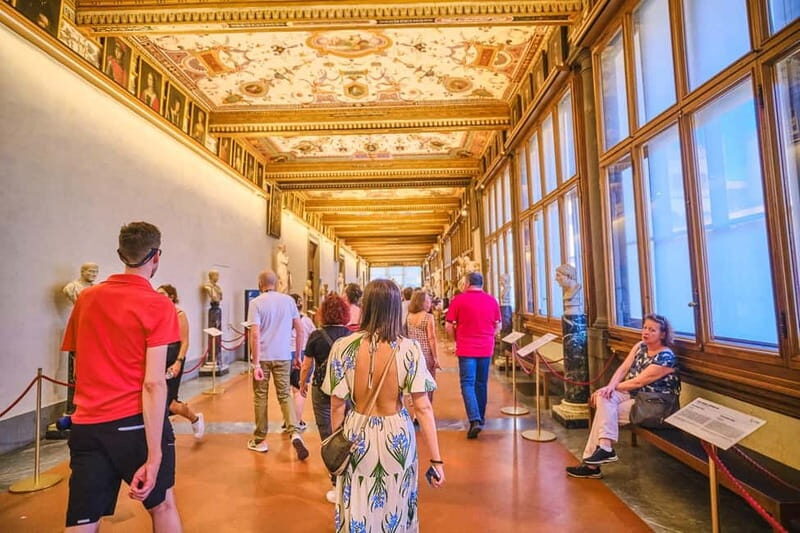
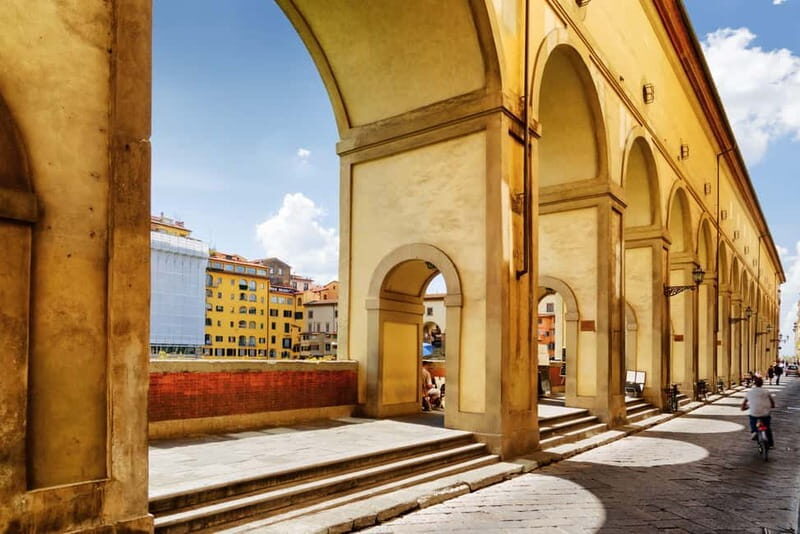
If you select the option that includes it, you get access to the Vasari Corridor, which is described as a once-exclusive passage for the Medici family. You’re not just walking a hallway. You’re walking a piece of power and planning.
Important expectations before you go:
- Access is limited to a maximum of 25 people inside the corridor system.
- Even though your tour is small (up to 10), other participants may join through the broader corridor cap.
- The guide’s ability to explain is restricted during the corridor walk. The guide can accompany you and point out key sights, but detailed explanations aren’t permitted for the corridor segment.
- The corridor portion is about 30 minutes.
That sounds limiting, but it’s part of the experience. The corridor is short and rules-based. Your job is to watch and absorb the views. Think of the corridor as the visual payoff to everything you learned at the Uffizi: art, power, architecture, and Florence’s obsession with controlling how people saw the city.
Also, here’s a practical upside. Even if you only get a short guided corridor window, the timing is tight enough that it doesn’t eat your whole afternoon. It fits into the overall 2–3 hour tour format without turning into a marathon.
Arno River and Ponte Vecchio views: why the corridor route feels different
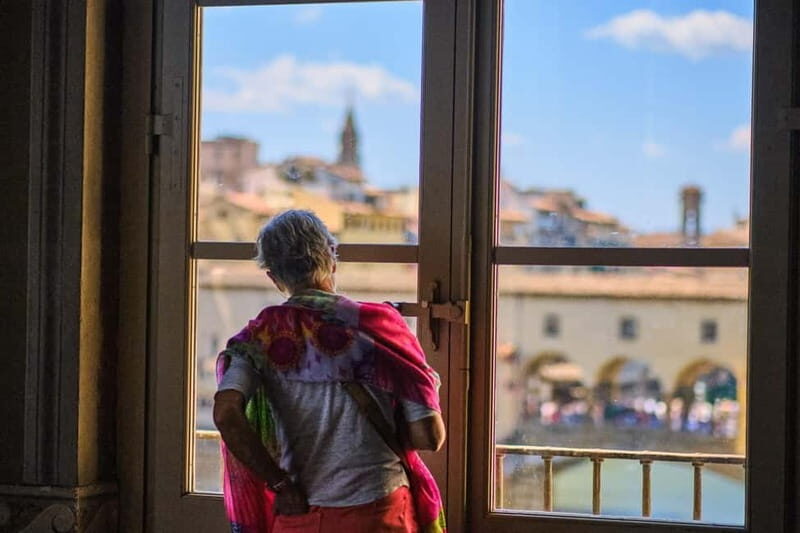
The corridor’s biggest contribution is the perspective shift. From up there, you understand Florence as a connected system—river, bridges, neighborhoods, and the Medici route between them.
As you walk, you’ll get views of:
- the Arno River
- the historic Ponte Vecchio
- the Oltrarno neighborhood
You’ll notice the difference between seeing Ponte Vecchio from the street level versus seeing it from the corridor. On the street, Ponte Vecchio is just busy and photogenic. From the corridor, it becomes part of a plan—how movement, commerce, and elite access fit together.
This is one of those rare moments where you can feel architecture doing storytelling. And yes, you’ll likely want your camera ready, but don’t block your own view for every photo. A few good shots are enough; the real win is your sense of scale.
You can also read our reviews of more museum experiences in Florence




A clever design detail: how the corridor bypasses the Mannelli Tower
One of the more interesting architecture notes you’ll hear on the corridor route is the ingenuity that lets the corridor bypass the Mannelli Tower. That detail matters because it shows Renaissance problem-solving in motion.
This isn’t just a scenic walk. You’re seeing the mechanics of how a powerful family solved a built-environment challenge. Even if you’re not an architecture nerd, you’ll understand the point: this was engineered to function.
That kind of explanation is especially valuable after the Uffizi. In the gallery, art reflects what people valued. In the corridor, engineering reflects what they could do to protect access and status.
Ending near Buontalenti Grotto in the Boboli Gardens
The experience concludes near Buontalenti Grotto in the Boboli Gardens. That’s a good end point for two reasons.
First, the gardens give you a breather after the museum and corridor intensity. Second, you exit with the option to keep going on your own. If you want to linger, you’re already in the right setting.
The description you’ll hear also frames the journey as Medici-era movement. You’re moving through spaces that reinforce Florence’s identity—first through art, then through a controlled architectural corridor, then through a garden designed to express taste and power.
Price and value: what you’re really paying for at $65.25
At $65.25 per person, this is not a budget museum deal. But it can be solid value if you want a guided Florence experience with tangible perks.
Here’s what that price likely covers in real-world terms:
- Professional guidance inside the Uffizi, where the museum’s scale can overwhelm you
- Skip-the-ticket-line benefit for the Uffizi entry
- Earphones, which improve comprehension in a crowded environment
- Small-group format (up to 10 participants)
- Optional Vasari Corridor access, which is the hardest part to get on your own because access is capped and timed
DIY can be cheaper, but it’s harder to replicate the guide’s role. The corridor especially is where independent planning gets tricky. With limited capacity and strict rules for how the guide can speak, it’s exactly the kind of experience where buying a guided component saves you stress.
If you’re the type who reads every label and wants to wander slowly, you might not need the corridor add-on. But if you want Florence’s “wow” factor with structure and timing, this is a reasonable way to pay for it.
Group dynamics and timing: what your 2–3 hours will feel like
The tour is listed for 2–3 hours, and actual flow depends on starting times and museum entry conditions.
Your best bet: plan your day so you’re not rushing immediately afterward. The Uffizi plus corridor plus garden ending can take most of your morning or early afternoon. If you’re pairing it with lunch or another timed ticket, build a cushion.
Also, be aware of a small-group reality. You’re capped at 10, but the corridor has a separate cap of 25. That means your group may not be alone in the corridor segment. You’ll still have your guide accompaniment, but you’ll share the space.
A fun detail from one experience: the start at the meeting point went smoothly, but when two other expected people didn’t show and didn’t answer calls, the visit essentially became close to private. That’s not something you can count on, but it’s reassuring that the operator and guide are ready to handle timing hiccups without throwing the day off.
Who should book this Uffizi plus Vasari Corridor experience
This tour makes the most sense if you:
- want major Renaissance art explained in a way that helps you prioritize
- like getting views that connect landmarks, not just snapping photos
- enjoy Medici-era Florence as a theme that ties art and architecture together
- prefer small-group touring with earphones and live guidance
It might be less ideal if you:
- need wheelchair accessibility or mobility support. This tour is not accessible to people with mobility disabilities or wheelchairs.
- want a long, fully narrated corridor segment. The corridor walk is shorter and the guide’s detailed commentary is restricted.
Practical tips to make the most of it
A few simple habits will improve your experience fast:
- Wear shoes you can walk in comfortably for the Uffizi route and the corridor walk. This isn’t a sit-and-stare tour.
- If you’re choosing the Vasari option, treat the corridor as a view moment. Let your eyes do the work during that segment.
- Bring a charge for your phone and keep it ready, but don’t over-photograph. The best corridor memory is often the one you experience without looking through a screen.
- Plan to spend extra time in the Uffizi afterward if there’s a specific work you care about. The tour focuses on key selections, and you can build your personal favorites afterward.
And if your schedule is tight, remember that complex corridor management can lead to slight timing adjustments. You should expect a bit of operational flexibility rather than assuming every minute will be identical to your ticket.
Should you book it?
If you’re doing Florence for the art and the architecture, yes—especially if you want the Uffizi plus the Vasari Corridor as one efficient story. This is a strong choice when you value guided clarity, small-group attention, and high-impact views over major landmarks like the Arno River and Ponte Vecchio.
Skip the corridor option only if you’re sure you don’t care about that specific Medici passage or if you’d rather use your time for slower museum wandering. Otherwise, the combo is good value for the effort it saves and the perspective it gives.
In short: book it if you want Florence explained, then seen from a place most people never get.
FAQ
What is the location of this tour?
The tour is in Florence, Tuscany, Italy. The meeting point is the Ciaoflorence Sales Office in Via Cavour 18.
How long does the tour take?
It’s listed as 2 to 3 hours. Starting times vary, so check availability for the exact schedule.
How much does the tour cost?
The price is $65.25 per person.
Does the tour include the Vasari Corridor?
The Vasari Corridor is included only if you select the option that adds it. The tour includes a guided outdoor walk along the corridor when that option is chosen.
Will I be able to hear and follow the guide?
Yes. Earphones are included, and the tour includes a live English or Spanish guide.
Where does the tour end?
The experience ends back at the meeting point, and the Vasari Corridor option concludes near Buontalenti Grotto in the Boboli Gardens.
Is the tour accessible for wheelchair users?
No. This tour is not accessible to people with mobility disabilities or wheelchairs.
What information is needed for the Vasari Corridor tickets?
Tickets for the Vasari Corridor are issued in the name of each participant. You need to provide full name, surname, and date of birth for all attendees.
You Might Also Enjoy

More Guided Tours in Florence
- The Best tour in Florence: Renaissance & Medici Tales – guided by a STORYTELLER
★ 5.0 · 12,316 reviews


More Tours in Florence
- The Best tour in Florence: Renaissance & Medici Tales – guided by a STORYTELLER
★ 5.0 · 12,316 reviews



More Tour Reviews in Florence
- Tuscany Day Trip from Florence: Siena, San Gimignano, Pisa and Lunch at a Winery
★ 5.0 · 21,634 reviews - The Best tour in Florence: Renaissance & Medici Tales – guided by a STORYTELLER
★ 5.0 · 12,316 reviews