REVIEW · FLORENCE
Bargello private tour with a 5-star tour guide
Book on Viator →Operated by THINGS TO DO IN FZCO · Bookable on Viator
Renaissance Florence gets real quiet here. This private Bargello Museum tour keeps you out of the crowd rush while a 5-star guide walks you through major Renaissance sculpture you can actually study.
I especially like the combo of skip-the-queue admission and a guide who stays focused on the art instead of corralling a big herd. The museum also feels more relaxed than the headline stops, so you get time to look without pressure.
One thing to consider: on a rare day, a guide substitution can happen if someone is out sick or injured. If that ever occurs, I’d suggest saying hello early and asking any questions right away so the tour still feels well-prepared.
In This Review
- Quick Highlights You’ll Feel Right Away
- Why Bargello Works When Florence Feels Too Busy
- Your 1-Hour Plan at Museo Nazionale del Bargello (And What It Means for You)
- Headsets: Small Tech, Big Calm
- The Artistic Core: What You’ll See and Why It Matters
- Donatello: The Revolution You Can Walk Up To
- Andrea del Verrocchio and the Apprentice Idea
- Michelangelo: When Genius Meets Criticism
- Giambologna and Benvenuto Cellini: Showmanship and Technique
- The Florence Backstory You’ll Actually Remember
- Private Tour Value: What You Gain (And What You Don’t)
- Price Check: Is $112.95 Worth It?
- Who Should Book This Tour
- A Note on Guide Experience (From What You Can Expect)
- Should You Book the Bargello Private Tour?
- FAQ
- FAQ
- How long is the Bargello private tour?
- Is museum admission included?
- Does the tour include a guide and audio headsets?
- Where do we meet for the tour?
- What language is the tour offered in?
- Is this a private tour?
- What is the cancellation policy?
Quick Highlights You’ll Feel Right Away
- Skip the lines at the Bargello Museum with admission included.
- Audio headsets let you hear your guide clearly without craning your neck.
- Private pacing means you can stop, ask, and move on at a comfortable rhythm.
- Sculpture-focused Renaissance stories connect Donatello, Michelangelo, Cellini, and more.
- Hard-to-find context like the competition over the Baptistery Doors and what came after.
- Small “what’s visible today” adjustments can appear when works are moved, so you still get the key idea.
Why Bargello Works When Florence Feels Too Busy
Florence can be intense. You arrive expecting art and end up doing a cardio version of history—standing in lines, then rushing to fit “the must-sees” before dinner.
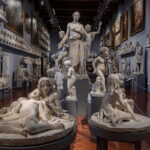
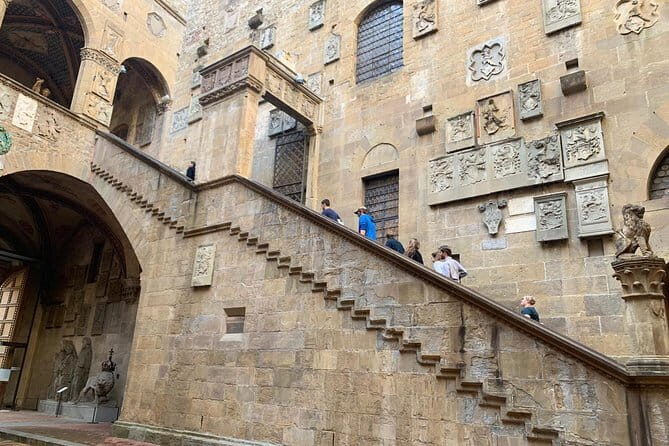
The Bargello flips that. This is a sculpture museum inside a palace, and it’s set up for slower looking. Instead of sprinting from chapel to chapel, you focus on works that reward close attention: faces, poses, textures, tools’ marks, and the way artists solved the same problem in totally different ways.
What makes this tour especially practical is that it’s built for a short time window. In about an hour, you still get a clear narrative arc of Renaissance Florence—without the “we’ll see everything” promise that usually turns into stress.
You can also read our reviews of more guided tours in Florence
- The Best tour in Florence: Renaissance & Medici Tales – guided by a STORYTELLER
★ 5.0 · 12,316 reviews
Your 1-Hour Plan at Museo Nazionale del Bargello (And What It Means for You)
This is a one-stop tour. You meet at the museum entrance (Via del Proconsolo, 4) and then your guide leads you through the collection at a pace that suits a private group.
In that hour, the goal isn’t to check boxes. It’s to understand how the Renaissance sculptors thought and competed. You’ll hear the stories behind the objects, not just dates and titles.
You also get a “quiet advantage” in practice. Bargello is often less crowded than Florence’s blockbuster museums. That matters because sculpture is visual but also tactile in your mind—you want to stand close and follow lines across the surface. A quieter room gives you that option.
Tip: If you want to ask questions, do it early. Early questions guide what you notice later.
Headsets: Small Tech, Big Calm
A big part of why this works is that the tour uses audio headsets. That means you’re not stuck playing “guess the whisper” while the guide speaks over foot traffic.
So you can do two important things:
- Keep your attention on the sculpture in front of you.
- Still catch details without moving every few seconds to follow the guide.
On a private tour, it’s easy to think you won’t need audio. But in real museum spaces, sound bounces, people pass, and room echoes happen. Headsets reduce that distraction and keep the tour’s tone consistent from stop to stop.
The Artistic Core: What You’ll See and Why It Matters
The Bargello’s power is that it puts major names in direct conversation. Your guide doesn’t treat these artists like isolated geniuses. You learn how they respond to each other’s ideas—through commissions, competition, and technical breakthroughs.
Here’s the backbone of what you can expect to spend time on.
Donatello: The Revolution You Can Walk Up To
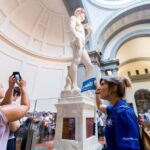
Donatello’s presence is one of the reasons the Bargello feels essential. His work helped change Renaissance sculpture from decorative objects into emotionally direct images with human scale and attitude.
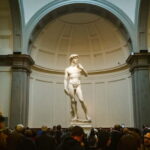
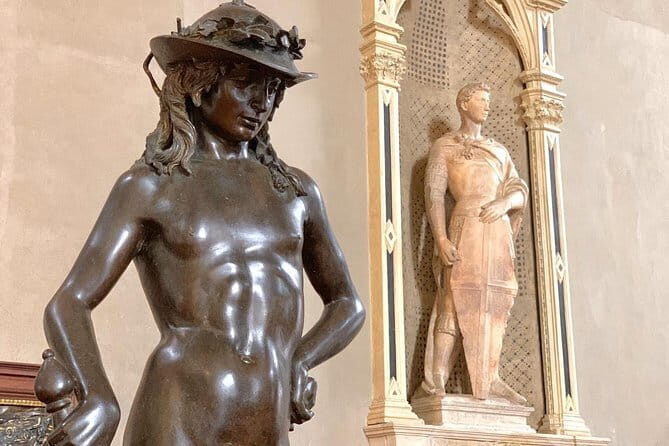
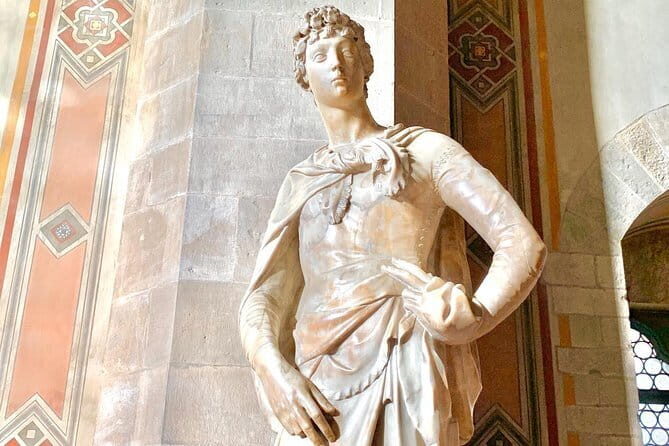
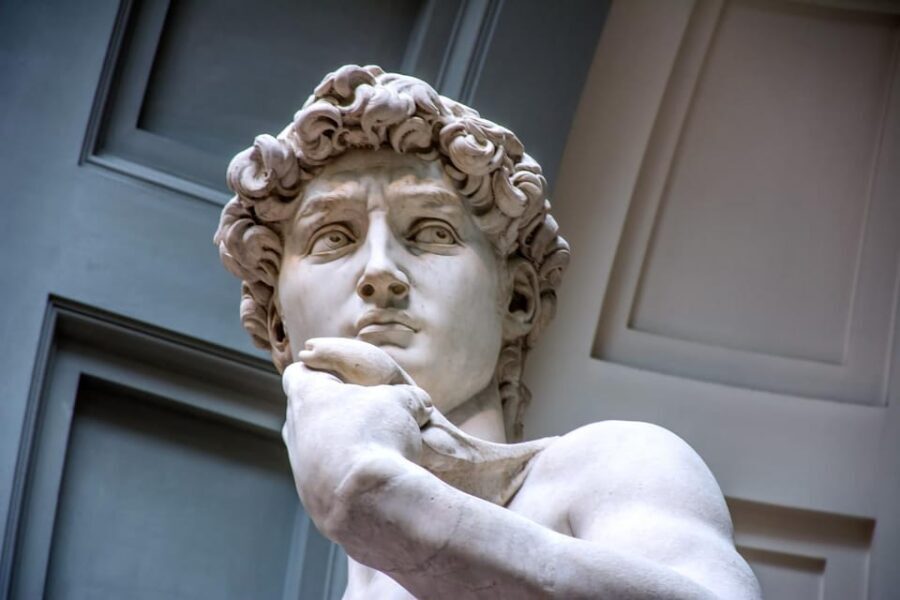
You’ll hear stories tied to major works commonly associated with Donatello, including the famed David and St. George. The tour focuses on what made Donatello’s approach different—especially how he gave stone and bronze a more lifelike presence.
A detail I like from past experiences with this style of tour: when an important work can’t be seen due to temporary movement, some guides may point you to a nearby reference. For example, one guide in this program took a short detour (about five minutes) to see a copy of Donatello’s St. George at Florence’s Guild Church area. It’s not guaranteed, but it’s a smart reminder to ask your guide if any pieces are temporarily unavailable that day.
You can also read our reviews of more private tours in Florence



Andrea del Verrocchio and the Apprentice Idea
Next comes the theme of teacher and student—because Renaissance art wasn’t made in a vacuum.
You’ll spend time on work associated with Andrea del Verrocchio and hear how his apprentice later created something new enough to outgrow the original style. You get the sense of a workshop system where ideas were passed on, tested, and then challenged.
Even if you don’t consider yourself an “art person,” this portion usually clicks because it’s human: ego, mentorship, experimentation, and the pressure to prove you can do more than copy.
Michelangelo: When Genius Meets Criticism
Michelangelo’s works at the Bargello tend to hit harder in person than people expect. Your guide can connect two different sides of Michelangelo’s talent: power in form and drama in presentation.
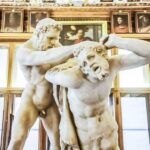
You may hear about pieces like Brutus and a marble tondo, plus the story behind why Bacchus was originally criticized by its patron. That patron criticism part matters—it shows that art at the time wasn’t always loved instantly. People paid for it, judged it, and negotiated meaning.
This kind of context changes how you look. Instead of seeing “a sculpture,” you start seeing a conversation that happened in real time between artist, patrons, and public taste.
Giambologna and Benvenuto Cellini: Showmanship and Technique
The Bargello doesn’t only reward reverence. It also rewards curiosity about how sculpture gets made.
You’ll encounter works associated with Giambologna and Benvenuto Cellini. The tour also brings in a key story tied to Cellini’s Perseus—the kind of work that turns public space into a stage.
One practical and fascinating topic your guide covers is bronze sculpture and the process behind it. Even when you aren’t going home thinking about casting steps, you’ll start to notice how Renaissance sculptors planned for how metal would behave. It gives you respect for what you’re looking at.
The Florence Backstory You’ll Actually Remember
One reason I like this tour format is that it doesn’t stop at “artist A made sculpture X.” It gives you the political and emotional frame that makes the art readable.
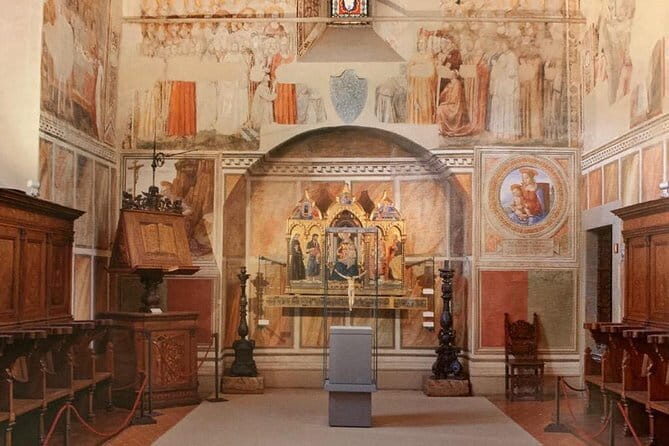
You’ll hear about dark moments in Florentine history and the idea that the building and its past have weight. That matters because the museum is housed in a palace that carries stories beyond the objects on the walls.
You’ll also learn about the competition for the Baptistery Doors, a famous thread tied to Brunelleschi, including how a major failure later led to a bigger success. That arc helps you understand Renaissance creativity as a cycle: ambition, rivalry, disappointment, and reinvention.
In short: you don’t just memorize names. You understand why these artists pushed so hard.
Private Tour Value: What You Gain (And What You Don’t)
This tour is private, meaning only your group participates. For Bargello, that’s a real advantage because you’re moving through a sequence of artworks where timing and attention matter.
When you travel with a large group, you often do this:
- hear a quick overview
- rush to “the next thing”
- barely look at details you can’t photograph well
- repeat the same loop in every room
With a private format, you can:
- pause longer where something grabs you
- ask a follow-up question without feeling rushed
- reframe your focus if you get interested in a specific artist
The tradeoff is simple: because it’s a 1-hour tour, you won’t see every single piece in the museum. Instead, you get clarity on the most important threads, which is often the better use of limited time in Florence.
Price Check: Is $112.95 Worth It?

At $112.95 per person for about an hour, the price can look steep if you compare it to a general “museum pass.” But compare it to what you get in this package:
- Admission ticket included (so you’re not paying twice)
- Licensed tour guide
- Headsets so you get full-guide audio clarity
- A private group format, which usually means better pacing and less waiting
If you’re traveling with one or two people who genuinely enjoy art stories and want a structured route, this is solid value. You’re paying for time efficiency plus a guide who can link works together so they make sense.
If you only want a quick walk-through and you don’t care about context, you might be better off with a self-guided visit. For many people though, Bargello rewards interpretation—especially when you’re seeing major names like Donatello and Michelangelo.
Who Should Book This Tour
This tour fits best if you:
- want Renaissance sculpture with a story arc in just one hour
- prefer a quiet, uncrowded museum rhythm
- enjoy hearing how artists competed, collaborated, and evolved
- like close-looking at pieces you can walk up to
I’d especially recommend it for first-timers to the Bargello who still want the Florence “big names” (Donatello, Michelangelo) but don’t want the stress that comes with the most famous sights.
It also works well if you’re the type of person who asks questions like: Why did patrons react this way? What changed between teacher and apprentice? How do bronze pieces get made?
A Note on Guide Experience (From What You Can Expect)
The tour is offered with a high standard—there are guides in this program who are clearly strong in art history and storytelling. In past experiences with this type of booking, guides like Glenda and Anna/Ana were praised for hitting the main highlights and making the museum feel easy to navigate.
One caution: occasionally a guide substitution can happen, and that can affect readiness for a specific day’s flow. If that happens, the fix is simple: be proactive. Confirm where to meet, start with questions early, and ask if any works are temporarily unavailable before you spend time focusing on one section.
Should You Book the Bargello Private Tour?
If your schedule in Florence is tight and you want sculpture with context, I’d book this. It’s a smart use of time: admission included, headsets included, and a private pacing that keeps you from burning your energy on crowds.
Book it if you want the story connections—Brunelleschi’s door competition, mentorship threads from Verrocchio to his student, and the Michelangelo moments that include patron judgment. That kind of context makes the Bargello feel bigger than its reputation.
Skip it if you’re only seeking a casual stroll and you don’t want a guided interpretation. For self-guided visitors, it’s still a good museum, but you’ll miss the “why it matters” links that this tour is designed to deliver.
FAQ
FAQ
How long is the Bargello private tour?
The tour lasts about 1 hour.
Is museum admission included?
Yes. Admission tickets to the Bargello Museum are included in the price.
Does the tour include a guide and audio headsets?
Yes. You get a licensed tour guide and audio headsets so you can hear the guide clearly.
Where do we meet for the tour?
You meet at Museo Nazionale del Bargello, Via del Proconsolo, 4, 50122 Firenze FI, Italy.
What language is the tour offered in?
The tour is offered in English.
Is this a private tour?
Yes. It’s private, so only your group participates.
What is the cancellation policy?
You can cancel for a full refund if you cancel up to 24 hours in advance of the experience’s start time.
You Might Also Enjoy



More Guided Tours in Florence
- The Best tour in Florence: Renaissance & Medici Tales – guided by a STORYTELLER
★ 5.0 · 12,316 reviews

More Tours in Florence
- The Best tour in Florence: Renaissance & Medici Tales – guided by a STORYTELLER
★ 5.0 · 12,316 reviews

More Tour Reviews in Florence
- Tuscany Day Trip from Florence: Siena, San Gimignano, Pisa and Lunch at a Winery
★ 5.0 · 21,634 reviews - The Best tour in Florence: Renaissance & Medici Tales – guided by a STORYTELLER
★ 5.0 · 12,316 reviews