REVIEW · FLORENCE
Essential Florence Walking Tour with an Expert Local Guide
Book on Viator →Operated by Walkabout Florence Tours · Bookable on Viator
Duomo day starts with a local story. This Essential Florence Walking Tour strings together major landmarks and the human drama behind them, from guild power to Medici-style maneuvering. You’ll get an expert guide, a small group pace, and time to actually enjoy the walk instead of just sprinting between photos.
What I like most is how efficiently the tour turns a first visit into something you can navigate afterward. I also like the balance of landmark time with room for a breather—think bathroom breaks and even a quick coffee-style pause—while you still hit big hitters like the Duomo complex.
One thing to consider: it’s still a lot of cobblestones and standing. If your legs aren’t great on stone streets, plan for a steady walking rhythm and wear comfortable shoes from the start.
In This Review
- Key things you’ll notice right away
- Why this 3-hour Florence walk is worth your time
- Starting at Piazza della Repubblica and ending by Piazza della Signoria
- Stop 1: Orsanmichele, where guild power became sculpture
- Stop 2: Dante’s world at Museo Casa di Dante
- Stops 3–5: Duomo complex in bite-sized pieces
- Duomo (Stop 3)
- Baptistery of St. John (Stop 4)
- Campanile di Giotto (Stop 5)
- Stop 6: Santa Maria Novella and the Dominican connection
- Stop 7: Palazzo Rucellai, Renaissance math on a facade
- Stop 8: Palazzo Strozzi, scale and Renaissance ambition
- Stop 9: Santa Trinita and Ghirlandaio’s frescoes
- Stop 10: Palazzo Pitti and the Medici-to-diplomats timeline
- Stop 11: Santa Felicita, an older church in Oltrarno
- Stop 12: The Vasari Corridor, power moving above the streets
- Gelato, coffee, and bathroom breaks: the pacing you’ll feel
- Guide quality: Andrea, Becky, and Lisa-style storytelling
- Price and value: why $40.12 can make sense here
- Practical tips so you enjoy the walking part
- Who should book this tour
- Should you book this Essential Florence Walking Tour?
- FAQ
- How long is the Essential Florence Walking Tour?
- Where does the tour start and where does it end?
- Is there a mobile ticket?
- What group size should I expect?
- Are the attractions on the route free to enter?
- What happens if weather is bad?
Key things you’ll notice right away

- A 3-hour circuit that covers a serious chunk of central Florence, ending near Piazza della Signoria
- Expert local storytelling that connects Florence’s politics, art, and architecture into one flow
- A manageable group size (max 20), so you can hear and ask questions
- Frequent breaks for comfort, including time that works for bathroom stops
- Stops that are free for you to enter, based on the time blocks listed
Why this 3-hour Florence walk is worth your time
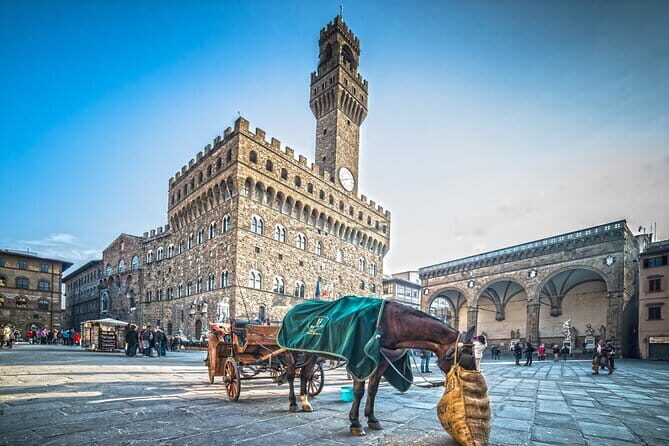
Florence can feel like one long museum day—until you realize you don’t know where you are. This tour is designed to fix that fast. In about three hours, you cover both the “postcard Florence” zone and the quieter, story-filled streets toward the Oltrarno side.
The big win is how the guide ties the sights together. You don’t just get names. You get context: who held power, why buildings were built the way they were, and how artists and patrons shaped what you see today. The tour also leans into the more dramatic side of Florence’s reputation, including tales of murder and betrayal, which makes the whole place feel more human.
And yes, it includes the simple stuff too. Expect time for gelato during the strolling. It’s a small touch, but it keeps the day from feeling like a classroom lecture with good architecture.
You can also read our reviews of more walking tours in Florence

Starting at Piazza della Repubblica and ending by Piazza della Signoria
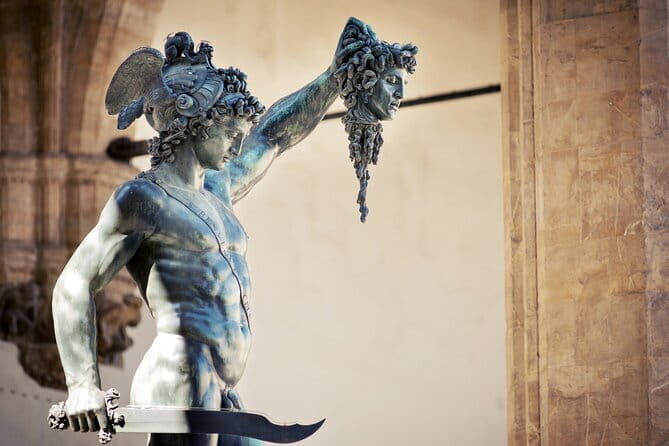
You begin at Piazza della Repubblica (9:00 am start) and finish at Piazza della Signoria. That’s a smart route for two reasons.
First, Piazza della Repubblica puts you near transit and sets you up right in the center of things. Second, ending at Piazza della Signoria is perfect because you’re dropping off in another “main stage” area—so you can continue on your own right away without a long trek back across town.
You’ll also get a mobile ticket, which makes it easier to keep everything in your phone and not waste time at the start. The tour runs with a max group size of 20, which usually means less jostling when you stop in tight spots.
Stop 1: Orsanmichele, where guild power became sculpture
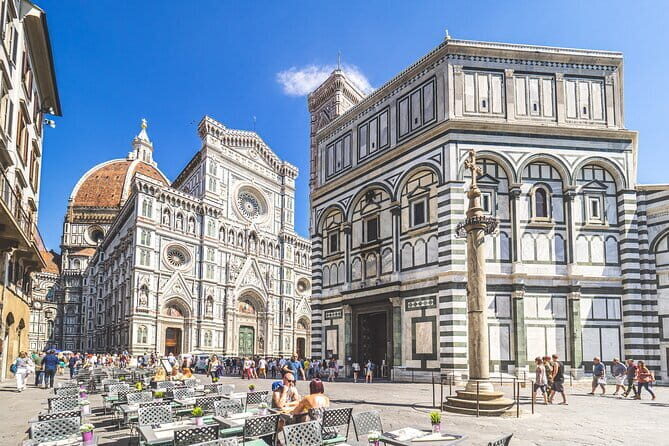
The walk kicks off at the Church & Museum of Orsanmichele. This building’s story is a great example of why Florence is more interesting than its skyline. It began as a loggia meant for storing and trading grain. Later it was transformed into a church tied to the Arts guilds, so the building became a platform for civic pride.
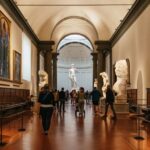
The museum level is where the sculptural reputation comes in. You’ll be pointed toward the originals connected to the building’s external niche program, including famous works by Donatello and Ghiberti. Even if you’re not a full-time art nerd, this stop helps you understand something important: in Florence, art wasn’t only decoration. It was status.
A practical note: the time here is short, so don’t expect a slow museum marathon. Treat it like orientation plus a “this is what you’re looking at” lesson.
Stop 2: Dante’s world at Museo Casa di Dante
Next comes Museo Casa di Dante, centered on Dante’s life and work. You’ll pass by Dante’s house and learn how the city shaped his writing—and how he fit into the larger Florence of his day.
This stop is a useful bridge. After Orsanmichele, you’re moving from the “guild and art power” angle to the “Florence as ideas and words” angle. It’s also the kind of connection that makes later reading feel less random. If you’ve read even a bit of Dante, you’ll likely find yourself remembering lines with a new sense of place.
Stops 3–5: Duomo complex in bite-sized pieces
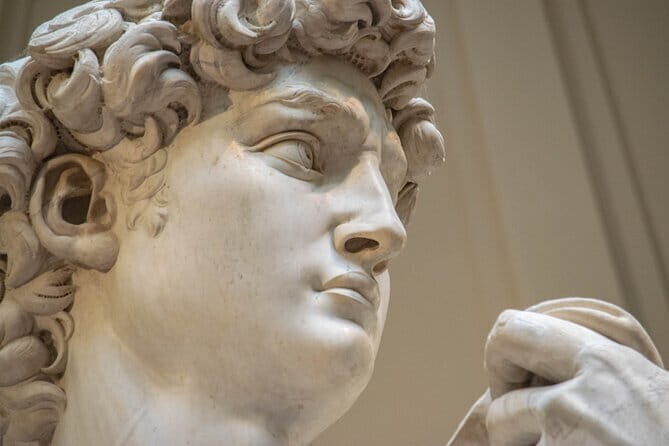
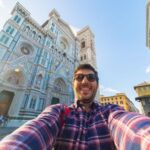
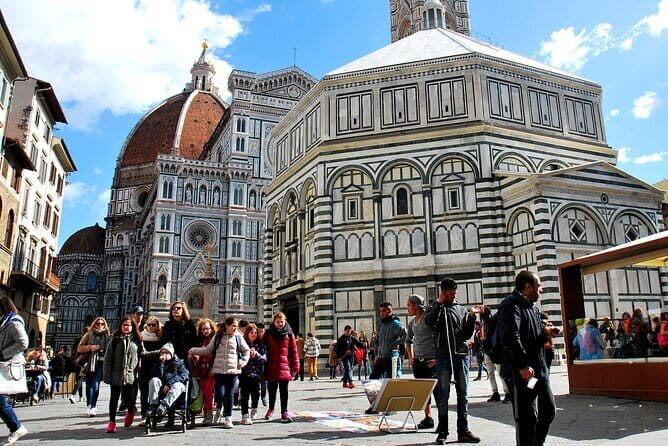
Then you hit the iconic cluster around the Cattedrale di Santa Maria del Fiore—the Duomo complex—and the pacing turns into the secret sauce.
You can also read our reviews of more guided tours in Florence
- The Best tour in Florence: Renaissance & Medici Tales – guided by a STORYTELLER
★ 5.0 · 12,316 reviews
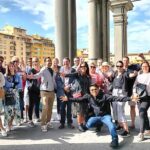
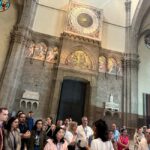
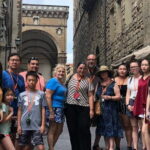
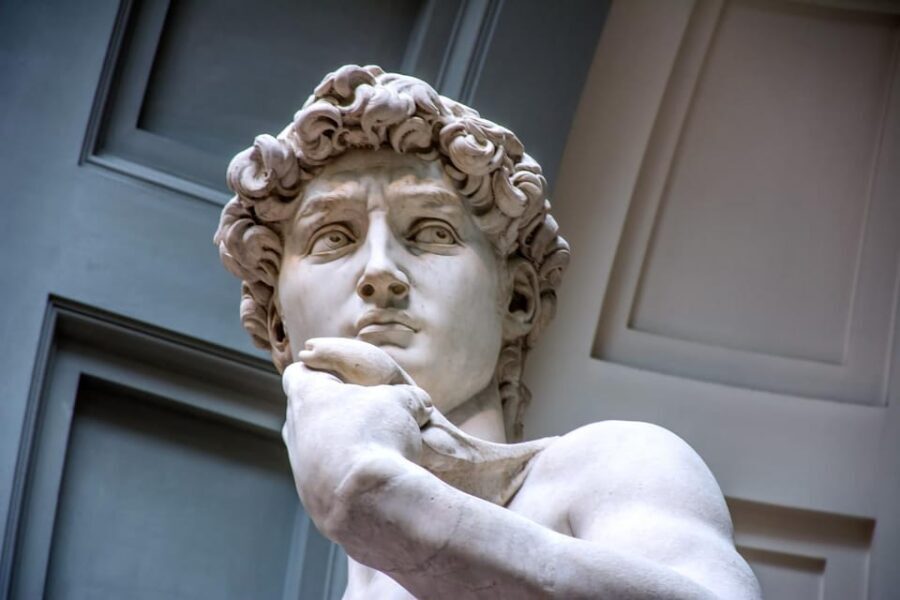
Duomo (Stop 3)
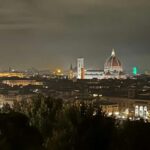
You’ll get the big picture: the cathedral sits on older worship foundations dating back to Roman times. You also learn what makes it such a landmark, including the story of when it was completed and why its dome mattered so much that it was once the largest in the world. Even if you’ve seen photos before, the guide’s framing usually changes how you see the structure.
Also, this is a stop where Florence is famous for crowds. Having a guide manage timing (and giving you a clear reason to look up instead of only at street level) makes your visit smoother.
Baptistery of St. John (Stop 4)
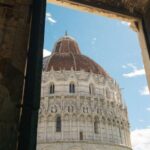
In front of the cathedral is the Baptistery of St. John (San Giovanni Battista). It’s dedicated to Florence’s patron saint, and historically it was where baptisms happened for centuries. You’ll also hear how it connected to civic life—beyond religion—including investiture of knights and poets, and the note that Dante was baptized here.
This is the moment where the tour’s storytelling stays focused. It’s easy to get lost in details around the Duomo area. The guide helps you keep the “why this place mattered” thread.
Campanile di Giotto (Stop 5)
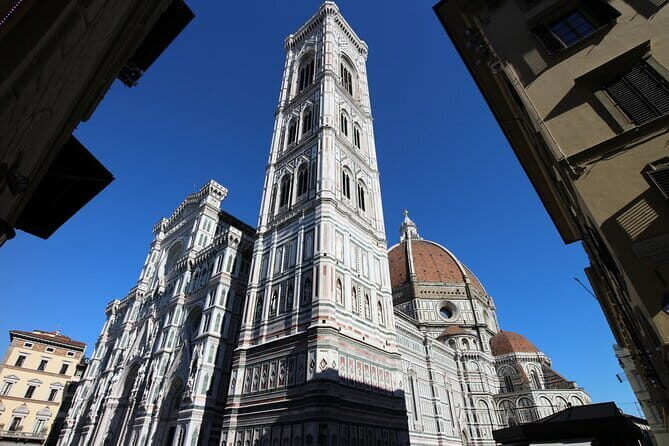
Right next door is Giotto’s bell tower, tied directly to Santa Maria del Fiore and Piazza del Duomo. This stop is worth it even if you’ve seen images. The guide’s callouts help you understand the tower’s place in the cathedral complex and why it’s viewed as a defining Florence landmark.
Stop 6: Santa Maria Novella and the Dominican connection
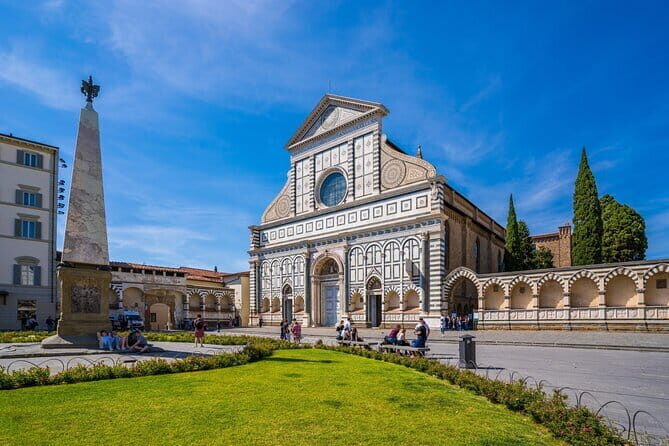
At Santa Maria Novella, you’ll learn about a religious building tied to the Dominicans. In Florence, churches often acted like anchors for ideas, education, and influence. This one is important for that reason: it’s not only an architectural stop, but also a reference point for understanding how major orders shaped city life.
Short time here means you’ll be guided toward what matters most—where to look, what period signals to notice, and how the church fits into Florence’s bigger story.
Stop 7: Palazzo Rucellai, Renaissance math on a facade
Now you shift toward Renaissance power made visible in stone. Palazzo Rucellai is a 15th-century palace associated with a design attributed to Leon Battista Alberti and linked to execution work credited to Bernardo Rossellino (within the date range given for the project).
The key idea you’ll take away: the facade is an early expression of Renaissance architecture principles using proportional relationships, especially through elements like pilasters and entablatures. In plain terms, it’s Renaissance design as measurement and pattern, not just decoration.
If you like architecture, this stop scratches a very specific itch: it teaches you how to read the building without needing an art history degree.
Stop 8: Palazzo Strozzi, scale and Renaissance ambition
Then comes Palazzo Strozzi, described as one of the best-known Renaissance palaces. It’s big enough that it required destroying 15 buildings to clear the space—yes, that’s part of the story.
You’ll also be pointed to the facade layout: three identical portals on every side. That repeating structure is a good cue for what you’re seeing. When the guide points out the pattern, suddenly “pretty palace” becomes “intentional design project.”
Stop 9: Santa Trinita and Ghirlandaio’s frescoes
The tour continues to Basilica di Santa Trinita, where you’ll enter and see frescoes by Ghirlandaio. This is the kind of stop that works especially well mid-tour because you’ve already built context for what Renaissance patrons wanted, and now you get a direct example of art on the walls.
Even the small linguistic detail is part of the fun here—its pronunciation gets explained in a way that connects back to how Florentines talk. The result: the church isn’t just “a church,” it becomes a local cultural reference point.
Stop 10: Palazzo Pitti and the Medici-to-diplomats timeline
At Palazzo Pitti, you’re in the heavyweights category. The building’s origin starts with Luca Pitti in 1458, then shifts to the Medici in 1549. Later, it becomes connected to the grand dukes and then to other ruling families, including Habsburg-Lorraine starting in 1737.
One of the most useful bits of context is the modern political timeline: after the unification of Italy, it served as a royal palace for the House of Savoy during Florence’s years as capital of the Kingdom of Italy (1865–70).
That’s a lot for one stop, but it’s exactly why having a guide matters. Without context, Palazzo Pitti can feel like “big palace, pretty.” With context, it’s a timeline you can walk through.
Stop 11: Santa Felicita, an older church in Oltrarno
Next is the Church of Santa Felicita in the Oltrarno district. It’s described as one of the oldest churches in Florence and sits between Ponte Vecchio and Palazzo Pitti.
This stop is a palate cleanser. You’re not in a “big wow” museum moment. Instead, you get a more grounded sense of how old religious spaces sit inside the same neighborhoods as later Renaissance power.
Stop 12: The Vasari Corridor, power moving above the streets
The final major story stop is the Vasari Corridor, an elevated path linking Palazzo Vecchio with Palazzo Pitti, passing through the Uffizi and crossing over Ponte Vecchio.
The tour explains why this kind of private “above-ground route” mattered: it was intended to let the grand dukes move between residence and government without facing danger from public uncertainty after the fall of the ancient Florentine Republic.
This is a great closing stop because it brings everything back to motive. Architecture wasn’t only art. It was control, safety, and access.
Gelato, coffee, and bathroom breaks: the pacing you’ll feel
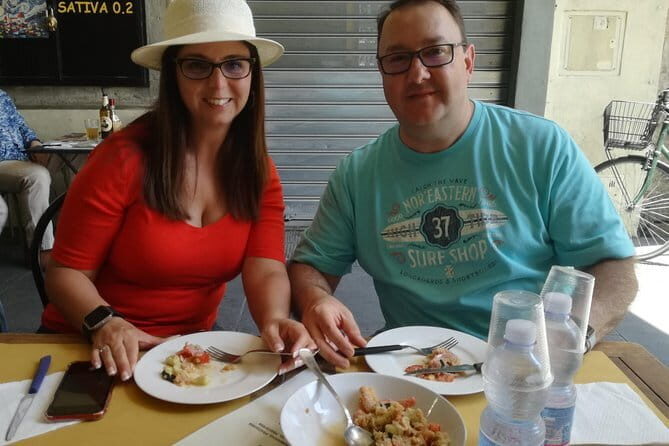
One of the most appreciated parts is that the route isn’t designed to bully you. There’s plenty of time for bathroom breaks, and there may be a brief rest or coffee pause during the three hours.
That matters because the Duomo area and the central streets can be packed. If you’re trying to do this on your own, you either skip stops or spend your time in line and head-spinning around crowd flow. With a guide, you get a calmer rhythm and less guesswork.
Guide quality: Andrea, Becky, and Lisa-style storytelling
A lot of the tour’s appeal is the way guides tell the story. Names that come up include Andrea, Becky, and Lisa—each praised for strong knowledge and an engaging style.
You might also notice audio support. One guide being credited for headpieces suggests you’ll have tools that make it easier to hear in busy places. And across the board, the guide’s job isn’t just facts—it’s keeping you oriented while you’re looking at sculptures, domes, and palace facades that all look similar until someone points out what’s different.
If you have a preference, ask for a guide by name when possible. If you’re assigned someone else, you should still get the same core approach: context first, then sights.
Price and value: why $40.12 can make sense here
At $40.12 per person for about three hours, the value depends on what you’d otherwise do.
If you’re arriving in Florence and trying to piece together an efficient “greatest hits” day with self-guided maps, you’ll spend time figuring out routes, which sights to prioritize, and what to look for once you’re there. This tour spends that time for you and adds story context, plus a guided route that gets you into a workable flow.
Another value point: multiple stops are listed with free admission tickets for the time blocks noted. That doesn’t mean every single thing in Florence is free, but it helps you avoid paying entry fees on top of the tour.
With a small group cap (max 20) and a focused duration, it’s also easier to justify than a longer full-day tour—especially if you’re already planning museum visits later.
Practical tips so you enjoy the walking part
Here’s how to set yourself up for an easy, enjoyable day.
- Wear comfortable walking shoes. Cobblestones don’t care about your itinerary.
- Expect outdoor sections near major landmarks, especially around the Duomo area.
- Bring a phone for the mobile ticket, plus a backup way to find your meeting place.
- Plan to move at a steady pace for a few hours. The stops are short, so you’ll want to be ready to look and listen quickly.
- If you want gelato, think of it as part of the tour flow, not something extra you tack on later.
Since the experience requires good weather, you’ll also want to be flexible. If it’s canceled due to poor weather, you should be offered an alternative date or a full refund.
Who should book this tour
This tour is a strong match if you want:
- a smart first introduction to central Florence
- a quick way to understand what you’re looking at, from domes to palace facades
- a guide-led day that balances major sights with human stories
- a manageable group size and some comfort breaks
It’s also a good choice if you like Florence but don’t want a day that turns into leg pain plus photo fatigue.
Should you book this Essential Florence Walking Tour?
Yes—especially if it’s your first or one of your first days in Florence. The route finishes where you’ll still have energy to keep exploring, and the guide-led storytelling gives you a framework you can use all week.
I’d skip it only if you know you can’t handle steady walking on cobblestones or if you already have a deep, personal interest in one single niche (like only sculpture or only church fresco programs). Otherwise, this is the kind of “starter key” day that helps everything else you do make more sense.
And with free cancellation up to 24 hours in advance, you can book now and adjust if your schedule changes.
FAQ
How long is the Essential Florence Walking Tour?
It lasts about 3 hours.
Where does the tour start and where does it end?
It starts at Piazza della Repubblica and ends at Piazza della Signoria.
Is there a mobile ticket?
Yes, the tour uses a mobile ticket.
What group size should I expect?
The tour has a maximum of 20 travelers.
Are the attractions on the route free to enter?
The stops listed in the schedule show free admission ticket status for the time blocks provided.
What happens if weather is bad?
The tour requires good weather. If it’s canceled due to poor weather, you’ll be offered a different date or a full refund.
You Might Also Enjoy

More Walking Tours in Florence

More Tours in Florence
- The Best tour in Florence: Renaissance & Medici Tales – guided by a STORYTELLER
★ 5.0 · 12,316 reviews

More Tour Reviews in Florence
- Tuscany Day Trip from Florence: Siena, San Gimignano, Pisa and Lunch at a Winery
★ 5.0 · 21,634 reviews - The Best tour in Florence: Renaissance & Medici Tales – guided by a STORYTELLER
★ 5.0 · 12,316 reviews