REVIEW · FLORENCE
Florence: Private Electric Mini Car Tour with Local Guide
Book on GetYourGuide →Operated by Brama Travel · Bookable on GetYourGuide
Florence can feel like a moving maze, so this tour turns the grid into a game you can win. I especially like the private pace (you choose the route) and the efficient way you cover top sights like the Duomo and Ponte Vecchio without wearing out your legs. One thing to consider: the vehicle type can vary, and the audio can be hard to hear at times when traffic is loud.
If you want an easy win on a short visit, this is built for you. You’ll get hotel pickup and drop-off, ride in an eco-friendly golf cart-style vehicle, and learn as you go with a live driver/guide plus an onboard audio guide in multiple languages. Just know you can’t bring luggage or large bags, and it isn’t suitable for pregnant women.
In This Review
- Key things to know before you book
- Why a private electric mini-car works so well in Florence
- Pickup, vehicle reality, and how you set the route
- The core loop: Duomo, Palazzo Vecchio, and Ponte Vecchio
- Past Uffizi, Palazzo Pitti, and the squares that shape the city
- How the onboard audio guide keeps you informed
- Piazzale Michelangelo: the optional viewpoint that can steal the show
- The guide can make or break the ride
- Who this tour fits best (and who should rethink it)
- Price and value: is $79.30 per person worth it?
- Practical tips to keep the ride smooth
- Should you book this Florence electric mini-car tour?
Key things to know before you book
- Private means your route can flex: tell your guide what you care about and the loop can adjust.
- You see Florence from street level fast: major landmarks roll by with less waiting than walking.
- Audio guide in many languages: plus live guidance depending on the language you get.
- Optional stop at Piazzale Michelangelo: great for photos and skyline views.
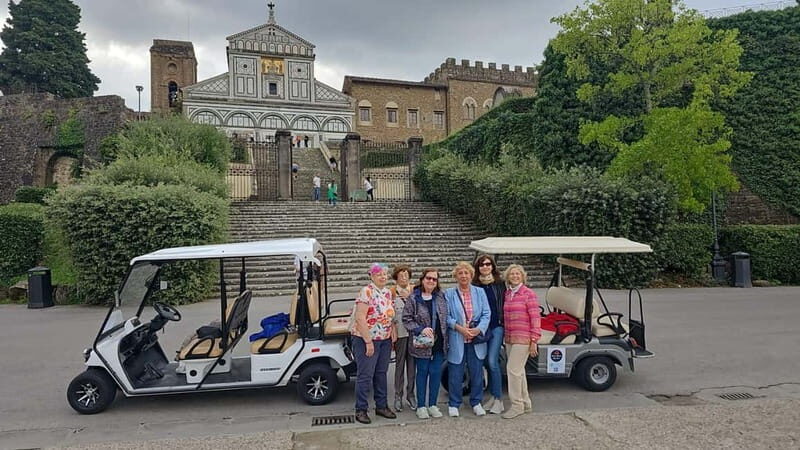
- Small vehicles, easy traffic handling: golf cart or tuk-tuk style, depending on availability.
- Plan for hearing: if you’re sensitive to audio volume, ask for a position where you can hear clearly.
Why a private electric mini-car works so well in Florence
Florence is beautiful, but it’s also traffic, crowds, and tight streets. A private electric mini-car tour helps you move through the city instead of repeatedly negotiating bottlenecks on foot. In about 1 to 1.5 hours, you get a sense of where everything sits relative to everything else—key if it’s your first day.
I like that the focus is practical sightseeing. You’re not doing an all-day museum marathon; you’re getting an informed overview while you watch the city unfold around you. And because it’s private, you’re not stuck following a rigid group tempo.
One more value point: you’re not paying extra for the “know where to go” part. The experience includes a driver/live guide and a multilingual audio guide, so you can learn even if you don’t speak Italian.
You can also read our reviews of more guided tours in Florence
- The Best tour in Florence: Renaissance & Medici Tales – guided by a STORYTELLER
★ 5.0 · 12,316 reviews
Pickup, vehicle reality, and how you set the route
The tour starts with pickup from your hotel. Be ready and waiting at the designated address about 10 minutes before the start time—Florence runs on tight logistics, and you’ll feel it if you’re late.
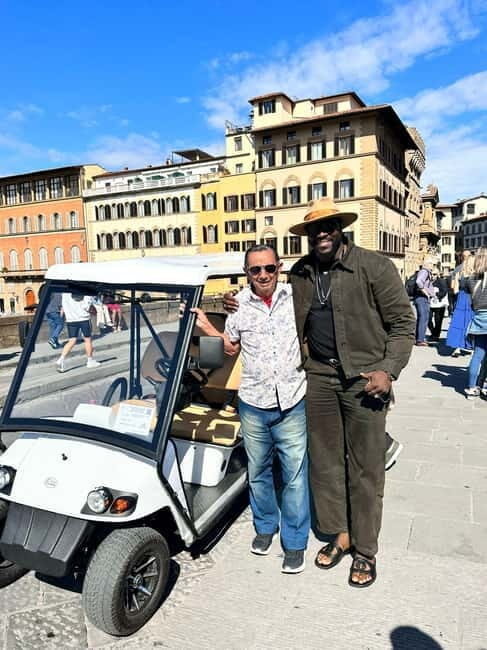
Next comes the vehicle situation. The cart style can vary (4 to 6 seaters depending on availability), and you might ride in something tuk-tuk-like instead of a classic golf cart. That variation is usually not a big deal, but it can affect where you sit and how the ride feels.
Here’s the customization piece that matters: you can customize your route. Tell your guide what you want most—architecture, viewpoints, photo stops, or just an efficient highlight loop—and they’ll shape the drive accordingly. This is also where the live guide shines: they can steer you toward the best angles and the smoother streets.
Two practical notes from the rules:
- No luggage or large bags on board.
- The tour is not suitable for pregnant women.
If you’re traveling light and you want an easy, guided circuit, this setup is a win.
The core loop: Duomo, Palazzo Vecchio, and Ponte Vecchio
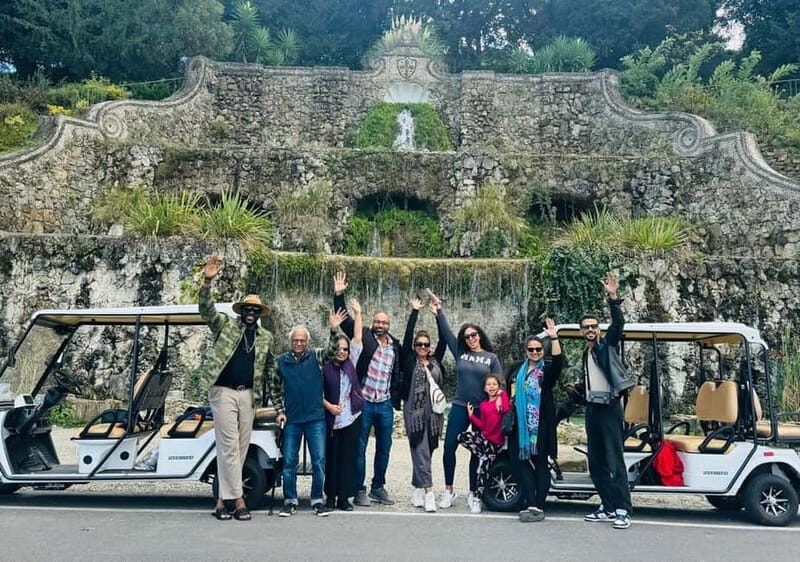
Your tour’s heartbeat is the set of sights people come to Florence for in the first place. Expect the cart to glide you past the Duomo, Palazzo Vecchio, and Ponte Vecchio while your guide talks you through what you’re seeing.
From a cart, the benefit is timing. You’re less likely to get stuck at the exact moment crowds peak around a landmark. You also get a broader view of the surrounding streets and approaches, which walking-only tours sometimes miss because you’re zoomed in on the single site in front of you.
Duomo area: You’ll understand why it’s not just a building but a visual magnet. From the road, you can pick up how the square, surrounding facades, and traffic patterns funnel people toward the same iconic lines.
Palazzo Vecchio: This is where the tour helps you look at details without needing to stop for long. The guide can point out what makes it feel like the city’s civic center—formality on display, power in stone—without forcing you into a time-consuming stop.
Ponte Vecchio: Seeing the bridge from the street during a moving tour helps you grasp its role as a connector. You get the famous look, but also a sense of how the rest of the river crossing shapes the flow of the neighborhood.
If your priorities are the big-name highlights and you don’t want to burn your day walking between them, this part is exactly why the mini-car format exists.
Past Uffizi, Palazzo Pitti, and the squares that shape the city
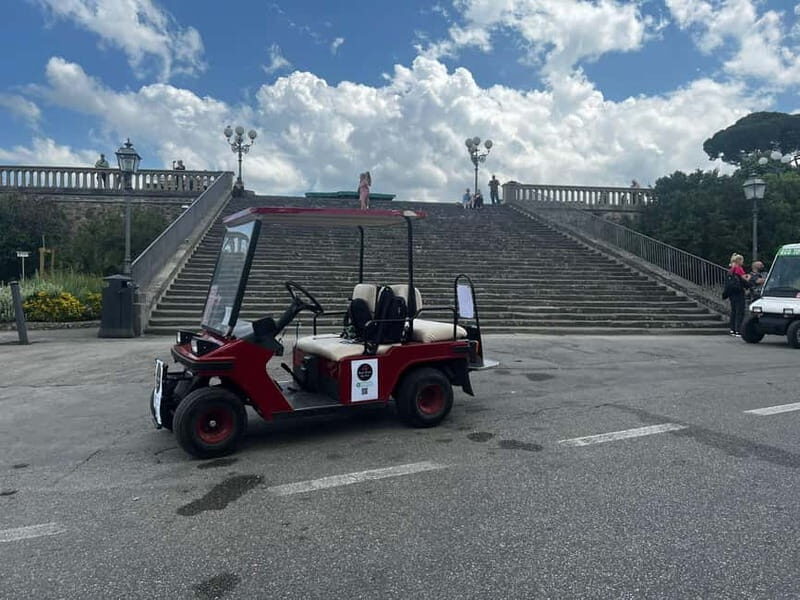
After the core trio, the ride typically continues past major cultural and neighborhood landmarks. You may pass the Uffizi Gallery and Palazzo Pitti, along with a string of squares that show you how Florentines move through the day.
Here’s why this portion matters: Florence isn’t only “sight A, sight B.” It’s sight + street + square + perspective. Even when you’re not stepping inside, your guide helps you connect the dots.
Uffizi Gallery: You’ll see the landmark presence of it without getting trapped in museum queues. This is ideal if you’re planning Uffizi as a separate visit and want to come in with a mental map first.
Palazzo Pitti: The cart gives you a sense of scale and positioning. It helps you understand how the palace area feels like a different “zone” compared with the Duomo side of town.
Piazza Santa Croce: This square has a laid-out openness that contrasts with Florence’s tighter streets. Passing by with commentary helps you “read” the city’s layout quickly.
Piazza Santo Spirito: This is a nice stop-and-go area in how it feels. You’ll get the social vibe from street-level viewpoints, plus context from your guide.
Piazza Santa Maria Novella and San Lorenzo: These add the city’s everyday rhythm. They’re not just famous addresses; they’re the kinds of places where you can spot how locals and visitors share the same paths.
Your guide’s job here is to keep the story connected. They’re not only naming sites; they’re helping you build an internal map. When you finish, your next day in Florence tends to go faster because you already understand where things sit.
How the onboard audio guide keeps you informed
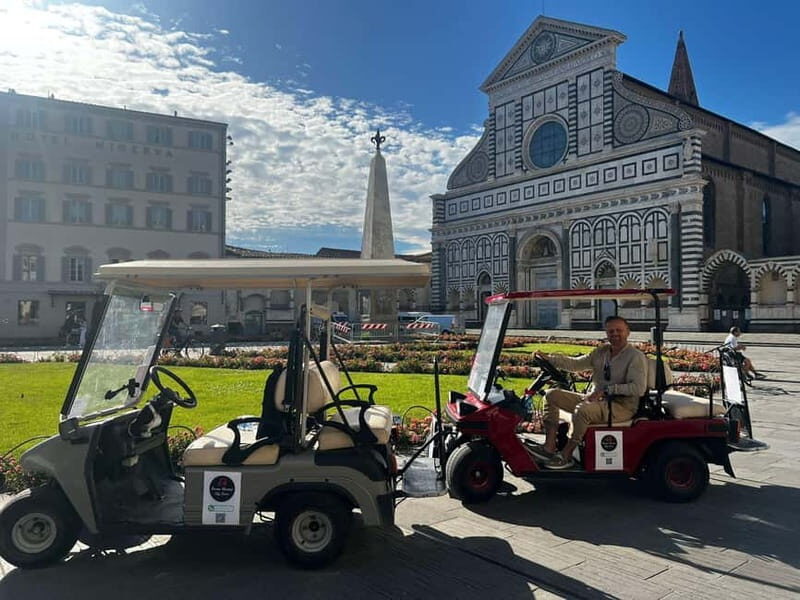
This tour includes an audio guide in multiple languages (English, French, Italian, Japanese, Polish, Portuguese, Russian, Spanish, German). Depending on your language, you may also get live guiding in languages such as English, French, Italian, Serbian, Spanish, Arabic, and German.
The biggest advantage of the audio is control. You’re not waiting for a single narrator to reach your part of the group. It’s built into the experience so you can hear the commentary while you ride.
That said, one real-world caution: the audio can be difficult to hear at times when the vehicle is moving and street noise rises. My practical advice is simple:
- Sit where you can hear best.
- If you have trouble, tell the guide right away so they can help you adjust position.
When it works, it’s a smart way to learn without turning the trip into a lecture. You stay relaxed, you keep moving, and the city explains itself as you go.
You can also read our reviews of more private tours in Florence



Piazzale Michelangelo: the optional viewpoint that can steal the show
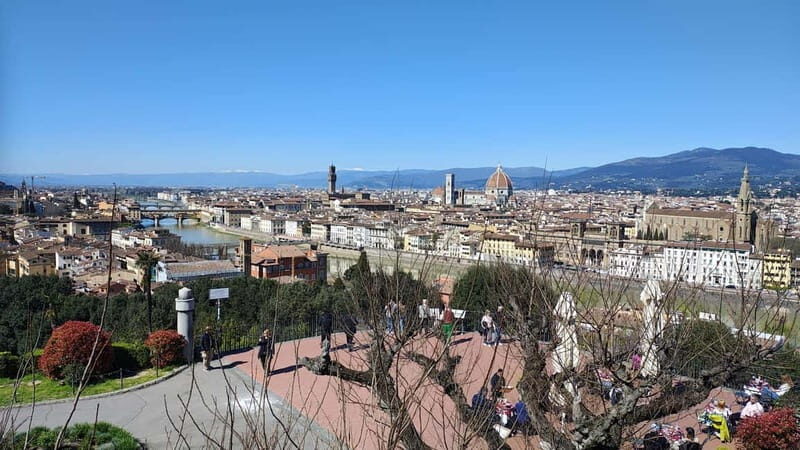
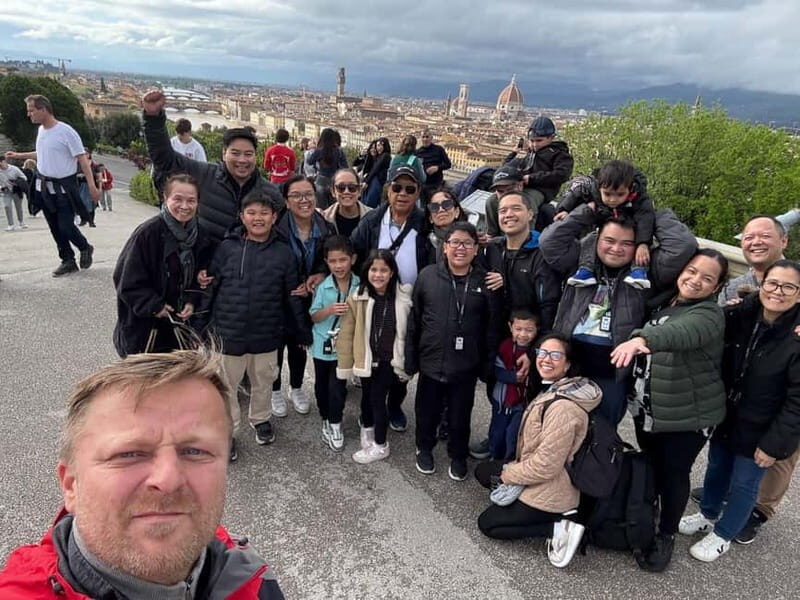
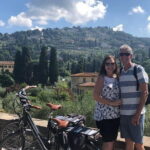
The tour offers an optional add-on: Piazzale Michelangelo for panoramic views. This stop is designed for that Florence skyline moment when you finally get the full geometry of the city—the roofs, the river, and the long lines back toward the center.
If you’re the type who likes photos (or just likes seeing things from above once in your life), this is the stop worth thinking about. It’s also a good fit if you want one memorable “wow” moment during a short visit.
Timing is something to plan. You might have the option to extend the experience for a better photo window, and it can be impacted by how your schedule fits with other tours. My advice: if sunset is your goal, ask about timing when you’re setting expectations with your guide before you roll out.
The guide can make or break the ride
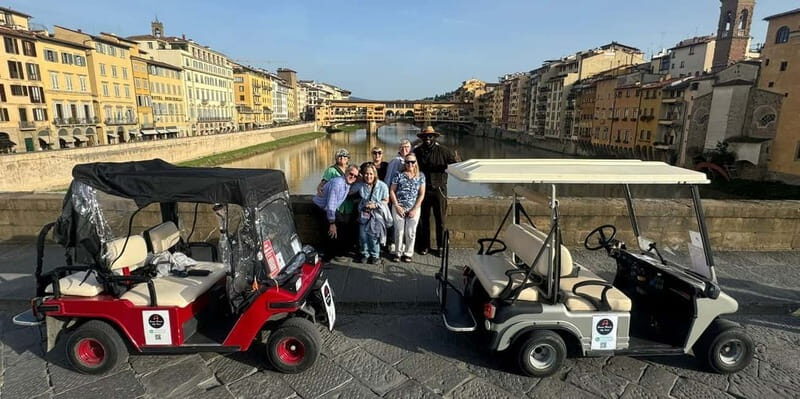
The format is structured, but the experience often feels personal because the guide brings energy. Names that show up in real service examples include Enzo, Deni, Gabriel, Sam, Jules, and Ayman (and one standout noted as Mr. Aymen Ayari). While you can’t pick a specific person in advance from the details provided, the pattern from strong experiences is clear: the best tours are led by guides who talk with you, not at you.
What you should look for in a great guide on this type of tour:
- Quick explanations that connect buildings to the city’s story
- Flexibility when you ask to linger for photos
- Helpful handling of guests who need extra care (one guide was praised for assisting a guest who did not walk well)
If you’re traveling with family, a guide with good rapport can make a big difference. Some experiences highlighted that the ride can work well even with kids—because the drive itself becomes part of the fun, not a struggle.
Who this tour fits best (and who should rethink it)
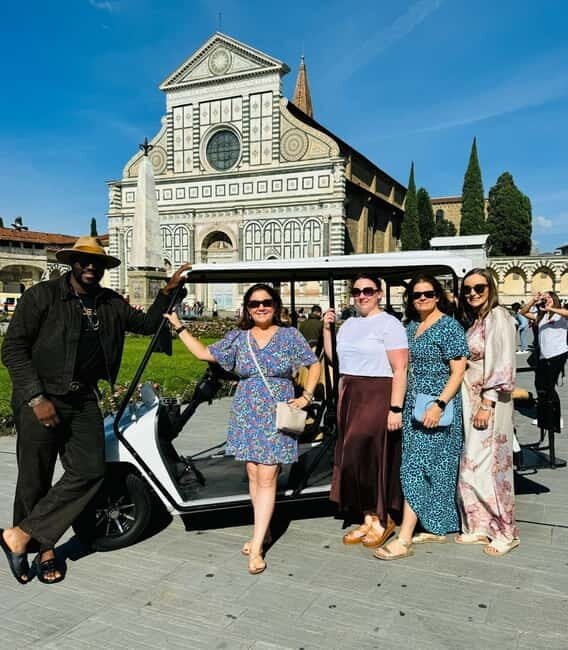
This tour tends to suit people who want Florence highlights with less effort. It’s a strong choice if:
- You have limited time and want a fast orientation
- Your group includes mixed mobility levels
- You’d rather spend the day seeing more streets than counting steps
The tour is also marked as wheelchair accessible, which is a major plus if you need a ride format rather than a foot-only route.
That said, it’s explicitly not suitable for pregnant women. If that applies to you, skip it and choose another style of guided experience that better matches your needs.
Also keep your expectations aligned: this is a ride-and-see tour. You’re not promised long on-foot museum visits. It’s about seeing, understanding, and moving.
Price and value: is $79.30 per person worth it?
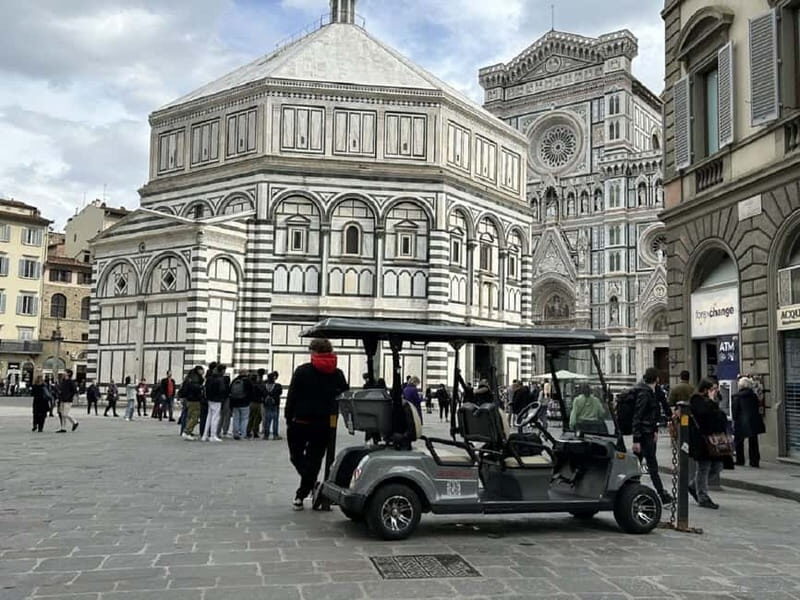
At $79.30 per person, you’re paying for three things: private transport, hotel pickup/drop-off, and guided interpretation. For many people, that’s the right trade.
Here’s why the cost can make sense:
- More coverage per hour: you see a chain of major sights that would take a lot of walking to sequence efficiently.
- Included guidance: you get both a driver/live guide and a multilingual audio guide.
- Private group time: you’re not squeezed into a large mass with fixed timing.
It’s also a budget decision. If you’re the type who can handle long walking days, a cheaper walking tour might work. But if your goal is to get a clear Florence map quickly—plus viewpoints like Piazzale Michelangelo—the mini-car format can feel like money spent well.
One practical value tip: if you’re traveling as a small group, the private setup can feel more reasonable because you’re buying comfort and time savings.
Practical tips to keep the ride smooth
A few small things can make your experience better fast.
Wear what works for a short ride and a few quick stops. You won’t spend the day hiking, but you may step out for photo moments.
Travel light. The tour rules say no luggage or large bags, so pack accordingly.
If the audio is important to you, pay attention to where you sit and ask for help adjusting if you can’t hear. The pace is quick by design, so being able to follow the commentary matters.
Finally, give yourself a little flexibility. A city like Florence runs on real-time crowds and street conditions. When a guide can adjust on the fly, the tour tends to feel smoother and more personal.
Should you book this Florence electric mini-car tour?
Book it if you want a private, efficient Florence overview with hotel pickup, guided storytelling, and the option to add Piazzale Michelangelo for skyline views. It’s especially worth it when you want to cover the big hits—Duomo, Palazzo Vecchio, Ponte Vecchio, plus Uffizi/Pitti-area passes—without losing your whole day to walking and crowd bottlenecks.
Skip it if you prefer long museum time, don’t want a ride-and-glide format, or if the tour’s rule about pregnancy applies to you.
If you decide to go, set one priority in advance (best photos, architecture focus, or a viewpoint stop) and tell your guide at pickup. That one conversation often determines whether you feel like you got a standard highlight loop—or a route that actually fits your trip.
You Might Also Enjoy

More Guided Tours in Florence
- The Best tour in Florence: Renaissance & Medici Tales – guided by a STORYTELLER
★ 5.0 · 12,316 reviews

More Tours in Florence
- The Best tour in Florence: Renaissance & Medici Tales – guided by a STORYTELLER
★ 5.0 · 12,316 reviews

More Tour Reviews in Florence
- Tuscany Day Trip from Florence: Siena, San Gimignano, Pisa and Lunch at a Winery
★ 5.0 · 21,634 reviews - The Best tour in Florence: Renaissance & Medici Tales – guided by a STORYTELLER
★ 5.0 · 12,316 reviews