REVIEW · FLORENCE
Florence Untold Bike Tour
Book on Viator →Operated by Florence Untold by Roberto · Bookable on Viator
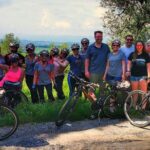
Florence moves fast on two wheels. This short ride strings together major sights with stories that make the city feel personal, from Florence’s Duomo to the guide Roberto keeps you laughing while you learn.
I love the tight 2-hour route that still covers a lot of central landmarks without turning into a long slog. I also love the storytelling style that turns famous names into real characters you can place on the map.
One thing to plan for: you need to be comfortable riding a bicycle, and there is an extra €8 bike hire fee you pay on the day.
In This Review
- Key things that make this Florence bike tour worth your time
- Why a 2-hour bike loop makes Florence click
- Meeting at Via della Pergola and how to set yourself up
- Oldest Hospital of the World and why anatomy mattered in Florence
- Brunelleschi’s Dome, Santa Maria del Fiore, and San Giovanni’s Baptistery
- Roman Forum to the Column of Abundancy: Medici-era power in plain sight
- Plague-lore and the Devil of Bologna: Florence as a storyteller’s playground
- Wine Window and medieval street gossip that explains social rules
- Tornabuoni Street palaces and Bar Giacosa’s Negroni claim
- Ferragamo Museum and the Justice Column: design meets civic identity
- Ponte Vecchio: how it became the jewelry bridge and oldest crossing
- Palazzo Vecchio and the Uffizi orbit: government to art to famous names
- The Tower of Corbizi and Donati: Gemma Donati and Dante’s language legacy
- Price, value, and who this tour is best for
- Should you book Florence Untold by Roberto?
- FAQ
- How long is the Florence Untold Bike Tour?
- Where does the tour start?
- What language is the tour offered in?
- What is the price?
- Do I need to pay extra for a bicycle?
- Are there multiple start times?
- How big is the group?
- Do I need to know how to ride a bicycle?
- Is the meeting point near public transportation?
- What happens if the weather is poor?
- Is free cancellation available?
Key things that make this Florence bike tour worth your time
- A real guided loop in about 2 hours that hits big targets without wasting your day
- Roberto’s humor + recall-friendly stories (you’ll remember details later)
- Duomo and Baptistery stop that sets up the rest of Florence’s religious and civic identity
- Medici-era power and conspiracy talk tied to specific landmarks
- Plague-lore and prank-style Florence legends that keep even teens paying attention
- Small group size (max 20) so you get more of a guided feel than a crowd shuffle
Why a 2-hour bike loop makes Florence click
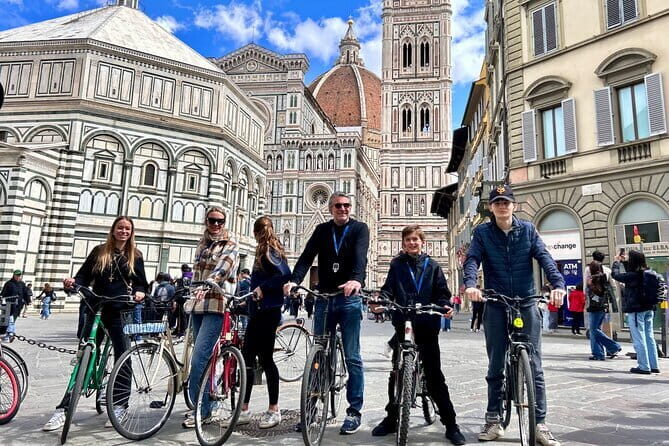
If you only have a slice of time in Florence, this type of tour is a smart move. Two wheels let you cover more ground than a walking tour, while still staying close enough to actually absorb the neighborhood vibe. The route is designed for momentum: you’re not waiting around to get from one end of town to the other.
You also get flexibility. There are multiple start times, so you can fit this into your Florence rhythm, whether that means morning energy or a later slot. And with a maximum of 20 people, it feels more like a shared outing than a mass event.
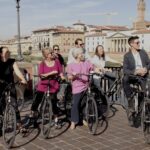
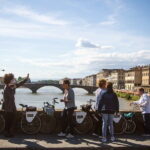
You can also read our reviews of more cycling tours in Florence
Meeting at Via della Pergola and how to set yourself up
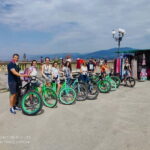
The tour meets at Via della Pergola, 8 R, 50121 Firenze FI, Italy, and it ends back at the same spot. It also runs in English, and you’ll have a mobile ticket. Service animals are allowed, and the meeting area is near public transportation, which is handy if you’re juggling train timing or bus transfers.
Here’s the practical part that matters: the bike is not included in the base price. You pay an extra €8 per person for bike hire on the day of the tour. So if you budget ahead, you won’t feel surprised when you check in.
Also, don’t book this if you’re not comfortable riding a bicycle. This experience is not meant for people who don’t know how to ride, so it can get stressful if you’re learning on the go.
Oldest Hospital of the World and why anatomy mattered in Florence
The tour starts by working backward through time, beginning with the Oldest Hospital of the world—an anatomy school that connects directly to Leonardo and Michelangelo. This is one of those stops that feels like it should be inside a museum, but instead it lands right in the flow of the ride.
What I like about starting here is the mindset shift. Florence isn’t only art and stone façades; it’s also study, observation, and hands-on learning. When you hear how anatomy tied into the era’s thinking, you get a clearer reason why the city produced artists who could draw the human body so convincingly.
You’ll likely get a mix of big-name attribution and smaller details that make the connection feel less abstract. It’s a strong opener because it tells you what kind of stories you’ll be hearing all tour: history with context, plus a few laughs along the way.
Brunelleschi’s Dome, Santa Maria del Fiore, and San Giovanni’s Baptistery
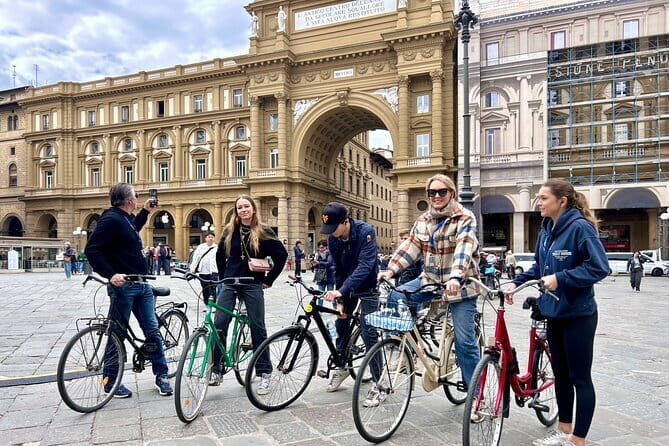
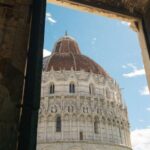
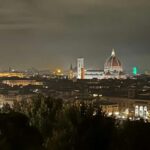
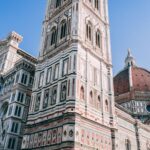
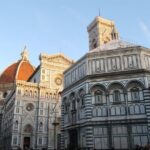
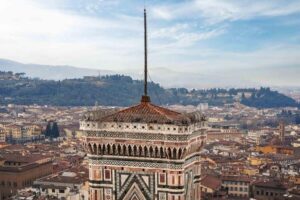
Next up is the Cathedral of Santa Maria del Fiore area, including Brunelleschi’s Dome and the San Giovanni Baptistery. Even if you’ve seen the Duomo before, this is a good moment to slow your brain and line up what you’re looking at.
This stop matters because the Duomo complex is both spiritual and civic. Florence built it as a statement of identity—religious faith on one level, city pride on another. When your guide points out what’s where and why it’s arranged this way, you start noticing details you’d normally miss while snapping photos and moving on.
A bike tour also helps here. You’re close enough to register scale, but you’re not stuck in the same slow crowd bottleneck. You get a more continuous sense of the surrounding streets, which makes the Duomo feel like part of daily city life, not an isolated postcard.
Roman Forum to the Column of Abundancy: Medici-era power in plain sight
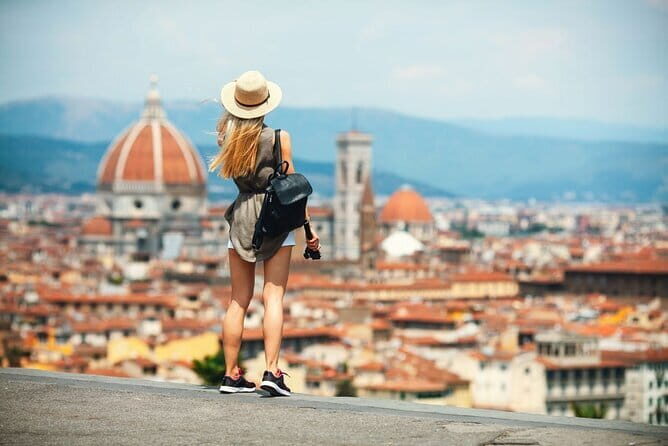
After the cathedral zone, the tour shifts into a web of stories around the Roman Forum and the Column of Abundancy. Then you move into the Medici orbit: history of the Medici family, with names like Lorenzo the Magnificent and Giuliano the Handsome, plus the Pazzi Conspiracy and the larger power structure involving pope, Vatican, dukes, and grand dukes.
This is where the ride earns its keep. Florence can feel like a pile of famous buildings, but this stop makes it political. You start seeing power networks as something that shaped art, architecture, and public life.
The tour also threads in Catherine of France and Catherine dei Medici, which helps explain how Florence’s influence didn’t stay trapped inside Tuscany. You’re not just hearing who mattered; you’re learning how their roles connect to the broader story your eyes are seeing.
- Tuscany Day Trip from Florence: Siena, San Gimignano, Pisa and Lunch at a Winery
★ 5.0 · 21,634 reviews

Plague-lore and the Devil of Bologna: Florence as a storyteller’s playground
One of the most memorable moments is the stop for the Devil of Bologna, a statue in a corner that’s tied to a story about Tuesday afternoon during the plague in the 12th century. That alone is the kind of detail you can’t easily Google into existence on your own.
Then you’ll get a miracle story connected to the pillar of San Zanobi. After that, the tour turns playful with prank-style lore like the Pisan buckets and the cheating cow, La mucca del duomo.
This blend is a big deal for real enjoyment. It’s not just dates and reigns. It’s how people in Florence explained the world—sometimes with religion, sometimes with superstition, and often with a wink. And based on how the guide keeps teenagers engaged, this section is a strong option if you’re traveling with kids who need their attention held in motion.
Wine Window and medieval street gossip that explains social rules
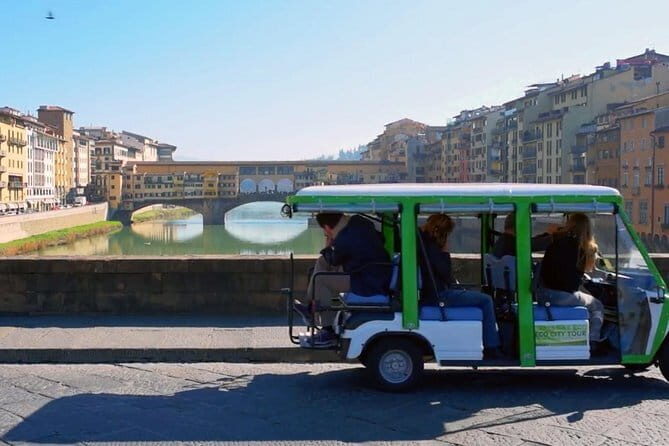
You also stop at the Wine Window and hear about a medieval street connected to prostitution. Even if you’re not looking for dark stories, these kinds of stops give Florence more balance. The city wasn’t only saints, merchants, and artists; it also had everyday negotiations, temptation, and behavior shaped by rules that weren’t written for tourists to understand.
The value here is perspective. When someone explains what a place was used for—who would pass through, what people feared, how society tried to control behavior—you stop treating the street as just scenery. You start understanding it as a lived system.
I’d treat this as “history with humanity.” If you prefer your tours strictly museum-like and squeaky clean, you might find the tone sharper. But if you want Florence to feel real, these stops do that quickly.
Tornabuoni Street palaces and Bar Giacosa’s Negroni claim
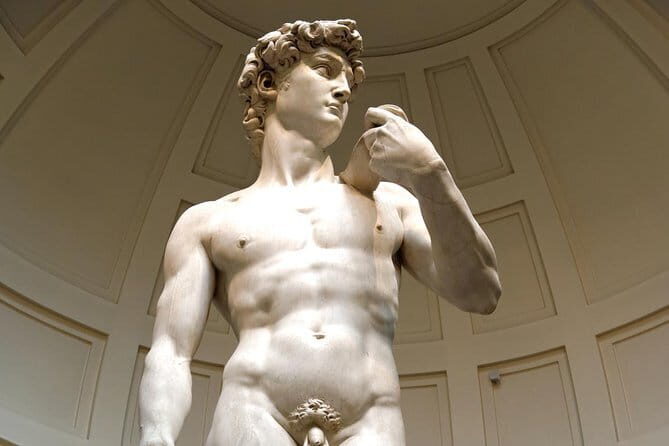
A later stretch includes Tornabuoni street and a set of big-name buildings: Palazzo Strozzi and Palazzo Corsini. You’ll also stop at Bar Giacosa, noted as the home of the Negroni cocktail.
This is one of those clever pairings that makes the city stick. Palaces remind you of wealth and power, while a bar connection reminds you that Florence’s “serious” side and “social” side overlap. You’re learning that culture isn’t locked in galleries; it happens in everyday places too.
If you enjoy blending sightseeing with small lifestyle details, this part will feel especially satisfying. You’ll come away with more than just architectural facts—you’ll have a sense of taste, patronage, and how modern identity still borrows from old prestige.
Ferragamo Museum and the Justice Column: design meets civic identity
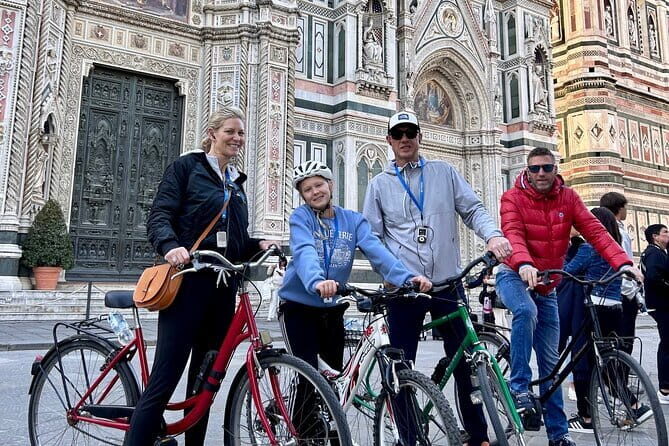
The tour also includes the Ferragamo Museum and the Justice Column. That combination might sound random until you think about Florence’s pattern: beauty and craftsmanship sit right beside civic authority.
Ferragamo represents fashion and design, while the Justice Column signals the city’s legal and governance side. Together, they offer a quick reminder that Florence’s creativity isn’t just about painting and sculpture. It’s also about how people build systems—what they value, what they enforce, and how they represent those values in stone.
Even if you don’t go into every site, the tour’s approach helps you understand why they’re here. You’ll likely see these details as part of one larger story instead of separate stops on a checklist.
Ponte Vecchio: how it became the jewelry bridge and oldest crossing
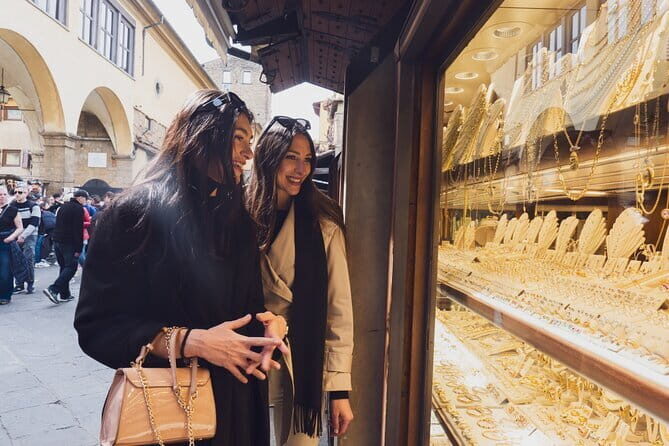
Then comes the crowd favorite: Ponte Vecchio. You’ll hear how it became a jewelry bridge and how it ended up as the oldest bridge in Florence. This isn’t just trivia. Those two points explain why Ponte Vecchio holds power in the city’s imagination.
A bike tour gives you a different feel for Ponte Vecchio than standing still. You catch the bridge in context—approach, sightlines, street flow—so it feels like a working connection instead of a one-time photo moment. The stories also help you understand the bridge’s role in trade and prestige.
If you’re someone who likes learning how a place evolved over time—who settled there, what industries took hold, and why that mattered—this is a strong moment.
Palazzo Vecchio and the Uffizi orbit: government to art to famous names
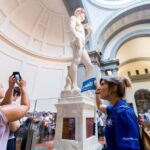
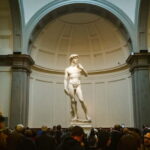
The next stop is Palazzo Vecchio, described as the home of government since 1299. After that, the tour brings in the Uffizzi Gallery in connection with Leonardo da Vinci, plus names like David of Michelangelo and Benvenuto Cellini, along with Cosimo Primo.
This section matters because it pulls the “Florence is a creative city” idea into a more complete picture. Government and power are not background noise. They’re part of how art got made, who got funded, and which figures shaped what you see.
The overall effect is that you’re moving through a city where politics, artists, and legacy overlap. It’s not only what’s on the walls. It’s who decided what belonged there and why.
The Tower of Corbizi and Donati: Gemma Donati and Dante’s language legacy
The tour wraps with the Tower of Corbizi and Donati, plus Gemma Donati. The story ties her to Dante Alighieri and highlights Dante as father of the modern Italian language.
This ending works well for two reasons. First, it shifts from stone buildings and civic symbols into personal legacy—the human side of Florence. Second, it ties Florence into something that extends beyond Italy’s borders: language, literature, and identity.
If you like closing a tour with a concept you can carry into your next day—like how language itself evolves—this ending feels satisfying.
Price, value, and who this tour is best for
The listed price is $42.05 per person for the tour itself, and then there’s the additional €8 per person for bike hire you pay on the day. That extra fee is small enough to plan for, but it’s important because it changes the true all-in cost.
So what’s the value? You’re paying for a two-hour guided route that connects major Florence landmarks—Duomo, Medici-related stories, Ponte Vecchio, Palazzo Vecchio—while keeping the pacing tight. For a first visit, or for a day where you don’t want to commit to long museum time, this is a strong trade: motion plus context.
I’d especially suggest it if:
- you’re traveling with teens or preteens and want stories that actually hold attention
- you want to see a lot of central Florence in a short window
- you enjoy humor in your history, not just lectures
I’d skip it if:
- you’re learning to ride a bicycle or you’re not confident in traffic-free street cycling
- you prefer in-depth museum time, since this is a ride through key sights rather than an all-day deep dive
Should you book Florence Untold by Roberto?
If you want a Florence tour that feels like a story you can walk through afterward, this is a great choice. The big win is Roberto’s style: energetic, funny, and organized enough that even familiar places feel fresh when you know what to look for. The route also makes sense for short stays, since you get major landmarks plus the side stories that make them memorable.
Book it if you want a practical, central highlights route with a guide who brings the city to life in a way you’ll still remember later. Skip it only if riding a bike is a deal-breaker for you or if you want slow, museum-grade time instead of a paced two-hour overview.
FAQ
How long is the Florence Untold Bike Tour?
The tour lasts about 2 hours.
Where does the tour start?
It starts at Via della Pergola, 8 R, 50121 Firenze FI, Italy, and it ends back at the meeting point.
What language is the tour offered in?
The tour is offered in English.
What is the price?
The tour is priced at $42.05 per person.
Do I need to pay extra for a bicycle?
Yes. Bike hire has an additional €8 per person fee, paid on the day of the tour. The bicycle is not included in the base price.
Are there multiple start times?
Yes. You can choose from multiple start times.
How big is the group?
The tour has a maximum of 20 travelers.
Do I need to know how to ride a bicycle?
Yes. The experience is not for people who do not know how to ride a bicycle.
Is the meeting point near public transportation?
Yes, the meeting point is near public transportation.
What happens if the weather is poor?
This experience requires good weather. If it is canceled due to poor weather, you’ll be offered a different date or a full refund.
Is free cancellation available?
Yes. You can cancel for a full refund up to 24 hours before the experience starts.
You Might Also Enjoy
More Cycling Tours in Florence
More Tours in Florence
- The Best tour in Florence: Renaissance & Medici Tales – guided by a STORYTELLER
★ 5.0 · 12,316 reviews
More Tour Reviews in Florence
- Tuscany Day Trip from Florence: Siena, San Gimignano, Pisa and Lunch at a Winery
★ 5.0 · 21,634 reviews - The Best tour in Florence: Renaissance & Medici Tales – guided by a STORYTELLER
★ 5.0 · 12,316 reviews