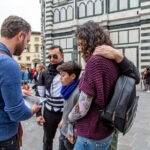
Two hours, and Florence clicks into place. This walking tour is built for quick orientation: you move through key Renaissance neighborhoods, stop often for photos, and use a radio system so you don’t miss the guide’s explanation.
I especially like two things: the small-group attention (your pace can be adjusted with stops on request), and the fact that you get included admission for extra experiences like Fiesole and the Roman Theatre.
One consideration: the timing is tight at each stop (around 10 minutes), so if you want long hangs for photos or shopping, you may need to plan a return visit later.
In This Review
- Key things I’d watch for
- Florence Walking Tour: A Smart Two-Hour Orientation Loop
- Price and Value: What $66.37 Buys You (and Why It Can Be Worth It)
- Small-Group Setup and How the Tour Actually Feels
- Stop-by-Stop: Cappelle Medicee to Piazza della Repubblica
- Stop-by-Stop: Piazza della Signoria and the Civic Heart of Florence
- Ponte Vecchio to Oltrarno: Views, Shops, and Local Flavor
- Palazzo Pitti, Santo Spirito, and the River Bridges
- Via de’ Tornabuoni: Where the Walk Lands on Fashion and Palaces
- Where the Included Admission to Fiesole and the Roman Theatre Helps
- Eco-Friendly Pace: How to Make the Most of 10 Minutes at Each Stop
- Who This Tour Fits Best
- Should You Book This Florence Walking Tour?
- FAQ
- How long is the Florence walking tour?
- Is the tour offered in English?
- What’s the maximum group size?
- Where does the tour meet, and does it end nearby?
- What’s included with the guide?
- Are admissions included?
- Are food and drinks included?
- Is this tour easy on mobility?
- What if the weather is bad, or I need to cancel?
Key things I’d watch for
- Radio system clarity makes a walking tour feel much less “hurry up”
- Small-group size (max 20) helps the guide actually manage the group
- Short, frequent stops keep it realistic for a 2-hour intro
- Bonus included admissions (Fiesole and the Roman Theatre) add value beyond the main sights
- Flexible stops on request means you can steer the walk toward what you care about
Florence Walking Tour: A Smart Two-Hour Orientation Loop

If Florence feels like too much the moment you arrive, this kind of walking orientation helps. You’re not trying to “do everything.” Instead, you get a guided path that connects the city’s big Renaissance symbols—Medici power, civic squares, the Arno bridges—with the more local feel of Oltrarno.
It’s also an eco-friendly way to get around. You’re walking through historic lanes and major squares, which is exactly how Florence likes to be seen: at human pace, in the real street atmosphere, with time to look up and around as you go.
You can also read our reviews of more walking tours in Florence

Price and Value: What $66.37 Buys You (and Why It Can Be Worth It)
At $66.37 per person for about 2 hours, this isn’t the cheapest thing you can book in Florence. But the value is in the format: guided time, radio audio, and tight routing that saves you from guessing where to start and what order to see places in.
You also get practical extras included with the tour:
- a certified guide
- a radio system so you can hear clearly while walking
- personalized tips and the ability to request stops
- support from the team to help with attraction tickets
- admission included for Fiesole and the Roman Theatre (a real money-saver if those are on your list)
And yes, you still pay for food and drinks yourself if you choose to buy them. That’s standard. But the tour is set up so you’re positioned to grab an espresso, a snack, or gelato when it makes sense.
Small-Group Setup and How the Tour Actually Feels
This is a small-group tour with a maximum of 20 travelers. In a city like Florence—where streets get narrow and crowds gather—smaller groups move with less stress and give the guide room to manage timing.
The radio system is the quiet hero here. Without it, guides competing with street noise can turn a walking tour into lip-reading. With it, you can actually hear about why each place matters, not just what it looks like.
Because the tour allows customization and “stops on request,” you’re not locked into a rigid script. If your group cares more about architecture than markets, or you want extra time for a viewpoint, the guide can usually work with the schedule.
Stop-by-Stop: Cappelle Medicee to Piazza della Repubblica
The walking path starts with Cappelle Medicee. This is the Medici family’s monumental mausoleum and a true Renaissance statement. Expect major art and design tied to Medici influence, and yes, it’s the kind of stop that helps you understand why Florence mattered so much in the Renaissance.
Next up is Mercato Centrale, a historic, high-energy market where you’ll see Tuscan food culture at close range. Even if you don’t buy anything, this is a good sensory reset: color, aromas, and the local rhythm of daily life.
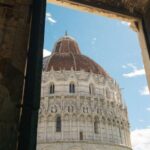
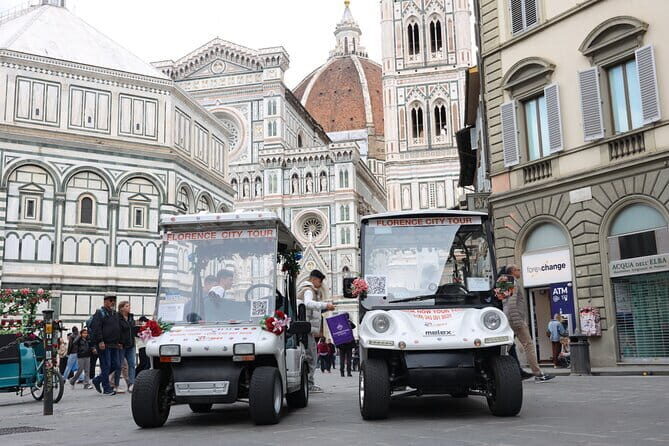
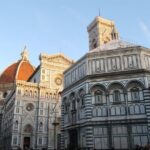
From there, you head to Santa Maria del Fiore, Florence’s signature cathedral complex. The key takeaway here is the Brunelleschi Dome, which you can recognize instantly—even when you’re viewing it from the street. This is one of the best ways to get grounded on your first day, because the dome becomes your visual compass all week.
Then you pause at Piazza della Repubblica, an elegant square that once sat near the heart of Roman Florence. It’s a great “breather” stop: you can sit with a coffee if you want, watch the street flow, and connect what you’re seeing now with the deeper layers of the city.
Stop-by-Stop: Piazza della Signoria and the Civic Heart of Florence
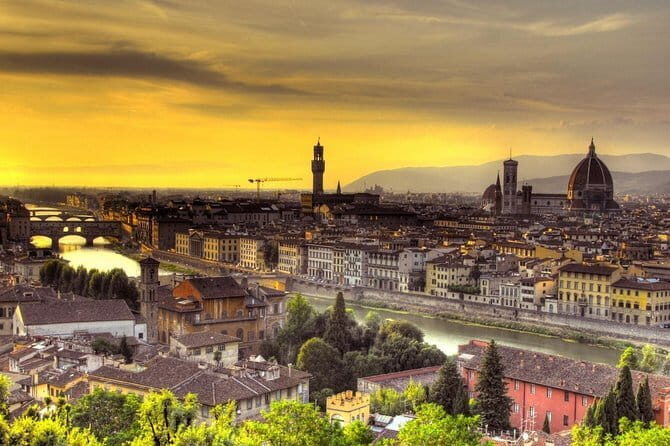
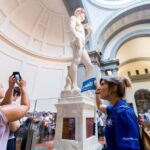
Piazza della Signoria is where Florence turns from pretty to political. This open-air setting is often described as a kind of museum because statues and architecture make the square feel curated, even outdoors. The Palazzo Vecchio presence dominates the scene, and the square’s role as a historic political center gives context to what you’re looking at.
Practically, this stop is also a smart photo moment. You get big architecture, recognizable Renaissance shapes, and a sense of scale that’s hard to feel from a single quick look.
The benefit of doing this with a guide is context. You’re not just collecting “pretty buildings.” You’re learning how the places fit together—power, art, civic identity—so later, when you walk on your own, you’ll know what you’re seeing.
- Tuscany Day Trip from Florence: Siena, San Gimignano, Pisa and Lunch at a Winery
★ 5.0 · 21,634 reviews


Ponte Vecchio to Oltrarno: Views, Shops, and Local Flavor
Now for the bridge everyone wants to see: Ponte Vecchio. It’s famous for its historic shops and iconic position over the Arno. Even on a busy day, the guide’s pacing and stop timing help you get the essentials without losing your whole morning to crowds.
Then comes Oltrarno, the side of Florence that tends to feel more lived-in. The tour focuses on the neighborhood’s artisan side and local traditions, which is exactly where the city becomes less like an art postcard and more like a real community.
This is also where the walking tour format pays off. If you tried to “self-tour” these sections from a map, you’d likely hit big landmarks only. Here, you move through the in-between streets that make Oltrarno feel like Florence, not just Florence on a brochure.
Palazzo Pitti, Santo Spirito, and the River Bridges
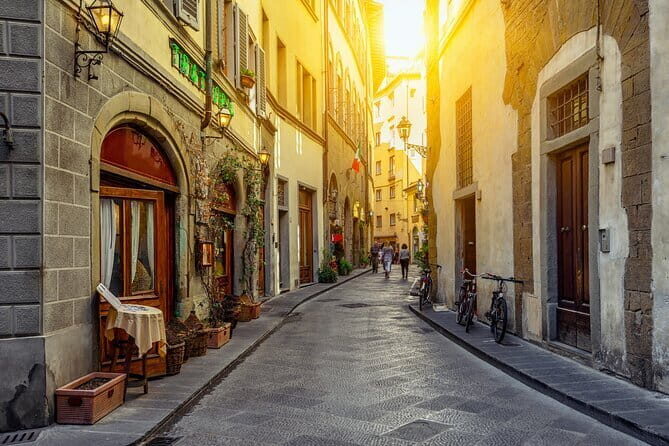
Next is Palazzo Pitti, a major Renaissance palace tied to the Medici as former residences. Even from outside, you can understand the message: this wasn’t a modest operation. It’s the kind of place that signals influence through sheer presence.
Then you reach Santo Spirito, both a basilica and a gathering square in the heart of Oltrarno. It’s one of those spots where locals and visitors share space in a way that feels everyday, not staged.
The tour continues with Ponte Santa Trinita, a Renaissance bridge known for refined design and panoramic river views. It’s a nice counterpoint to Ponte Vecchio: same river, different feel, and a strong chance to frame the city from a new angle.
Via de’ Tornabuoni: Where the Walk Lands on Fashion and Palaces

The ending stretch includes Via de’ Tornabuoni, Florence’s luxury fashion street lined with historic palaces and high-end boutiques. For some people, this is the perfect finish: after churches, squares, and bridges, it feels like a shift into modern Florence wrapped around older walls.
Even if shopping isn’t your thing, I’d use this stop for one simple purpose: notice the architecture details and the street rhythm. It’s an easy place to transition into your next plan—whether that’s dinner reservations, a museum visit, or just wandering.
Where the Included Admission to Fiesole and the Roman Theatre Helps
Most first-time Florence visits focus only on the “main map” sites. What makes this tour feel like better value is the included admission for Fiesole and the Roman Theatre.
You don’t get that same bonus if you only book a basic city stroll. Instead, this tour nudges you toward a wider story: Florence isn’t just Renaissance Florence. Roman remnants and nearby hill towns are part of the larger picture, and the included tickets mean you can fit that in without extra planning friction.
Because your exact timing for those admissions isn’t spelled out here, I’d treat it as a check-at-the-start kind of detail: ask your guide when those included entries will be used (or how they’re offered on your departure).
Eco-Friendly Pace: How to Make the Most of 10 Minutes at Each Stop
With a 2-hour route and about 10 minutes per stop, you’ll want a simple strategy:
- Decide in advance what you want most: photos, explanations, or just location context.
- Use your 10 minutes for the “must-do” viewpoints first, then decide if you want extra time before moving on.
- Wear shoes that handle uneven stone and quick transitions, because Florence is never flat-friendly.
The good news: because the tour is paced as a small-group walk and includes a radio system, you’re less likely to fall behind. You can keep your eyes up, listen when something matters, and still feel like you’re progressing.
Also, since food and drinks aren’t included, you’ll get the best experience if you plan a drink or gelato purchase on your own terms rather than expecting it as part of the ticket. If you do stop for gelato, treat it like a bonus moment, not a schedule anchor.
Who This Tour Fits Best
This is an excellent choice if:
- you’re visiting Florence for the first time and want fast orientation
- you want a guide to connect the dots between Medici power, civic squares, and the Arno
- you’d rather handle an organized route than fight your way through guesswork
- you like the idea of small-group attention and clear audio
It may be less ideal if you:
- want a slow, linger-at-every-spot walking day
- struggle with reduced mobility (this tour is not recommended for that)
- need long stretches of free time with no guiding
Should You Book This Florence Walking Tour?
I’d book it if you want Florence to feel navigable fast. The route covers the big recognizable landmarks, but the tour’s real strength is how it turns them into a connected story—then adds value with included admissions beyond the center.
Skip it (or be selective) if you’re already a confident Florence walker with a tight “only my interests” itinerary, because the schedule is intentionally short at each stop. In that case, you might prefer a pick-and-choose approach.
If you’re on your first day, or you’re trying to avoid missing major sights while still keeping your energy for the rest of your trip, this one earns its place on the calendar.
FAQ
How long is the Florence walking tour?
It runs for about 2 hours.
Is the tour offered in English?
Yes, the tour is offered in English.
What’s the maximum group size?
The tour has a maximum of 20 travelers.
Where does the tour meet, and does it end nearby?
You start at Piazza di Madonna degli Aldobrandini, 50123 Firenze FI, Italy, and the tour ends back at the meeting point.
What’s included with the guide?
You get a certified guide, a radio system to hear clearly, personalized tips, small-group specialization, stops on request, and tour customization.
Are admissions included?
Entrance tickets are listed as not included in general, but the experience explicitly includes admission to Fiesole and the Roman Theatre.
Are food and drinks included?
No. Food and drinks are not included, though you can take advantage of the places you pass by.
Is this tour easy on mobility?
The tour calls for moderate physical fitness and is not recommended for visitors with reduced mobility.
What if the weather is bad, or I need to cancel?
The experience requires good weather. If it’s canceled due to poor weather, you’ll be offered a different date or a full refund. You can cancel up to 24 hours in advance for a full refund.
You Might Also Enjoy


More Walking Tours in Florence

More Tours in Florence
- The Best tour in Florence: Renaissance & Medici Tales – guided by a STORYTELLER
★ 5.0 · 12,316 reviews

More Tour Reviews in Florence
- Tuscany Day Trip from Florence: Siena, San Gimignano, Pisa and Lunch at a Winery
★ 5.0 · 21,634 reviews - The Best tour in Florence: Renaissance & Medici Tales – guided by a STORYTELLER
★ 5.0 · 12,316 reviews