
REVIEW · FLORENCE
Leonardo Interactive Museum® Entrance Ticket
Book on Viator →Operated by Leonardo Interactive Museum® · Bookable on Viator
Leonardo’s ideas feel more real when you can touch the results. This self-led stop in Florence turns da Vinci’s designs into working machines in an air-conditioned, family-friendly space. You’ll move through the inventions at your own pace, armed with multi-language explanations and timed entry.
I like the hands-on focus: stations built around Leonardo’s earth, water, air, and fire themes let you see how mechanical thinking turns into motion. I also like the easy planning value—mobile ticket, skip-the-line admission, and a visit length that fits neatly into a day of sightseeing.
One watch-out: it’s a smaller museum and can get crowded and noisy, so if you want quiet reading time or a perfectly guided storyline, you may feel rushed.
In This Review
- Key highlights to know before you go
- Leonardo Interactive Museum: what you’re really paying for
- Tickets, timing, and walking in smoothly
- The main stop: earth, water, air, and fire machines
- The hands-on factor: why it works for kids and engineers
- Anatomy studies: when art meets science
- Backlit paintings: high-resolution reproductions with an eye for detail
- Museum shop time: books and souvenirs you can actually use
- Crowds, noise, and how to have a calmer visit
- Rules of the exhibit areas (and why you’ll notice them)
- Value check: is $11.95 a good deal?
- Who this museum suits best
- Quick FAQ for your planning
- FAQ
- How long does the Leonardo Interactive Museum visit take?
- Is this ticket self-led or guided?
- What languages are available in the museum?
- Do I get skip-the-line entry?
- Do I need to prebook?
- Is the museum family-friendly for children?
- Can I bring food, chewing gum, or drinks into the exhibit areas?
- Is free cancellation available?
- Should you book this Leonardo Interactive Museum ticket?
Key highlights to know before you go
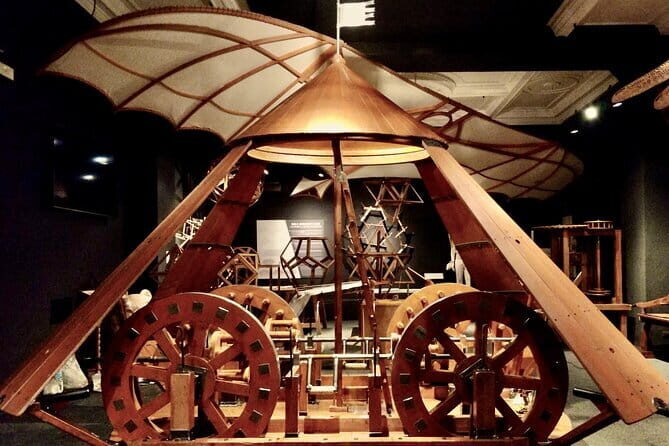
- Interactive replicas you can test at stations inspired by Leonardo da Vinci’s drawings
- Four themed zones: earth, water, air, and fire, plus extra material for science lovers
- Multi-language explanations on-site (Italian, English, French, German, Spanish, Russian)
- Self-led and no guided tour, so bring your curiosity and pace yourself
- Air-conditioned rooms and clean bathrooms, a real perk in Florence heat
- Rules that keep it safe for machines: no food, gum, or drinks in exhibit areas
Leonardo Interactive Museum: what you’re really paying for
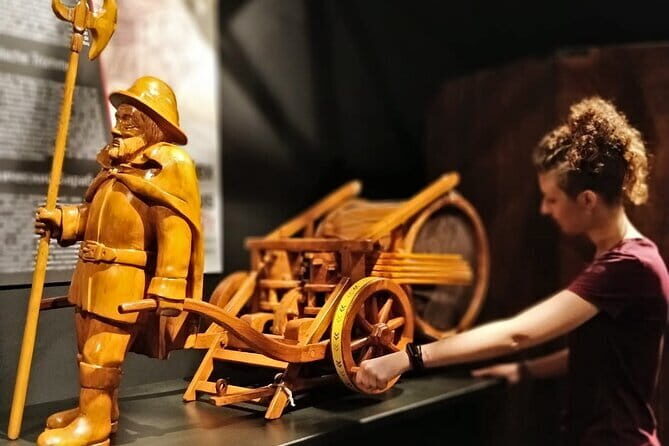
For $11.95, you’re not buying a lecture or a walking tour. You’re buying entry to an interactive, science-and-art museum format that uses replicas, touchable elements, and clear explanations to make Leonardo’s engineering feel immediate.
The visit window is about 1 to 1.5 hours. That’s important. It means you can realistically add it between bigger-ticket Florence sights without turning your day into a marathon. If you like short stops that still feel substantial, this fits well.
Also, the ticket is set up to reduce friction: you get a mobile ticket and skip-the-line admission with no commissions or add-on fees. For Florence in peak seasons, that “straight in” feeling can be worth more than it sounds.
You can also read our reviews of more tours and experiences in Florence


Tickets, timing, and walking in smoothly
This is a self-led admission ticket, offered in English, and you receive confirmation at booking. On average, people book about 14 days in advance, so it’s smart to plan ahead rather than gamble on availability.
You’ll also want to pay attention to the museum’s own rules for the experience. Food, chewing gum, and beverages are prohibited in exhibit areas. Children must be supervised at all times, and anyone who causes or risks damage (or disturbs other visitors) can be asked to leave. The museum is designed to keep hands-on stations workable for everyone, so the rules aren’t just fussiness—they’re part of how the place stays functional.
Location-wise, it’s near public transportation, which helps if you’re bouncing between neighborhoods and you don’t want to waste time with parking.
The main stop: earth, water, air, and fire machines
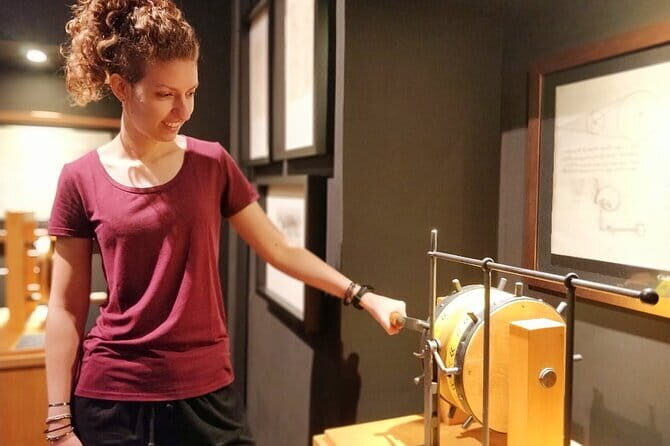
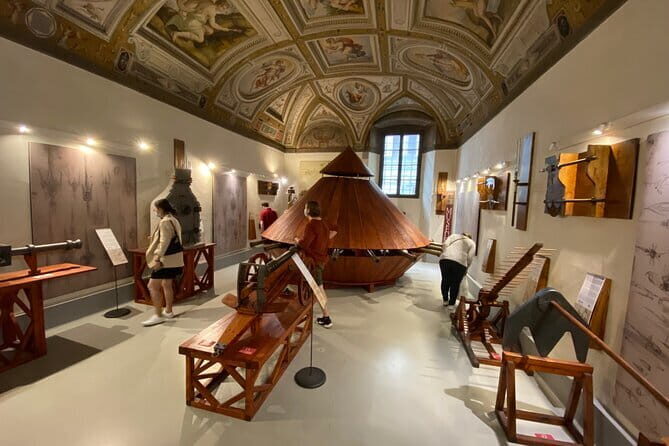
Your main experience is the Leonardo Interactive Museum exhibition, organized into four sections: earth, water, air, and fire. Each section is built around Leonardo’s design thinking, using machines created according to his ideas—and where possible, built to scale.
This structure matters because it turns “da Vinci stuff” into something you can actually navigate. Instead of random displays, you get a theme-based route that helps you connect what you’re seeing to categories of Leonardo’s interests. If you’re traveling with kids, this also keeps attention from wandering, since each zone feels like a new mini-world.
What you can expect as you move through the machines:
- Stations are explained with on-site descriptions in multiple languages, including English
- Multimedia elements add context about Leonardo’s life and works
- Some areas let you actively engage with working models rather than only look at glass cases
A small but real consideration: there isn’t a strong sense that the visit is one locked-in storyline with a clear chronology. Some visitors have found it a bit tricky to follow an ordered narrative through Leonardo’s life. If you’re the type who likes “start here, then next chapter,” you may need to slow down and create your own path.
The hands-on factor: why it works for kids and engineers
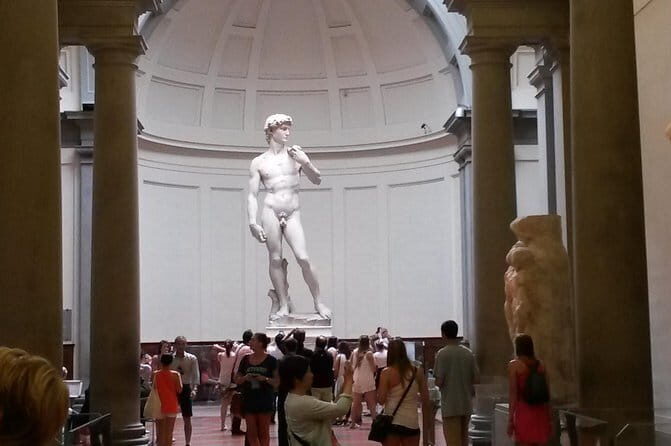
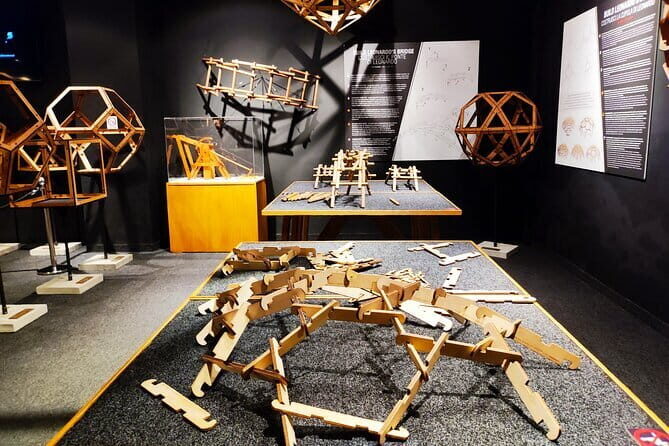
The best part of this museum is the way the exhibits are built for interaction—so your brain gets a mechanical workout. You don’t just read about ideas; you see how design decisions change outcomes.
That hands-on approach is especially good for:
- Families with mixed ages (kids who need action, adults who want explanations)
- People who enjoy puzzles, model-building, and how-to understanding
- Visitors who want science without the pressure of a lab setting
In practical terms, plan to spend time at stations where you can test or build. The museum’s tone is curiosity-first, and many exhibits are designed to stimulate questions: What happens if the angle changes? How does the mechanism transfer motion? How does a sketch become hardware?
Just remember: when it’s busy, everyone is trying to use the machines at once. That’s where crowds and noise can make hands-on slower.
Anatomy studies: when art meets science
Besides the machine zones, there’s a dedicated section for Leonardo’s Anatomical Studies. This is a strong “pause and pay attention” moment, because it shifts you from engineering mechanics to Leonardo’s deeper obsession: understanding the human body.
If you’re the kind of visitor who loves the scientific side of da Vinci—his notebooks, his careful observation, his attempts to map how things work—this segment gives you a more complete picture than an inventions-only visit.
Also, since the museum uses multi-language descriptions and multimedia, you don’t have to rely on guessing what you’re looking at. You can read your way through the ideas without needing a guide.
You can also read our reviews of more museum experiences in Florence



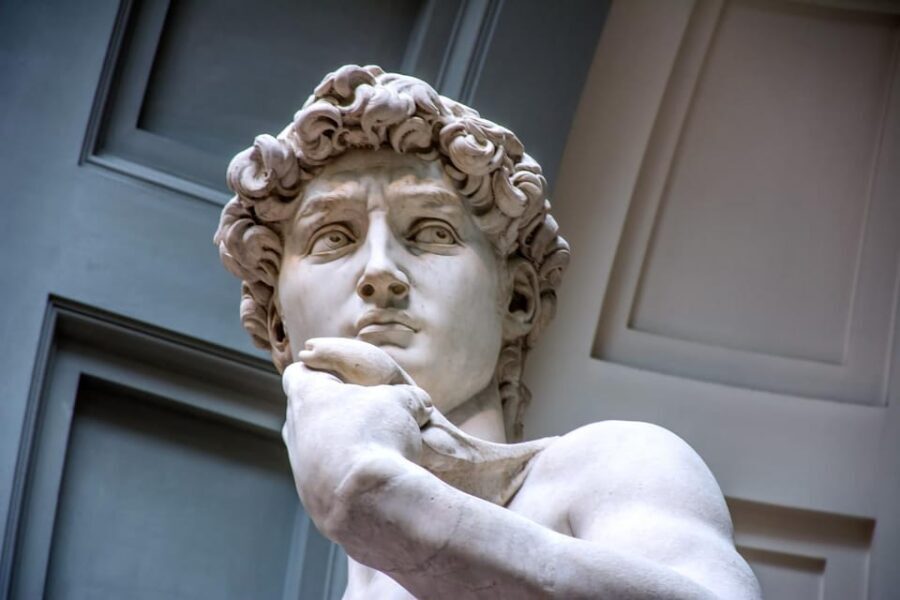


Backlit paintings: high-resolution reproductions with an eye for detail

There’s also a gallery of Leonardo’s most important paintings, reproduced using high-resolution backlight technology. Even if you’re not a hardcore art critic, this can be a satisfying contrast to the mechanical rooms.
Paintings and machines are different kinds of genius. The machines show how to turn sketches into functioning devices. The art section helps remind you that Leonardo didn’t separate creativity from observation—he treated both as ways of seeing.
If you’re deciding whether this is worth it versus other Florence art stops, this pairing is one of the main reasons the museum holds attention: you’re not stuck in only one mode (just clicking through inventions, or just looking at art).
Museum shop time: books and souvenirs you can actually use
You’ll find a museum shop with books and souvenirs. That matters because if you leave wanting more, you can follow up immediately while the concepts are still fresh.
I like this kind of wrap-up because it’s not random gift-shopping. It’s tied to what you just saw, and it gives you options beyond standard “I was here” postcards.
Crowds, noise, and how to have a calmer visit

Based on how this museum functions, it’s easiest to enjoy when you manage three realities:
1) It’s smaller than you might imagine.
A smaller layout means less walking, but it also means less space to spread out. If it’s peak hours, you may feel packed in.
2) Stations get noisy when everyone photographs or tests the models.
If you’re hoping for quiet reading time at every placard, give yourself some flexibility. You can step away, watch from the edges, then come back when a machine clears.
3) There’s no fully guided “chronology path.”
You may want to create a simple plan before you enter: pick one machine zone to go deep in, then do the others at a steadier pace. That keeps you from feeling like you’re chasing an order that isn’t enforced.
One practical tip: if the audio or multimedia suggestions are hard to hear inside, you can use the content when you step away from the densest stations. (The museum has shared audio/multimedia support, and spacing out is a normal part of how people enjoy it.)
Rules of the exhibit areas (and why you’ll notice them)
You’ll see rules posted at the exhibit areas: no food, no chewing gum, no beverages. That’s not just etiquette. It protects the machines and keeps the space clean enough for interactive stations.
Children are welcome—this is a family-friendly concept—but they must be supervised at all times. If a child causes damage or disturbs other visitors, staff can ask that person to leave.
If you’re traveling with kids, this is actually a helpful thing to know upfront. It means the museum is trying to preserve hands-on access for everyone, not just look entertaining.
Value check: is $11.95 a good deal?
At $11.95 per person, the value comes from three places:
- You get skip-the-line admission with no extra commissions or costs. In Florence, avoiding delays matters.
- Your time cost is reasonable: about 1–1.5 hours to see the core exhibition without turning it into a half-day detour.
- The museum is built for learning by doing. That’s the difference between “I looked at models” and “I understood how the mechanism works.”
Will you learn everything? Probably not. A museum like this can’t be a full academic archive. But it can be a very good starting point—especially if you’re planning to see other da Vinci-related sites during your trip.
If you already know a lot about Leonardo’s inventions, you might find you’re seeing mostly familiar themes. Still, the interaction component can make known ideas feel new again.
Who this museum suits best
This ticket works best if at least one of these is true for you:
- You travel with kids or teens who want action, not only reading
- You love engineering, mechanisms, and “how things work”
- You’re curious about the overlap between art and science
- You want a climate-comfort break with air-conditioned rooms and bathrooms
It may be less satisfying if you:
- Want a guided storyline with a leader guiding you through history
- Need a quiet museum where you can read placards for long stretches without interruption
- Prefer massive, multi-floor collections where you can wander for hours
Quick FAQ for your planning
FAQ
How long does the Leonardo Interactive Museum visit take?
Plan for about 1 hour to 1 hour 30 minutes for the museum experience.
Is this ticket self-led or guided?
This is a self-led admission option. A guided tour is not included.
What languages are available in the museum?
Exhibits include detailed descriptions in Italian, English, French, German, Spanish, and Russian.
Do I get skip-the-line entry?
Yes. The ticket includes skip-the-line admission.
Do I need to prebook?
Prebooking is recommended to guarantee your entry.
Is the museum family-friendly for children?
Yes. It’s recommended for children and adults, and children must be supervised at all times.
Can I bring food, chewing gum, or drinks into the exhibit areas?
No. Food, chewing gum, and beverages are prohibited in the exhibit areas.
Is free cancellation available?
Yes. You can cancel up to 24 hours in advance for a full refund.
Should you book this Leonardo Interactive Museum ticket?
If you want a short, hands-on stop that turns Leonardo da Vinci’s sketches into something you can see work, I’d book it. The mix of machines, anatomy studies, and backlit painting reproductions gives you variety in about 90 minutes, and the air-conditioned comfort plus skip-the-line entry makes it easy to fit into a Florence day.
If you hate crowds or you want a guide-led narrative, consider your timing and pace. Go prepared to move a little, share space at interactive stations, and use the multi-language explanations to make sense of what you see.
You Might Also Enjoy




More Museum Experiences in Florence
More Tickets in Florence


More Tour Reviews in Florence
- Tuscany Day Trip from Florence: Siena, San Gimignano, Pisa and Lunch at a Winery
★ 5.0 · 21,634 reviews - The Best tour in Florence: Renaissance & Medici Tales – guided by a STORYTELLER
★ 5.0 · 12,316 reviews