REVIEW · FLORENCE
Palazzo Vecchio Small Group Tour
Book on GetYourGuide →Operated by Inside Out Italy · Bookable on GetYourGuide
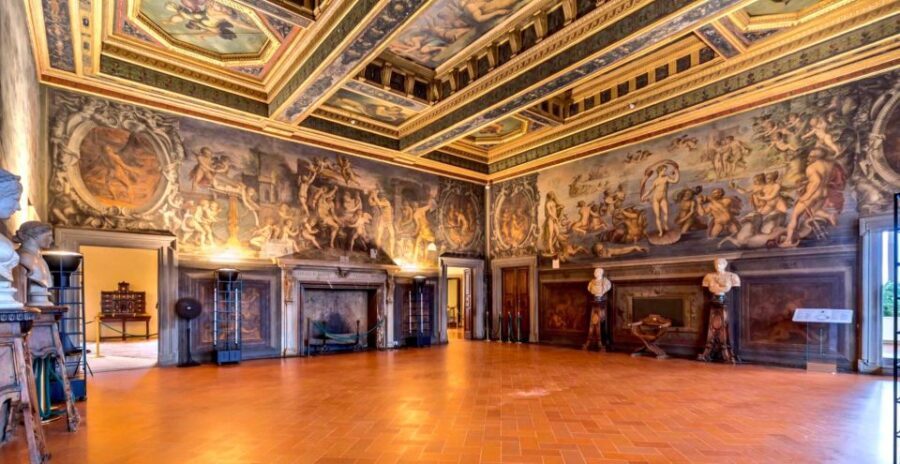
Medici Florence hits fast. In just 1.5 hours, this small-group visit gets you past the busy parts and into the heart of Palazzo Vecchio, where you’ll trace how the city’s power shifted and how the Medici made it look effortless. I like the priority entrance plus express security, because it means you’re not watching other people wait in line. I also like that the guide steers you through key rooms you’d miss on your own, including the Salone dei 500 with Giorgio Vasari’s fresco work. One drawback: it’s not suitable for people with mobility impairments, and the tower climb can be affected by weather.
You’ll start with a friendly local guide meeting you near the Uffizi area, then spend your time inside on a focused route—government halls, Medici spaces, and major themed rooms—before you’re free to wander more if you want. If you’re hoping for tower views, keep in mind access can be suspended in bad weather, and the climb may be tough for younger kids.
In This Review
- Key things I’d bet on
- Palazzo Vecchio as the Medici’s stage, not just a museum
- Getting there fast: meeting point near the Uffizi exit
- Priority entrance and express security: where the value starts
- Government of the Republic halls: understanding how Florence ruled itself
- Grand Ducal rooms and the Medici family narrative
- Thematic stops you’ll remember: Gigli, maps, and chancellor space
- Salone dei 500: Vasari’s fresco moment that anchors the whole tour
- What happens after the guided tour: re-entry and photo rules
- Price check: is $105 worth 90 minutes inside a palace?
- Who should book (and who should skip)
- Should you book Palazzo Vecchio Small Group Tour?
- FAQ
- How long is the Palazzo Vecchio Small Group Tour?
- How many people are in the group?
- Where do we meet for the tour?
- Do we skip the line?
- What’s included in the price?
- Are there different tour languages?
- Can I visit the museum again after the tour?
- Is flash photography allowed inside Palazzo Vecchio?
- Is the tour suitable for everyone, including mobility impairments?
Key things I’d bet on
- No more than 15 people, so questions land and pacing stays human.
- Priority entrance with express security, which saves time right where lines usually kill momentum.
- A guided route inside the museum focused on Medici rooms and Florence’s political story.
- Earphones for groups over 5, so you can hear clearly without leaning in.
- You can re-enter later: the entrance ticket does not expire, so you can return at your own pace.
- Salone dei 500 + Vasari frescoes is the big visual payoff.
Palazzo Vecchio as the Medici’s stage, not just a museum
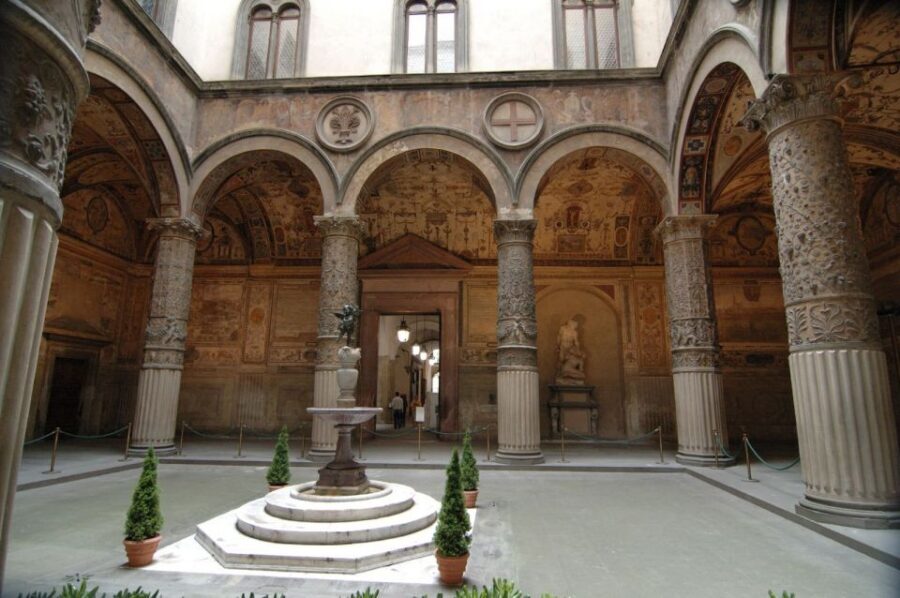
Palazzo Vecchio is Florence’s old power center turned museum. It’s the kind of place where you walk into rooms and feel the logic of power—where decisions were made, where leaders hosted, where art got used as messaging. This tour keeps that idea front and center: you’re not just looking at paintings. You’re seeing how the Medici family shaped public image inside a building that had been built to run the city.
What makes this work for a short visit is the balance between politics and aesthetics. You’ll spend time in the Halls of the Government of the Republic and then move into rooms that connect to the Grand Ducal Family. That shift matters, because it helps you understand Florence isn’t one single “brand” across time. It’s layers—Republic governance, Medici dominance, and the way art and architecture helped make authority feel natural.
Also, Palazzo Vecchio is symbol-level Florence. Even if you’ve never studied Medici politics, the building’s reputation sets expectations. This tour meets them with a guided narrative and specific room stops, including the famous Salone dei 500.
You can also read our reviews of more tours and experiences in Florence.
- Tuscany Day Trip from Florence: Siena, San Gimignano, Pisa and Lunch at a Winery
★ 5.0 · 21,634 reviews
Getting there fast: meeting point near the Uffizi exit
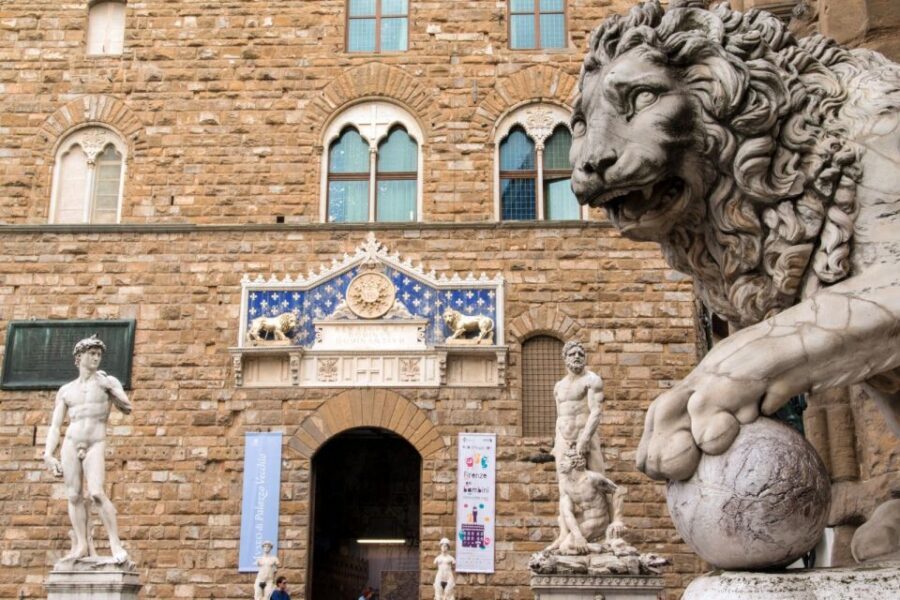
The meeting point is close and easy to find if you’re already in that Uffizi orbit. Look for the local partner’s office next to Via De’ Castellani 14, specifically at Via De’ Castellani 18/red, in front of the general exit of the Uffizi Gallery. It’s about a two-minute walk from Palazzo Vecchio.
My practical advice: arrive 15 minutes early. That buffer helps you handle the real-world stuff—finding the office, checking your voucher, and getting oriented without stress. If you’re the type who likes a calm start (I am), this matters a lot because the tour begins with getting you lined up for express entry.
Priority entrance and express security: where the value starts
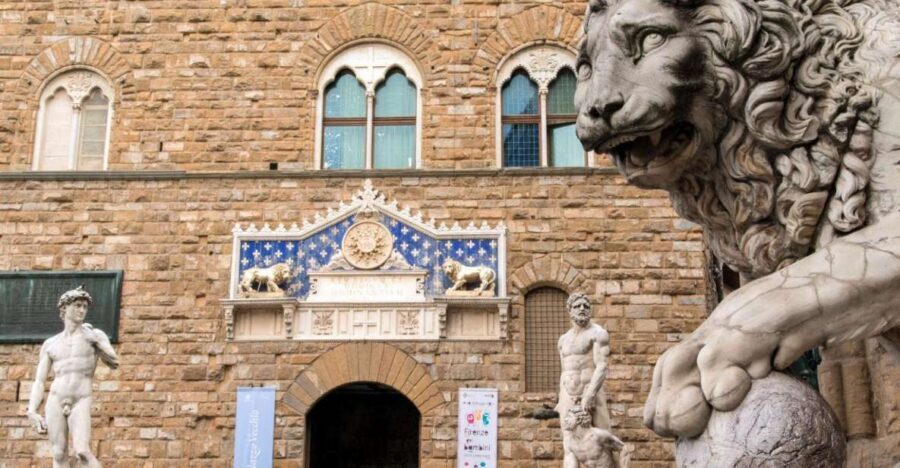
The biggest “value lever” here is the priority entrance plus the express security check. In a place like Palazzo Vecchio, security lines can eat your good time. Here, the ticket includes that head start, so you spend your 1.5 hours on the rooms that matter instead of standing around.
You also get earphones when the group is larger than 5 people. That’s not just a comfort detail; it changes the experience. When you can hear the guide clearly, you actually catch the room-to-room story. In a building full of echoes and stone, sound quality isn’t a small matter.
The guide is live and you’re with them inside the museum. That’s a key distinction: they’re there for the rooms where context makes the art and power dynamics click. You’re not left to decode things alone right after entry.
Government of the Republic halls: understanding how Florence ruled itself
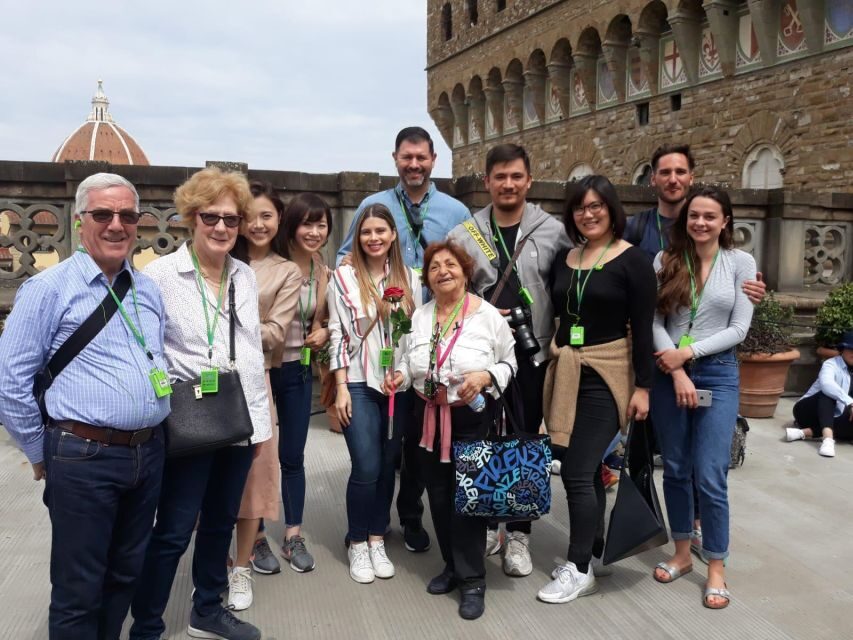
Your guided time begins with the building’s public-face spaces, especially the Halls of the Government of the Republic. This is where the tour’s political backbone starts to make sense. Florence wasn’t always governed by the Medici in the way you may imagine from textbooks. The rooms reflect civic authority, decision-making, and the city’s sense of identity.
Here’s what to pay attention to as you move through these government spaces: look for how grandeur is used for legitimacy. Even if you’re not reading every detail, you’ll start feeling why these rooms were built to impress. They were meant for authority to be seen, not just exercised.
A short guided visit is best when it helps you connect symbols to meaning. In these halls, you’re learning the “before Medici” story that makes later rooms land harder. Without this part, the Medici sections can feel like isolated luxury rooms. With it, you get the sense of an evolution.
Grand Ducal rooms and the Medici family narrative
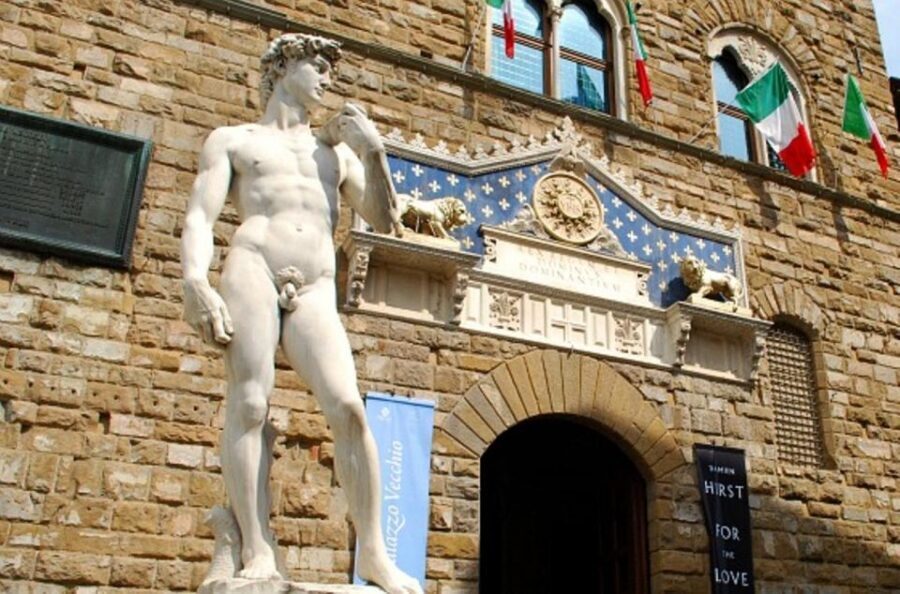
Next comes the shift into the Medici world: the tour takes you into the rooms of the Grand Ducal Family. This is where the experience turns from civic governance into personal power—and where art and decoration support the message.
A big advantage of the small-group format (up to 15) is pacing. If you’re the kind of person who wants to ask about the family story, you can. The guide’s job is to connect what you’re seeing to who held influence and why they needed to display it.
You’ll also see key themed stops, not just generic corridors. Those include the Sala dei Gigli and Sala delle Mappe Geografiche. The names help, but the value is in what the guide makes of them: objects and rooms that support the Medici identity and their idea of Florence as a center of order, knowledge, and reach.
And yes, this is also where you’ll learn to spot how “museum rooms” were once functional spaces with a purpose. That’s the difference between walking through a famous building and actually understanding it.
- Tuscany Day Trip from Florence: Siena, San Gimignano, Pisa and Lunch at a Winery
★ 5.0 · 21,634 reviews


Thematic stops you’ll remember: Gigli, maps, and chancellor space

Two of the most memorable parts of the route are the themed rooms, because they give you a structure you can repeat later in your own thoughts.
In the Sala dei Gigli, the focus is on symbolism. Florence and the Medici world used recognizable visual language to signal identity. Even if you’re not a flag-and-emblem person, this room stop helps you read the building like a message board: not modern, but still communication.
Then you move to the Sala delle Mappe Geografiche. Maps in a Renaissance palace aren’t just decoration—they represent worldview. They hint at curiosity, authority, and the idea that Florence could understand and manage its place in the wider world. If you like the intersection of art and science, you’ll likely enjoy this stop. If you don’t, the guide can still point you to the big idea: knowledge was political.
Finally, the route includes the Sala of the last Chancellor of the Republic. That’s an important pivot point. It bridges the civic thread with the end of one phase and the approach of the next. It’s also a nice moment for perspective: you’re seeing a turning point inside the same walls.
Salone dei 500: Vasari’s fresco moment that anchors the whole tour
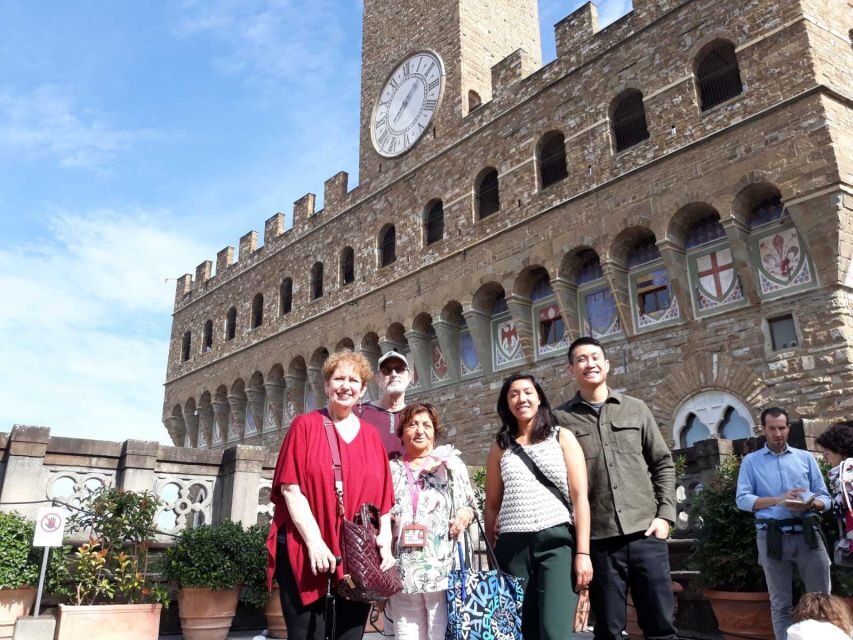
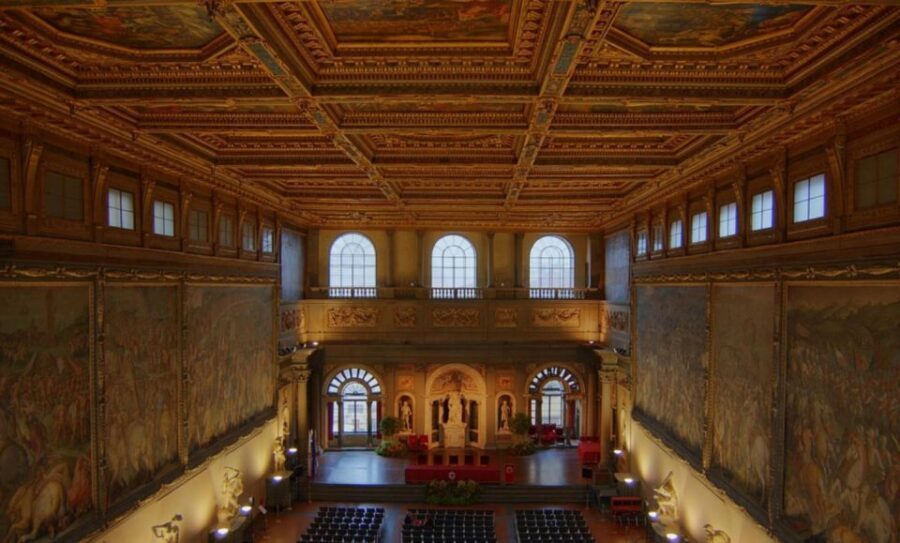
If you only remember one room, make it the Salone dei 500. This is the main attraction, and the reason is straightforward: it’s entirely frescoed by Giorgio Vasari.
This hall works as a finale because the building’s story comes together in one visual statement. You’ll see how art functioned as power theater—big scale, high visibility, and a visual program designed for impact. Vasari’s fresco work in this space isn’t just about skill. It’s about shaping what people think they’re looking at when they step into a room built for authority.
My suggestion: slow down here. Let your eyes move across the frescoes and don’t rush to the “next thing.” A timed tour is still long enough to actually feel the hall’s presence if you give yourself a minute to reset.
And if you’re visiting during busy hours, this is where hearing the guide’s framing helps the most. Without a story, you can admire the artwork and still miss why that hall mattered so much.
What happens after the guided tour: re-entry and photo rules
After your guided portion ends, you get a genuinely useful perk: you can return even during the following days to explore the museum freely, because the entrance ticket does not expire.
That’s big value for travelers who like breathing room. The guided tour gives you the narrative spine. The self-paced time lets you lean into what you liked most—whether that’s repeating a favorite room, comparing details, or just wandering when the crowds thin.
Photography is also covered: non-flash photography is allowed inside the palace. So if you take photos, plan on natural light and avoid flashes. It’s a simple rule, but it prevents the awkward stop-your-moment problem.
Also note what’s not included: you’re not automatically buying extra add-ons like the Archaeological itinerary ticket, and Ronda Tower and Walkway ticket are not included. If you’re imagining tower views as a guaranteed part of your visit, manage expectations ahead of time.
Price check: is $105 worth 90 minutes inside a palace?
At $105 per person for a 1.5-hour guided experience, you’re not paying for a long day. You’re paying for three things that add up:
- Priority entrance and express security help you avoid time loss.
- A real guide inside the museum with a focused route.
- A museum ticket included, plus earphones when needed.
For short visits, this kind of tour can beat “just go there and wander” in one key way: context. Palazzo Vecchio is meaningful, but it’s also big. A guided sequence through the Republic halls, Grand Ducal rooms, themed chambers, and then Vasari’s Salone dei 500 gives your brain a map.
You also get a practical bonus: the ticket doesn’t expire, so you’re not locked into only what fits in 90 minutes. That’s how the value holds up if you want more time the next day.
Where it may not be worth it is if you already know exactly what you want to see and you’re comfortable reading it solo. But for most people—especially those who want the Medici story without hours of research—this is a strong time-to-understanding ratio.
Who should book (and who should skip)
This is a great pick if you want a tight, guided introduction to Palazzo Vecchio without turning it into a day-long project. It’s also a good fit if you prefer small group energy and clear explanations, because the group size stays at no more than 15 participants.
It’s less of a fit if you:
- need mobility-friendly access (the tour is not suitable for people with mobility impairments)
- are counting on a tower climb as part of the plan (access can be suspended in bad weather)
- are traveling with younger children who might find stair-heavy areas challenging (the tower climb may be challenging for younger children)
Language-wise, you’re covered. The tour offers German, Italian, Spanish, French, and English, so you should be able to match what you’re most comfortable hearing.
If your goal is to leave Florence with a clear mental picture of how Medici power looked inside the city’s main civic building, this tour does that job.
Should you book Palazzo Vecchio Small Group Tour?
Yes, I’d book it if you value a fast, guided hit of the Medici story and want to see the Salone dei 500 without wasting time to crowds and security lines. The priority entrance, small group size, and earphones make the short duration feel efficient instead of rushed.
Skip it if mobility access is a must, or if you mainly want to roam with no guidance at all. In that case, you might be happier doing a purely self-guided visit.
If you’re on a tight schedule and you want the key rooms with context, this tour is a solid use of your time in Florence.
FAQ
How long is the Palazzo Vecchio Small Group Tour?
The tour lasts 1.5 hours.
How many people are in the group?
It is a small group tour with no more than 15 participants.
Where do we meet for the tour?
Meet at the local partner’s office at Via De’ Castellani 18/red, next to number 14 of Via De’ Castellani, in front of the general exit of the Uffizi Gallery (about two minutes from Palazzo Vecchio). Arrive 15 minutes early.
Do we skip the line?
Yes. You get priority entrance and an express security check.
What’s included in the price?
Included are the priority entrance ticket, a professional tour guide inside the museum, earphones (for groups over 5 people), and the Palazzo Vecchio museum ticket.
Are there different tour languages?
Yes. The tour is available in German, Italian, Spanish, French, and English.
Can I visit the museum again after the tour?
Yes. After the guided tour, you can return during the days following your visit because the entrance ticket does not have an expiration date.
Is flash photography allowed inside Palazzo Vecchio?
Non-flash photography is allowed inside the palace.
Is the tour suitable for everyone, including mobility impairments?
No. It is not suitable for people with mobility impairments. Also, tower access can be suspended in bad weather, and the tower climb may be challenging for younger children.
You Might Also Enjoy


More Tours in Florence
- The Best tour in Florence: Renaissance & Medici Tales – guided by a STORYTELLER
★ 5.0 · 12,316 reviews

More Tour Reviews in Florence
- Tuscany Day Trip from Florence: Siena, San Gimignano, Pisa and Lunch at a Winery
★ 5.0 · 21,634 reviews - The Best tour in Florence: Renaissance & Medici Tales – guided by a STORYTELLER
★ 5.0 · 12,316 reviews