Sketching Florence turns sightseeing into a real skill. This urban drawing workshop lets you slow down and learn how to see the city—then put it on paper using Renaissance know-how with a modern twist.
I especially like the small-group size and the hands-on help. When you are learning perspective and building an illustration step by step, fewer people means more time with your tutor. I also like that it is guided by an architect-illustrator, not just a general art teacher—so the drawings focus on architectural dimensional rules, not random marks.
One possible drawback: because this session relies on being outside around major sights, you should plan for weather-dependent timing. And on rare occasions, some participants have reported a no-show at the meeting point—so arriving a bit early and staying attentive day-of is smart.
In This Review
- Key takeaways before you go
- Why drawing Florence beats another sightseeing loop
- Price and what you really get for $30.04
- Timing, meeting point, and how to avoid the most common headache
- Florence Historic Center stop: sketching the city’s core shapes
- Ponte Vecchio stop: the bridge as your perspective training ground
- Mixed art techniques: getting more than a pencil copy
- Your tutor: guidance that focuses on construction, not talent
- What to bring and how to prepare (so you can draw instead of scramble)
- Who this workshop is best for (and who might want something else)
- Weather, booking timing, and that outdoor reality
- Should you book Urban Drawing Workshop in Florence?
- FAQ
- How long is the Urban Drawing Workshop in Florence?
- Where does the workshop start?
- Where does the workshop end?
- Is the workshop offered in English?
- What is included in the price?
- What is not included?
- What is the maximum group size?
- Is this workshop suitable for beginners?
- Is good weather required?
- Can I cancel for free?
Key takeaways before you go
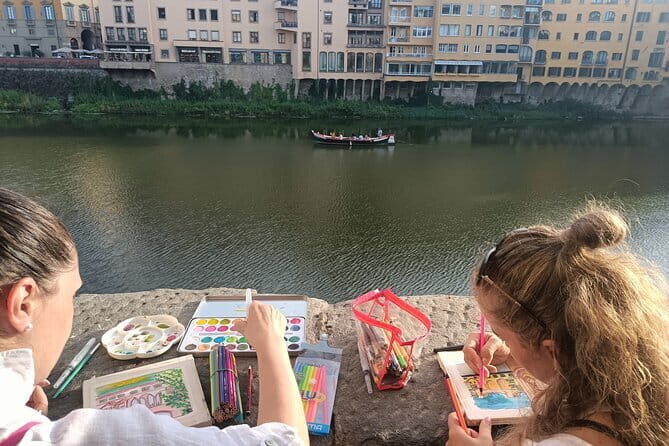
- Max 6 people, so you get real feedback while you sketch
- Architectural drawing rules for proper dimensions and perspective
- Ponte Vecchio + Historic Center for two iconic angles in one session
- Renaissance techniques meet mixed modern illustration styles
- Art supplies included, so you can travel lighter
- Beginner-friendly guidance if your sketchbook is rusty
Why drawing Florence beats another sightseeing loop
Florence can hit you in the face—in a good way—especially if you keep seeing the same perfect-looking buildings from every angle. This workshop gives you a different way to process it. Instead of only looking, you practice the basic visual math behind what makes the streets, facades, arches, and bridges look right on paper.
You start by embracing creativity, then you get structure. That mix matters. If you’ve ever tried to draw and felt stuck in the first 2 minutes, this format helps you move past the blank-page panic. You’ll be taking cues from the city’s architecture and Renaissance details, but the tutor keeps bringing it back to practical drawing choices: where lines go, how shapes sit in space, and how to refine what you already started.
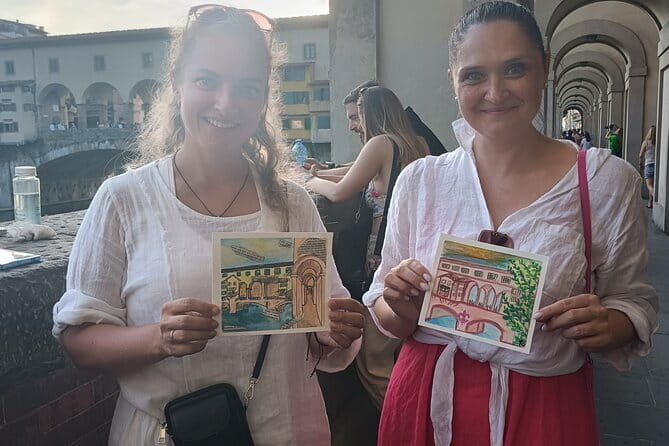
It is also a good option when you feel like you’ve already checked off the big sights and want something more personal. You leave with a finished-ish illustration that actually came from your own hands. That is the kind of souvenir that ages well.
You can also read our reviews of more tours and experiences in Florence



Price and what you really get for $30.04
At about $30.04 per person for roughly 2 hours 15 minutes, you’re paying for two things: tutor time and art supplies. The supplies are included, which is a big deal in Italy, where buying a decent sketch kit can quietly eat your budget.
This is not the kind of class where you get talked at for two hours. The flow is built around drawing at the locations—first with a proper sketch, then refining it into an illustration. The tutor guidance is part of the value, especially if you’re working on perspective and architectural dimensions. That is exactly where beginners tend to struggle and where a patient instructor can save you.
If you are already an experienced artist, you might find the structure a bit more basic than advanced studio courses. Still, drawing Florence in the open air forces you to adapt quickly, and that can be useful practice even when you know your basics.
Timing, meeting point, and how to avoid the most common headache
The workshop starts at P. Signoria, 7, 50122 Firenze FI, Italy, and it ends back at the same meeting point. Expect an around-2-hour sketching session, with time built in to get inspired and start correctly.
Because the class is capped at 6 travelers, they can move as a group without feeling like a parade. That said, small groups also mean timing matters. You’ll want to be at the meeting point early, not just on time. A couple of participants reported issues when no one showed up at the start—so I’d treat this as a session where you should arrive ahead and keep your phone handy if you have to message the organizer.
The workshop is offered in English, and you get a mobile ticket. It also runs near public transportation, which is helpful if you are bouncing between Florence highlights.
Plan one simple thing: bring a light layer. You’ll be outside long enough to notice the shift between “morning cool” and “afternoon sun,” and it’s easier to draw when you’re not shivering.
Florence Historic Center stop: sketching the city’s core shapes
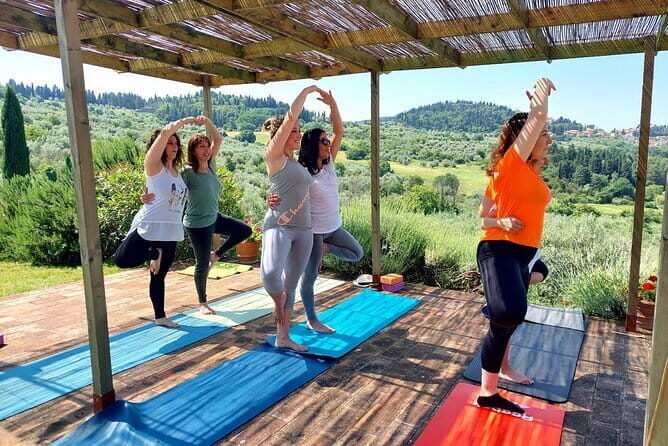
The first part is in the Florence Historic Center, where the tutor helps you turn the visual chaos into a usable composition. The goal here is not to copy every detail. It’s to start with a proper sketch of the city and include either a famous Florentine icon or a scene from the area’s architecture and views.
This is where the architectural drawing instruction comes in. You’ll get basic rules for making your drawing dimensional—so buildings don’t look like flat cardboard cutouts. Perspective can sound like a scary word, but the teaching style here is about construction: line placement, how to “build” forms, and how to keep proportions under control.
As a beginner, this is the part you’ll likely appreciate most. Multiple participants mentioned that the instructor is patient and willing to guide you through construction, which matters when you do not know what to draw first.
A realistic drawback: you’ll still need to do some work. Even with guidance, you are actively sketching from real architecture. If you’re expecting a passive, sit-and-watch art experience, you might feel rushed. But if you want a skill you can reuse later, this stop is where that happens.
Ponte Vecchio stop: the bridge as your perspective training ground

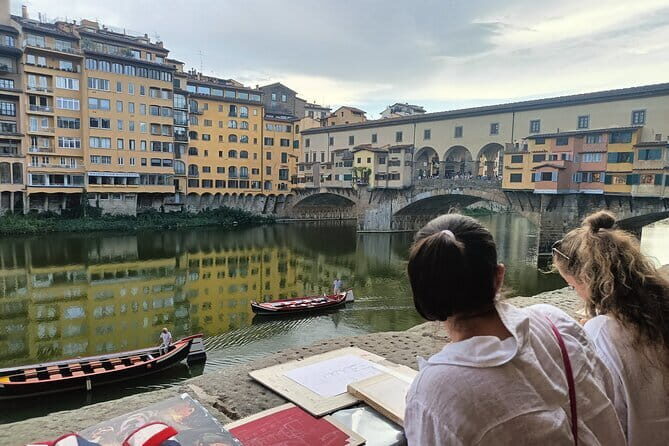
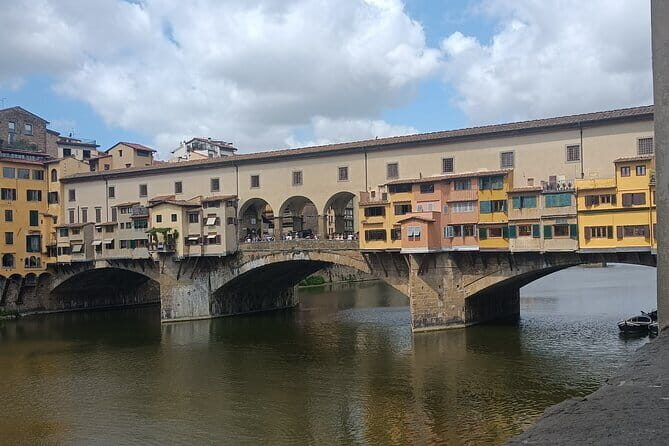
Then you move to Ponte Vecchio, one of Florence’s best-known scenes. This stop is smart because bridges force you to deal with depth. You have foreground, midground, and background elements stacked together—perfect for practicing perspective and line control.
You’ll use what you learned in the first stop to draw from a slightly different angle and with new visual elements. The tutor’s job is to help you capture the vibe of Florence’s architecture while still keeping your illustration readable. That means you’ll probably simplify what you see so it looks like it belongs together.
If you already have drawing skills, this part can feel like play—same city, different geometry. You can experiment with your illustration choices while the tutor keeps steering you back to correct dimensional rules. And if you’re a total beginner, Ponte Vecchio is a strong motivator: it’s recognizable, so even a first attempt can feel like progress.
One practical note: major sights mean you may be standing with other people around. It’s still a workshop, not a private studio. You’ll do best if you treat it like a field sketching session: position yourself, draw for a while, then adjust rather than trying to capture everything in one shot.
- Tuscany Day Trip from Florence: Siena, San Gimignano, Pisa and Lunch at a Winery
★ 5.0 · 21,634 reviews

Mixed art techniques: getting more than a pencil copy
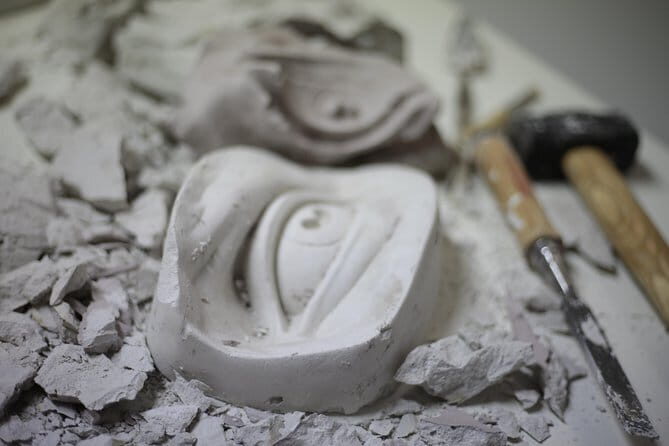
The workshop uses mixed art techniques, meaning you’re not stuck doing only one medium or one style. The intention is to help your final illustration feel complete, not just like an outline.
What’s valuable here is the thinking behind it: you start with a pencil-like structure (a sketch with proper construction), then you apply technique to make the artwork look finished. You’re combining inspiration from Renaissance art with modern illustration habits, so your final result can still feel current rather than like a museum reproduction.
Even if you’re not an art-person, you can use this approach later when you travel. When you don’t have time for a full painting, a structured sketch plus a few technique steps can turn a moment into something you can keep.
If you’re the type who hates mess, don’t worry too much. The instruction is about building and refining, not perfection on the first try. One participant even emphasized how clear the perspective explanations were and how the tutor was understanding about imperfections in techniques.
Your tutor: guidance that focuses on construction, not talent
The instructor is an architect and illustrator, and the teaching style shows in the results. One name came up clearly: Francesca. People praised her for being super great, helpful, and very patient, especially when it came to difficult concepts like perspective.
That matters because perspective is usually where people give up. It’s also where an architect’s mindset helps. Instead of just saying draw what you see, you get rules for how architecture works in space. That can make your drawings look more believable faster than random practice.
You can also expect support throughout the session, not just a quick demo at the start. The workshop is structured so the tutor can guide you as you construct your sketch, then help you refine it into an illustration.
For me, the biggest sign of quality is not that the class exists—it’s that people said the teaching made the tough parts understandable. If you’ve ever been in a class where you leave more confused than when you arrived, you’ll likely appreciate this one.
What to bring and how to prepare (so you can draw instead of scramble)

You get art supplies included, which reduces what you need to pack. Still, you should prepare your mindset and your comfort level, because you’ll spend the time actively drawing.
Here’s how to set yourself up:
- Wear shoes you can stand in comfortably.
- Bring sun protection or a light layer; you’ll be outside.
- If you have glasses, make sure they work for close drawing.
- Keep your expectations practical: the goal is a refined sketch and an illustration outcome, not a perfect masterpiece.
If you’re traveling as a couple, this workshop can be a nice break from constant walking. If you’re traveling with kids, it can work too, as long as they can sit and focus long enough to sketch. One review mentioned a young daughter and beginner-friendly pacing.
Who this workshop is best for (and who might want something else)
This class is ideal if you:
- want a structured way to learn perspective and architectural dimension from a real scene
- are a beginner and want someone to guide your construction step by step
- want a creative activity that still feels tied to Florence’s architecture and Renaissance art
- prefer a small group over crowded tours
It can also suit returning artists who already draw, because you’ll practice quickly capturing a scene and refining an illustration with guidance. You get feedback, and you get a location-driven drawing workout.
It may feel less satisfying if you want a history lecture. This is not a long storytelling tour. It is about drawing rules and producing artwork within a set time.
Weather, booking timing, and that outdoor reality
This experience requires good weather. If it’s canceled due to poor weather, you’ll be offered a different date or a full refund. That flexibility is useful in Florence, where skies can change fast.
It’s also booked fairly ahead on average—about 25 days in advance. If you’re visiting in peak season or you want a specific day, it’s wise to reserve early.
Given the occasional start-point issues reported by a small number of participants, I’d also do the boring but smart thing: show up a bit early and confirm everything the day of. You’ll enjoy the workshop more if the start is smooth.
Should you book Urban Drawing Workshop in Florence?
I’d book it if you want a Florence souvenir you made yourself—and you like the idea of learning how architecture becomes a drawing. The small-group tutoring, the architectural perspective focus, and the inclusion of art supplies make it good value for time and effort.
Skip it only if you expect a passive, guided photo-walk, or if outdoor weather is a dealbreaker for you. Otherwise, this is a solid, practical class that turns iconic streets into an actual skill-building session.
And if you’re worried about being a beginner: the instruction is built for that. You do not need to be able to draw like an old master. You need to show up, open your mind, and let Francesca’s construction-based guidance do the heavy lifting.
FAQ
How long is the Urban Drawing Workshop in Florence?
It lasts about 2 hours 15 minutes.
Where does the workshop start?
The meeting point is P. Signoria, 7, 50122 Firenze FI, Italy.
Where does the workshop end?
It ends back at the same meeting point.
Is the workshop offered in English?
Yes, it is offered in English.
What is included in the price?
Art supplies are included.
What is not included?
Coffee and/or tea, alcoholic beverages, and lunch are not included.
What is the maximum group size?
The workshop has a maximum of 6 travelers.
Is this workshop suitable for beginners?
Yes. Most travelers can participate, and the instructor will guide you through constructing the artwork if you are a beginner.
Is good weather required?
Yes, the experience requires good weather. If canceled due to poor weather, you’ll be offered a different date or a full refund.
Can I cancel for free?
Yes. Free cancellation is available up to 24 hours in advance for a full refund.
You Might Also Enjoy

More Workshops & Classes in Florence
- Cooking Class and Lunch at a Tuscan Farmhouse with Local Market Tour from Florence
★ 5.0 · 4,831 reviews


More Tour Reviews in Florence
- Tuscany Day Trip from Florence: Siena, San Gimignano, Pisa and Lunch at a Winery
★ 5.0 · 21,634 reviews - The Best tour in Florence: Renaissance & Medici Tales – guided by a STORYTELLER
★ 5.0 · 12,316 reviews