REVIEW · FLORENCE
Florence Highlights: Guided Walking Tour of the Historic Center
Book on Viator →Operated by Vox City International Ltd · Bookable on Viator
This walking tour makes Florence feel walkable and understandable. You get a guided route through major landmarks, plus an audio app that keeps you moving when you want a break. It’s a smart mix of structure and freedom, especially in a city this compact.
I especially like the live English commentary for the big-picture ideas, and the built-in multilingual audio for the details you might miss on the fly. I also like the flexible style: you can walk with the guide, step away for a snack, then get back on course.
One thing to consider: if the guide’s pacing doesn’t click for you, the experience can feel a bit repetitive. Also, the route can start a few minutes later than expected, so I’d arrive early (5 minutes helps).
In This Review
- Key things to know before you go
- Florence Highlights: guided route meets smart self-walking freedom
- Meeting at Café Firenze (Via de’ Martelli): easy start, clear handoff
- The “historic center” route: what you’ll actually see and why it matters
- Donatello’s artwork inside a monastery-era church
- Covered market atmosphere and a piglet fountain photo
- Florence’s main political square and the W-shaped detail
- Town hall facade: a symbol tied to Renaissance identity
- Medici-era fountain snapshot: Renaissance power in water form
- Arched gallery with historic statues: the in-between stop you’ll remember
- A major art gallery stop: world-class Renaissance works (viewing, not entry)
- An older church with Romanesque style architecture
- A triangular piazza framed by Gothic and Renaissance palaces
- A High Renaissance palace by architect Baccio d’Agnolo
- Strozzi family palace: Medici rivals in stone and street space
- The Fountain of the Naiads: snap-worthy statues in a popular square
- A towering church as Medici resting place
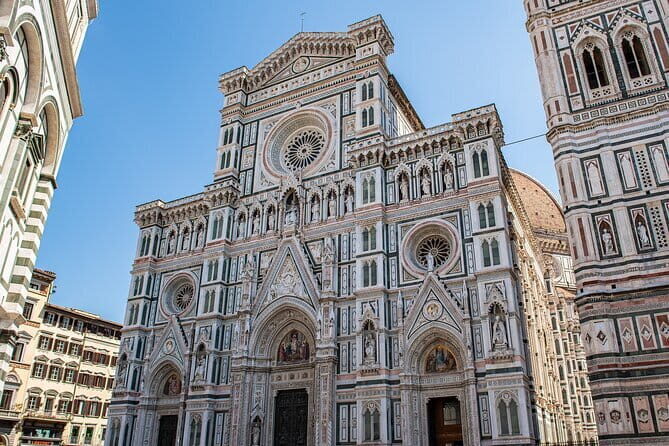
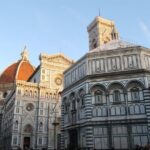
- Santa Maria del Fiore: the Duomo dome that dominates everything
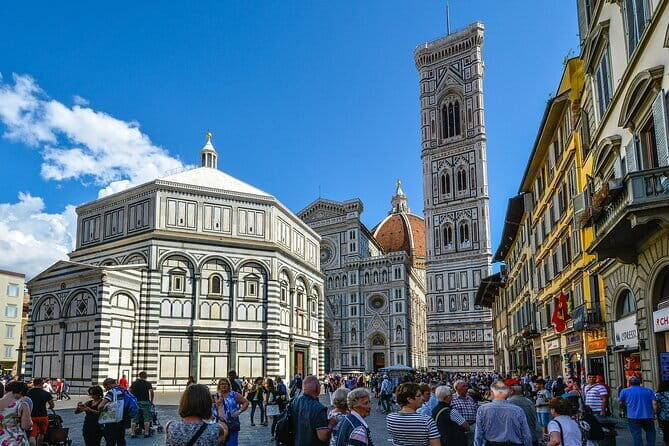
- Baptistery: the octagonal building used for centuries of baptism
- Campanile: the free-standing bell tower over 80 meters
- Roman-era roots and the oldest standing building in the center
- Dante’s footprint: the museum dedicated to Alighieri
- The Chestnut Tower and other “City of Lilies” landmarks
- Price and value: what $30.12 buys you (and what it doesn’t)
- Timing: 1 to 2 hours is realistic in the Duomo zone
- Who should book this Florence Highlights tour
- Quick tips to make it smoother
- Should you book this Florence Highlights: Guided Walking Tour of the Historic Center?
- FAQ
- How long is the Florence highlights guided walking tour?
- Where do I meet the guide in Florence?
- What language is the live commentary in?
- Do I need to bring my own headphones and mobile device?
- Is admission to attractions included?
- Can I use the tour audio on my own?
- What time should I arrive for the start?
- Is there a limit on group size?
- Can I cancel for a full refund?
Key things to know before you go
- Live English guide plus pre-recorded audio in multiple languages, so you can follow even if you miss a moment
- Hop-on, hop-off style flexibility: you can leave for a bite and rejoin using the app
- Max group size is 30, which keeps it manageable in crowded central streets
- Central meeting point near Via de’ Pucci, easy to find and easy to return to
- No entry tickets included, so plan for viewing from outside or paying separately if you want inside
Florence Highlights: guided route meets smart self-walking freedom
Florence can overwhelm you fast. The Duomo dome is huge, the streets are tight, and every corner seems to have another masterpiece waiting. This tour helps you connect the dots without locking you into a rigid, all-day schedule.
The setup is simple. You start with a 90-minute guided walking segment and commentary in English, then you lean on the audio guide through the app for the rest. That means you’re not stuck waiting on the group for every tiny stop, and you still get the story behind what you’re seeing.
What makes it practical is the rhythm. You don’t just pass buildings—you get enough context to understand why Florence looks the way it does: Renaissance power, Medici influence, and the city’s ongoing layers of religious and civic life.
You can also read our reviews of more walking tours in Florence

Meeting at Café Firenze (Via de’ Martelli): easy start, clear handoff
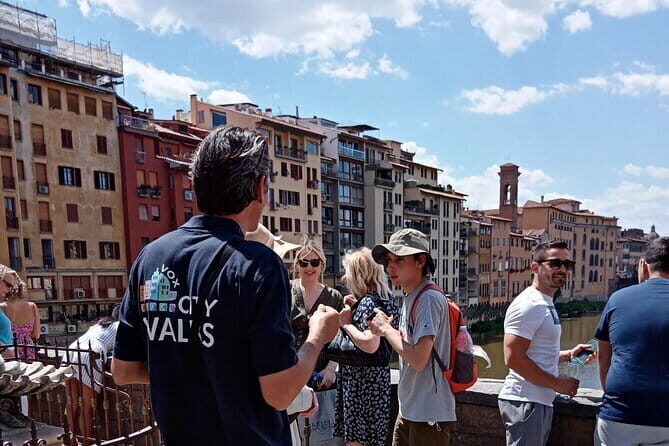
You meet at Café Firenze, Via de’ Martelli, 50/r, on the corner of via de’ Pucci. The guide wears a dark blue Vox City uniform, so you should spot them quickly.
Arrive about 5 minutes early. Not because you’ll be late without it, but because small delays can happen when groups form at the same meeting point. A few minutes of breathing room keeps the start smooth.
You’ll end back at the same meeting point. That matters in Florence, where “getting back” is often harder than “getting there.”
The “historic center” route: what you’ll actually see and why it matters
This is a highlights loop built for first-timers and repeat visitors alike. The itinerary threads through churches, squares, palaces, and key civic spots, then closes with the Duomo complex area.
Because it’s a combination guided and self-guided experience, you’ll likely get the best value if you stay present during the live portion. Treat those moments as your map for what you’re about to notice on your own—details, symbols, family rivalries, and the way architecture signals power.
Below is the route in the order you’ll experience it, with the “why should I care?” angle for each stop.
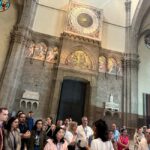
Donatello’s artwork inside a monastery-era church

Early on, you’ll admire a 700-year-old church built on the site of a monastery. The big draw here is art linked to Donatello.
This stop works well at the start because it sets a tone: Florence isn’t just Renaissance sightseeing. It’s older, and it keeps reusing sacred space. You’ll get a quick sense of how the city’s artistic identity sits on top of older religious foundations.
Tip: look at the building carefully before you look at the details. Even without entering, you’ll start noticing how Florence’s craftsmanship frames the human scale.
Covered market atmosphere and a piglet fountain photo
Next up: the covered market with Renaissance-style arches. You’ll also get a famous little photo moment tied to a piglet fountain.
Markets are one of the best places to see how architecture and daily life mix. Even if you don’t buy anything, walking through the arcade-like space gives you a feel for the city’s old rhythm—where civic and commercial life overlap.
If you want a snack, this is often a good moment to grab one. Just remember: entries and inside visits aren’t included, so plan purchases around what’s open.
You can also read our reviews of more guided tours in Florence
- The Best tour in Florence: Renaissance & Medici Tales – guided by a STORYTELLER
★ 5.0 · 12,316 reviews

Florence’s main political square and the W-shaped detail
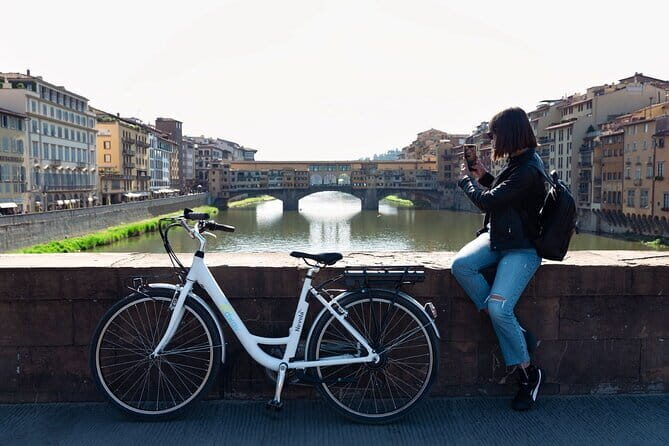
You’ll stroll through Florence’s main square, known for political importance. Along the way, you’ll see a unique W-shaped design.
Squares are where power becomes visible. In Florence, the look isn’t random. Civic space, palace facades, and symbolic forms all tell you who mattered—and how.
This is also a good stop to slow down. Squares get crowded, and the temptation is to keep moving. But the geometry here is exactly what a guide can explain quickly.
Town hall facade: a symbol tied to Renaissance identity
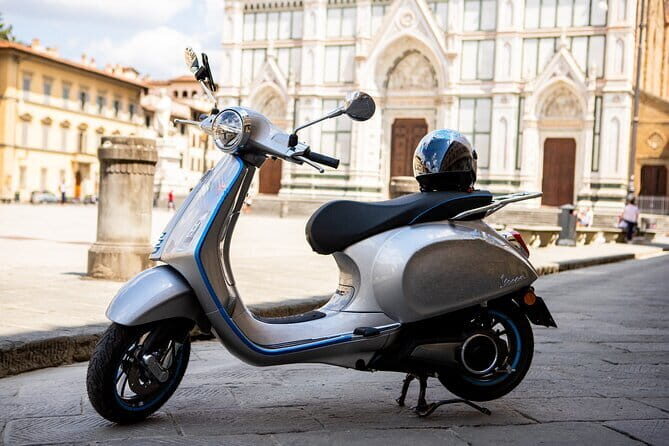
Then you’ll look up at Florence’s town hall, one of the city’s most recognizable heritage symbols. This stop is basically architecture as branding.
When you understand what you’re looking at—government authority, cultural pride, Renaissance influence—the building stops being just a photo subject. It becomes a statement in stone.
Medici-era fountain snapshot: Renaissance power in water form
You’ll take a snap of a magnificent fountain created by the Medici family nearly 500 years ago. Even if you don’t know the full story yet, fountains in Florence are rarely decorative. They’re identity markers.
This is a great place to look up and around, too. Florence often hides meaning in the “supporting cast”: the palaces, the street angles, the way the architecture frames the square.
Arched gallery with historic statues: the in-between stop you’ll remember
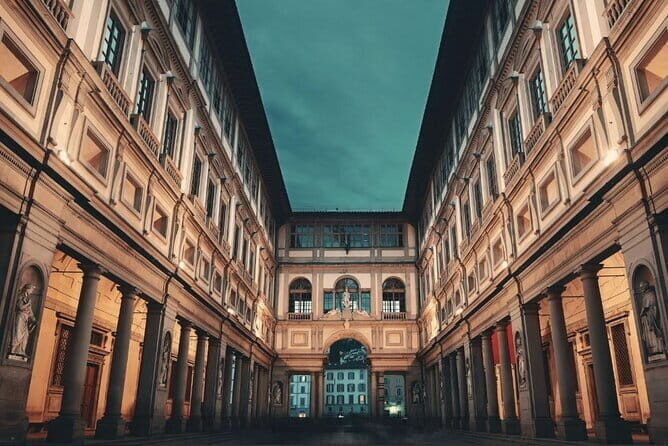
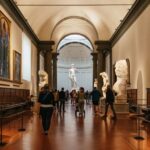
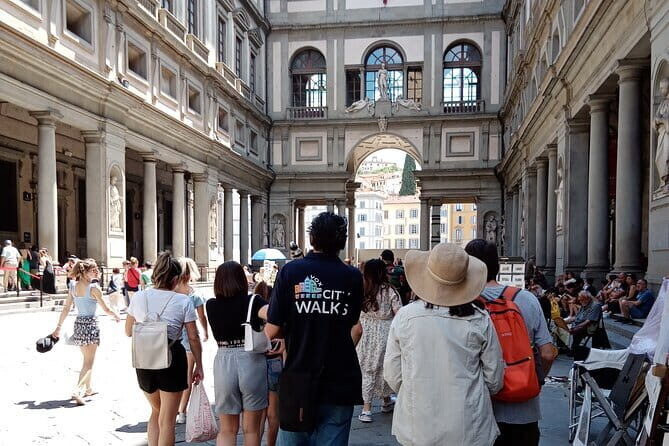
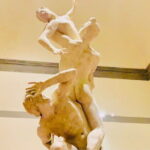
One of the most enjoyable parts of this route is the beautiful arched gallery with a collection of historic statues.
This kind of stop is underrated because it’s not always on the first-page “must see” list. But galleries like this teach you something important: Florence’s Renaissance art isn’t only in famous museums. A lot of it lives in the everyday walk—quietly placed, visually consistent, and easy to miss when you’re rushing.
A major art gallery stop: world-class Renaissance works (viewing, not entry)
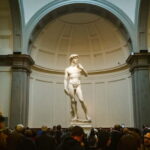
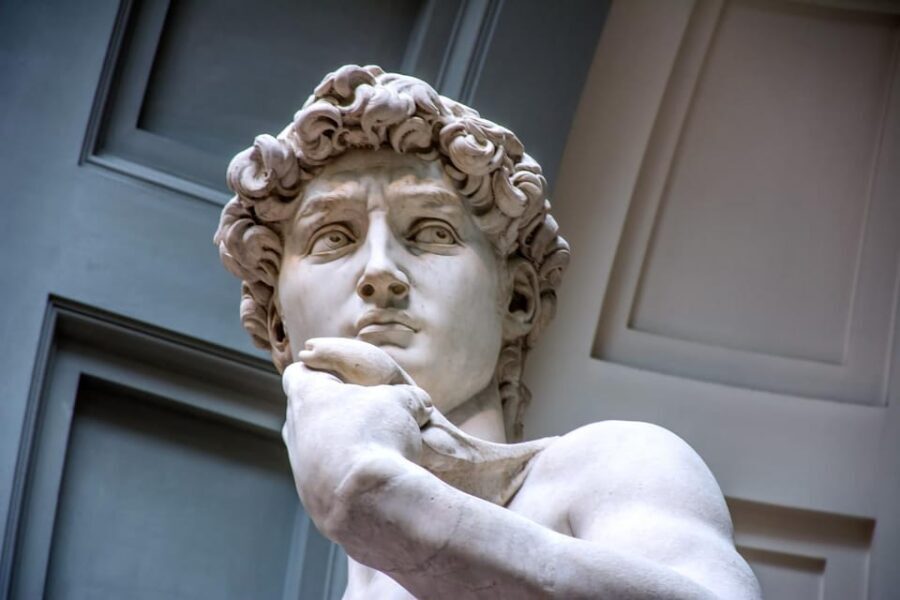
Next you’ll reach the iconic art gallery with a world-class collection of Italian Renaissance sculptures, paintings, and more.
Important practical point: entry to attractions is not included. So expect the highlight to be the exterior viewing and the context you get from the guide and audio—not a guaranteed timed entrance.
If you want inside time, you can plan that separately. The advantage of this tour is that it helps you decide what you care about before you buy tickets elsewhere.
An older church with Romanesque style architecture
You’ll admire one of Florence’s oldest churches, with Romanesque style architecture.
Romanesque detail gives you a different texture than the later Renaissance look. Even from the outside, Romanesque buildings tend to feel heavier—more mass, more solidity. That contrast makes the Renaissance stops land harder later.
A triangular piazza framed by Gothic and Renaissance palaces
Then comes a walk through a triangular piazza lined with striking Gothic and Renaissance palaces.
Triangular spaces are great for photos because they force perspective. They also help you see how different architectural eras share the same civic stage.
This is one of those moments where going slowly pays off. Stop once, look at the lines, then keep going. The audio guide can help connect the buildings to the bigger city story.
A High Renaissance palace by architect Baccio d’Agnolo
You’ll admire a High Renaissance palace designed by Baccio d’Agnolo.
When you hear the name of an architect tied to an exact building type, it makes your brain hold onto the place longer. Instead of just seeing a facade, you start noticing how the design fits the High Renaissance mindset: controlled form, confident scale, and a sense of polished intention.
Strozzi family palace: Medici rivals in stone and street space
You’ll discover the palace built by the Strozzi family, long-standing rivals of the Medici.
This is one of Florence’s best “history in motion” themes. You don’t need a timeline wall. You just need to know: rival families shaped politics, art patronage, and even what got built where.
Even if you’re not a deep history person, the visual contrast between civic powerhouses makes the rivalry feel real.
The Fountain of the Naiads: snap-worthy statues in a popular square
You’ll walk through another popular square and take a snap of the famous statues lining the Fountain of the Naiads.
This is a good pause for photography and people-watching—without turning it into a time sink. The best move here is to grab your photo, then use the audio to connect it back to what you saw earlier: Florence’s power displayed through public art.
A towering church as Medici resting place
Next you’ll look up at a towering church, the final resting place of several Medici family members.
This stop reminds you Florence is both art capital and dynasty capital. Understanding that the Medici connection isn’t just political—it’s personal and memorial—changes how you read the architecture.
If you’re more interested in the art story than the religious part, this still matters. It connects who paid for art and why certain works and monuments appear where they do.
Santa Maria del Fiore: the Duomo dome that dominates everything
Then it’s the big moment: be ready to take snaps of Santa Maria del Fiore, with Brunelleschi’s dome dominating the skyline.
Even before you reach it, Florence lets you feel it. The dome becomes a navigation tool. The closer you get, the more it changes your sense of scale, and the more you understand why so many streets seem to point toward this area.
Practical note: bring your eyes, not just your phone. Look at the dome proportions, then look at how the street angles funnel you toward the cathedral complex.
Baptistery: the octagonal building used for centuries of baptism
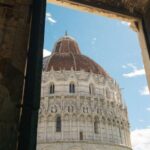
You’ll see the striking octagonal baptistery building, known as the exclusive place for baptism in Florence for centuries.
This is one of those spots where geometry is the message. Octagons and religious spaces aren’t random here—they’re part of a long tradition of ceremonial meaning.
If you like architectural details, this stop gives you something distinct to focus on besides artwork and crowds.
Campanile: the free-standing bell tower over 80 meters
You’ll look up at the free-standing bell tower, built almost 700 years ago and over 80 meters tall.
From the ground, you don’t always grasp how tall it is until you’re directly aligned with it. This stop is worth slowing down for even if you’ve seen Florence before.
Tall towers also help you read the city. They create a vertical map, and you start understanding how people historically moved and worshipped within a skyline shaped by power and devotion.
Roman-era roots and the oldest standing building in the center
Next you’ll walk by the oldest building still standing in the historic center, with foundations that date back to the Roman era.
This is a sneaky good stop because it breaks the “only Renaissance” mindset. Florence didn’t start in the Renaissance. It absorbed eras—and kept rebuilding on top of itself.
Dante’s footprint: the museum dedicated to Alighieri
You’ll walk by the museum dedicated to poet and writer Dante Alighieri, famed for the Divine Comedy.
If you want a human anchor beyond architecture, this is it. Dante gives Florence its literary gravity, and the presence of his museum in the walking circuit makes the city feel bigger than art catalogs.
The Chestnut Tower and other “City of Lilies” landmarks
You’ll also see the Chestnut Tower, described as one of the best preserved towers in Florence’s historic center. Then you’ll end with views tied to Florence’s nickname, the City of Lilies, and the cultural heritage that nickname carries.
Towers and civic symbols are an easy way to leave with a sense of place, not just a pile of photos. Even without entering every site, you’ll have enough context to remember what each stop represents.
Price and value: what $30.12 buys you (and what it doesn’t)
At $30.12 per person, this tour sits in the practical mid-range for Florence. You’re paying for two things: a structured route plus a multilingual audio system that keeps working after you step away.
The live guide is English, and the audio/app adds languages including English, French, German, Italian, Spanish, and Chinese. That matters if you’re traveling as a mixed-language pair or group—everyone can follow along.
What’s not included is also important. Headphones and a mobile device are not provided, and entry to attractions isn’t included. So if you’re hoping to cross off multiple inside ticketed sites in one go, you’ll need to plan those separately.
In return, you get a walkable highlights plan that helps you avoid the common mistake: spending your day wandering without knowing why a place is important.
Timing: 1 to 2 hours is realistic in the Duomo zone
The duration is listed as about 1 to 2 hours, with a guided component of about 90 minutes. That’s a good length for Florence because it lets you see a lot without turning your feet into pasta.
Crowds around the Duomo area can slow things down. The app-based audio helps here. If you need to stop, read, or step aside briefly, you can keep the story moving instead of waiting for the group to catch up.
Who should book this Florence Highlights tour
This is a strong fit if you:
- Want a structured route through major landmarks without booking a stack of separate museum tours
- Like the idea of a guide for context but don’t want to stay trapped in a single pace
- Appreciate multilingual support if someone in your party needs it
- Prefer a manageable group size (up to 30) in a dense center
It’s less ideal if you:
- Want guaranteed inside entry to specific attractions (since entry isn’t included)
- Get frustrated by walking pace changes and small start-time delays
Quick tips to make it smoother
- Download the audio guide using your QR code before you arrive, so you’re not fumbling at the meeting point.
- Wear comfortable shoes. Florence punishes fancy footwear fast.
- Bring your own headphones if you want audio without disturbing others.
- Use the app during breaks so you can rejoin without guessing.
Should you book this Florence Highlights: Guided Walking Tour of the Historic Center?
If you’re trying to get oriented fast, this is a solid booking. The combination of English live guidance, multilingual audio, and the flexibility to pause and continue makes it easier to manage crowds and energy levels.
I’d book it if you want a smart “first pass” through Florence’s big symbols—churches, civic squares, Medici connections, and the Duomo dome area—without locking yourself into a museum-ticket marathon.
Skip it or pair it with other plans if you mainly want inside entrances, or if you’re the type who expects every minute to feel perfectly choreographed. Otherwise, it’s a practical way to see the Florence highlights while still keeping your day in your own hands.
FAQ
How long is the Florence highlights guided walking tour?
The tour is listed as about 1 to 2 hours total, and the guided walking portion is about 90 minutes.
Where do I meet the guide in Florence?
Meet at Café Firenze, Via de’ Martelli, 50/r, at the corner of via de’ Pucci.
What language is the live commentary in?
The live commentary is offered in English. Pre-recorded audio in English, French, German, Italian, Spanish, and Chinese is also available.
Do I need to bring my own headphones and mobile device?
Yes. Headphones and a mobile device are not included.
Is admission to attractions included?
No. Entry to attractions is not included.
Can I use the tour audio on my own?
Yes. The tour includes a sightseeing app with multilingual audio, and you can use it alongside the guided portion.
What time should I arrive for the start?
Try to arrive about 5 minutes early if possible.
Is there a limit on group size?
Yes. The tour has a maximum of 30 travelers.
Can I cancel for a full refund?
Yes. Free cancellation is allowed up to 24 hours in advance for a full refund.
You Might Also Enjoy

More Walking Tours in Florence

More Tours in Florence
- The Best tour in Florence: Renaissance & Medici Tales – guided by a STORYTELLER
★ 5.0 · 12,316 reviews

More Tour Reviews in Florence
- Tuscany Day Trip from Florence: Siena, San Gimignano, Pisa and Lunch at a Winery
★ 5.0 · 21,634 reviews - The Best tour in Florence: Renaissance & Medici Tales – guided by a STORYTELLER
★ 5.0 · 12,316 reviews