REVIEW · FLORENCE
Florence: Uffizi Gallery Small Group Guided Tour
Book on GetYourGuide →Operated by Nicom Tours · Bookable on GetYourGuide
Art meets time-saving logistics. This Florence Uffizi tour is interesting because it pairs a small group experience with skip-the-line entry, so you spend more time looking and less time waiting. You’ll focus on the famous works most people come for, with a guide giving you the story behind what you’re seeing.
I especially like the combo of a live guide plus headsets. In a museum this packed, it means you can actually hear the explanation without hovering behind other visitors. The second big win is the tight time window—1.5 hours—which pushes you to see a smart selection instead of getting lost in the scale of the Uffizi.
One drawback to plan around: the Uffizi is huge, and even with skip-the-line entry there’s still a security check. During peak hours, expect about 15–20 minutes for security, and at 1.5 hours you won’t see everything.
In This Review
- Key points before you go
- Uffizi in 90 minutes: what this tour really delivers
- Meeting the guide at Leonardo da Vinci’s statue (and not losing time)
- The real ticket saver: skip-the-line, plus the security checkpoint
- Small group size: why up to 9 people changes the experience
- The Uffizi highlights you’ll actually focus on
- Botticelli’s Birth of Venus: where story meets detail
- Da Vinci’s Adoration of the Magi: ambition and drama in paint
- Caravaggio’s Medusa: intensity you feel in your chest
- Rembrandt’s A Young Man: how light does the talking
- Michelangelo’s Doni Tondo: craft, character, and attitude
- Giotto’s Ognissanti Madonna: early clarity, real emotion
- Architecture inside a palace: you’re in the frame, too
- Listening with headsets: the underrated part of a good museum tour
- What language support looks like in real life
- Who this tour is best for (and who should choose differently)
- Value check: is $82 worth it?
- Tips to get the most from your 90-minute art sprint
- Should you book the Florence Uffizi Small Group Guided Tour?
- FAQ
- Where is the meeting point for the Uffizi tour?
- How long is the Uffizi Gallery small group tour?
- What’s included in the price?
- Does the tour really skip the line?
- What do I need to bring, and what’s not allowed?
- Is the tour wheelchair accessible?
Key points before you go
- Skip-the-line entry through a separate entrance helps you get inside faster
- Small group of up to 9 keeps the tour from feeling like a cattle drive
- Headsets included so the guide’s English (and other languages) lands clearly
- Major masterpieces in about 1.5 hours, including Botticelli, Caravaggio, Da Vinci, Michelangelo, and Giotto
- A former palace setting means you’re not just viewing art—you’re inside historic architecture
- Find your guide easily at Leonardo da Vinci’s statue, holding a white ENJOY ROME flag
Uffizi in 90 minutes: what this tour really delivers
The Uffizi Gallery can feel like a museum built out of temptation. One room looks like you’ll be done in five minutes—then you realize you’re still staring at masterpieces while your whole afternoon quietly disappears.
This tour’s value is simple: it’s designed for time-poor days in Florence. At $82 for a 1.5-hour small-group guided visit with skip-the-line entry, you’re paying for two things that matter most here—priority entry and expert direction. You’re not buying a “whole museum” ticket experience. You’re buying a smart hitting plan.
And it works best when you treat it like an art primer. Afterward, you’ll know what you like, what questions you have, and where you’d want to return for a slower second visit.
You can also read our reviews of more guided tours in Florence
- The Best tour in Florence: Renaissance & Medici Tales – guided by a STORYTELLER
★ 5.0 · 12,316 reviews

Meeting the guide at Leonardo da Vinci’s statue (and not losing time)
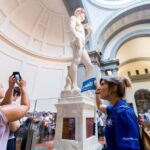
You’ll meet your guide in front of Leonardo da Vinci’s statue. Look for someone holding a white flag that says ENJOY ROME. It’s a practical setup because it’s a clear landmark in a city where meeting points can be… vague.
Plan to arrive a few minutes early so you don’t end up rushing. With any Uffizi tour, the museum’s entrance flow can be tight, and you’ll want a calm start so you can settle into the tour rhythm once you’re inside.
You’ll also want to bring your passport or ID. Tickets with incorrect names may not be accepted for entry, so double-check what you entered when booking.
The real ticket saver: skip-the-line, plus the security checkpoint
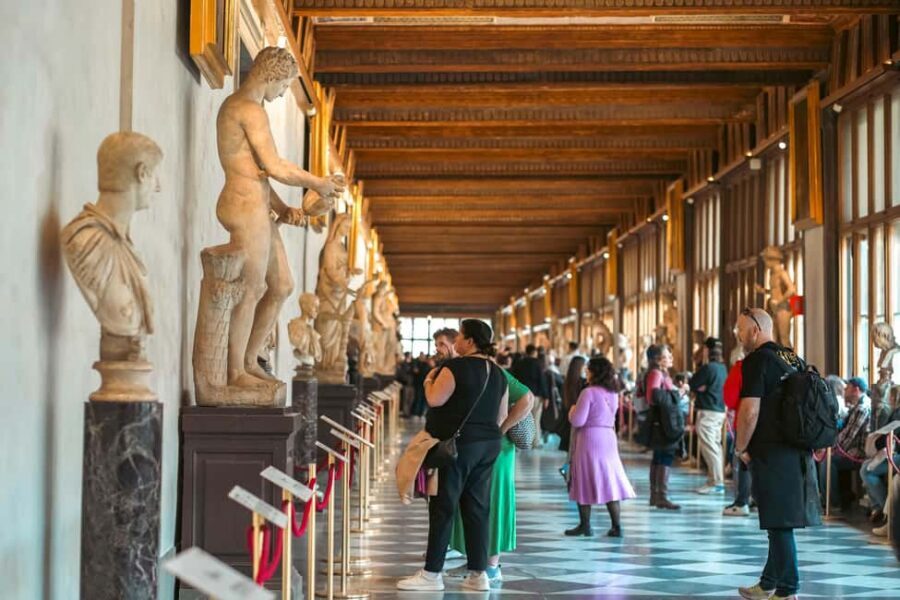
Here’s how the entry feels on the ground. You get skip-the-line tickets through a separate entrance, which is a big deal at the Uffizi. But there’s still museum security, and during peak hours the check can take about 15–20 minutes.
So the best mindset is: skip-the-line helps with the main queue, not with the security reality of a major museum. If your day is packed—like you’ve got another booking right after—build in a little buffer around your tour start time.
In a practical sense, the headset is part of the time-saving too. Once you’re in, you don’t waste moments asking for repetition or getting stuck behind other visitors trying to hear.
Small group size: why up to 9 people changes the experience
A Uffizi tour can go one of two ways: you either get a rushed walk-past, or you actually stand and look. With a small group limited to 9 participants, you’re more likely to experience the museum as “rooms you stop in,” not “hallways you survive.”
That small-group format also makes it easier for your guide to adjust. If your questions pop up—about symbolism, technique, or why a painter made certain choices—the guide has room to answer without the whole group falling behind.
This is also where the different guide styles matter. Names like Hilary, Christian, Simona, Anna, Laura, Anatasia, and Martina have shown up in guide feedback, and the pattern is consistent: guides who can explain clearly and keep people engaged tend to create that stand-and-look feeling.
The Uffizi highlights you’ll actually focus on
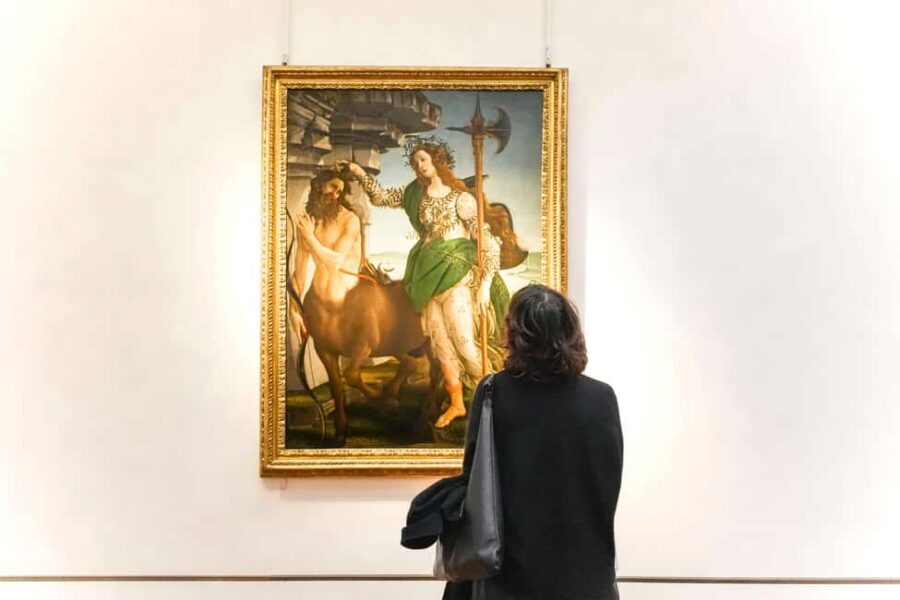
This tour is designed around a “greatest hits” approach, but with enough context to make the paintings more than postcards.
Here are the main works included in the experience, and what you should pay attention to at each stop.
You can also read our reviews of more museum experiences in Florence

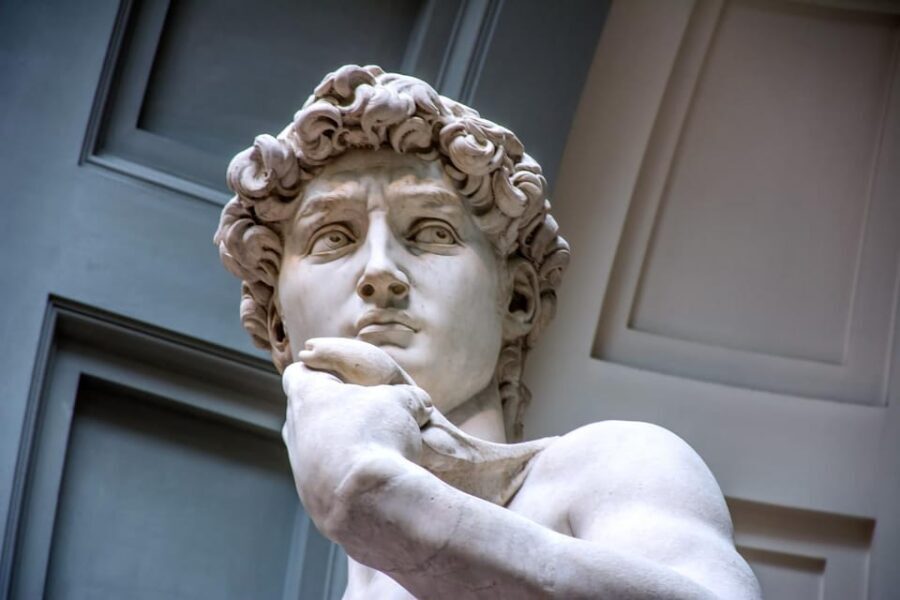


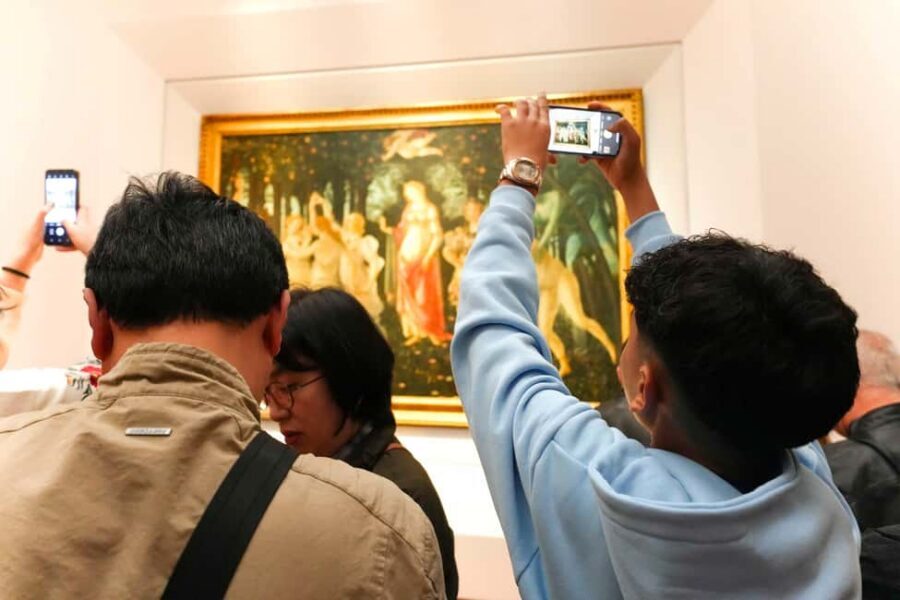
Botticelli’s Birth of Venus: where story meets detail
Botticelli’s The Birth of Venus is one of those paintings that almost everyone recognizes—yet it still surprises you once you’re close enough to notice the choices. The figure’s pose, the way the background is handled, and the overall mood all matter.
With a guide’s explanation, the painting becomes less about simply seeing Venus and more about understanding why this image mattered in its time. This is a good first anchor because it sets the tone for the rest of your visit: you’re not just looking at art, you’re learning how artists built meaning.
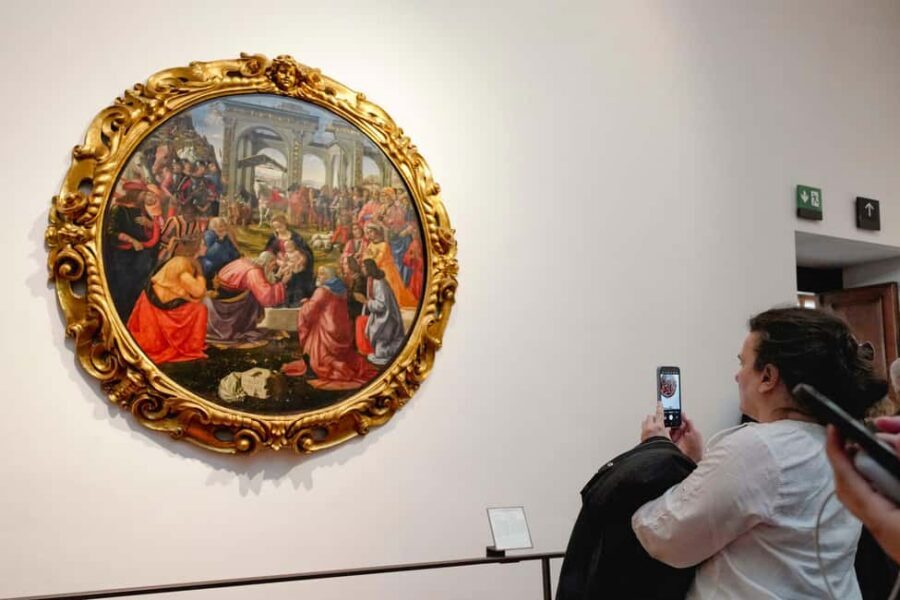
Da Vinci’s Adoration of the Magi: ambition and drama in paint
Da Vinci’s Adoration of the Magi isn’t calm. Even if you’re not a technical art person, you can sense the energy in the scene—the way the figures relate and how attention seems to move.
A good guide helps you understand why the composition feels purposeful. The point isn’t to memorize a lecture. It’s to learn how to read a painting’s “route” for the eyes.
Caravaggio’s Medusa: intensity you feel in your chest
Caravaggio has a way of turning a subject into an emotional event. Medusa is the kind of image that can look oddly modern because the tension is so direct.
When you see it through guided context, you’ll understand the stakes of how the image is presented—what makes it more than a mythological monster on a wall. If you like art that pulls you toward the center of the drama, this stop is a strong reason to book.
Rembrandt’s A Young Man: how light does the talking
Rembrandt’s work is often about more than what’s shown; it’s about how you’re made to feel what you’re seeing. A Young Man is a great example because the painting’s atmosphere is built through light and expression.
Your guide’s context helps you connect that atmosphere to Rembrandt’s approach. Even in 1.5 hours, this is a stop that rewards you with an art-reading skill you can reuse in other museums.
Michelangelo’s Doni Tondo: craft, character, and attitude
Michelangelo’s Doni Tondo is a centerpiece for anyone interested in the Renaissance shift toward expressive form and confident design. Up close, you can appreciate how the figures are handled and how the work carries itself.
A guided visit helps you notice the choices you might otherwise miss. The goal isn’t to become a critic. It’s to leave with a sense of why Michelangelo’s work still feels powerful.
Giotto’s Ognissanti Madonna: early clarity, real emotion
Giotto’s Ognissanti Madonna is a different kind of experience than the later big names. It’s earlier, and it shows how artists were learning to translate feeling and form in a way that would influence generations.
This stop is useful because it gives you a timeline feeling. You’ll see that art doesn’t just “happen.” Styles evolve, and artists borrow, react, and improve across decades.
Architecture inside a palace: you’re in the frame, too
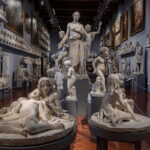
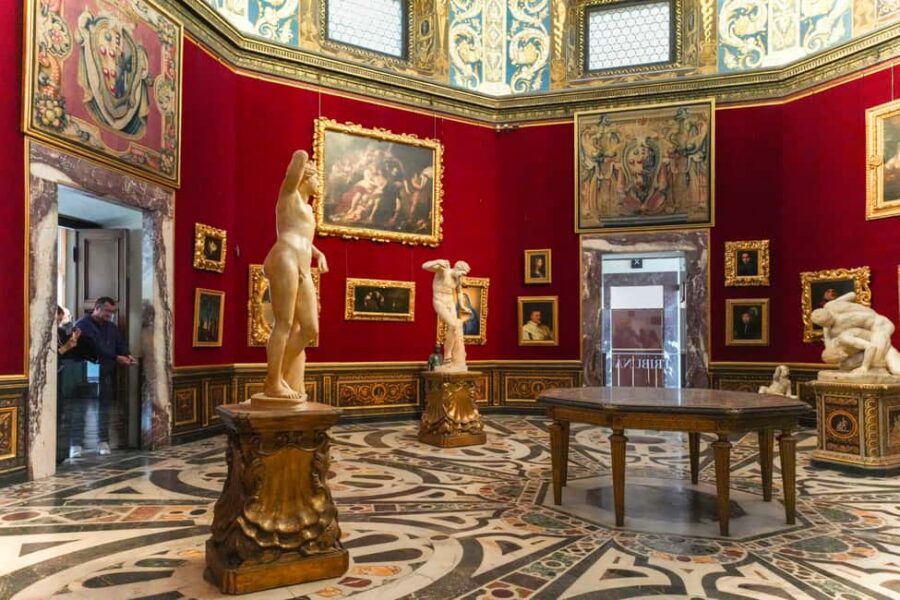
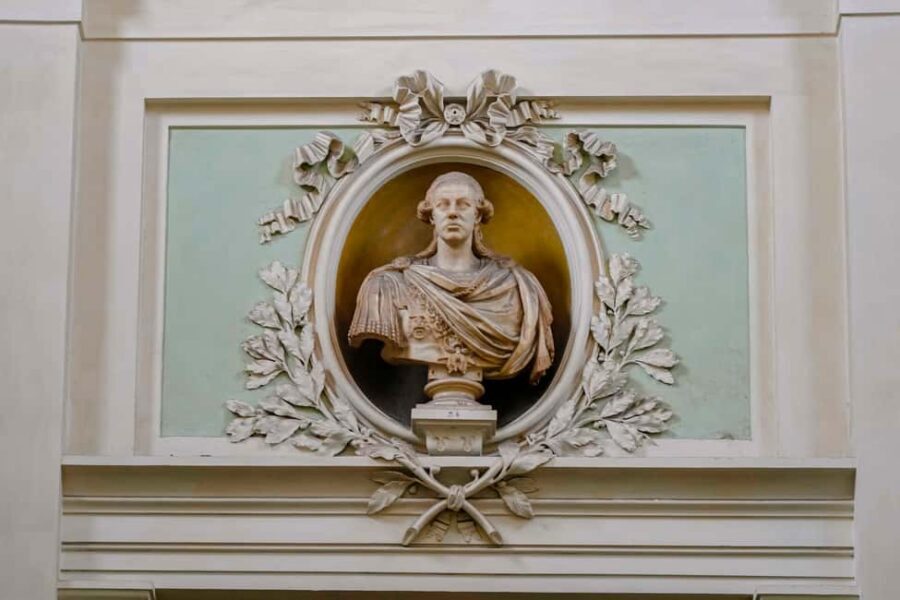
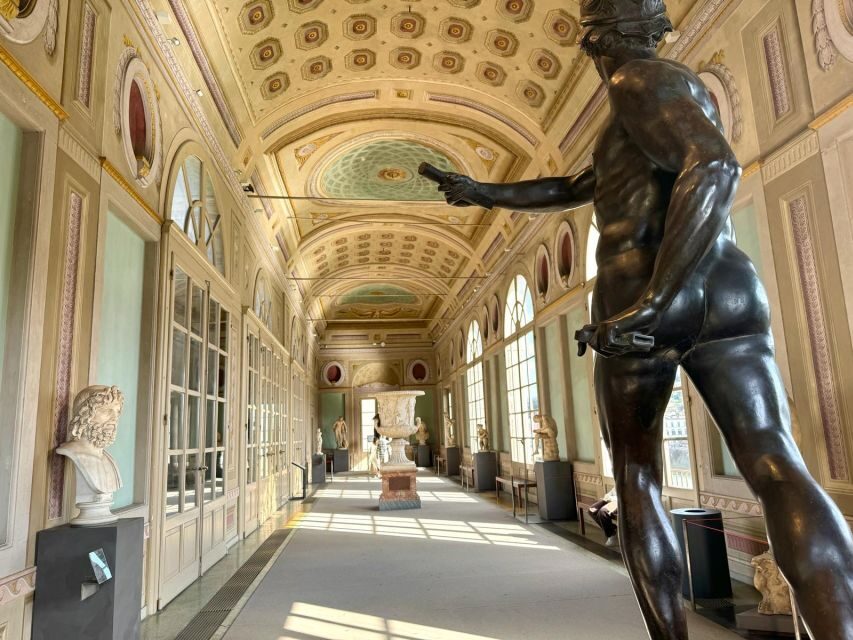
The Uffizi isn’t just a container for paintings. This gallery is housed in a former palace, and the visit includes architectural highlights. That matters, because the building and the art were shaped by how power, taste, and culture wanted to display themselves.
So while your attention is on the art, the setting quietly helps you understand why these collections were assembled the way they were.
Listening with headsets: the underrated part of a good museum tour
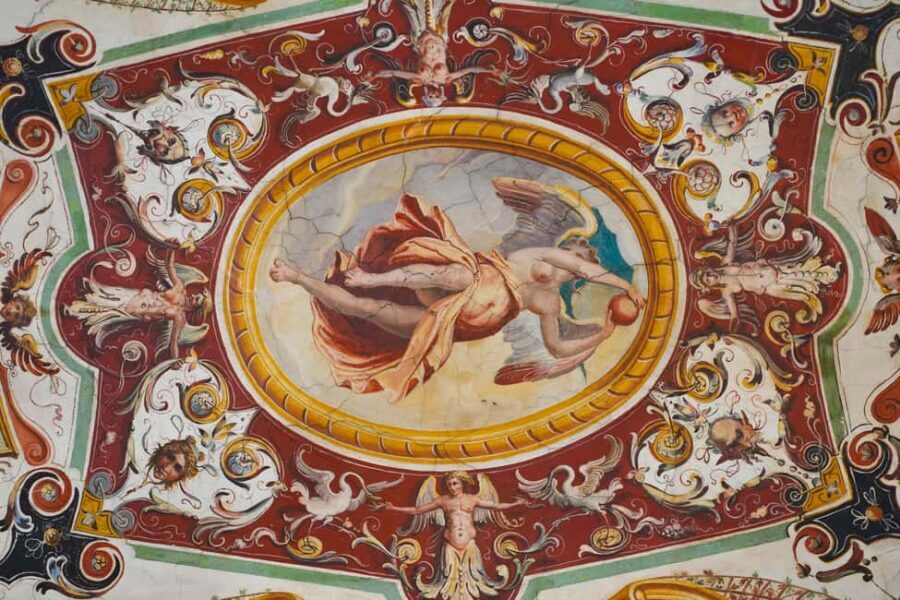
Headsets sound like a small detail until you’re in a room packed with people. Then they become the difference between enjoying the guide and constantly turning your head hoping you’ll catch the explanation.
This tour includes headsets, which means you can keep your eyes on the work. You’re less likely to miss key points because you were stuck behind someone’s shoulder or your friend decided to step three inches to the left.
If you’re hard of hearing or you simply prefer not to strain, this is one of the best inclusions you can get for a big-city museum day.
What language support looks like in real life
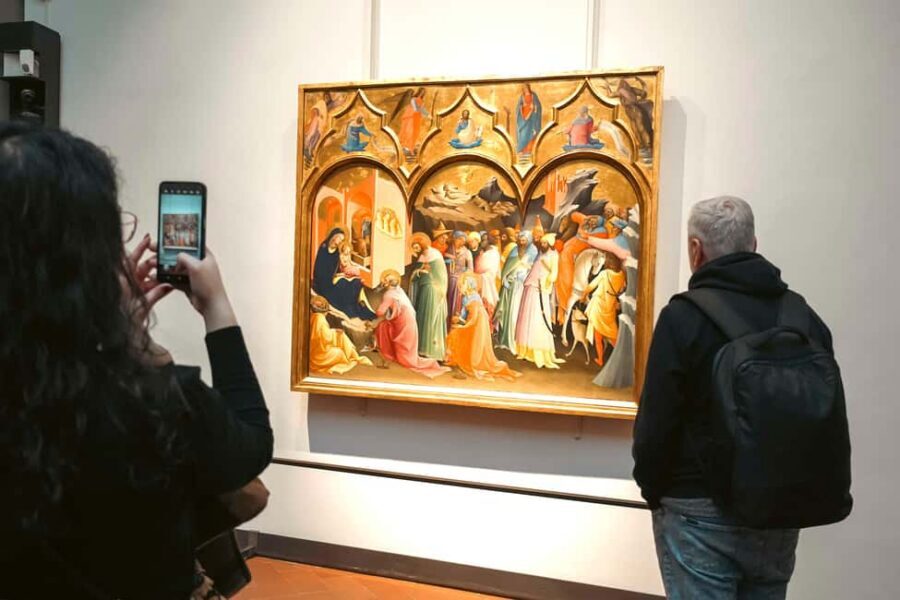
Your guide may speak Italian, French, German, Spanish, or English. That range is helpful because Uffizi tours can be mixed groups, and it’s easier to find a format that fits your comfort level.
In practice, clear language matters most at the masterpieces. It’s hard to connect to symbolism or story beats if the guide’s explanations get lost. Based on guide track records, the better tours focus on clarity and pacing—not just name-dropping.
Who this tour is best for (and who should choose differently)
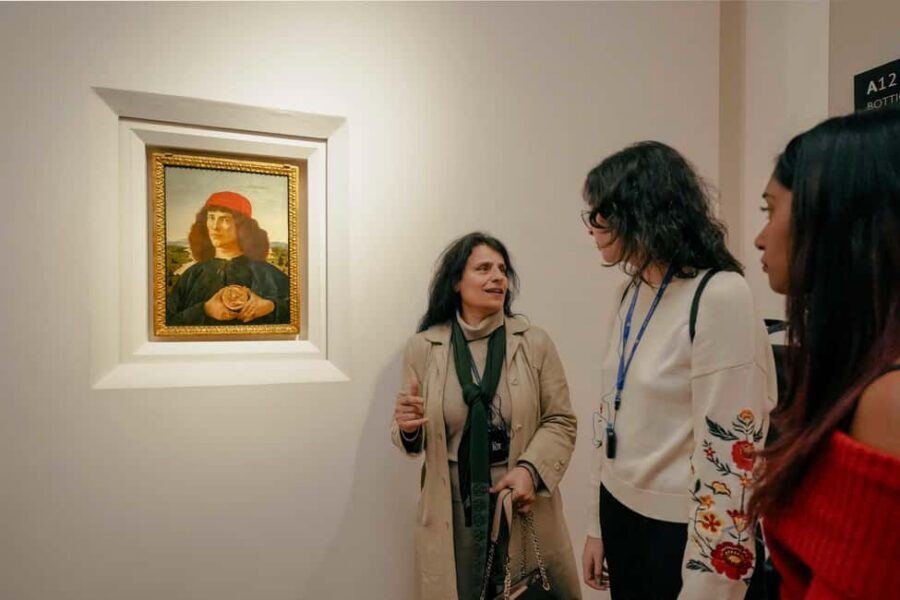
I’d book this tour if you fit one of these profiles:
- You have limited time in Florence and want the Uffizi’s biggest hits with context
- You like a guided plan that helps you “see what matters” without spending hours picking rooms
- You want a small group experience where hearing the guide is built in (headsets help a lot)
- You’re traveling with someone who likes art but might get overwhelmed by museum size
I’d consider a different approach if you:
- Want to spend the whole day wandering freely without a fixed 1.5-hour pace
- Have a very tight schedule with no buffer for security or entry flow
This tour is a highlight reel, not a full-length film. If you know that going in, it pays off fast.
Value check: is $82 worth it?
Let’s be practical. $82 for 1.5 hours is not cheap, but you’re also not just buying entrance. You’re paying for skip-the-line entry, a live guide, and headsets, plus a small group format limited to 9 people.
The Uffizi is the kind of museum where self-guided visits can turn into random walking. With a guide, your time becomes directional. Instead of wondering which room to hit next, you’re standing in front of the most iconic works and getting the story behind them.
If you’d otherwise spend 2–3 hours trying to figure out a route (and lose time to lines), this price can feel fair quickly.
Tips to get the most from your 90-minute art sprint
- Bring your passport or ID, and make sure your name matches your booking.
- Wear shoes you can stand in for a while. Even with a guided flow, you’ll be viewing art closely.
- If you’re picky about photos, plan for short moments rather than expecting long photo sessions at every stop.
- Keep your next commitment flexible. Security and entry flow can add time, especially at peak hours.
If you do these, the tour becomes less about rushing and more about focusing.
Should you book the Florence Uffizi Small Group Guided Tour?
Yes, if you want a high-impact Uffizi experience without losing your entire day to logistics. The mix of skip-the-line access, headsets, and a small group of up to 9 turns the museum into an organized viewing session centered on major masterpieces like Botticelli’s Birth of Venus, Caravaggio’s Medusa, Da Vinci’s Adoration of the Magi, Michelangelo’s Doni Tondo, Giotto’s Ognissanti Madonna, and Rembrandt’s A Young Man.
Book it with realistic expectations: you’ll see a powerful selection, not every room. If you’re okay with that, you’ll leave with stronger context, better recall, and an easier map of what you want to revisit later.
FAQ
Where is the meeting point for the Uffizi tour?
You meet your guide in front of Leonardo da Vinci’s statue. Look for the guide holding a white flag that says ENJOY ROME.
How long is the Uffizi Gallery small group tour?
The tour lasts about 1.5 hours.
What’s included in the price?
The tour includes a guided visit to the Uffizi Gallery, a live guide, skip-the-line tickets, and headsets so you can hear the guide well.
Does the tour really skip the line?
Yes. It includes skip-the-line entry through a separate entrance, but there is still a required security check on arrival.
What do I need to bring, and what’s not allowed?
Bring your passport or ID card. Luggage or large bags are not allowed, and weapons or sharp objects are not allowed.
Is the tour wheelchair accessible?
Yes, the tour is wheelchair accessible.
If you want, tell me your travel month and your next appointment time after the tour, and I’ll suggest a smart buffer so you don’t get stressed at the museum entrance.
You Might Also Enjoy



More Guided Tours in Florence
- The Best tour in Florence: Renaissance & Medici Tales – guided by a STORYTELLER
★ 5.0 · 12,316 reviews


More Tours in Florence
- The Best tour in Florence: Renaissance & Medici Tales – guided by a STORYTELLER
★ 5.0 · 12,316 reviews



More Tour Reviews in Florence
- Tuscany Day Trip from Florence: Siena, San Gimignano, Pisa and Lunch at a Winery
★ 5.0 · 21,634 reviews - The Best tour in Florence: Renaissance & Medici Tales – guided by a STORYTELLER
★ 5.0 · 12,316 reviews