REVIEW · FLORENCE
Florence: Uffizi Gallery Small Group Guided Tour
Book on GetYourGuide →Operated by Inside Out Italy · Bookable on GetYourGuide
Uffizi is big, but your plan is simple. This small-group guided visit (max 15) uses timed entry and clear headsets so you can focus on the art instead of lines and noise.
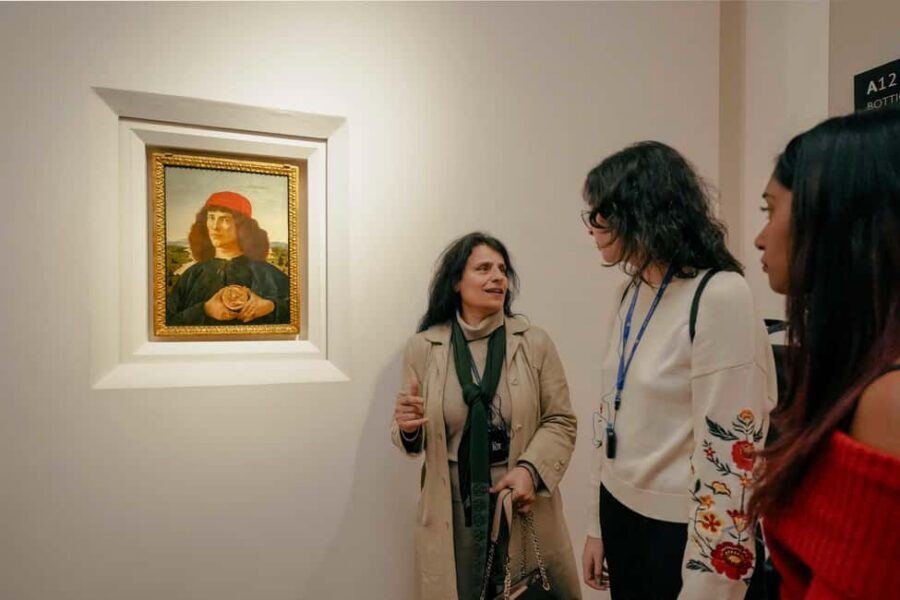
I especially like the way the licensed local guide frames the masterpieces with stories and context you can actually use when you look at the paintings. And because the group stays small, you get a guided path through the museum highlights without feeling rushed into a checklist.
One possible drawback: the tour is only 1.5 hours, so you’ll see the major works and key themes, not every room in the Uffizi.
In This Review
- Key Things That Make This Uffizi Tour Worth Your Time
- Why This Uffizi Plan Feels Less Like a Sprint
- Small Group, Timed Entry, and Headsets: Crowd Control That Actually Helps
- The Second Floor Route: Botticelli and Friends Without Getting Lost
- Botticelli: When Symbolism Becomes Understandable
- Leonardo da Vinci: The Calm Drama of Annunciation
- Michelangelo: Doni Tondo and Renaissance Craft
- How the Tour Creates a Renaissance Story (Not Just a Highlight Reel)
- After Your Guided Portion: Terrace Views and First-Floor Explorations
- Price and Value: What You’re Really Paying For at $73
- Meeting Point in Florence: Find It Fast, Start Easy
- What You Need to Bring (And Why Florence Makes This Matter)
- Who Should Book This Uffizi Tour (And Who Might Want Another Option)
- Should You Book This Uffizi Gallery Tour?
- FAQ
- How long is the Uffizi Gallery small group guided tour?
- How many people are in the group?
- Is the Uffizi ticket included in the price?
- What does the tour include for hearing the guide?
- Where do we meet the guide?
- What languages are available for the guided tour?
- What identification do I need to bring?
Key Things That Make This Uffizi Tour Worth Your Time
- Max 15 people keeps the experience personal, even on a busy day
- Timed entry + express security helps you start smoothly instead of waiting around
- Headsets mean you hear the guide clearly, even in crowded halls
- Second-floor route targets the most famous Renaissance works first
- Stay after the tour to explore the terrace views and additional collections at your pace
Why This Uffizi Plan Feels Less Like a Sprint
The Uffizi Gallery can be overwhelming fast. It’s famous, huge, and packed with Renaissance masterpieces that you want to study, not just glance at while dodging other visitors. This tour solves the problem with a short, guided route designed to give you a coherent view of what you’re looking at.
With a semi-private group capped at 15, I like that you’re not stuck behind a wall of strangers. You’re more likely to hear the guide’s explanation, stop when something matters, and ask a question without the pace breaking down.
The timing is also smart. A 1.5-hour guided visit is long enough to understand what makes these works tick, but short enough that you still have energy left for your own exploring afterward.
You can also read our reviews of more guided tours in Florence
- The Best tour in Florence: Renaissance & Medici Tales – guided by a STORYTELLER
★ 5.0 · 12,316 reviews

Small Group, Timed Entry, and Headsets: Crowd Control That Actually Helps
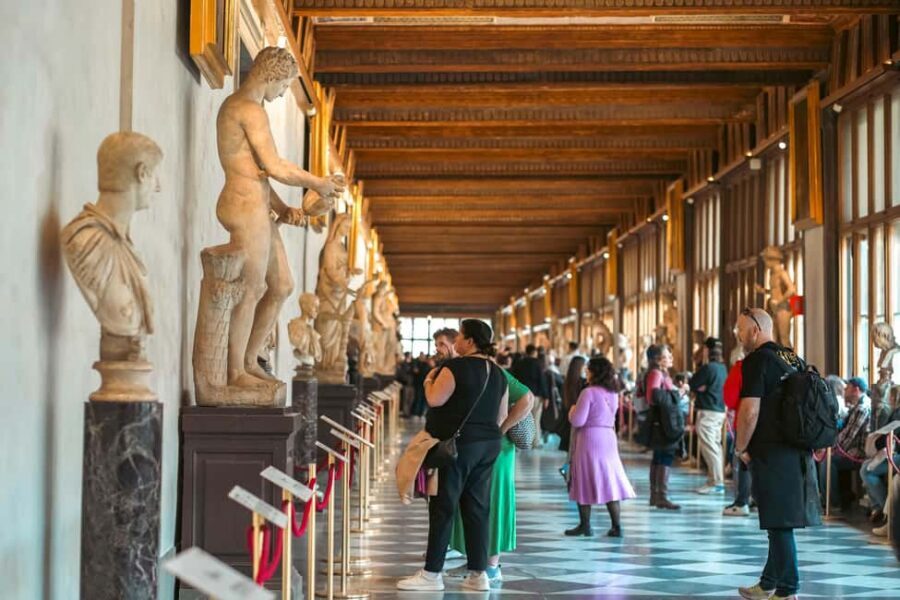
This is one of those tours where the logistics are part of the value. The Uffizi is popular, so the real win isn’t only the guide. It’s getting into the museum without spending your morning trapped in a human queue.
You get timed entry plus skip-the-line handling through an express security check. That means you spend more of your visit inside the galleries, not parked in a bottleneck.
Then there are the radio headsets. If you’ve ever done a museum tour where you keep raising your hand to hear over the crowd, you’ll appreciate this. Headsets help you catch details even when the guide isn’t speaking at the same volume as everyone else’s walking.
Also, you’ll know your guide is doing more than reciting a script. Many of the named guides who lead these tours (like Manuela, Guido, Laura, and Mirella) are described as enthusiastic and prepared, with a style that keeps attention on what matters in each room. That’s the difference between hearing facts and learning what to look for.
The Second Floor Route: Botticelli and Friends Without Getting Lost
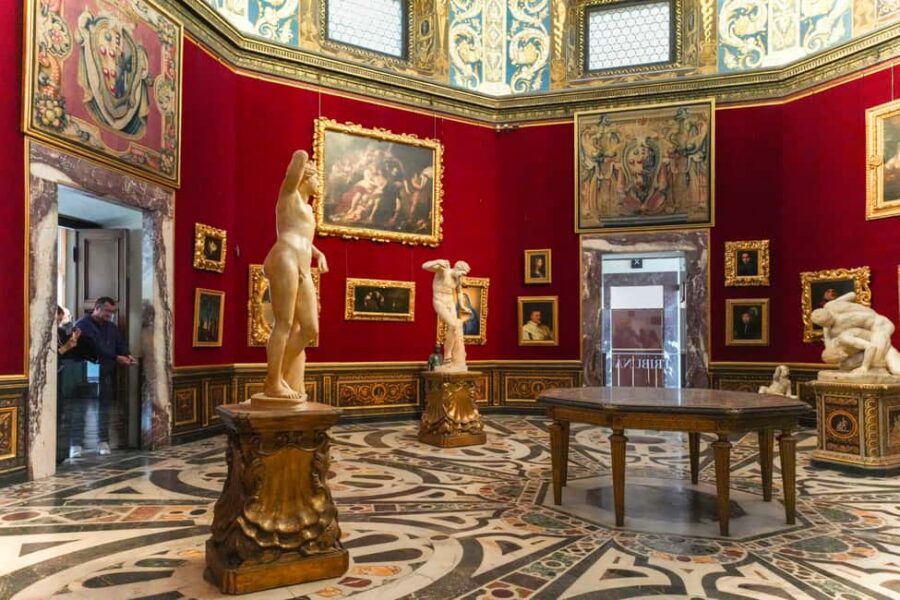
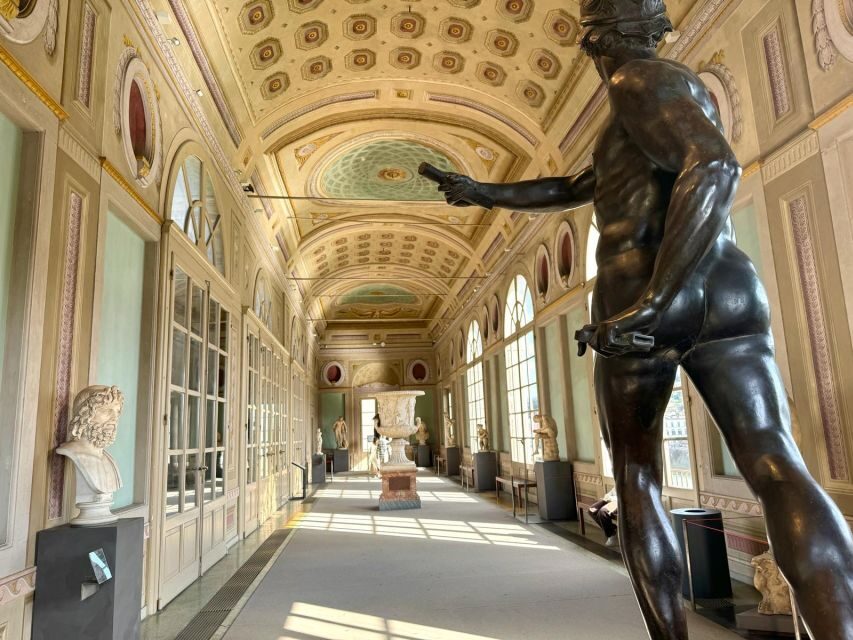
The tour begins on the second floor, which is where the Uffizi leans hardest into the Renaissance spotlight. The structure matters because it gives you a logical starting point: you don’t bounce around randomly, and you don’t have to guess which masterpieces are the real anchors.
Here’s the kind of stop-by-stop focus you can expect:
Botticelli: When Symbolism Becomes Understandable
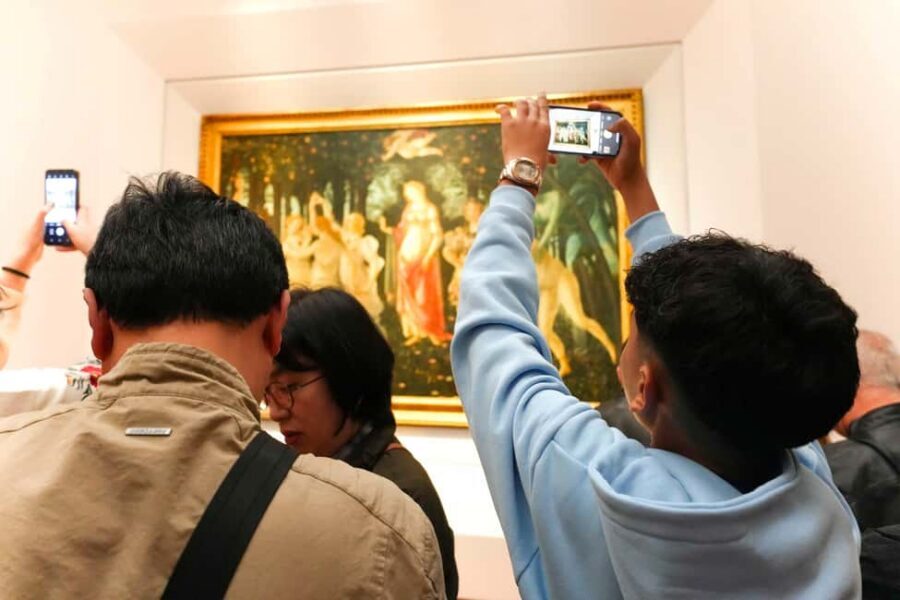
You’ll see major Botticelli works such as The Birth of Venus and Primavera. These aren’t paintings you should rush past. The guide’s job is to help you read what’s going on beyond the surface beauty.
In practice, this usually means you’re not staring at a title and hoping it makes sense. You’re getting context for why the scene looks the way it does, and how ideas in Renaissance Florence shaped art. It’s the moment where a visitor’s experience often shifts from admiration to understanding.
Leonardo da Vinci: The Calm Drama of Annunciation
Next comes Leonardo da Vinci’s Annunciation. Leonardo’s work can feel mysterious if you don’t know what you’re watching for. A guided explanation helps you slow down and see how Leonardo uses form and expression to carry meaning.
If you’re the type who likes to stand in front of a painting and figure it out, this is a great pairing. You’ll be able to focus on the right details instead of wandering for the “next big thing.”
You can also read our reviews of more museum experiences in Florence



Michelangelo: Doni Tondo and Renaissance Craft
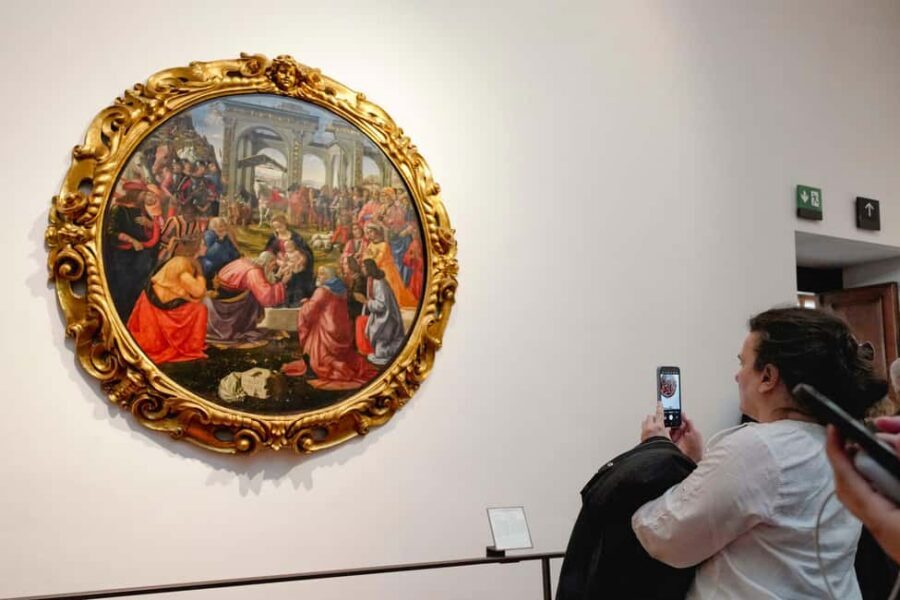
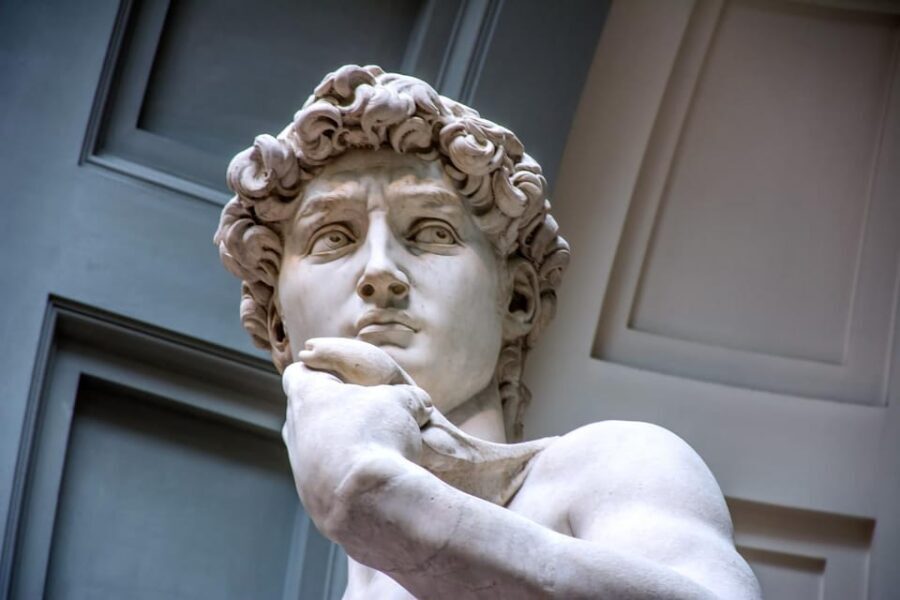
A highlight is Michelangelo’s Doni Tondo, described as one of his rare completed paintings and the only surviving piece from his early period. Michelangelo is a name you hear everywhere, but the value here is how a tour helps you connect the reputation to a specific work and its place in his career.
This stop is also a good reminder that Renaissance art isn’t only about style. It’s about development—how artists grew, changed, and experimented.
How the Tour Creates a Renaissance Story (Not Just a Highlight Reel)
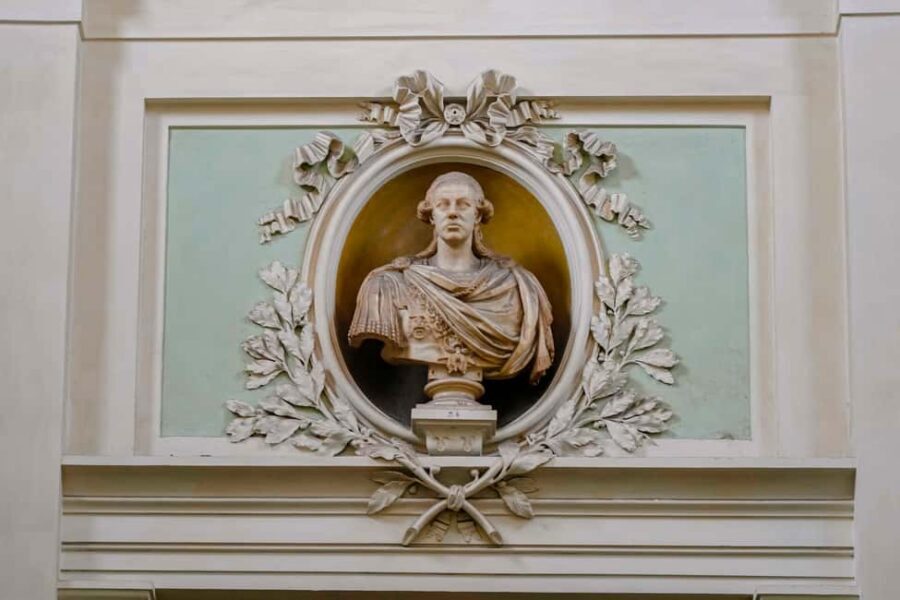
A key reason this experience works is that it covers more than just the biggest names. You also get works by Raphael, Titian, and Caravaggio, which helps you see how art evolves across the period.
Instead of treating each painting like a standalone postcard, you get a sense of progression. One moment you’re learning how Renaissance artists approached form, light, and ideas. Then you’re moving toward later styles and attitudes that influenced what came next.
Caravaggio is especially helpful for understanding contrast. His presence in the Uffizi can make you feel the shift in mood and realism. You’ll see works such as Medusa, Bacchus, and The Sacrifice of Isaac listed as part of what the tour and your post-tour exploration can include.
That’s a smart way to experience the museum. You’ll leave with a mental map of how the collection tells a story, rather than simply remembering names.
After Your Guided Portion: Terrace Views and First-Floor Explorations
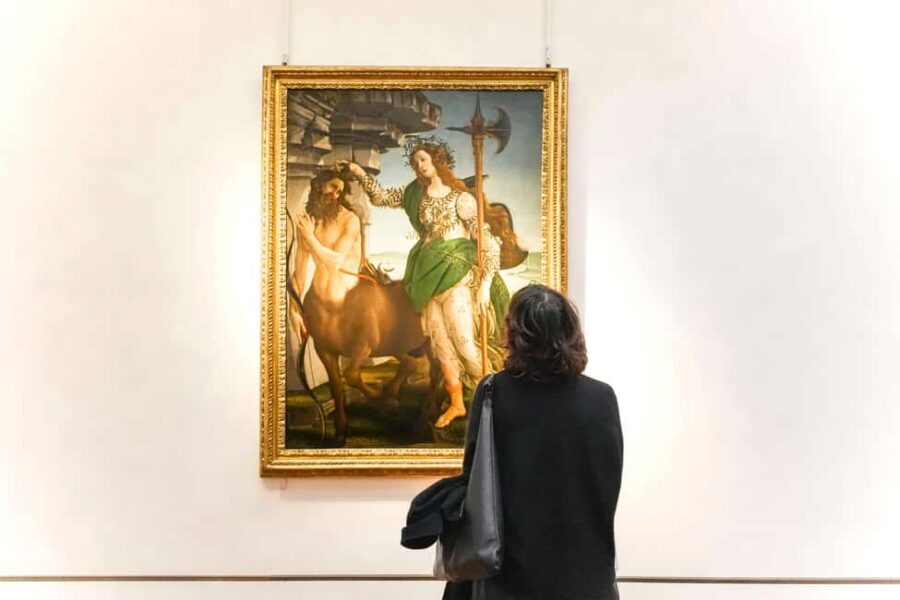
The tour doesn’t end when the explanation ends. When the 1.5-hour guided part finishes, you’re free to keep going at your own pace.
This is where you can tailor your visit. If you love getting those photo-worthy overlooks, head for the terrace views over Florence. It’s a classic payoff after a focused museum route.
You can also explore other collections on the first floor. Here, the emphasis shifts to Byzantine art and earlier periods—a useful change of pace if you feel like you’ve been living inside Renaissance stories for long enough.
And if you want more Caravaggio, there are additional opportunities once you’re free to roam. The museum notes works like Medusa, Bacchus, and The Sacrifice of Isaac, and staying after the tour is how you can give those pieces more time.
Practical tip: go in knowing you won’t see everything perfectly on a first trip. Use the guided route to get oriented, then use your free time to linger where you feel the strongest pull.
Price and Value: What You’re Really Paying For at $73
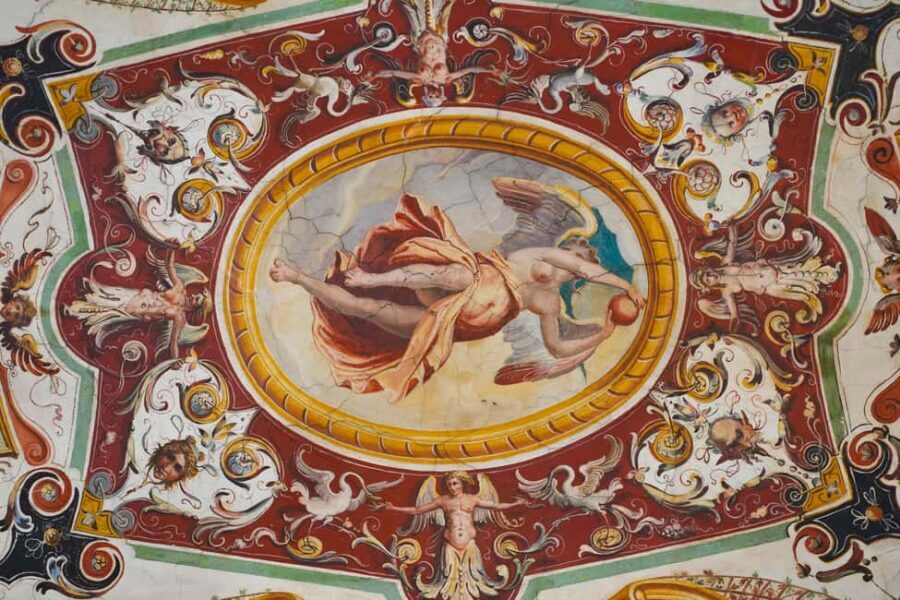
The advertised price is $73 per person, and it includes the Uffizi ticket price of €29.00 plus guide and headset expenses and reservation fees.
Is it pricey? Yes, in the sense that you’re paying for convenience, time-saving, and interpretation. But it’s also a realistic price for a major museum where the entry process can be the hardest part of the day.
Here’s the value math you can think through:
- You’re not just buying entry. You’re buying a guided route that helps you understand what you see.
- You’re not just walking in. You’re getting timed entry and express security, which reduces wasted time.
- You’re not guessing what you’re looking at. You’re getting context in a format you can hear clearly thanks to headsets.
In a museum this large, getting a coherent highlights route can be the difference between leaving impressed and leaving satisfied that you actually understood the big themes.
If you’re the type who loves art but dislikes info overload, this pricing tends to feel fair because the tour compresses the best of the Uffizi into a manageable chunk.
Meeting Point in Florence: Find It Fast, Start Easy
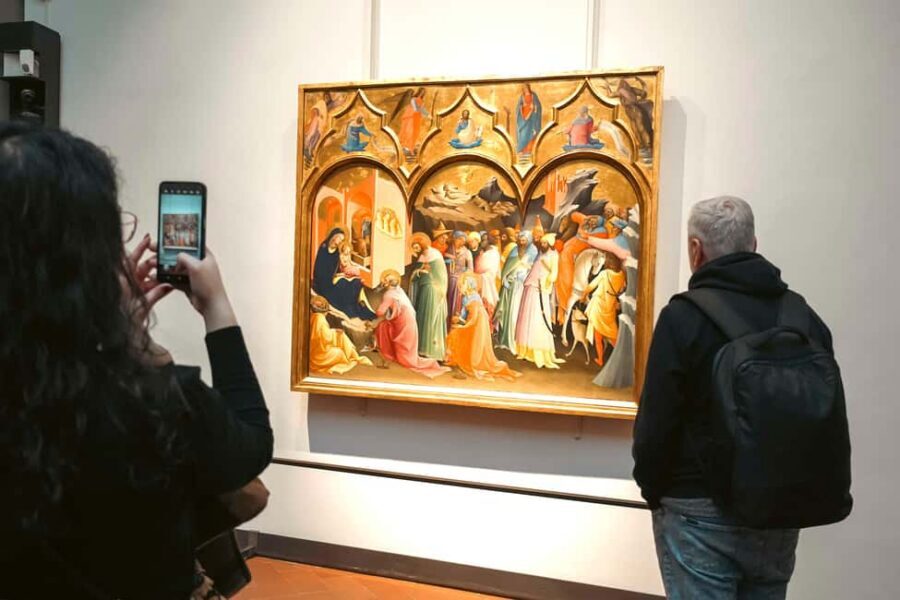
Meet your guide at City Florence Tours, next to Via De’ Castellani 14, specifically at Via De’ Castellani 18/red, in front of the general exit of the Uffizi Gallery.
This matters because you don’t want to waste the first 10 minutes figuring out where everyone is supposed to gather. If you’re nearby, give yourself a few minutes buffer so you can locate the office and get checked in without stress.
Also note the experience provider is listed as Inside Out Italy. The meeting location is tied to the activity office you’ll use for the group handoff, so use the address and landmark rather than relying on vague directions.
What You Need to Bring (And Why Florence Makes This Matter)
You must bring a valid ID. The tour data also requires full names (first and last name) and dates of birth for all participants before purchase.
They also specify ID rules for kids: bring a passport or ID card for children, and for adults bring your passport or ID card. A copy is listed as accepted in some cases, but the safe move is to show a real document that matches the booking.
Why does this matter? The Uffizi is strict with access. If your document details don’t line up with your booking, you risk delays at the worst moment—right when you’re trying to start your timed entry experience.
Also, the tour involves standing and walking, so plan on comfortable shoes. The itinerary is tight, and you’ll want your feet to feel good even if you decide to stay longer afterward.
One note about mobility: the data says wheelchair accessible, but it also lists the experience as not suitable for people with mobility impairments. If that’s relevant for you, contact the operator before booking so you’re not stuck with conflicting expectations.
Who Should Book This Uffizi Tour (And Who Might Want Another Option)
This tour is a great fit if you want:
- A structured highlights route through the Uffizi without getting overwhelmed
- Clear guidance with headsets in a museum that can get loud and crowded
- A Renaissance-focused overview that helps you recognize what you’re seeing
- A plan that leaves room after the tour for your own pace, especially for the terrace and extra collections
It’s also a solid choice if you’re visiting with kids. Multiple named guides are described as keeping children engaged, with stops explained in a way that encourages questions instead of turning the visit into a long art-history wait.
You might consider a different approach if you already know you want to study the Uffizi like a research project. A 1.5-hour guided tour won’t cover every work, and you’ll likely want a longer format or more time-based flexibility.
Should You Book This Uffizi Gallery Tour?
I’d book it if you want a smart first visit that gives you orientation fast. The big win is the combination of timed entry, a small group cap, and a guided route that focuses on the Uffizi’s Renaissance essentials on the second floor.
I’d skip or reconsider if you dislike structured time. This is a highlights tour with a firm pace. If you’re the type who needs 10 minutes per painting to really absorb everything, you’ll still enjoy the guided overview, but you’ll want to plan for extra self-guided time after.
Best strategy: use the tour to learn how to look, then go back to the pieces that hit you hardest. That way you get both the structure and the freedom—and you leave the Uffizi feeling like you understood more than you saw.
FAQ
How long is the Uffizi Gallery small group guided tour?
The tour lasts 1.5 hours.
How many people are in the group?
The experience is limited to a maximum of 15 participants.
Is the Uffizi ticket included in the price?
Yes. The €29.00 Uffizi ticket price is included in the total price.
What does the tour include for hearing the guide?
You’ll use radio headsets so you can hear your guide clearly.
Where do we meet the guide?
Meet at City Florence Tours, located next to Via De’ Castellani 14, at Via De’ Castellani 18/red, in front of the general exit of the Uffizi Gallery.
What languages are available for the guided tour?
The guide is offered in English, Italian, French, Spanish, and German.
What identification do I need to bring?
You must bring a valid ID to access the booked attraction, and the booking requires participants’ full names and dates of birth.
You Might Also Enjoy



More Guided Tours in Florence
- The Best tour in Florence: Renaissance & Medici Tales – guided by a STORYTELLER
★ 5.0 · 12,316 reviews


More Tours in Florence
- The Best tour in Florence: Renaissance & Medici Tales – guided by a STORYTELLER
★ 5.0 · 12,316 reviews



More Tour Reviews in Florence
- Tuscany Day Trip from Florence: Siena, San Gimignano, Pisa and Lunch at a Winery
★ 5.0 · 21,634 reviews - The Best tour in Florence: Renaissance & Medici Tales – guided by a STORYTELLER
★ 5.0 · 12,316 reviews