REVIEW · FLORENCE
Florence: Walking Tour and Bargello Museum
Book on GetYourGuide →Operated by My Green Tour srl · Bookable on GetYourGuide
Florence turns three blocks into a time machine. This walking tour strings together the big Renaissance landmarks with a visit to the Bargello Museum, and the guide keeps the story moving—square to statue to secret. I love the way the route connects what you see outdoors with what you’ll find indoors at Bargello. I also love the focus on specific works—Cellini’s Perseus, Giambologna’s Kidnapping of the Sabines, and Michelangelo’s David—so the art feels less like random names and more like cause-and-effect. One possible drawback: the timing has been reported as a bit inconsistent, so if you have a tight schedule right after, build in a buffer.
You get a live guide (English, German, Italian, Russian, Spanish, French) and you’ll start at the Tourist Point in front of Eataly, arriving 15 minutes early. The whole experience is about 2 hours, and it ends back at that same meeting point, which makes planning the rest of your day easier. This is also wheelchair accessible, and private group options are available if you want a quieter pace.
If you’re traveling around the first Sunday of the month, plan smart. Entrance is free then, but tickets can’t be reserved in advance, so entry isn’t guaranteed—meaning you could end up waiting or losing your spot.
In This Review
- Key highlights worth planning around
- How the tour maps Florence in just two hours
- Duomo Square stop: focus on the dome and the city’s confidence
- Republic Square: the 58 BC story that makes Florence feel older
- Signoria Square: statues that turn into a mini art history lesson
- Bargello Museum: from 1255 prison walls to Renaissance sculpture
- What the guide actually does (and why it matters)
- Price and value: does $112.15 make sense for you?
- Timing, meeting point, and how to avoid the first-day stress
- First Sunday free entry: a nice perk with one big caveat
- Wheelchair accessibility and private groups
- Who should book this Florence walk + Bargello visit
- Should you book this Florence: Walking Tour and Bargello Museum?
- FAQ
- How long is the Florence Walking Tour and Bargello Museum?
- Where does the tour start and where does it end?
- What’s included in the price?
- What languages are available for the live guide?
- Is it free to enter the Bargello on the first Sunday of the month?
- Is the tour wheelchair accessible?
- Can I cancel for a refund?
Key highlights worth planning around
- Duomo Square included: You’ll pause at the Cathedral of Santa Maria del Fiore area with the world’s largest dome as your visual anchor.
- Republic Square context: You get a quick historical beat for the Romans who settled in 58 BC.
- Signoria Square art focus: The tour points you toward major statues tied to Florence’s master sculptors.
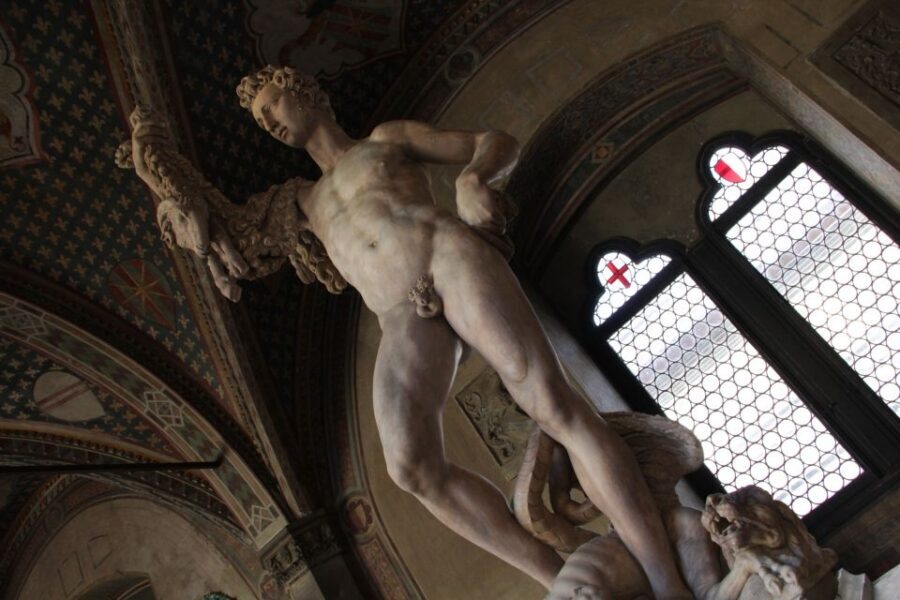
- Bargello’s real identity: Built in 1255 as a prison for the Florentine Republic, it’s now packed with Renaissance sculpture.
- Guides like Giacomo: Clear, professional storytelling is a strong theme in the experiences people share.
- First Sunday reality check: Free entry exists, but you can’t rely on guaranteed access.
How the tour maps Florence in just two hours
This is a short tour, so it works best when you treat it like a smart primer. You’re not trying to memorize everything. You’re learning what to look for, and why Florence’s Renaissance leaders cared so much about art, power, and public space.
The pacing is built around Florence’s historic center landmarks: you’ll walk through key squares and then shift gears into Bargello, where the museum’s sculpture collection lands the story in your lap. That change in setting matters. Outdoors, you see the public face of the city. Indoors, you see the sculptural craft that made that public face possible.
You’ll also appreciate the simple logistics. Starting at the Tourist Point in front of Eataly keeps you oriented. Ending back there means you won’t waste time regrouping somewhere else.
You can also read our reviews of more walking tours in Florence
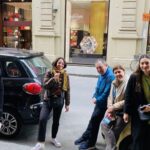
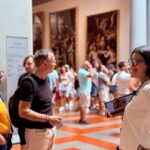
Duomo Square stop: focus on the dome and the city’s confidence
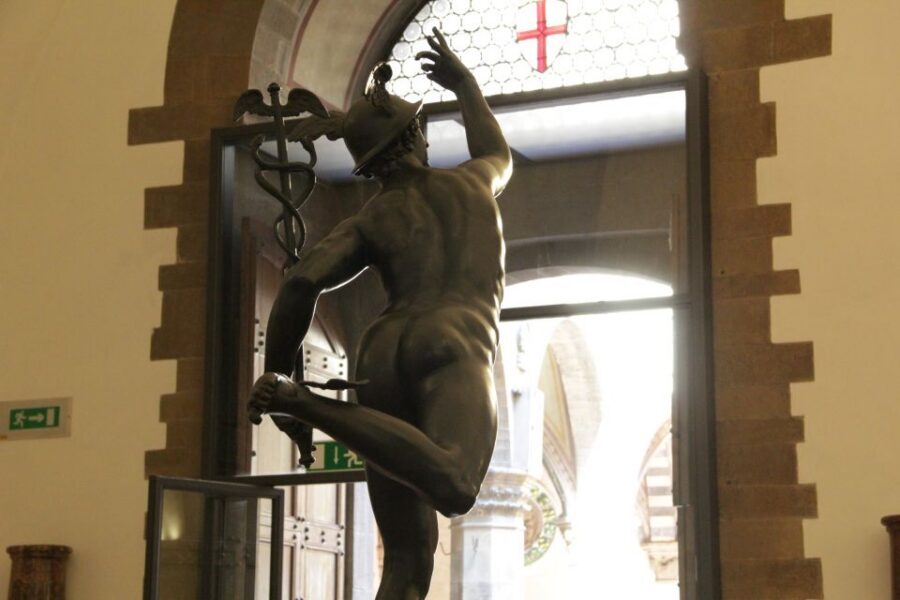
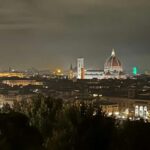
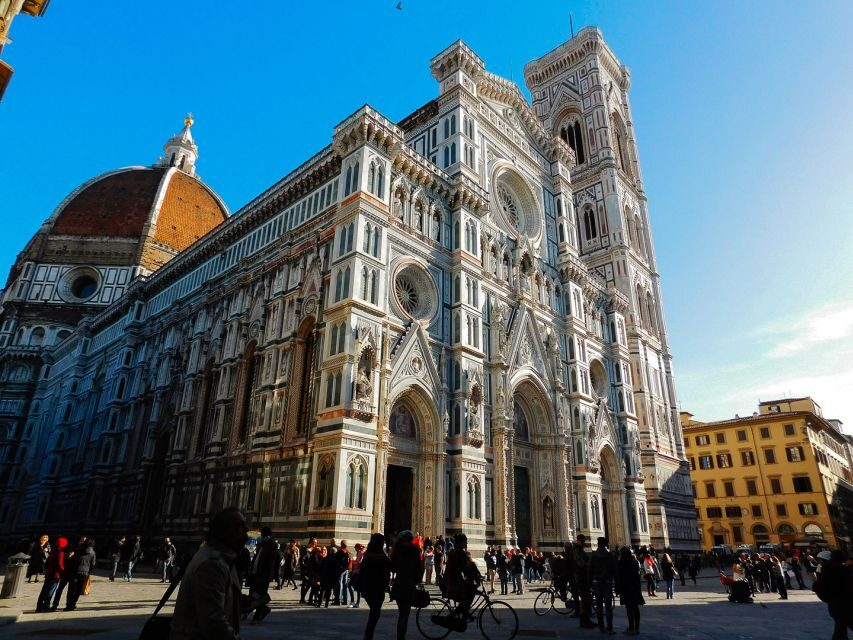
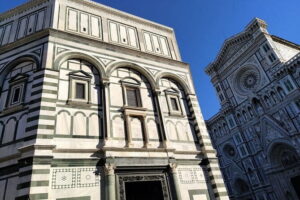
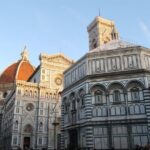
Duomo Square is the obvious starting point, but the tour’s value is in what you’re asked to notice. You’ll get time at the Cathedral of Santa Maria del Fiore area, with the emphasis on its massive dome. That dome isn’t just an architectural flex; it’s a sign Florence was serious about ambition.
When you stand there with a guide, you start seeing the square differently. The space becomes part of the art. The building reads like a statement aimed at everyone walking by—citizens, visitors, and rivals.
Practical note: this is a walking tour format, so wear shoes you’re comfortable in for uneven historic-street surfaces. The tour is short, but the city’s center isn’t designed for slow strolls.
Republic Square: the 58 BC story that makes Florence feel older
From Duomo area energy, the walk shifts to Republic Square, where you’ll hear the Roman backstory tied to 58 BC. This is one of those moments where the guide’s job really matters: you’re connecting a Renaissance city to earlier layers instead of treating each era like a separate postcard.
Why that matters for you: when you understand that Florence sits on top of older power and earlier settlements, you start reading later changes as evolution rather than magic. You’ll also understand why public squares became the stage for politics and art together.
This section also helps you pace your expectations. The tour isn’t trying to cover everything in Florence. It’s choosing landmarks that explain how Florence built its identity over centuries.
Signoria Square: statues that turn into a mini art history lesson
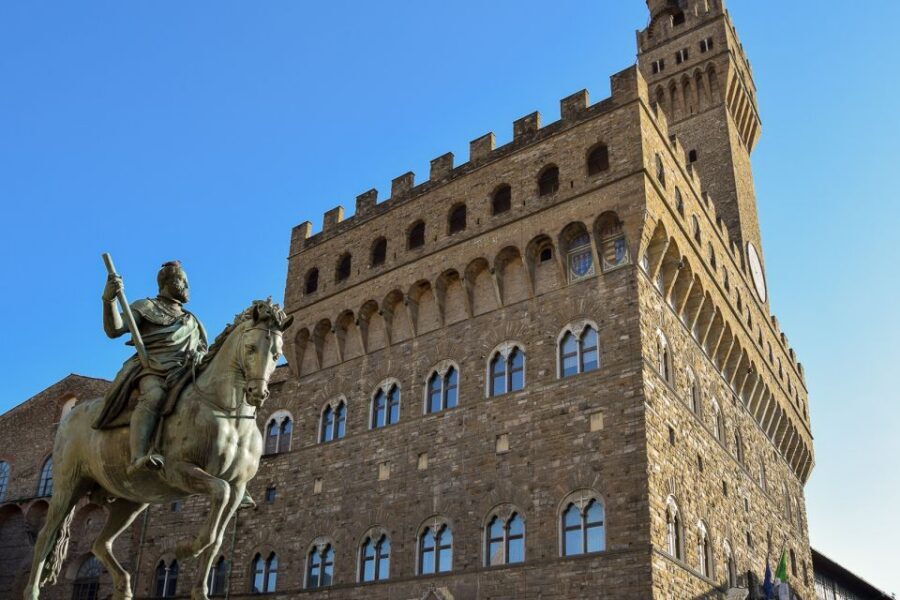
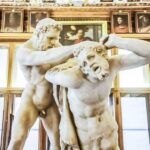
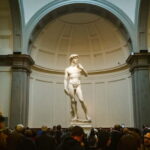
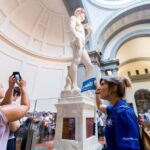
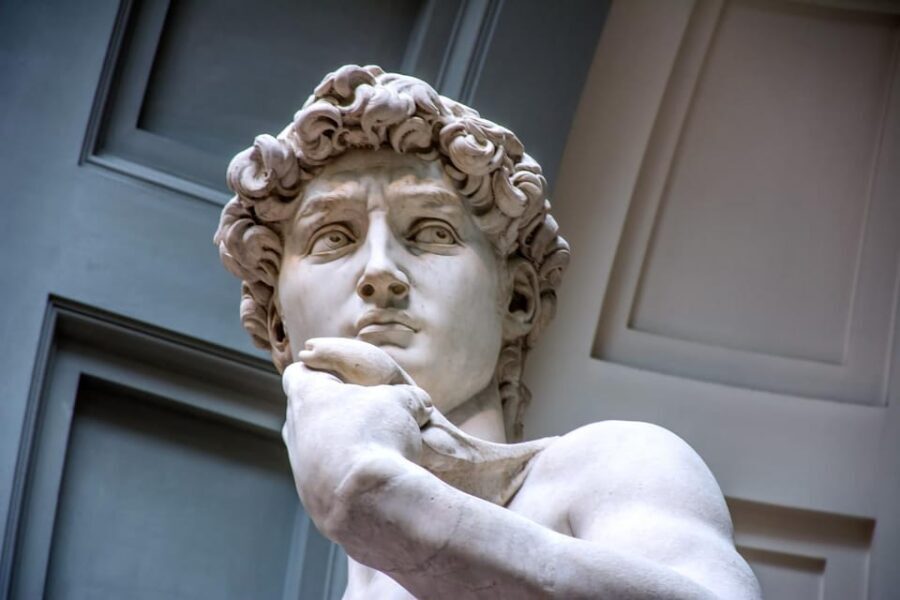
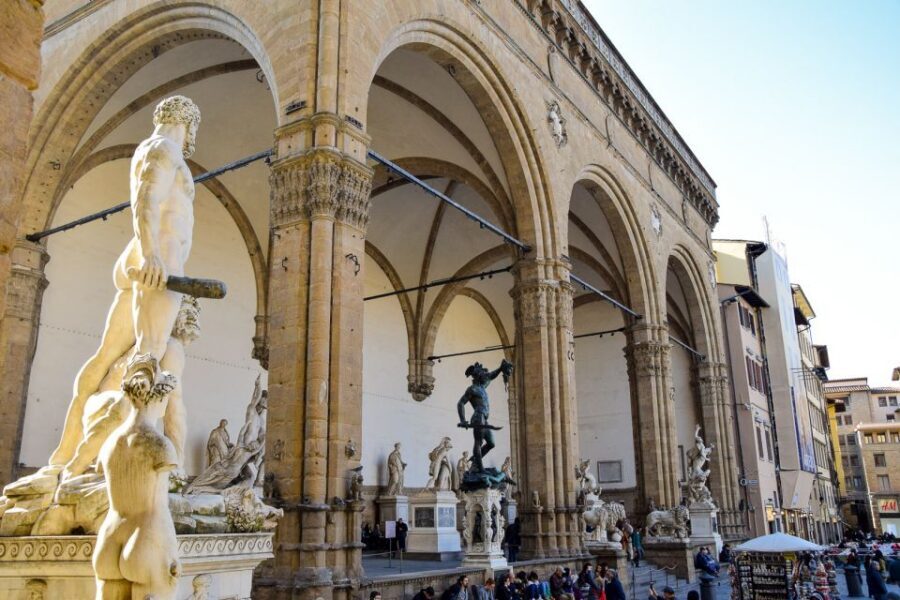
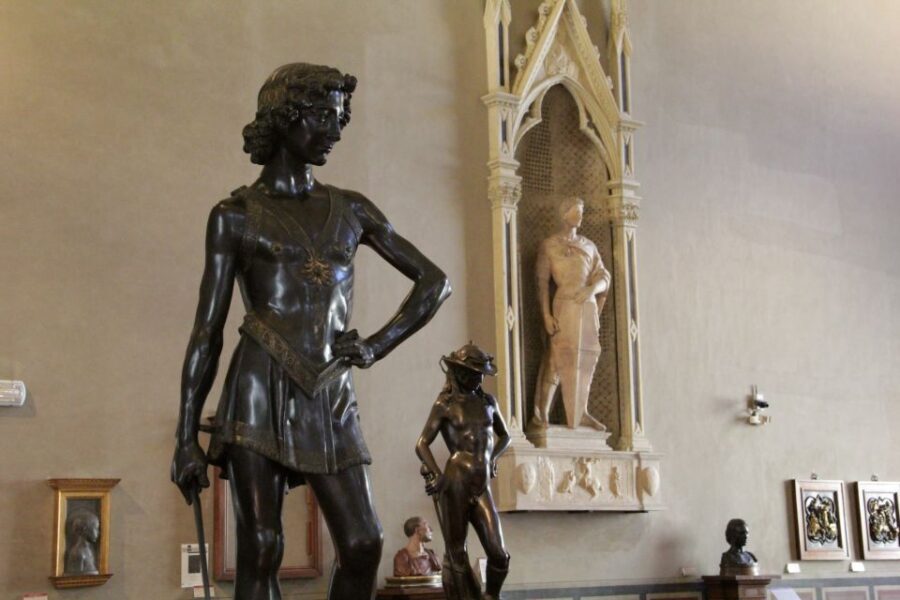
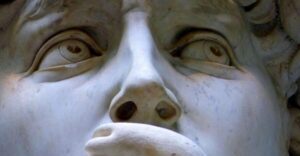
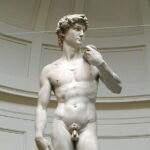
Signoria Square is where sculpture stops being abstract. The tour points you toward major works by some of the era’s best-known names. You’ll look toward Cellini’s Perseus, Giambologna’s Kidnapping of the Sabines, and, of course, Michelangelo’s David.
Here’s what’s useful: the guide doesn’t just list titles. You get stories behind why these works mattered to the city. Once you know that, the statues become arguments—about strength, beauty, civic pride, and who gets to be remembered.
Also, these names are not just “famous.” They’re also a map of Renaissance workshop culture. Different artists had different approaches, and Florence celebrated skill that looked fearless. Even on a quick walk, you can sense the competition and the ambition.
Potential drawback to keep in mind: since the tour is only about 2 hours, you won’t get endless time at every single landmark on the route. If you’re the type who wants long museum-style viewing outdoors, this is still a good start—but treat it as a guided highlight, not an all-day deep study.
Bargello Museum: from 1255 prison walls to Renaissance sculpture
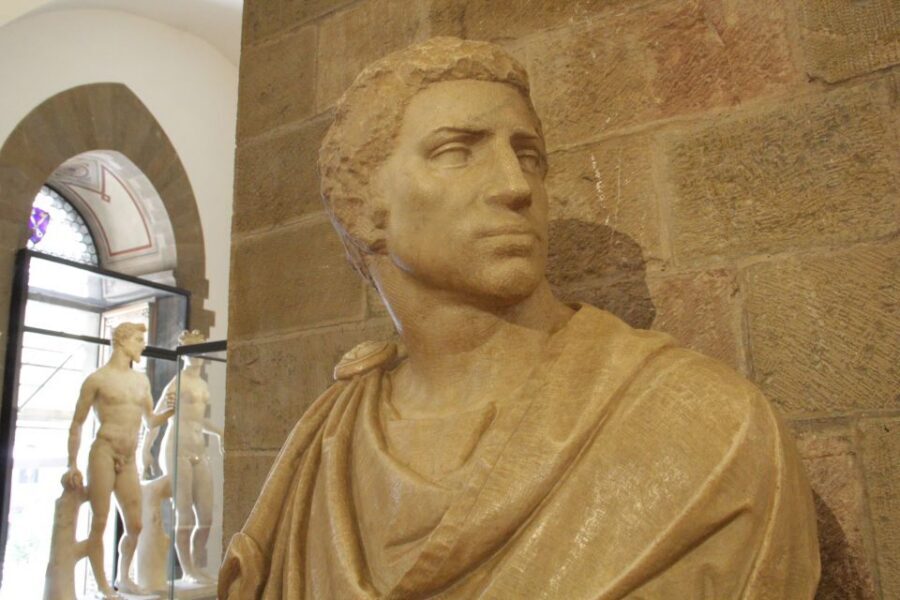
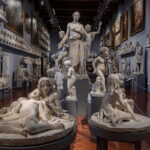
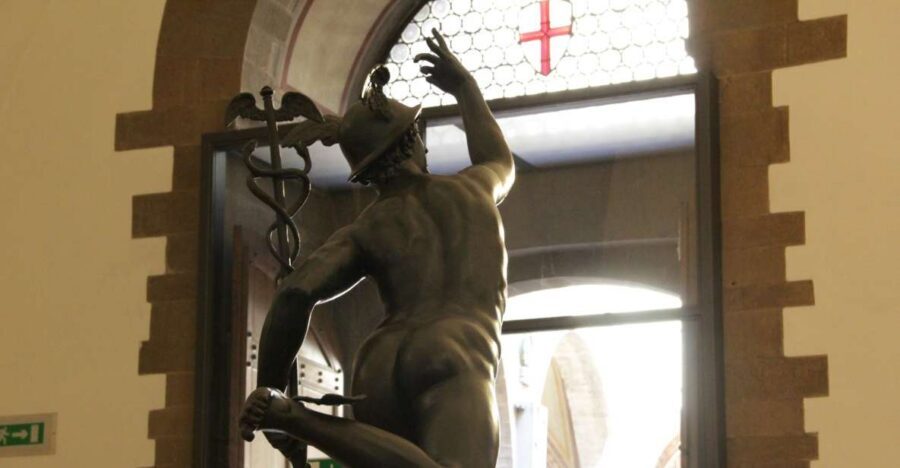
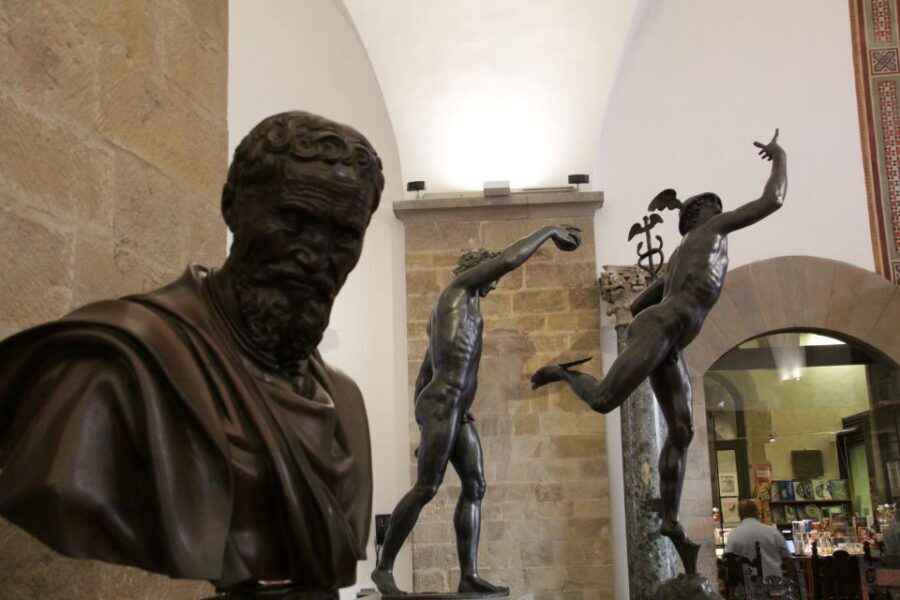
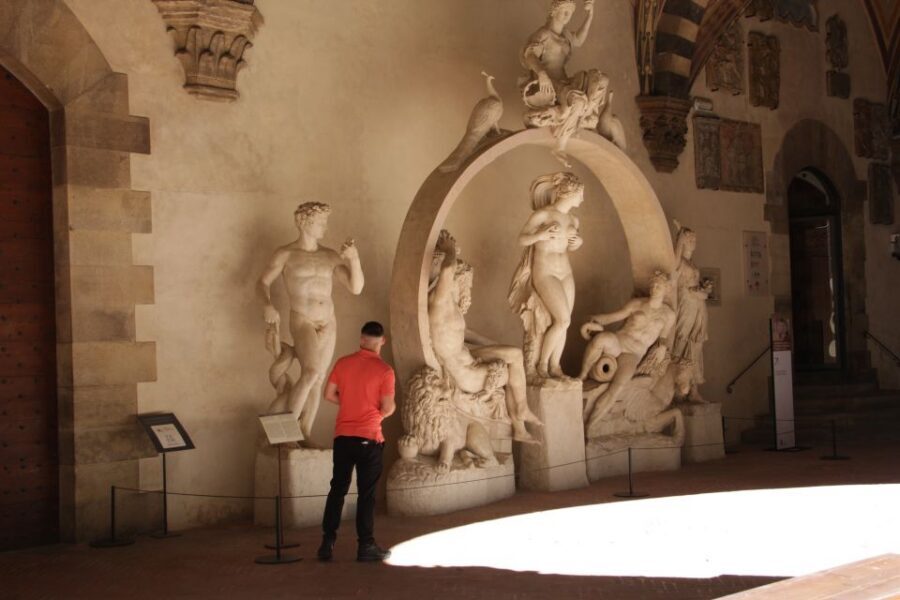
Then you hit the Bargello Museum, and the change in mood is immediate. The building itself matters. Bargello was built in 1255 and served as the main prison of the Florentine Republic. Today it houses one of the largest collections of Renaissance statues, including major works connected to artists such as Cellini, Bandinelli, and Michelangelo, plus more.
This is the part you’ll remember, especially if you like art that has a physical presence. Sculpture is different from painting. It’s about form you can walk around, light that changes how it reads, and details that show up when you slow down.
The museum connection also makes the walking portion feel smarter. You’re not just seeing Florence’s squares and then leaving. You’re feeding your outdoor observations into the museum’s collection. In other words: you’ll know why certain sculptors belong in Florence’s story.
Unique context you get here: Bargello is often described as the oldest castle of Florence. Even if you don’t focus on the building’s military or civic role, that idea adds a layer. You’re seeing how a place designed for restraint became a place devoted to artistic expression.
You can also read our reviews of more museum experiences in Florence

What the guide actually does (and why it matters)
The quality of this experience comes down to the guide. One professional standout named Giacomo is described as very helpful, with clear explanations. That kind of guiding matters because Renaissance art can feel like a blur of names if nobody gives you a thread to follow.
A strong guide helps you connect three things:
- the public setting outside (squares, symbols, civic pride),
- the specific sculpture you’re seeing,
- and the political or cultural reasons Florence valued those choices.
You also get multilingual options, since the live guide can work in English, German, Italian, Russian, Spanish, and French. If you’re traveling with someone who prefers a non-English language, you’ll likely appreciate having that flexibility.
And yes, there can be friction in real-world timing. At least one experience has mentioned a late start of around 30 minutes and less time in the museum than the written description implied. So if you’re the kind of person who hates schedule drift, arrive early and stay flexible. It’s a small tour, so every minute counts.
Price and value: does $112.15 make sense for you?
At $112.15 per person for about 2 hours, you’re paying for a bundled experience: a guided tour, admission to the Bargello Museum, and bottled water. The math works best if you want:
- an expert to interpret what you’re seeing,
- a guided route that covers major Florence anchor points,
- and an organized museum visit tied directly to the street stops.
If you already plan to wander Florence on your own and you’re happy reading museum labels without help, you might feel the price less justified. But if you want Florence to make sense fast, the guide becomes the main value.
One more thing to factor in: bottled water is listed as included, yet there has been at least one report of not receiving it. That’s not a dealbreaker for most people, but it’s a reminder to keep expectations realistic. You can always grab water once you’re out and about.
Timing, meeting point, and how to avoid the first-day stress
Start is at the Tourist Point in front of Eataly. The instruction is clear: arrive 15 minutes before and check in there. That buffer is worth it, especially if you’re navigating a busy central area and want to avoid joining the group late.
The tour ends back at the meeting point, which is convenient. You won’t need to figure out a new rendezvous location for your next plan. That simplicity is a quiet win in a city where people can easily get turned around.
If you’re taking this during a busy week, keep an eye on the exact start time shown when you check availability. The tour duration is about 2 hours, but real timing can shift. I’d treat it like a guided appointment, not a casual stroll you can detach from.
First Sunday free entry: a nice perk with one big caveat
On the first Sunday of each month, entrance is free. But tickets can’t be reserved ahead of time, and entry isn’t guaranteed. So if you’re traveling during that window, you have to decide what matters more: saving money or locking in a smooth, predictable experience.
For most people, the safest approach is to plan to treat it like a normal ticketed visit even if it’s the first Sunday. If free entry happens, great. If it doesn’t, you haven’t built your whole schedule around a maybe.
Wheelchair accessibility and private groups
This activity is wheelchair accessible, which is great if you need that support. Also, private group availability exists if you want fewer people and a more personalized pace. For family groups or mixed-age travelers, private can be a practical way to keep the tour from feeling rushed.
Who should book this Florence walk + Bargello visit
This is a strong fit if:
- you want a structured Florence experience in about 2 hours,
- you like Renaissance sculpture and want the stories connected to specific works,
- you’re new to Florence and want a guided path that gives you instant context.
You might skip it if:
- you’re already extremely comfortable with Renaissance Florentine sculpture and prefer self-guided pacing,
- you need guaranteed museum time down to the minute (the schedule has had some inconsistency reported).
Should you book this Florence: Walking Tour and Bargello Museum?
Yes, I’d book it if you want Florence to click quickly. The Bargello setting—1255 prison turned sculpture museum—adds real atmosphere, and the tour’s focus on concrete works (Perseus, Sabines, David) makes the art easier to remember. With the guide driving the story, you’re not just touring; you’re learning what the city wanted to say through sculpture.
Just book with realistic expectations about timing. Arrive early, build a little slack into your day, and keep your plan flexible if you’re traveling on the first Sunday of the month.
If that sounds like your style, this is a good value way to see Florence’s Renaissance brain up close.
FAQ
How long is the Florence Walking Tour and Bargello Museum?
The duration is 2 hours.
Where does the tour start and where does it end?
Start: Tourist Point in front of Eataly. End: back at the same meeting point.
What’s included in the price?
Included items are a guided tour, a Bargello museum ticket, and bottled water.
What languages are available for the live guide?
The tour offers live guiding in English, German, Italian, Russian, Spanish, and French.
Is it free to enter the Bargello on the first Sunday of the month?
Entrance is free on the first Sunday of each month, but tickets cannot be reserved ahead of time and entry is not guaranteed.
Is the tour wheelchair accessible?
Yes, the activity is wheelchair accessible.
Can I cancel for a refund?
Yes. Free cancellation is available up to 24 hours in advance for a full refund.
You Might Also Enjoy
More Walking Tours in Florence

More Tours in Florence
- The Best tour in Florence: Renaissance & Medici Tales – guided by a STORYTELLER
★ 5.0 · 12,316 reviews

More Tour Reviews in Florence
- Tuscany Day Trip from Florence: Siena, San Gimignano, Pisa and Lunch at a Winery
★ 5.0 · 21,634 reviews - The Best tour in Florence: Renaissance & Medici Tales – guided by a STORYTELLER
★ 5.0 · 12,316 reviews