Santa Maria Novella turns into a puzzle when you know what to look for. This private 90-minute guided experience is built around hidden symbology—mixing mysticism, art history, and the kind of “wait, why is that there?” details that change how you see the basilica.
I especially like that the tour is guided by an official art historian specialized in symbol-finding, not just a quick walk-through of famous names. You’ll also get a single, guided route through the facade, major chapels, cloisters, and the museum frescoes, so you don’t waste time hunting for the next thing. One heads-up: the €7.50 adult admission isn’t included, so you’ll need to budget that ticket on top of the tour price.
In This Review
- Key Highlights at a Glance
- Hidden Symbols in Santa Maria Novella: what the tour actually does for you
- Who this tour fits best
- Where you start: Santa Maria Novella meeting point and the 3:30 pm rhythm
- Alberti’s Facade: the perfect first clue
- Inside Santa Maria Novella: Masaccio’s Trinity and Giotto’s Crucifix
- Why these stops feel different on this tour
- Chapels with strong stories: Strozzi Chapel and Tornabuoni Chapel
- A special reference: Strozzi Chapel in Mantua
- Green Cloister and Spanish Chapel: symbolism where you might not expect it
- The museum stop with Paolo Uccello frescoes: how the tour ties together
- What you’re getting, beyond another room to walk through
- The guide experience: Sonia Sànchez and why people keep coming back
- Price and value: $201.67 per group, plus the Santa Maria Novella admission ticket
- How to think about the value
- Timing, pace, and the one realistic drawback
- Should you book this Hidden Symbols tour in Santa Maria Novella?
- FAQ
- How long is the Hidden Symbols in Santa Maria Novella tour?
- Where does the tour start?
- Is the tour private?
- What’s the group size limit?
- Is admission included in the tour price?
- Does the tour end at the meeting point?
- What is included with the guided experience?
- Is the tour ticket mobile?
- Can service animals participate?
Key Highlights at a Glance
- Official art historian guide focused on hidden symbols (not generic explanations)
- Facade of Leon Battista Alberti as your opening “key” to the rest
- Inside masterpieces like Masaccio’s Trinity and Giotto’s Crucifix
- Strozzi Chapel + Tornabuoni Chapel with meaning tied to patrons and message
- Green Cloister + Spanish Chapel for symbolism beyond the main nave
- Paolo Uccello frescoes museum stop to connect art and ideas
Hidden Symbols in Santa Maria Novella: what the tour actually does for you
If you like Florence best when it feels like a secret code, you’ll enjoy this format. The basilica complex is full of details people usually pass by. This tour flips the script: instead of treating Santa Maria Novella as a checklist, it asks you to read the place—almost like visual storytelling.
The tour’s promise is simple: get ready to see beyond the obvious. You’ll move through a sequence of high-impact areas and learn how images, architectural choices, and chapel programs can carry layered meaning. That matters because Santa Maria Novella isn’t just pretty. It’s packed with intentional messages—religious themes, patron identity, and art choices made to communicate.
You can also read our reviews of more guided tours in Florence
- The Best tour in Florence: Renaissance & Medici Tales – guided by a STORYTELLER
★ 5.0 · 12,316 reviews
Who this tour fits best
This is ideal if you:
- like art with context (why a scene was placed there, what symbols were meant to signal)
- enjoy mythology and symbolism alongside normal art history
- want a guide who answers follow-up questions clearly
If you only want quick big-name highlights and zero interpretation, you might feel “too thoughtful” for this route. But if you’re curious, you’ll likely love the way everything links.
Where you start: Santa Maria Novella meeting point and the 3:30 pm rhythm
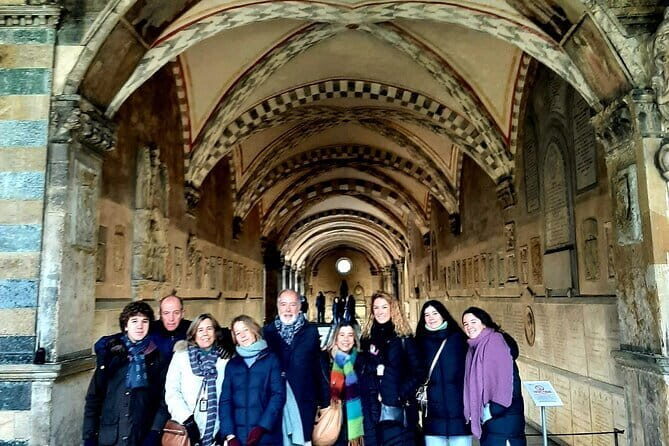
The tour meets at P.za di Santa Maria Novella, 18/A, 50123 Firenze FI and ends back at the meeting point. Start time is 3:30 pm, and the tour runs about 1 hour 30 minutes.
Why the start time matters: afternoon in Florence often shifts from “easy walking” to “hot and crowded,” especially near major churches. A private guide means you can keep moving with less waiting and more focused sight time. Also, because this is a private tour for your group only (up to 10), it doesn’t turn into a slow squeeze behind other visitors.
You’ll also receive a mobile ticket, which is a nice touch when you’re managing multiple things in the city.
Alberti’s Facade: the perfect first clue
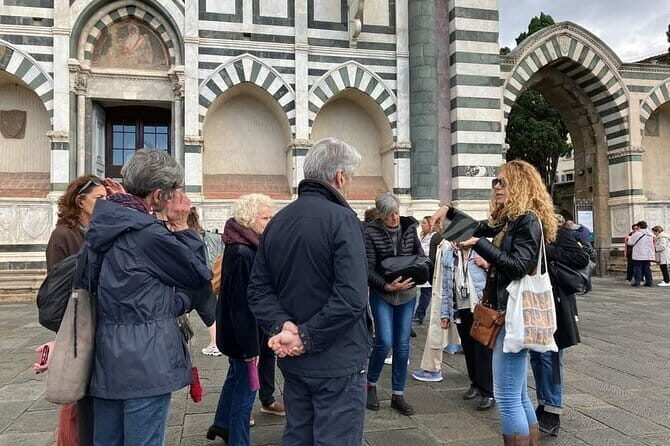
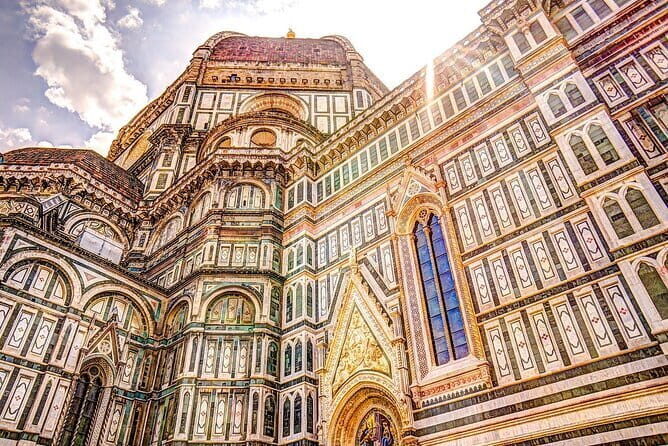
The tour starts with the facade of Leon Battista Alberti—a smart move, because it sets the tone for how you’ll read the rest of the complex. Alberti’s work is famous, but what makes it valuable here is the framing: you’re not just viewing the building. You’re learning how to interpret it.
Think of this as your visual “decoder ring.” Once you understand the guide’s approach to symbolism on the exterior, the interior choices make more sense. You begin to notice how art and architecture work together, and how meaning can be embedded into design—not only into paintings.
Practical tip: stand back for a moment before moving closer. From a short distance, the facade’s structure is easier to understand, and the guide can point out relationships you might miss when you’re too close.
Inside Santa Maria Novella: Masaccio’s Trinity and Giotto’s Crucifix
Step into the church and the tour pivots to two major anchor works: Masaccio’s Trinity and Giotto’s Crucifix.
These are the kind of pieces that can feel overwhelming if you’re rushing. The value of a symbol-focused guide is that you don’t just “see” the work—you learn how to look. In practice, that means you get explanation tailored to what the imagery is communicating and why the work matters in its setting.
You can also read our reviews of more private tours in Florence


Why these stops feel different on this tour
- Masaccio’s Trinity is often treated as a masterpiece you’ve heard about. With a guide focused on meaning, it becomes something more specific: a visual statement that connects theology, art decisions, and audience interpretation.
- Giotto’s Crucifix can feel like a “famous medieval thing” unless you get the right context. Here, the guide helps you notice the choices that shape how the scene is understood.
This is where you’ll likely feel the tour’s main strength: it’s not just name-dropping. It’s helping you connect artwork to message.
Chapels with strong stories: Strozzi Chapel and Tornabuoni Chapel
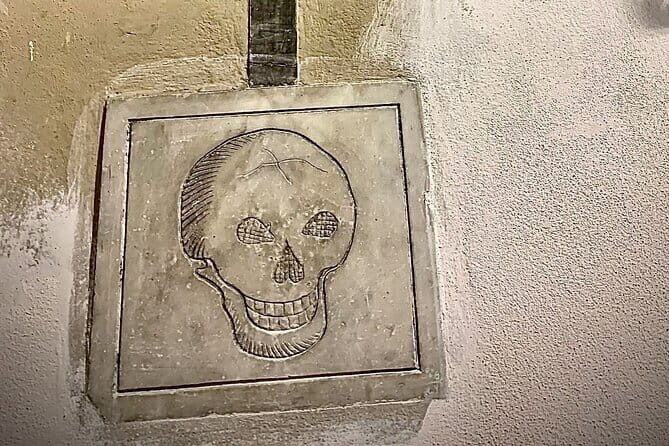
Next come the Strozzi Chapel and the Tornabuoni Chapel. In many Florence churches, chapels aren’t just decorative spaces—they’re like personal branding for powerful families. That’s exactly where symbolism becomes useful, because patronage and imagery often work together.
On this tour, these chapels are treated as meaning-rich environments. You don’t have to be an art expert to benefit. The guide’s job is to translate what you’re seeing into clear interpretation: what’s emphasized, what references might signal, and why the program is constructed the way it is.
A special reference: Strozzi Chapel in Mantua
You’ll also cover the Strozzi Chapel in Mantua as part of the symbolic discussion. Even if you’re not physically going there, the comparison point helps you understand patterns—how a patron or artistic idea can echo across locations. It’s the kind of connection that makes your eyes work differently when you return to Florence’s other sites.
Green Cloister and Spanish Chapel: symbolism where you might not expect it
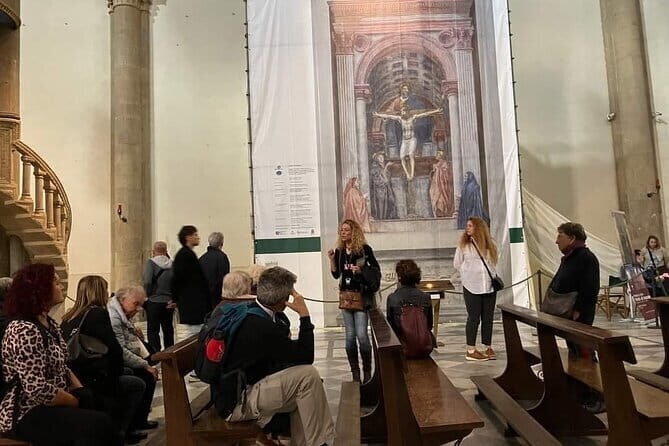
After the main interior works and chapels, the pace shifts to places that can be easy to overlook if you’re only chasing the headline paintings. Here you move to:
- The Green Cloister
- The Spanish Chapel
Cloisters are often associated with quiet and stonework, not coded art messages. But that’s what makes this stop worthwhile. A symbol-focused guide helps you notice decorative and compositional choices that have a purpose beyond “pretty background.”
The Spanish Chapel adds another layer. You’re still in the same overall basilica complex, but the symbolism and presentation feel like they belong to a different story chapter—one that reflects devotion, identity, and the way Catholic art communicates through visual language.
Practical tip: slow down here. Even though the tour is 90 minutes, the guide’s pacing tends to give you a chance to actually absorb. If you’re the type who likes to take photos, this is also a good area to do it without feeling rushed—just keep one eye on the guide’s pointing.
The museum stop with Paolo Uccello frescoes: how the tour ties together
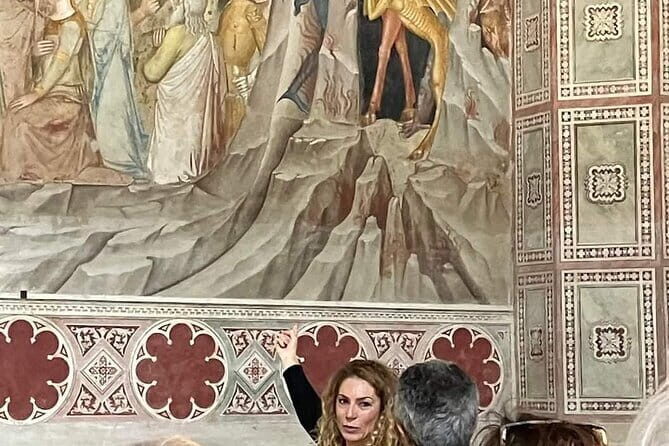
The last major portion is the museum with frescoes of Paolo Uccello. This is a key value moment because it helps you understand how the complex’s art language evolves and connects.
When you’ve seen chapels and major works inside the church, the museum stop works like a “theme callback.” You’ll have the chance to connect symbolism across different artists and display contexts. It also helps if you like variety: you’re not stuck only in the church’s main spaces.
What you’re getting, beyond another room to walk through
Uccello’s frescoes are not just a bonus. On this type of tour, they become part of the bigger argument: art communicates through form, imagery choices, and visual systems that repeat across time. That’s why this museum stop can leave you with a clearer sense of how Santa Maria Novella “thinks.”
The guide experience: Sonia Sànchez and why people keep coming back
The experience is led by Sonia Sànchez (Guia Oficial Florencia), an official guide with a specialization in hidden symbolism in art. The best part is how the explanations land: clear, structured, and patient.
From what you’ll hear, Sonia’s approach blends art history with mythology and symbol-based interpretation. That combination shows up in the way she answers questions and restates points if you need clarity. The result is that you don’t feel like you’re being rushed through difficult material.
Also, people consistently highlight her professionalism and warmth. You’re not just buying facts. You’re getting a conversation with an expert who can translate complexity into language you can use while you’re still standing in front of the artwork.
Price and value: $201.67 per group, plus the Santa Maria Novella admission ticket
The tour costs $201.67 per group (up to 10) for about 1 hour 30 minutes. That price is for the private guided experience with an official art historian guide and a mobile ticket.
Admission is not included:
- €7.50 adults
- €5 for ages 11 to 17
How to think about the value
- If you’re traveling as a couple or small group, you’ll pay closer to the full tour cost.
- If you can fill the group limit (up to 10), the guide time becomes a bargain compared to paying for separate tours and separate attention.
One way to budget: add the admission ticket cost per person to the group price when estimating your total. If you’re planning a family visit, know that the reduced youth admission is listed, which can help your math.
Also remember what you’re paying for: focused interpretation. In places like Santa Maria Novella, a general guide can help you identify works. This tour goes further, helping you understand what those works are saying.
Timing, pace, and the one realistic drawback
This is a tight 90-minute experience. The upside is that you won’t get lost in wandering. The downside is that if you personally want long, silent time in front of one artwork, you may feel slightly rushed.
And admission isn’t included in the tour price, which means you should come ready with that extra cost in mind.
If you’re the type who loves structured routes and crisp explanations, this timing is a plus. If you’re the type who wants hours of slow soaking, it may not be enough on its own.
Should you book this Hidden Symbols tour in Santa Maria Novella?
I’d book it if you want Santa Maria Novella to feel like a story you can actually read. This tour is best for people who enjoy symbolism, mythology, and art interpretation—especially with Sonia Sànchez, where the explanations are described as clear and the pace feels easy to follow.
You might skip or pair it with self-guided time if:
- you only care about quick highlights and don’t want symbolism-focused commentary
- you prefer spending lots of time lingering in chapels without a structured route
- you’d rather include every ticket cost up front (since admission is listed separately)
For the right traveler, it’s a strong use of afternoon time in Florence: focused, private, and designed to turn well-known spaces into something you understand—at least a little more deeply—before you move on to your next stop.
FAQ
How long is the Hidden Symbols in Santa Maria Novella tour?
It lasts about 1 hour 30 minutes.
Where does the tour start?
The meeting point is P.za di Santa Maria Novella, 18/A, 50123 Firenze FI, Italy.
Is the tour private?
Yes. It’s a private tour/activity, and only your group participates.
What’s the group size limit?
The price is per group for up to 10 people.
Is admission included in the tour price?
No. Admission tickets are not included. Adult admission is €7.50, and €5 is listed for ages 11 to 17.
Does the tour end at the meeting point?
Yes, it ends back at the meeting point.
What is included with the guided experience?
An official art historian guide specialized in hidden symbols in art is included.
Is the tour ticket mobile?
Yes, the experience includes a mobile ticket.
Can service animals participate?
Yes, service animals are allowed.
You Might Also Enjoy

More Guided Tours in Florence
- The Best tour in Florence: Renaissance & Medici Tales – guided by a STORYTELLER
★ 5.0 · 12,316 reviews
More Tours in Florence
- The Best tour in Florence: Renaissance & Medici Tales – guided by a STORYTELLER
★ 5.0 · 12,316 reviews

More Tour Reviews in Florence
- Tuscany Day Trip from Florence: Siena, San Gimignano, Pisa and Lunch at a Winery
★ 5.0 · 21,634 reviews - The Best tour in Florence: Renaissance & Medici Tales – guided by a STORYTELLER
★ 5.0 · 12,316 reviews