REVIEW · FLORENCE
Semi Private Uffizi Gallery Guided Tour in Florence
Book on GetYourGuide →Operated by StarEurope Tours · Bookable on GetYourGuide
Stairs in the Uffizi change everything. This semi-private Uffizi tour connects the Medici story to the paintings, so the gallery feels like one clear, guided thread instead of a blur of masterpieces.
I love the way the radio system keeps the guide’s commentary audible even in crowded rooms. I also love the range of works you get to anchor on, including Giotto’s Madonna di Ognissanti and major Renaissance names like Botticelli, Leonardo, and Michelangelo.
The main drawback to watch is timing: one booking reported the experience running close to double the planned length, which can make your later plans feel rushed if you have a tight schedule.
In This Review
- Key things you’ll notice right away
- Why this Uffizi tour works better than a museum “highlights grab”
- Meeting at Piazzale degli Uffizi: start on the right corner, not in a panic
- Inside the Uffizi: the Medici angle that makes the whole collection click
- The art stops that anchor the “who, what, and why”
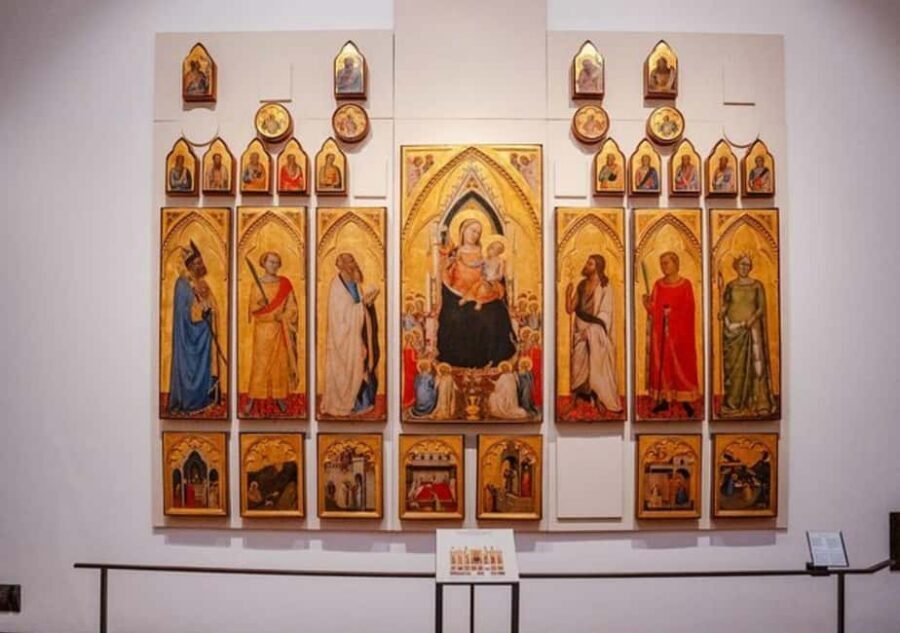
- Giotto’s Madonna di Ognissanti
- Botticelli’s Birth of Venus
- Leonardo’s Annunciation
- Michelangelo’s unique panel painting
- A notable work linked with Filippo Brunelleschi
- House paintings across centuries
- Why the guided architecture talk matters more than you think
- After the tour: turn your “tour time” into “your time”
- If you add wine: what the pacing feels like at Vino Tasting Global Srl
- Price and value: what $104 gets you in real-world terms
- Practical tips so you get the best day (not just the best tour)
- Who should book this Uffizi semi-private tour?
- Should you book this tour or plan it on your own?
- FAQ
- Where is the meeting point for this Uffizi tour?
- How long is the guided tour?
- Does this tour include skip-the-line entry?
- What’s included with the tour price?
- What languages are available for the live guide?
- Is it wheelchair accessible?
- What identification and items should I bring?
Key things you’ll notice right away
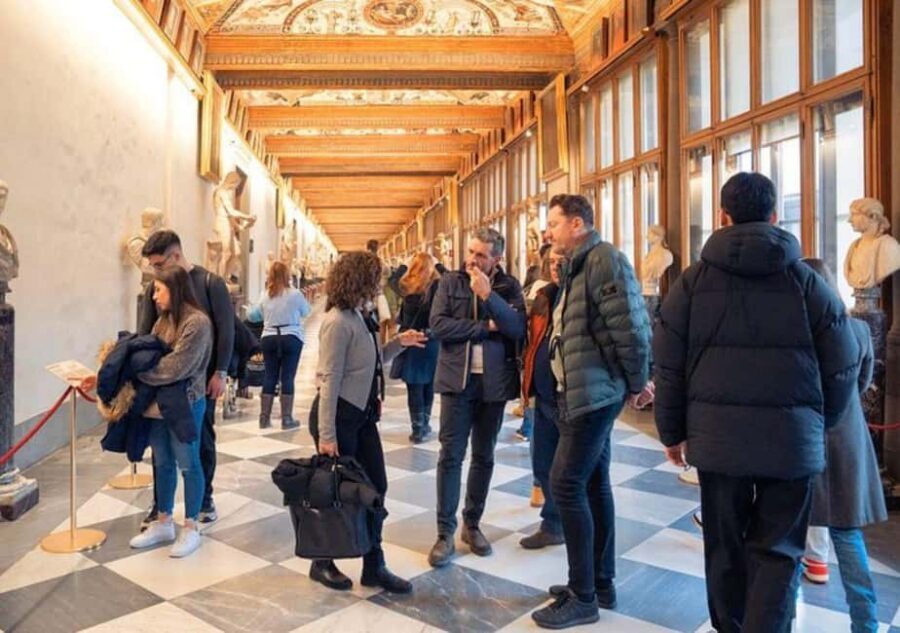
- Medici palace backstory that explains why this museum looks the way it does
- Radio system so you can actually hear your guide from a comfortable distance
- Focused art span from the 13th century to the 18th century without feeling lost
- Architecture storytelling as you ascend the grand staircase
- Hit list of must-sees, including Giotto, Botticelli (Birth of Venus), Leonardo, and a Michelangelo panel
- Optional wine tasting and pairing class at Vino Tasting Global Srl after the gallery
Why this Uffizi tour works better than a museum “highlights grab”
The Uffizi is famous for a reason, but it can still feel like information overload. You’ll stand in front of masterpiece after masterpiece and wonder what you’re supposed to notice first: the subject, the style, the patron behind it, or the artist’s trick.
This tour is built to fix that. Instead of treating the gallery like a checklist, you get a guided storyline: how Medici collectors shaped Florence’s taste, how the Uffizi became the stage for their collection, and how the building and the art relate to each other. That makes your visit feel more like understanding than sprinting.
You’ll also appreciate the pacing style. It’s designed to keep the experience readable and not exhausting, with time to revisit what catches your eye afterward. That matters, because the Uffizi is the type of museum where you’ll always want a second look at a detail you missed the first time.
You can also read our reviews of more guided tours in Florence
- The Best tour in Florence: Renaissance & Medici Tales – guided by a STORYTELLER
★ 5.0 · 12,316 reviews
Meeting at Piazzale degli Uffizi: start on the right corner, not in a panic
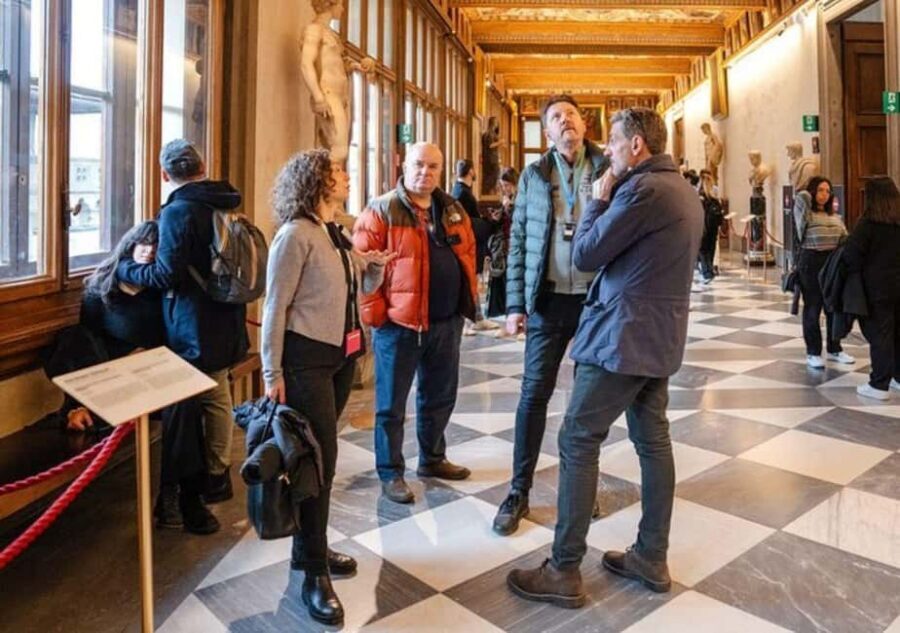
Your tour begins at the Statua di Leonardo da Vinci in Piazzale degli Uffizi. Show up 15 minutes early to avoid delays, because being late means you may not be able to join and you won’t be able to reschedule.
This is one of those small details that can make or break your morning. The area around the Uffizi can get crowded fast, and if you arrive after your group is already moving, you’ll lose the benefit of the whole plan—skip-line entry plus a guide who can lead you straight into the best flow of rooms.
If you’re trying to keep things smooth, wear comfortable shoes. You’ll be moving inside and around the museum, and the best part of the tour is being present at each stop rather than catching up later.
Inside the Uffizi: the Medici angle that makes the whole collection click
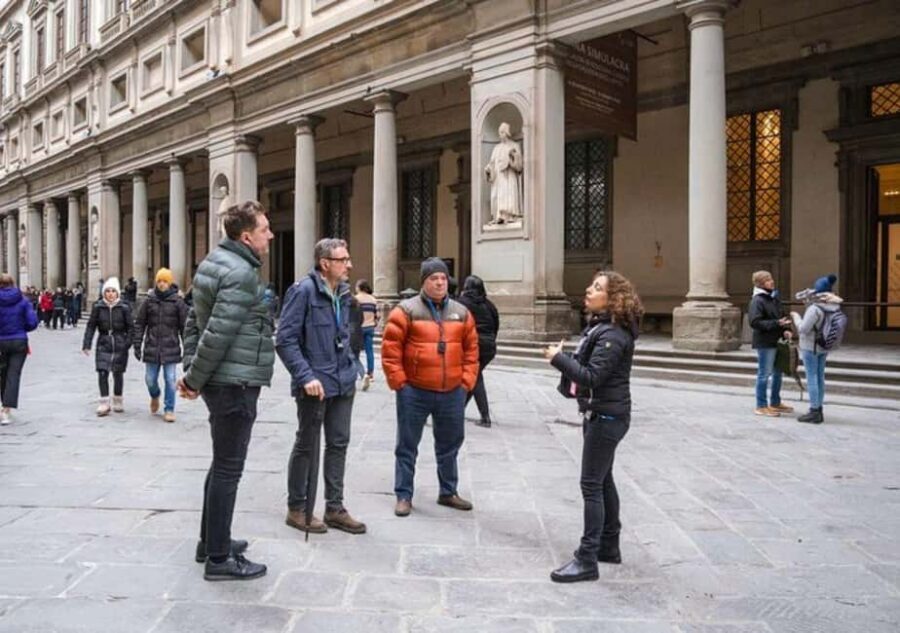
The tour starts with the Uffizi’s transformation—from a Medici palace to a museum holding Renaissance power and ambition. You’ll get the kind of context that turns names into meaning: who the Medici were, why they collected art, and how their choices shaped what Florence would remember.
One early visual anchor is the portrait of Anna Maria Luisa de’ Medici. The tour frames her connection to the collection being gifted to the city, so when you see that early piece, it sets the tone for what you’re about to experience: this isn’t only about what’s on the walls. It’s also about who controlled the story.
Then you head up through the grand staircase. This is where the guide’s focus on architecture really helps. You’re not just walking between rooms. You’re learning how the building itself supports the museum experience—where sightlines lead you, how the layout influences what you notice, and why the flow matters when you’re trying to understand a huge collection in limited time.
The art stops that anchor the “who, what, and why”
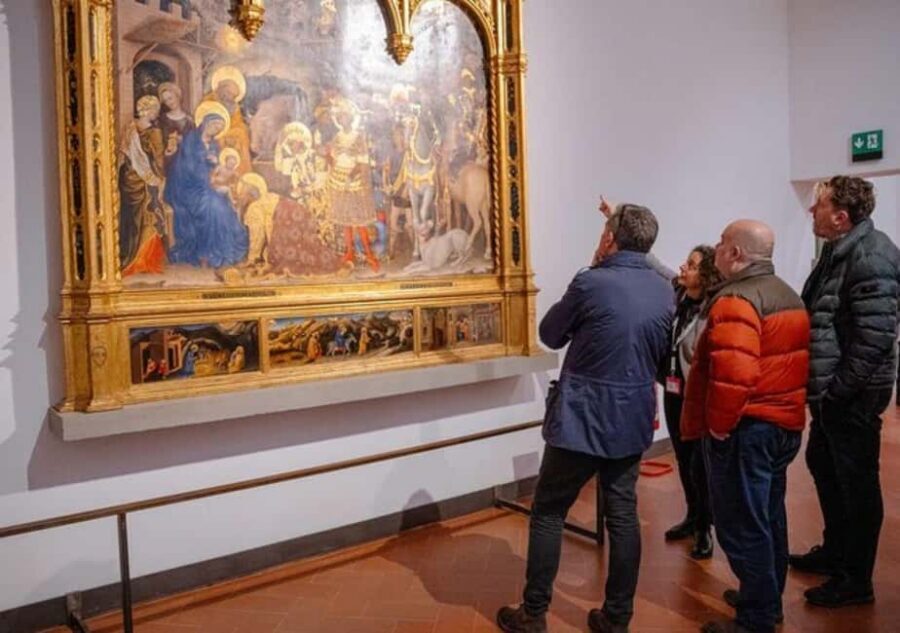
This is the heart of the tour: a guided walk through landmark works and the connections that make them more than famous images.
You’ll see a span of art across centuries—from the 13th century to the 18th century—and the tour keeps that change in style and subject matter from feeling random. Instead of watching centuries blur together, you learn what to look for when the period shifts: how religious painting language evolves, how artistic priorities change, and why a work lands where it does.
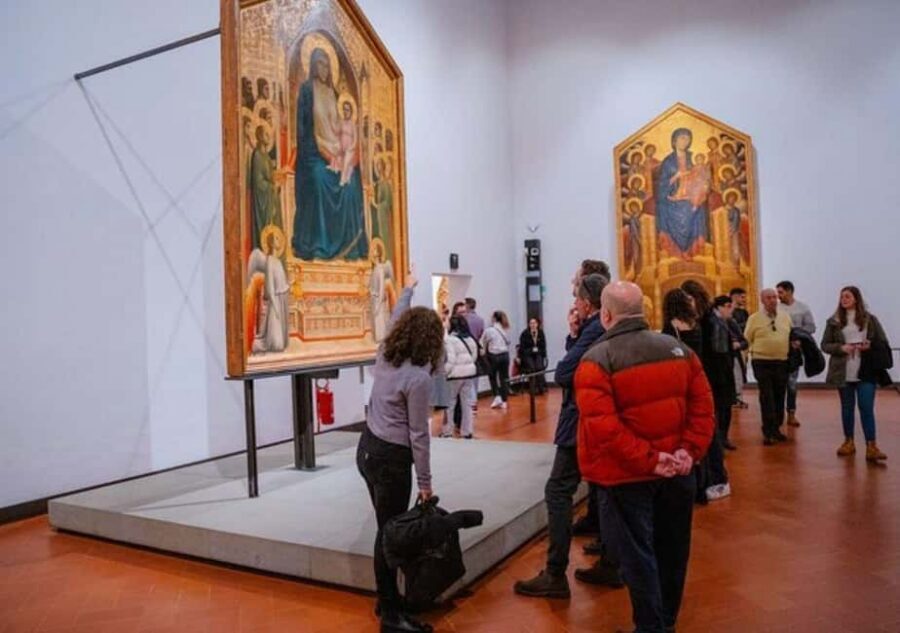
Giotto’s Madonna di Ognissanti
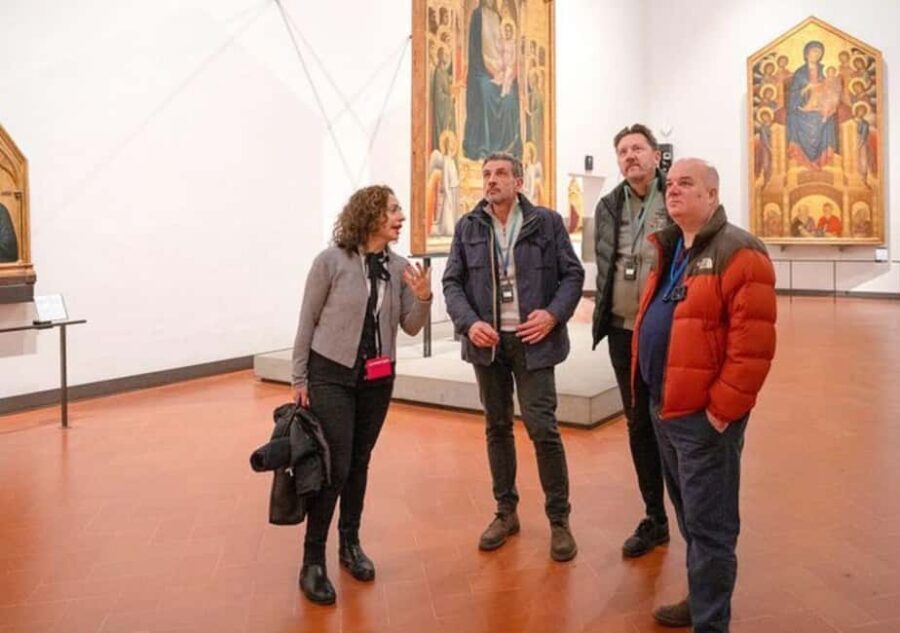
Giotto’s Madonna di Ognissanti is highlighted as a key moment. If you’ve ever wondered why Giotto’s work is treated like a turning point, this stop is the kind of reference point that helps. The guide’s commentary focuses on what makes it important in the larger story of Renaissance development, not just what’s in the frame.
You can also read our reviews of more private tours in Florence



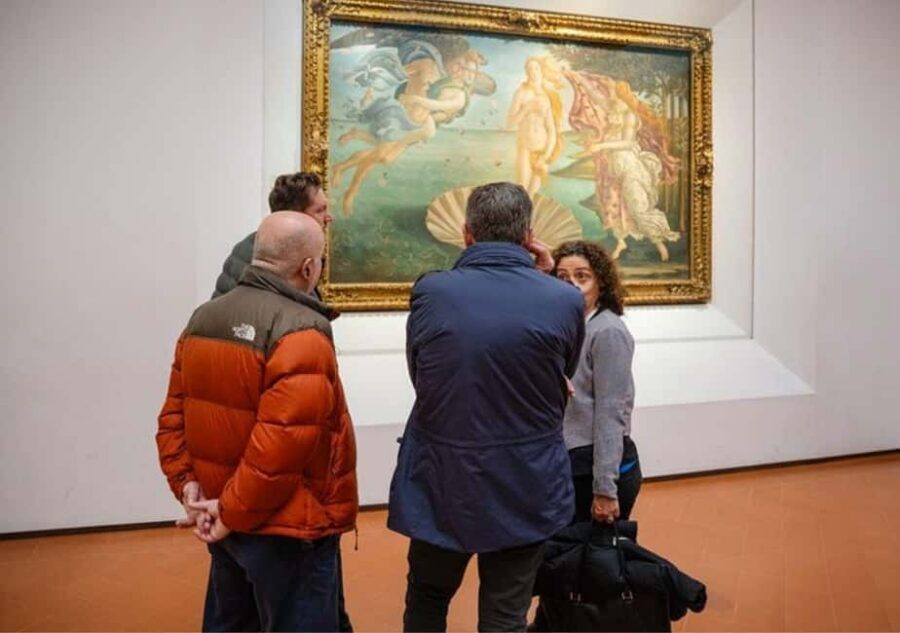
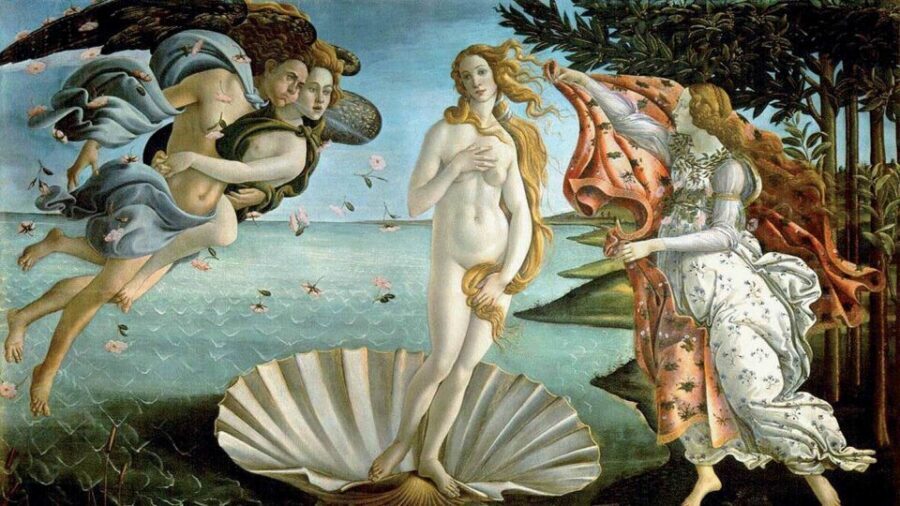
Botticelli’s Birth of Venus
Botticelli’s highlight is the Birth of Venus. Even if you’ve seen the image online a hundred times, you’ll learn how to read what you’re looking at in person—how the myth sits inside the art world of its time, and why the Medici collecting world mattered for works like this.
And yes, do keep your eyes on the detail. The tour isn’t only about the name on the label. It’s about learning what specific features mean in context.
Leonardo’s Annunciation
Leonardo’s Annunciation comes up as another iconic stop. Here, the value is in hearing the guide connect Leonardo’s approach to what came before and what comes next. You’re not just seeing a famous painting. You’re learning how Leonardo’s choices create emotion and clarity, and how that fits the larger Renaissance shift.
Michelangelo’s unique panel painting
Michelangelo’s contribution is emphasized as the only panel painting in the world. That phrasing is part of the tour’s focus, and it gives you an instant reason to slow down. When something is truly singular, it’s worth treating it that way: spend a minute longer than you think you need, because the guide’s framing makes you notice the work differently.
A notable work linked with Filippo Brunelleschi
The highlights also include an admired creation tied to Filippo Brunelleschi. Even if your main plan was to see the biggest painting names, this kind of stop broadens your understanding. It reminds you the Renaissance wasn’t only painting—it was architecture, design thinking, and the way form becomes a system.
House paintings across centuries
You’ll also encounter “house paintings” spanning a wide timeline. That might sound odd at first, but it becomes helpful when the guide ties it to patron life and the practical ways art lived alongside power and daily culture.
Why the guided architecture talk matters more than you think
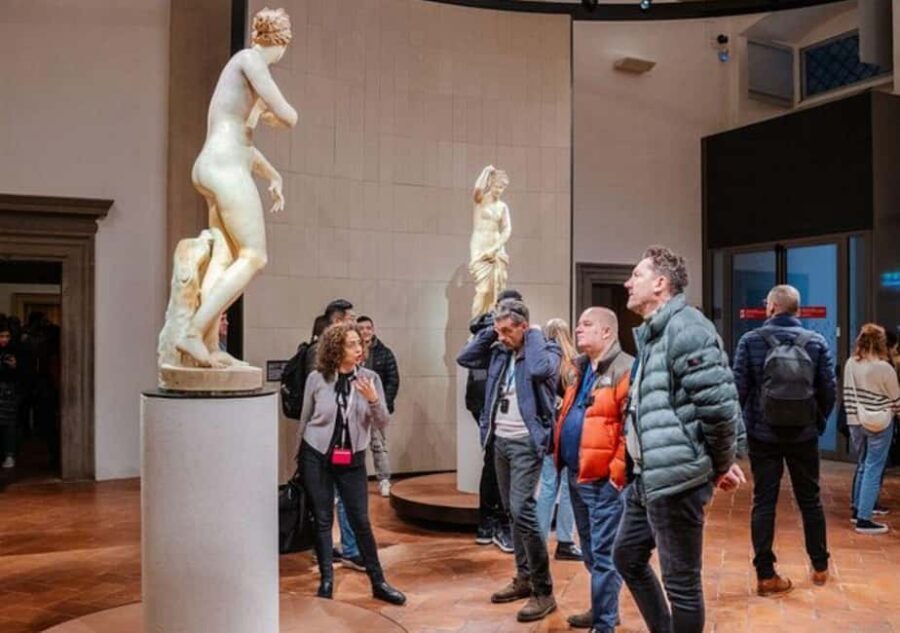
A lot of Uffizi visits are photo-focused: quick stops, quick shots, quick exit. This tour adds something practical: it teaches you how to move and how to see.
The staircase segment matters because it gives your brain a way to organize what comes next. Once you understand the museum’s internal logic—how spaces flow and how the guide expects you to look—the paintings stop feeling like random highlights and start feeling like chapters.
This is also where the semi-private format helps. You can ask follow-up questions without the tour feeling like a constant cattle line. The radio system means you don’t have to crowd the guide to hear the story.
After the tour: turn your “tour time” into “your time”
The best part of a highlights tour is when it doesn’t end your day. After the guided portion, you’re free to go back to any artworks that grabbed you.
This is where you should spend your energy. If you only have one museum visit in Florence, you don’t want to spend it collecting regrets. Come prepared with a short list in your mind—two or three works the guide emphasized—and then revisit those without time pressure.
I like this approach because it respects how brains work. During a tour, you’re often processing information fast. Later, when the noise fades, you can look slower and notice what stuck.
If you add wine: what the pacing feels like at Vino Tasting Global Srl
Some packages include a follow-up at Vino Tasting Global Srl: a guided experience with wine tasting and pairing class.
This is a smart pairing for two reasons. First, you’re still in the Florence mode of learning—your day keeps a theme: culture and craft. Second, wine tasting gives you a sensory break after a museum full of visual input.
One practical thought: the tour includes tasting and pairing if you choose that option, but it doesn’t automatically mean your meal is handled. If you’re sensitive to getting hungry, plan a simple backup snack for later in the day so you’re not negotiating lunch while your legs are tired.
Price and value: what $104 gets you in real-world terms
At $104 per person for a 1.5-hour Uffizi guided visit, you’re paying for three things:
1) A certified guide who can explain the Medici angle and the meaning behind the masterpieces.
2) Skip-the-ticket-line style help plus a reservation setup that cuts down wasted time.
3) Radio system audio support, which may sound minor until you’re standing in a crowd craning your neck.
For art lovers, the biggest value is time and attention. The Uffizi is too large to “wing” well if you want context. A focused guide helps you stop at the right works and learn how to connect them.
That said, keep expectations realistic about pacing. One booking described the tour running nearly double the planned length when they had to stop the route early. You don’t need to assume that will happen to you, but if your afternoon is tightly scheduled, build in extra breathing room.
If you choose the wine option too, the value stretches further because you’re not paying for a one-and-done museum moment. You’re getting an extra guided cultural experience within the same day.
Practical tips so you get the best day (not just the best tour)
A few things make this experience easier and more rewarding:
- Wear comfortable shoes. You’ll be moving through museum spaces and the start point area.
- Keep an eye on timing at the start. Being late can mean you lose the tour.
- Travel light. Oversize luggage and large bags aren’t allowed.
- Bring an ID or passport.
- Plan to spend a little time after the guided portion revisiting what you loved. That’s where the visit becomes yours.
The guide can work in multiple languages—French, Spanish, Italian, English, and German—so you should be able to match the experience to your comfort level even if you’re traveling internationally.
And if you’re relying on mobility support, this tour is listed as wheelchair accessible. That’s a big plus when you want a guided route that doesn’t ignore how hard it is to navigate big museums.
Who should book this Uffizi semi-private tour?
This tour is a strong fit if you want:
- A Medici-focused explanation of why the collection looks and feels the way it does
- A route that hits major works like Giotto, Botticelli (Birth of Venus), Leonardo, and Michelangelo
- Guidance that adds meaning without turning the day into a lecture marathon
- The chance to revisit favorites after the tour ends
You might think twice if you have a razor-thin schedule and can’t tolerate the possibility of slower pacing. Even well-run museum experiences can be affected by crowds and how long people stay on certain paintings.
Should you book this tour or plan it on your own?
If you want your Uffizi visit to feel organized and meaningful, I’d book it. The combination of a certified guide, skip-the-line entry, and radio system support is the kind of practical setup that makes a big museum visit actually enjoyable.
If you do book, give yourself a buffer for the rest of your day and plan to use the post-tour time to re-see the artworks that hooked you. That’s how you turn a guided overview into a personal connection with the paintings.
FAQ
Where is the meeting point for this Uffizi tour?
You meet in front of the Statua di Leonardo da Vinci at Piazzale degli Uffizi. Arrive about 15 minutes before departure time.
How long is the guided tour?
The Uffizi guided tour is listed as 1.5 hours.
Does this tour include skip-the-line entry?
Yes. It includes ticket and reservation for the Uffizi and skip-the-ticket-line access.
What’s included with the tour price?
Included items are an official certified guide, a radio system to hear the guide, and your Uffizi ticket/reservation. If you select the wine option, wine tasting and a pairing class are included too.
What languages are available for the live guide?
The live guide is available in French, Spanish, Italian, English, and German.
Is it wheelchair accessible?
Yes, the tour is listed as wheelchair accessible.
What identification and items should I bring?
Bring a passport or ID card and wear comfortable shoes. Oversize luggage and large bags are not allowed.
You Might Also Enjoy


More Guided Tours in Florence
- The Best tour in Florence: Renaissance & Medici Tales – guided by a STORYTELLER
★ 5.0 · 12,316 reviews
More Tours in Florence
- The Best tour in Florence: Renaissance & Medici Tales – guided by a STORYTELLER
★ 5.0 · 12,316 reviews


More Tour Reviews in Florence
- Tuscany Day Trip from Florence: Siena, San Gimignano, Pisa and Lunch at a Winery
★ 5.0 · 21,634 reviews - The Best tour in Florence: Renaissance & Medici Tales – guided by a STORYTELLER
★ 5.0 · 12,316 reviews