REVIEW · FLORENCE
3-Hour Historic WhoDunIt Tour in Florence
Book on GetYourGuide →Operated by ACCORD Italy Smart Tours · Bookable on GetYourGuide
A murder mystery in Florence sounds like a movie plot, but this one runs on real observation and old-stone details. You’ll work through an actual Renaissance-era crime with a self-guided WhoDunIt format that nudges you to look closely at the city as you go. I like that it mixes famous Florence energy with the kind of streets you’d normally pass without thinking.
Two things I especially liked: first, the clues push you to slow down and notice what’s actually in front of you (not just grand views). Second, it’s ticket-friendly in the sense that you can answer questions just by looking at what’s visible from the street, so you’re not forced into buying extra admissions. The main drawback to consider is simple: at $27 and rated modestly overall, the experience can feel like a paper stroll if you’re expecting a live guide-led mystery with big dramatic reveals.
In This Review
- Key Points That Matter Before You Go
- Price and Expectations: What $27 Really Buys You
- Starting Point: Piazza Madonna degli Aldobrandini, 2nd Floor
- Your “Investigation Mode”: How the Game Actually Works
- Loggia dei Lanzi Clue Spot: Counting Sculptures Without Tickets
- Following the Clues Through Piazzas and Streets (Expect Repeats)
- Time Reality: The 3 Hours Can Turn Into More
- The Reveal: Picking a Suspect and Getting the Gift
- Who This Tour Fits Best (And Who Might Feel Frustrated)
- Small Group Size: How It Changes the Feel
- What’s Included (and What Isn’t)
- Provider to Know: ACCORD Italy Smart Tours
- Should You Book This “Historic WhoDunIt” in Florence?
- FAQ
- How long is the 3-Hour Historic WhoDunIt Tour in Florence?
- How much does the tour cost?
- Is it guided or self-guided?
- What’s the meeting point address?
- What do I receive if I solve the mystery?
- What’s included in the package?
- Is there wheelchair access?
- How many people are in a group?
- Do I need tickets to the attractions to answer the clues?
- Can I cancel for a full refund?
Key Points That Matter Before You Go
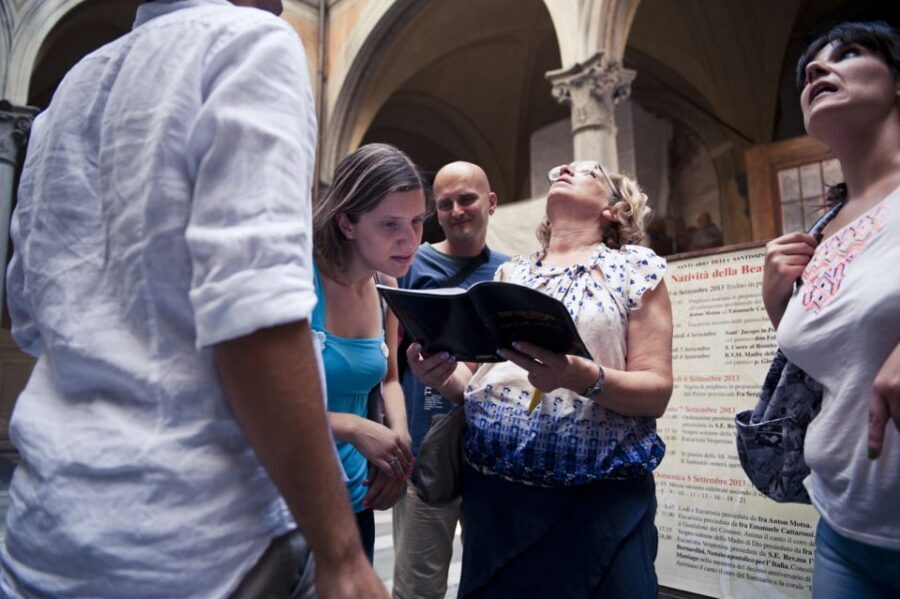
- A self-guided case file: you solve with a booklet and clues, not a talking guide.
- Observe specific details: you’ll answer questions by looking carefully at landmarks.
- Winner gets a gift: there’s a real incentive to finish strong.
- Walk a lot in the old center: plan for more time than the headline 3 hours.
- Loggia dei Lanzi is in the mix: at least one clue involves counting sculptures there.
- Small group, max 10: easier to start together and move at your own pace.
Price and Expectations: What $27 Really Buys You

At $27 per person for a 3-hour experience, you’re paying for structure and a game booklet: a planned route, a set of questions, and a way to “win” at the end. What you’re not paying for is a traditional guide who stands with you, explains everything, and answers questions on the spot. The tour is self-guided, with a game booklet and a gift for the winner, plus the tour is designed for groups limited to 10.
So here’s the value question I’d ask you: do you enjoy city-watching games more than guided storytelling? If yes, the price can feel fair because you’re buying an interactive way to move through central Florence. If you want a polished, high-production mystery with nonstop new information at every step, you may feel it’s overpriced—especially because some people felt the route can repeat areas and that the activity can feel more like sightseeing plus questions than a true whodunit puzzle hunt.
You can also read our reviews of more historical tours in Florence


Starting Point: Piazza Madonna degli Aldobrandini, 2nd Floor
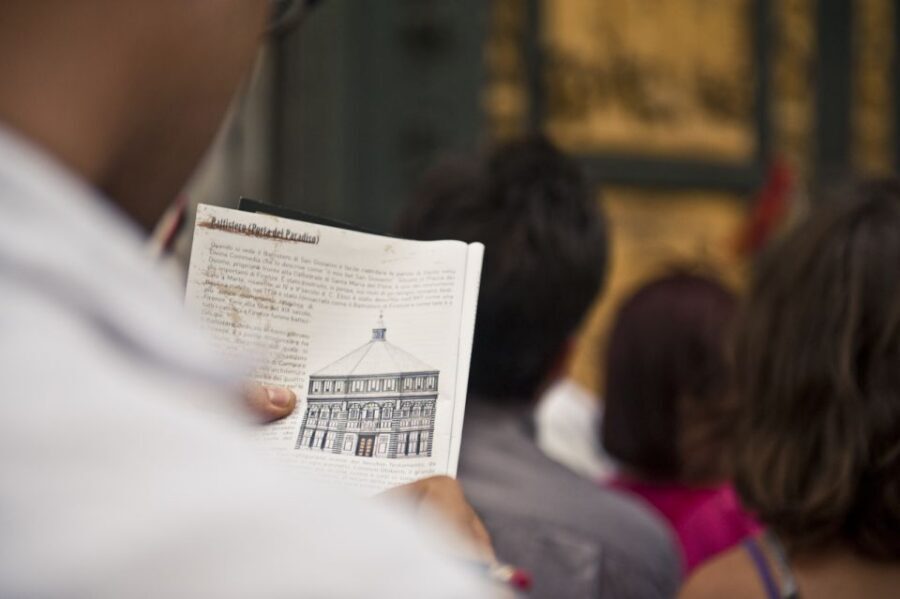
Your meeting point is listed as 2nd floor – Piazza Madonna degli Aldobrandini 8. This matters because these kinds of self-guided tours often hinge on a quick handoff: you arrive, you get your game booklet (and any instructions you need), and then you’re off.
Tip for your first minutes: don’t wander until you fully understand what you’re supposed to do. Take 2–3 minutes to scan the booklet’s structure and how it asks you to work. Since there’s no guide walking you through the story, your momentum depends on how quickly you get organized.
Your “Investigation Mode”: How the Game Actually Works

This isn’t a show with actors. It’s a WhoDunIt where you follow clues, answer questions, and narrow down suspects based on what you can observe. A magnifying glass and deerstalker hat are optional—so treat them as a fun prop option, not a requirement for solving.
In practical terms, expect this pattern:
- You read a clue or question.
- You navigate to a specific spot on the route.
- You look closely at what’s there and answer based on visible details.
- You keep building toward a final choice among suspects.
- When you finish, you receive a gift for the winner.
The best way to make this feel worth it is to accept the rules early: you’re here to watch, count, and identify details. If you walk fast like you’re just sightseeing, you’ll miss evidence and the case will feel frustrating rather than fun.
Loggia dei Lanzi Clue Spot: Counting Sculptures Without Tickets
One clue specifically involves the Loggia dei Lanzi, including questions like how many female statues are present (the kind of detail that makes the game click). This is a great example of why the format can be smart: you get to “play” with a world-famous Florence location while forcing yourself to slow down long enough to actually see the figures.
What you should know before you reach it:
- Expect to spend time standing and looking.
- Bring your concentration, not your calendar.
- If you’re with another person, decide who counts and who double-checks.
Also, one nice advantage from the experience style is that your answers don’t require you to buy tickets to attractions. That’s a big deal if you’ve already visited major sights in Florence earlier. You can treat this as a second pass, but in detective mode.
Following the Clues Through Piazzas and Streets (Expect Repeats)
Beyond the Loggia dei Lanzi stop, the case route takes you through a mix of well-known Florence moments and lesser-seen corners. The key is that the clues show up throughout the walk, so your job isn’t only reaching famous monuments. It’s also spotting smaller details and answering questions along the way.
Here’s the part you should plan for: several people noted a lot of back-and-forth and the feeling that some sights get visited multiple times. That doesn’t automatically mean the route is bad—it can happen when clues are placed to keep you near specific architectural features. Still, it’s a real consideration if your goal is efficient sightseeing with minimal walking.
My practical recommendation: wear shoes you’d wear for an all-day stroll. And if you hate repeating streets, give yourself a mental reset. Instead of thinking of it as a linear checklist, treat it as wandering with a purpose.
You can also read our reviews of more tours and experiences in Florence






Time Reality: The 3 Hours Can Turn Into More
The duration is listed as 3 hours, which sounds tight and satisfying. But in real life, self-guided clue tours tend to stretch. If you stop often to read, count, and re-check, and if you add in any breaks, you’ll probably go beyond the headline time.
A smart way to manage expectations:
- Plan for 3 hours as your minimum.
- If you want a relaxed pace (or you’re taking photos), treat it more like 4 to 5 hours.
If you’re traveling with kids, the pacing can work well because the format is interactive. But if you’re on a strict schedule, you’ll want buffer time before dinner or other timed reservations.
The Reveal: Picking a Suspect and Getting the Gift
The final part is where the tour earns its title. You’re expected to solve the murder and unmask the perpetrator from a list of possible suspects. The prize is a gift for the winner, which gives the game a friendly competitive edge even if you’re just doing it for fun.
Since there’s no guide included in what’s advertised, the reveal process depends on the instructions in your booklet and how the tour operator expects you to finish. Either way, you’ll want to arrive at the end with:
- Your answers filled in (or easy to review).
- A clear final suspect choice.
- Enough time not to rush through the last steps.
Who This Tour Fits Best (And Who Might Feel Frustrated)
This experience is best for people who like games, puzzles, and learning by looking. You’ll likely enjoy it if:
- You enjoy self-guided activities where you control the pace.
- You’ve already seen Florence’s big-ticket sights and want a new way to revisit them.
- You’re traveling with kids or anyone who likes scavenger-hunt energy.
- You don’t mind walking and can stay focused on details.
You might feel disappointed if:
- You expected a guide-led mystery with explanations and dramatic storytelling.
- You’re the type who wants nonstop new information at every stop.
- You dislike route repetition and long walking loops.
Small Group Size: How It Changes the Feel
The group is limited to 10 participants, and that’s a meaningful detail for this style of tour. Small groups help reduce the chaos at the start and keep the experience from feeling like a mass “shuffle through Florence” event. For a self-guided game, it also makes it easier to start together, confirm you have your booklet, and then go your own way without being swallowed by crowds.
Wheelchair access is marked as available, which is good to know. Still, the experience is built on walking through central areas, so you’ll want to consider your comfort level with extended strolls and turning points.
What’s Included (and What Isn’t)
Included:
- A game booklet
- A gift for the winner
Not included:
- A guide
That “no guide” piece is the central planning factor. It’s not a deal-breaker, but it changes what the tour feels like. If you want a human to answer your Florence questions, this isn’t that format. If you want an activity you can do at your own pace and treat as a game, you’ll probably appreciate the simplicity.
Provider to Know: ACCORD Italy Smart Tours
The provider listed is ACCORD Italy Smart Tours. When you book, keep an eye on what materials are actually included (your booklet, your winner incentive) so you’re not expecting extra add-ons like a spoken guide. With self-guided experiences, the booklet quality and the clue clarity are everything—so your own detective vibe matters.
Should You Book This “Historic WhoDunIt” in Florence?
My honest take: book it if you want an interactive walk through Florence where the fun comes from solving with your eyes. The Loggia dei Lanzi clue, the observation-based questions, and the fact that you can often answer without attraction tickets make it a practical choice, especially if you’ve already done some standard sightseeing.
Skip or rethink it if you expected a guided, narrative mystery or if you’re sensitive to the idea of repeating streets and spending more time than the 3-hour label suggests. At $27, you want the game to feel sharp, and that won’t land the same way for everyone.
FAQ
How long is the 3-Hour Historic WhoDunIt Tour in Florence?
It’s listed as a duration of 3 hours.
How much does the tour cost?
The price is $27 per person.
Is it guided or self-guided?
It’s self-guided. A guide is not included.
What’s the meeting point address?
The meeting point is 2nd floor – Piazza Madonna degli Aldobrandini 8.
What do I receive if I solve the mystery?
You receive a gift for the winner.
What’s included in the package?
Included are a game booklet and a gift for the winner.
Is there wheelchair access?
Yes, wheelchair accessibility is marked as available.
How many people are in a group?
The group is limited to 10 participants.
Do I need tickets to the attractions to answer the clues?
From the information provided, the answers can be found without needing tickets to the attractions.
Can I cancel for a full refund?
Yes, free cancellation is offered up to 24 hours in advance for a full refund.
You Might Also Enjoy



More Historical Tours in Florence



More Tours in Florence
- The Best tour in Florence: Renaissance & Medici Tales – guided by a STORYTELLER
★ 5.0 · 12,316 reviews






More Tour Reviews in Florence
- Tuscany Day Trip from Florence: Siena, San Gimignano, Pisa and Lunch at a Winery
★ 5.0 · 21,634 reviews - The Best tour in Florence: Renaissance & Medici Tales – guided by a STORYTELLER
★ 5.0 · 12,316 reviews