REVIEW · FLORENCE
3 hour Walking Tour Statue of David and Florence Highlights
Book on Viator →Operated by Guidaly · Bookable on Viator
David at street level in just three hours. This 3-hour walk strings together Florence’s biggest hits—Michelangelo’s David, the Duomo complex, Ponte Vecchio, and Piazza della Signoria’s outdoor sculpture—so you see more than just postcard angles, with a certified local guide and a mobile ticket.
I love the skip-the-line Accademia entry that gets you into the museum for David as the first big payoff. I also love the small group (up to 19), plus radio headsets when the group is larger, which keeps the whole thing conversational instead of chaotic.
My only heads-up: even with reserved access, the Accademia security check can still slow you down because entry uses a limited number of metal detectors—and rain makes the outdoor walking feel longer.
In This Review
- Key things you will notice on this Florence walk
- Accademia Gallery and Michelangelo’s David, with timing that actually matters
- The Duomo complex from the outside: Giotto and Brunelleschi in one sweep
- Baptistery, Piazza della Repubblica, and Orsanmichele: Florence’s layers walk by you
- Porcellino and the wishing coin: a small ritual, big fun
- Ponte Vecchio: the bridge Florence rebuilt, then branded with power
- Piazza della Signoria: an open-air sculpture museum you can actually navigate
- Piazza San Firenze and Santa Croce’s outside views with tomb-name gravity
- Price, timing, and group size: why this is a bargain if you want structure
- What to wear and bring so Accademia security does not slow you down
- Who this tour suits best (and who should skip it)
- Should you book this Florence David and highlights walk?
- FAQ
- How long is the walking tour?
- What is the price?
- Where do I meet the guide, and where does the tour end?
- What is the maximum group size?
- What’s included in the tour price?
- Is Michelangelo’s David included, and do I get skip-the-line entry?
- Do we enter the Duomo dome or Santa Croce church?
- Are there any clothing requirements for church stops?
- What are the Accademia Gallery rules for bags, umbrellas, and drinks?
- Is free cancellation available?
Key things you will notice on this Florence walk
- Skip-the-line access to see Michelangelo’s David at Galleria dell’Accademia
- A tight, first-day-friendly circuit that connects Duomo views, bridges, and major squares
- Piazza della Signoria as an outdoor sculpture gallery, including works by Cellini and Giambologna
- Outside-only stops for the Duomo complex and Santa Croce (great for photos, not for interior time)
- Small-group pacing (max 19) with radio headsets depending on group size
- Accademia rules are strict: bags, umbrellas, and drinks are limited at security
Accademia Gallery and Michelangelo’s David, with timing that actually matters
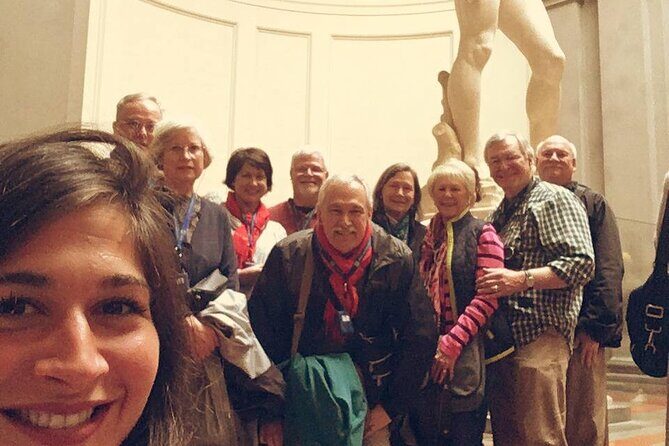
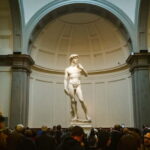
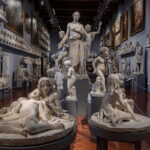
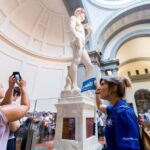
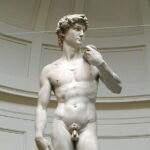
Your tour begins at the equestrian statue of Cosimo I in Piazza della Signoria, and within about an hour you are inside Galleria dell’Accademia to see Michelangelo’s David. This is the moment most people come for, and the guide helps you look past the obvious and notice details that you miss when you are just speeding through.
One key benefit is that your admission is built around reserved entry. Still, be mentally ready for a short wait at security. The Accademia entrance uses only two metal detectors and every person gets checked, so skip-the-line is not a magical force field.
Practical tip: if you want the best experience, treat the David stop as the main event and plan to stay present. After you see it, the rest of Florence starts to connect—art, politics, and power all share the same streets.
You can also read our reviews of more walking tours in Florence
The Duomo complex from the outside: Giotto and Brunelleschi in one sweep
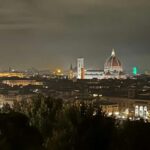
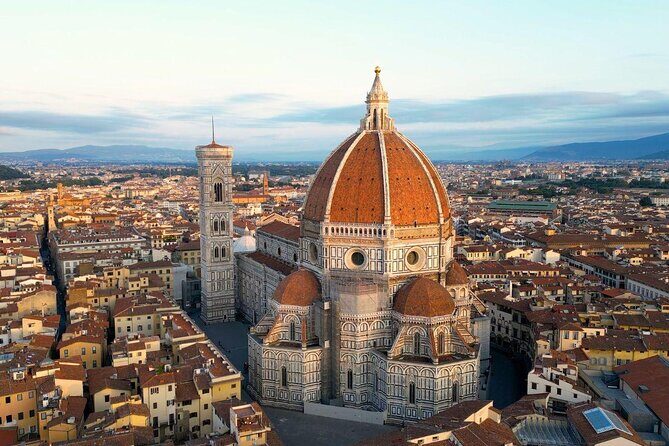
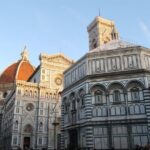
Next you head toward the Duomo complex, but you will experience it the way most of Florence does: from street level. You spend about 15 minutes admiring the Cathedral of Santa Maria del Fiore outside, with attention to the parts that define the skyline.
This is where the Duomo stops being just a big church and becomes a timeline. You see how construction spans Gothic and Renaissance periods, plus the famous duo of Giotto’s Bell Tower and Brunelleschi’s Dome from the viewpoints you get on foot.
If your plan includes going inside the dome later, this tour will not cover that time. But that is also the point: you get the big picture fast, then you keep moving.
Baptistery, Piazza della Repubblica, and Orsanmichele: Florence’s layers walk by you
The next stretch is about history you can read off buildings.
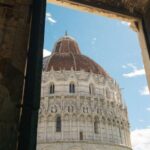
At the Baptistery of St. John, you view it outside—an ancient Florence landmark known for its inlay marble decorations and bronze doors. You also get the story behind why those doors helped spark the Renaissance mindset.
Then comes Piazza della Repubblica, historically tied to the ancient Roman center of Florentia. The square also has a heavier past, including its connection to the Jewish Ghetto, so it helps to have a guide who can frame what you are looking at instead of just pointing.
After that, you pause at Orsanmichele from the outside. The guide points out the unusual origin: a building shaped by guild power that later became a church. You also see what is described as an important early Renaissance work there—the statue of St. George by Donatello—with the focus kept where your eyes naturally go.
If you like turning stone-and-brick into stories, this is the part that quietly wins points.
Porcellino and the wishing coin: a small ritual, big fun
A short walk brings you to the Fontana del Porcellino, often called Florence’s most famous wishing well. This stop is playful and quick, which is great when you have been walking since the museum.
Here you flip a coin in the tradition of wishing, aiming for the boar’s mouth. You get the small ritual, plus the setting: it sits by a renaissance loggia that frames the street market feel.
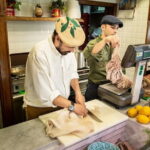
This is also a good moment to slow down. Outdoor Florence can blur into one long line of sights. The Porcellino stop is a reminder that the city is still a working place, not just a museum you walk through.
Ponte Vecchio: the bridge Florence rebuilt, then branded with power
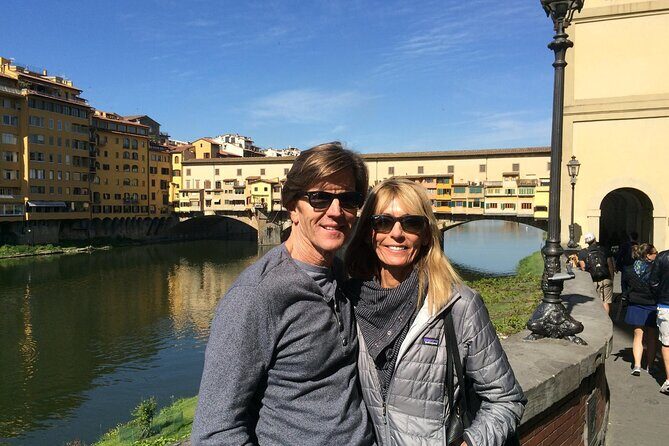
Next up is Ponte Vecchio, and the guide gives you the story that makes the bridge make sense.
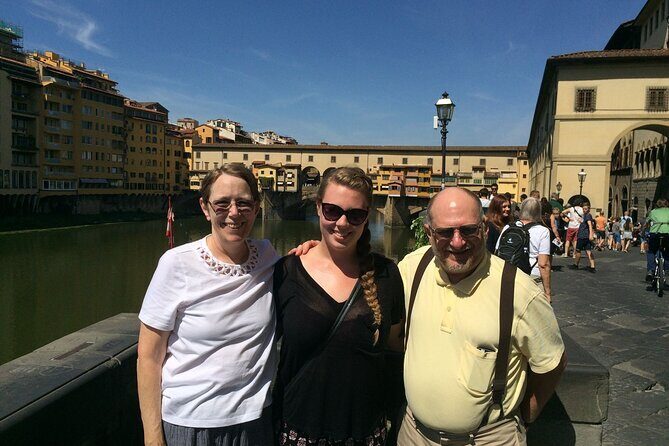
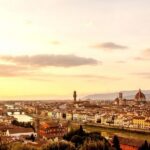
You are told this is the only Florence bridge that survived World War II. You also hear how it connects to earlier events like the 1333 flood, when the bridge was rebuilt. Then your eyes go to the jewelry shops lined across it, which is the signature look you will probably take home in photos.
The big Renaissance power move is the Vasari Corridor, the private passageway reserved for Medici rulers. Standing on or near the bridge, that detail helps you understand why this place was worth protecting, controlling, and redesigning.
This is one of those stops where you might think you already know what a bridge looks like—then the historical framing clicks and you see it differently.
You can also read our reviews of more tours and experiences in Florence

Piazza della Signoria: an open-air sculpture museum you can actually navigate
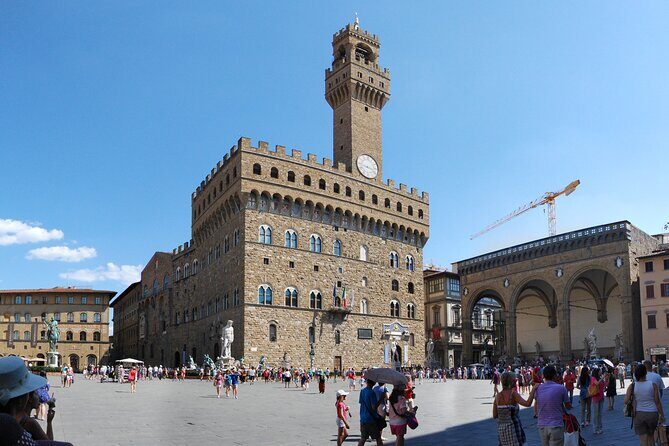
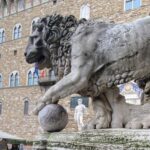
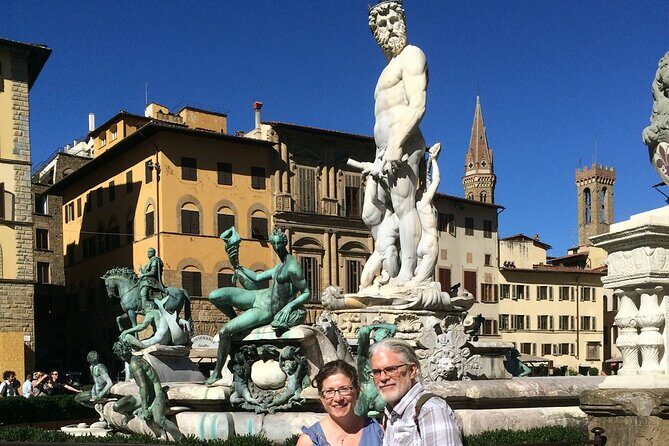
Piazza della Signoria is the tour’s sculpture moment outdoors. The square feels like a city-room for politics and art, and the guide helps you decode what you are seeing.
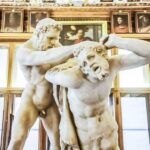
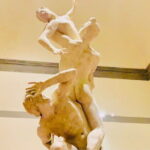
You spend about 15 minutes here, looking at major works connected to famous Renaissance names. The highlights include Perseus by Cellini, the Fountain of Neptune, and Ratto delle Sabine by Giambologna.
The practical value: this stop teaches you how to look. When you see multiple sculptures grouped together in an open space, your brain starts to compare style and meaning. You catch the theme of Florence as a place where art was part of public life, not just private taste.
If you want a Florence souvenir, this is it: photos are easy, but understanding why the sculptures are where they are sticks better.
Piazza San Firenze and Santa Croce’s outside views with tomb-name gravity
After the sculpture square, you get a short viewpoint stop at Piazza San Firenze. From here you can see landmarks tied to other big names in Florence—the Bargello palace and tower, the church of San Firenze, and Palazzo Gondi. There is also a plaque at Palazzo Gondi stating that Da Vinci lived there when he painted the Monna Lisa.
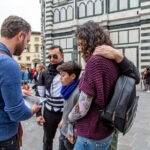
Then the tour ends at Santa Croce from the outside. You spend about 10 minutes looking at this Tuscan-Gothic church built in 1296. Even without interior entry, the context matters because Santa Croce is linked to tombs of major figures such as Michelangelo, Machiavelli, and Galileo.
This is a good landing point because it puts your last photos and your last bits of history in a single, recognizable place. You finish at Piazza di Santa Croce, right by Santa Croce church.
Price, timing, and group size: why this is a bargain if you want structure
The price listed for this 3-hour walk is $3, and that alone signals strong value. Most of what you are paying for is not just walking—it is a local professional English-speaking guide, skip-the-line Accademia tickets, and a small-group format with a maximum of 19 people.
At this duration, the tour is built for efficiency. One hour inside the Accademia, then a fast-moving loop of key exteriors and squares. If you are arriving with limited energy after travel, or you want a clean first-day overview, this pacing is a smart fit.
Just know where the time goes. Two indoor realities matter: the Accademia entry and the museum experience around David. Everything else is exterior-only viewing for the Duomo complex and Santa Croce, so you do not lose time in long lines inside churches.
Also, radio headsets are included depending on group size, which helps when the group expands. In a city where everyone is talking over everyone else, that is not a small thing.
What to wear and bring so Accademia security does not slow you down
Florence churches can be strict, and the tour follows those rules. You need appropriate clothing that covers your shoulders and knees. If you fail to comply, you might miss part of the tour.
Accademia has its own set of restrictions, and they are the kind that can ruin your morning if you show up unprepared:
- You cannot bring drinks into the Accademia Gallery. That includes cans and glass bottles.
- Only water up to 0.5 liters is allowed.
- Umbrellas must close; umbrellas that do not close are not allowed.
- There is no cloak room service, so larger items are not permitted. The limit given is 40x30x18 cm for bulky objects like large backpacks and luggage.
- If you are late, the tour still leaves on time. Accademia is strict with entrance times, and you do not want to gamble with that.
If you are traveling with kids: participants under 18 must show government-issued photo ID to get reduced entrance tickets for the Accademia Gallery. If they cannot prove age, there is a EUR 13 difference due on the spot.
The easiest approach: travel light, keep your plan simple, and think of this as a timed art mission, not a long wander.
Who this tour suits best (and who should skip it)
This is a great match if you are:
- Doing Florence for the first time and want your bearings fast.
- Interested in how art connects to politics and power, from David to Medici corridors.
- Traveling in a group size that stays manageable, where you can hear your guide without fighting the crowd.
It is also ideal when you want a guide to provide context on what you are seeing from the street. The Duomo complex and Santa Croce outside stops work best when someone frames what matters.
If your only goal is to rush straight to David and you plan to spend the rest of the day wandering on your own, you might feel the tour is too structured. There is also the small reality that security lines can still happen at Accademia even with reserved access.
Still, even with those caveats, the mix of David plus the major squares and bridges makes this a strong use of limited time.
Should you book this Florence David and highlights walk?
If you want a guided way to see the key Florence highlights in one half-day loop, I think this is worth booking. The value is strong for what you get: skip-the-line Accademia access, a curated set of major sights, and a small-group setup that keeps the experience focused.
I would book it especially as a first-day plan or as your backup strategy if you are worried about buying David tickets on your own. Just go in with realistic expectations about Accademia security checks, pack light, and dress for church stops.
If you hate group pace and you already know exactly what you want to see, you might be happier doing a self-guided day. But for most first timers, this is a clean, efficient way to start Florence with context, not confusion.
FAQ
How long is the walking tour?
The tour lasts about 3 hours.
What is the price?
The price is $3.
Where do I meet the guide, and where does the tour end?
You start at the equestrian statue of Cosimo I in Piazza della Signoria. The tour ends at Piazza di Santa Croce, in front of Santa Croce church.
What is the maximum group size?
The tour has a maximum of 19 travelers.
What’s included in the tour price?
Included are a local professional English-speaking guide, Accademia Gallery skip-the-line tickets, and radio headsets depending on group size. You also get a small-group experience (up to 19 travelers) and a mobile ticket.
Is Michelangelo’s David included, and do I get skip-the-line entry?
Yes. You enter the Galleria dell’Accademia to see Michelangelo’s David with skip-the-line tickets. Even with reserved entrance, there can be waits at the Accademia due to the security process using limited metal detectors.
Do we enter the Duomo dome or Santa Croce church?
No. The tour involves the Duomo complex and Santa Croce church from outside only.
Are there any clothing requirements for church stops?
Yes. Clothing must cover shoulders and knees. If you do not comply, you might miss part of the tour.
What are the Accademia Gallery rules for bags, umbrellas, and drinks?
You cannot bring drinks into the Accademia Gallery (including cans or glass bottles), and only water up to 0.5 liters is allowed. Umbrellas must close, and luggage or bulky items larger than 40x30x18 cm are not allowed. There is no cloak room service.
Is free cancellation available?
Yes. You can cancel up to 24 hours in advance for a full refund. If you cancel less than 24 hours before the start time, the amount paid is not refunded.
You Might Also Enjoy

More Walking Tours in Florence
More Tours in Florence
- The Best tour in Florence: Renaissance & Medici Tales – guided by a STORYTELLER
★ 5.0 · 12,316 reviews
More Tour Reviews in Florence
- Tuscany Day Trip from Florence: Siena, San Gimignano, Pisa and Lunch at a Winery
★ 5.0 · 21,634 reviews - The Best tour in Florence: Renaissance & Medici Tales – guided by a STORYTELLER
★ 5.0 · 12,316 reviews