REVIEW · FLORENCE
Medici Mile Walking Tour along the path of Medici Residences
Book on Viator →Operated by CAF Tour and Travel · Bookable on Viator
The Medici Mile is short and full. You’ll connect Florence’s big-name sights with a single theme: how the Medici family built power in plain view, then moved out of sight. I like that this route is walkable and focused, and that it keeps pointing you to the Vasari Corridor story at the right moments.
Two things really stand out for me: the sweep through the Duomo/Baptistery area and the way you trace the Medici’s presence from their early base to their later residences. One possible drawback to plan for is how the tour can feel crowded at squares and how some guides can be harder to follow if you’re not positioned well.
In This Review
- Key moments you’ll care about
- The Medici Mile: why this route matters
- Price and what you really get for $100
- Meeting point, timing, and how to keep up
- Language and communication
- From San Lorenzo to Piazza San Giovanni: Medici roots and the Duomo’s stage
- Piazza della Signoria and Santa Felicita: tracing power in public and secrecy
- Ponte Vecchio to the Medici garden phase: from city politics to leisure space
- Boboli Gardens upgrade: what to do with your skip-the-line ticket
- A real-world tip
- Palazzo Pitti upgrade: museums you can fit around your interests
- What the guide style can make or break
- Who should book this tour (and who might not)
- Should you book the Medici Mile Walking Tour?
- FAQ
- How long is the Medici Mile walking tour?
- Where does the tour start and end?
- Is the ticket mobile?
- Do I need to pay entry fees for the main stops?
- What do I get if I upgrade to Pitti Palace?
- What do I get if I upgrade to Boboli Gardens?
- Is there guided time inside Pitti Palace or Boboli Gardens?
- What languages are available?
- Can I cancel for a refund?
Key moments you’ll care about
- A “Medici Mile” that links monuments to family politics, not just photos
- Exterior tracking of the Vasari Corridor, including a viewpoint near Santa Felicita
- Duomo complex viewpoints in Piazza San Giovanni: Brunelleschi’s dome, Giotto’s bell tower, and the Baptistery
- Ponte Vecchio as the classic Florence divider between public city and Medici routes
- Skip-the-line upgrades for Boboli Gardens or Palazzo Pitti, with self-guided museum time
The Medici Mile: why this route matters
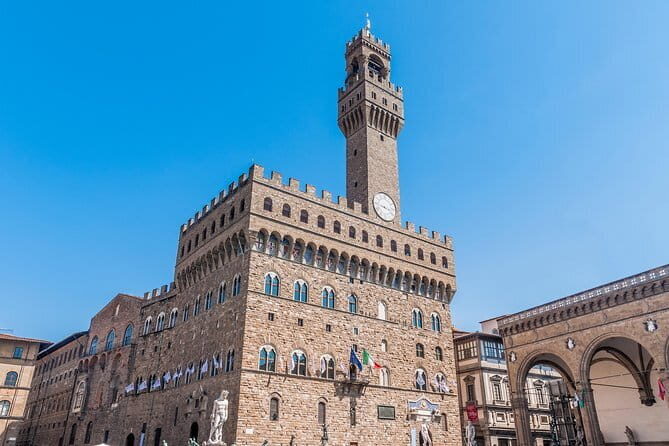
This is one of those Florence walks that makes the city feel organized. Instead of bouncing randomly between must-sees, the route follows the footprint of the Renaissance rulers who turned art, buildings, and public ceremony into political power.
What I like is that you’re not just looking at landmarks. You’re learning to read them. When you pass Palazzo Medici Riccardi in the San Lorenzo area, it helps you understand why the Medicis started where they did. Then you move outward toward the Duomo square and Piazza della Signoria, where Florence’s public face comes into view. By the time you get to the Vasari Corridor story, the tour turns into a lesson in control: how elite movement could be managed so regular citizens never had to see everything.
And yes, you’ll still see the headline sights. But the value is the connections you’re guided to notice.
You can also read our reviews of more walking tours in Florence

Price and what you really get for $100
At $100 for about 2 hours of guided time, you’re paying mostly for a local professional guide and for a structured route that saves you the guesswork. Many of the core stops along the walking portion don’t require paid entry, so your money mostly goes toward interpretation and timing.
Where the price can feel especially fair is if you choose an upgrade:
- If you select Pitti Palace, you get a skip-the-line ticket that lets you explore on your own, including the Palatine Gallery, Gallery of Modern Art, Museum of Fashion and Costume, and the Treasure of the Grand Dukes.
- If you select Boboli Gardens, you get a skip-the-line ticket that includes entrance at the Porcelain Museum and Bardini Gardens.
One practical note: the walk is guided, but the palace and/or gardens time is self-guided. That can be a plus if you want freedom, and a minus if you expected wall-to-wall narration inside the museums.
Meeting point, timing, and how to keep up
You start at Via de’ Martelli, 50, 50122 Firenze and finish at Palazzo Pitti, Piazza de’ Pitti, 1. It’s near public transportation, which matters because Florence can be a maze when you’re arriving between appointments.
This is a walking tour. Comfortable shoes are not optional. You’ll spend time in squares and around crowds, and that affects your experience more than the number on the itinerary.
Also, this tour maxes at 20 travelers. That’s good for atmosphere and makes it easier for a guide to keep eyes on the group. Still, crowds can make it hard to spot your guide. I suggest you treat the meeting point as your anchor: arrive a few minutes early, and keep your confirmation details on your phone so you can match up with the group quickly.
Language and communication
Depending on the time of year, you’ll have a monolingual guided visit (from April to October) or Spanish when the winter schedule runs and there are at least 4 participants (from November 1, 2024 to March 31, 2025). If you’re sensitive to audio or need clear volume, pick seating/positioning that puts you closer to the guide as you move.
From San Lorenzo to Piazza San Giovanni: Medici roots and the Duomo’s stage

Stop 1: Basilica di San Lorenzo
This is the Medici family church. Even if you only take in a short look, it sets the tone: you’re standing at a religious anchor tied to the family’s identity, not just another church façade photo.
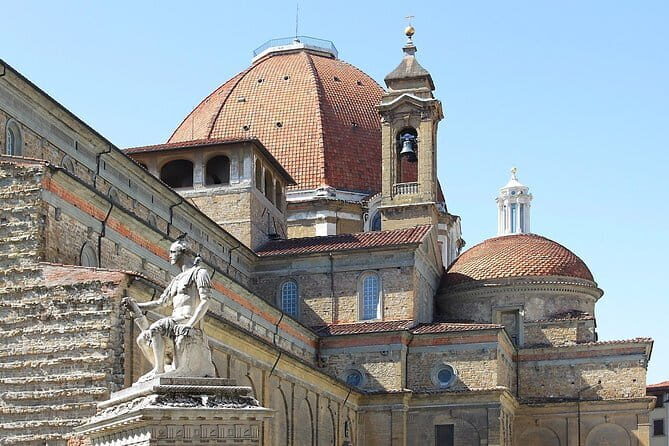
Stop 2: Cappelle Medicee
Next comes the Medici mausoleum area. In plain terms, it’s where the Medicis made a statement that outlasted politics: memory, burial, and legacy. Even if you don’t linger long, the stop helps you understand that their power wasn’t only about winning arguments in city hall.
Stop 3: Palazzo Medici Riccardi
This is where the story begins to feel architectural. As the first Medici residence in the San Lorenzo district, it’s the family’s early power center in stone. I like this stop because it makes you look at the building as a message—who lived here, who mattered, and why location mattered in Renaissance Florence.
Stop 4: Piazza San Giovanni
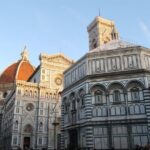
Here the tour shifts to Florence’s grand public stage: you admire the Cathedral (Duomo) complex, Brunelleschi’s dome, Giotto’s bell tower, and the Baptistery. This is the part that helps you understand why the Medicis needed both private influence and public spectacle. When you see these elements together from the square, Florence’s civic pride becomes obvious.
Practical drawback: this area is busy. Keep moving with the group so you don’t lose the narrative thread.
- Tuscany Day Trip from Florence: Siena, San Gimignano, Pisa and Lunch at a Winery
★ 5.0 · 21,634 reviews


Piazza della Signoria and Santa Felicita: tracing power in public and secrecy

Stop 5: Piazza della Signoria
This square is where you see Palazzo Vecchio, the second Medici residence mentioned on the route. It’s also a reminder that the Medicis didn’t just commission art and build prestige—they occupied the seats of authority.
What I find useful here is the transition: you go from the openness of the square to the idea that there were also routes designed to keep the elite out of sight.
Stop 6: Church of Santa Felicita
This is one of the most intriguing moments. From above, you can see the Vasari Corridor. The corridor is described as a secret, comfortable passageway used by the Medici Grand Dukes of Tuscany to move between Palazzo Pitti and their offices inside Palazzo Vecchio without being seen by citizens.
That last part changes how you look at the city. Suddenly, streets and rooftops stop being random. You start thinking about who could move freely, who had to stay visible, and how architecture supported control.
Ponte Vecchio to the Medici garden phase: from city politics to leisure space

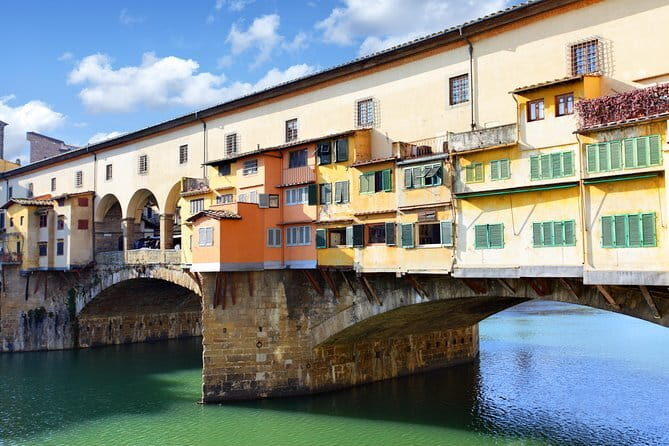
Stop 7: Ponte Vecchio
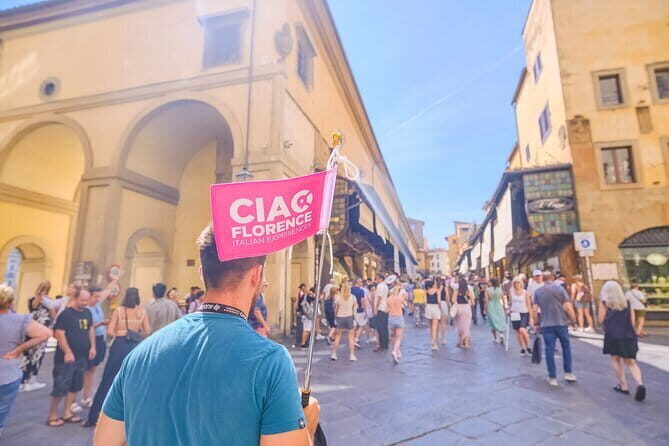
This is the oldest bridge in Florence and also the most famous. On a Medici-themed route, it works as a transition point. The bridge is public, obvious, and iconic—yet it sits near the idea of controlled movement that came right before.
The value here is perspective. When you’ve been tracking Medici power logic, Ponte Vecchio doesn’t just feel pretty; it feels like a hinge between everyday Florence and the elite routes nearby.
Boboli Gardens upgrade: what to do with your skip-the-line ticket
If you choose the Boboli Gardens option, you’ll get skip-the-line entrance and time to explore independently. The gardens are the grand-ducal garden of Palazzo Pitti, which makes them a logical next step: power doesn’t only show up in offices and churches. It shows up in curated nature, views, and controlled leisure.
The ticket details are specific. Your Boboli entry includes access at:
- the Porcelain Museum
- Bardini Gardens
Plan to spend about an hour or more, depending on how often you stop for views. If you like gardens but also want your visit to connect to the family story you’ve been hearing, this upgrade is a strong match.
A real-world tip
Double-check that your mobile ticket or booking confirmation actually includes the option you paid for. One traveler reported that Boboli Gardens tickets were missing due to an automatic reservation system malfunction. It’s rare, but it’s worth verifying before you walk into the line area.
Palazzo Pitti upgrade: museums you can fit around your interests
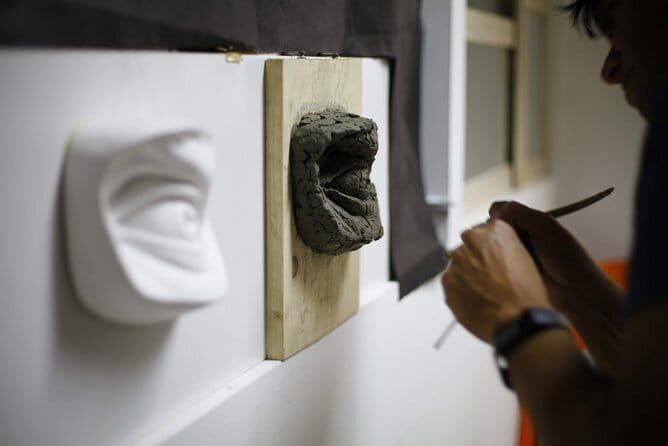
The Palazzo Pitti option is for people who want to linger. It’s the last Florentine residence of the Medicis, so it closes the loop of the route in a satisfying way.
Your skip-the-line ticket lets you explore on your own, including:
- Palatine Gallery
- Gallery of Modern Art
- Museum of Fashion and Costume
- Treasure of the Grand Dukes
Because the museum time isn’t guided, you’ll get the most out of it if you’re the type who likes choosing your own pace. I also like this option if you’re traveling with someone who wants museums but doesn’t want to be rushed along a script.
What the guide style can make or break
The route itself is solid, but your experience depends on the guide’s communication. The best versions of this tour tend to have guides who can explain the politics clearly and answer questions without making you feel cut off.
From the guide names shared in traveler feedback, I’ve seen strong results with people like Marta, Lisa, and Maria Cristina. When the guide is easy to hear and has a good rhythm, the Medici story clicks fast. When communication is tougher—too quiet, too fast, or hard to track in crowds—the tour can turn into a series of stops you recognize but don’t fully understand.
If you’re worried about audio, position yourself near the front and keep an eye out for your guide’s location when you reach plazas.
Who should book this tour (and who might not)
This tour is ideal if you:
- want a structured Florence walk with a single theme that ties big landmarks together
- love Renaissance stories where politics and art mix
- plan to upgrade with Boboli or Pitti so the end of the route matters
It’s less perfect if you:
- only want museum time with a guide inside every room (because the palace/gardens exploration is self-guided)
- struggle with busy squares and prefer quieter walking plans
- rely heavily on a clearly visible guide in crowds, unless you’re good at staying with the group
Should you book the Medici Mile Walking Tour?
Yes, I’d book it—especially if you’re the kind of traveler who likes Florence when it feels connected. The route gives you quick understanding fast: Medici foundations at San Lorenzo, the civic spotlight around Piazza San Giovanni and Piazza della Signoria, and the fascinating Vasari Corridor secrecy near Santa Felicita.
The smartest move: if you can spare the extra time, choose either Boboli Gardens or Palazzo Pitti so your day ends in the Medici world instead of just at a landmark.
If you do book, I’d also do one simple thing: confirm your upgrade is on your ticket before you go in. That small check can save you stress.
FAQ
How long is the Medici Mile walking tour?
It’s approximately 2 hours for the guided portion.
Where does the tour start and end?
The meeting point is Via de’ Martelli, 50, Firenze. The tour ends at Palazzo Pitti, Piazza de’ Pitti, 1, Firenze.
Is the ticket mobile?
Yes. The experience uses a mobile ticket.
Do I need to pay entry fees for the main stops?
The listed stops along the walking route are marked as free admission in the tour plan.
What do I get if I upgrade to Pitti Palace?
You receive a skip-the-line entrance ticket and can visit on your own the Palatine Gallery, Gallery of Modern Art, Museum of Fashion and Costume, and the Treasure of the Grand Dukes.
What do I get if I upgrade to Boboli Gardens?
You receive a skip-the-line entrance ticket, and it includes entrance at the Porcelain Museum and Bardini Gardens. You explore on your own.
Is there guided time inside Pitti Palace or Boboli Gardens?
No. The guided visit is for the walking route. The palace or gardens time is not described as guided.
What languages are available?
From April to October it’s a monolingual guided visit. From November 1, 2024 to March 31, 2025, Spanish is confirmed with a minimum of 4 participants.
Can I cancel for a refund?
Free cancellation is available. You can cancel up to 24 hours in advance for a full refund.
If you tell me your travel month and whether you’re considering Boboli, Pitti, or neither, I can help you choose the best option for your timing.
You Might Also Enjoy

More Walking Tours in Florence

More Tours in Florence
- The Best tour in Florence: Renaissance & Medici Tales – guided by a STORYTELLER
★ 5.0 · 12,316 reviews

More Tour Reviews in Florence
- Tuscany Day Trip from Florence: Siena, San Gimignano, Pisa and Lunch at a Winery
★ 5.0 · 21,634 reviews - The Best tour in Florence: Renaissance & Medici Tales – guided by a STORYTELLER
★ 5.0 · 12,316 reviews