REVIEW · FLORENCE
Florence: Renaissance City Walking Tour
Book on GetYourGuide →Operated by SLOW TOUR TUSCANY · Bookable on GetYourGuide
Florence on foot, with the art explained. This 1.5-hour tour strings together Uffizi courtyard area sights, the Piazza della Signoria, and the artisan lanes of Oltrarno like an open-air classroom. I love how it links each place to the people behind the Renaissance, from Dante to the Medici, and I also like that you’re not left guessing thanks to an expert guide who keeps the stories clear. The one catch is the walking: this is a fair amount of ground on old streets, so plan around it.
You start in the courtyard area tied to the Uffizi and Piazza della Signoria, then move past major power-and-art landmarks like Palazzo Vecchio and the Loggia dei Lanzi. I like that the tour includes an audio headset, so you can actually hear the guide on quieter corners and at viewpoints without turning into a human antenna. For $40 per person, you’re paying for interpretation plus a structured route that hits several top Renaissance scenes in a short window.
This tour is listed as wheelchair accessible, and it uses a guided pace rather than a free-for-all. Still, there are narrow alleys and cobbled bits, and it’s not set up for dragging along a suitcase—no luggage or large bags are allowed. Bring comfortable shoes, and think small bag only.
In This Review
- Key highlights worth looking forward to
- Starting at the Uffizi and Piazza della Signoria
- Piazza Santa Croce: the Renaissance stories under the church roof
- From the Vasari Corridor line to Ponte Vecchio’s goldsmith shops
- Oltrarno, S. Frediano, and Santo Spirito: artisan Florence in real life
- Via Tornabuoni, Piazza della Repubblica, and the Cathedral of Santa Maria del Fiore
- Value for $40: what you get in 90 minutes (and what you skip)
- What to bring, and how to keep the walk comfortable
- Who this Florence walking tour suits best
- Should you book this Florence Renaissance City Walking Tour?
- FAQ
- FAQ
- How long is the Florence Renaissance City Walking Tour?
- Where does the tour start?
- What landmarks are included on the route?
- Is the tour in English?
- What’s included in the price?
- Are refreshments included?
- Is this tour wheelchair accessible?
- What should I bring?
- Can I bring luggage or large bags?
- Is there free cancellation or a pay-later option?
Key highlights worth looking forward to
- Uffizi courtyard and Piazza della Signoria: You get the Florence “big stage” feeling right at the start, with landmarks that connect art to civic power.
- Palazzo Vecchio and Loggia dei Lanzi views: The tour points out why these works mattered to the Renaissance crowd.
- Santa Croce and the final resting places of Dante and Michelangelo: You’ll connect famous names to real stone and real place.
- Vasari Corridor exterior path to Ponte Vecchio: The bridge-and-goldsmiths area is a classic Florence moment, handled with context.
- Oltrarno with S. Frediano and Santo Spirito: Artisan shops, ancient tower houses, and a more local rhythm than the main tourist streets.
Starting at the Uffizi and Piazza della Signoria
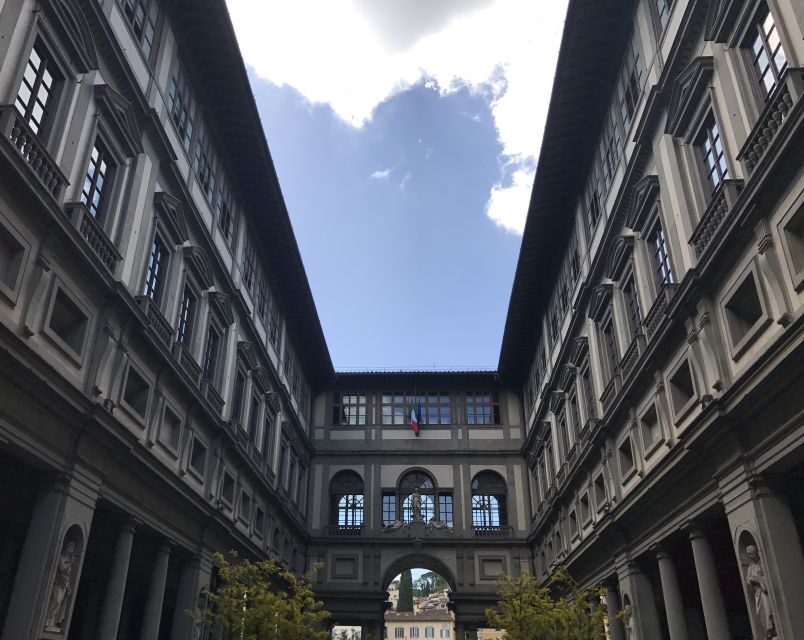
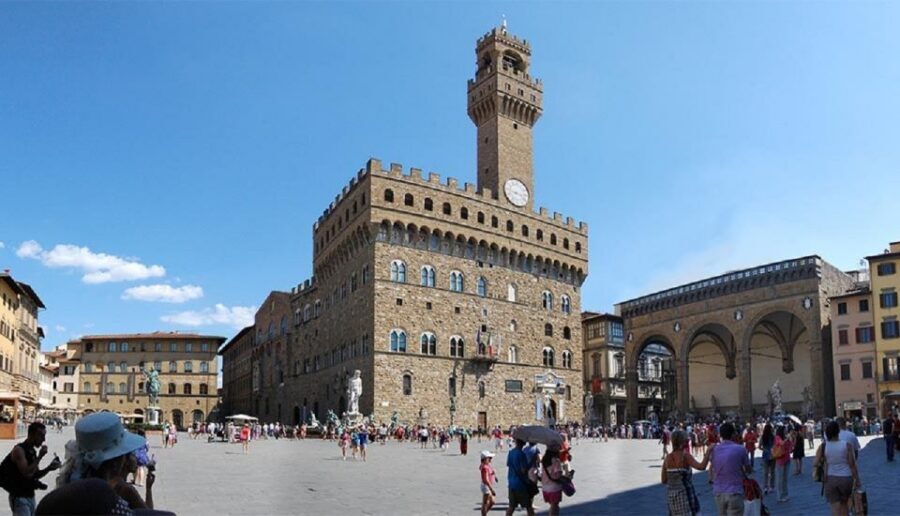
The tour begins in the courtyard area near the Uffizi Gallery and Piazza della Signoria, and that matters more than you might think. Starting here puts you right into the Renaissance mix of art, public life, and ambition, instead of having to scramble around later trying to connect the dots.
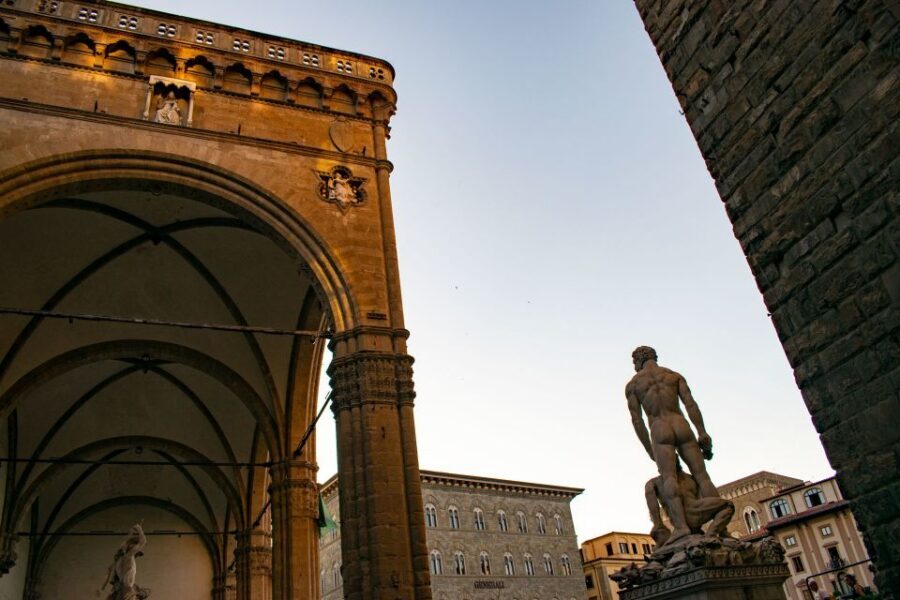
In this first stretch, you’ll take in Palazzo Vecchio and the Loggia dei Lanzi area. I like how the guide uses these landmarks as story anchors, so you’re not just collecting photos—you’re building a mental map for why Florence looked the way it did. With an audio headset included, you can keep your attention on the buildings and the street layout rather than chasing sound.
If you’re doing Florence for the first time, this opening also helps you understand the city’s “shape.” After just a short while, you’ll feel the logic of where you are relative to the big squares, the churches, and the walkable bridge zones. And if you’ve been staring at guidebooks all week, it’s a relief to have someone point your eyes in the right direction right away.
One practical tip: arrive ready for walking. Even early on, the streets can be narrow and the pacing expects you to move with the group.
You can also read our reviews of more walking tours in Florence

Piazza Santa Croce: the Renaissance stories under the church roof
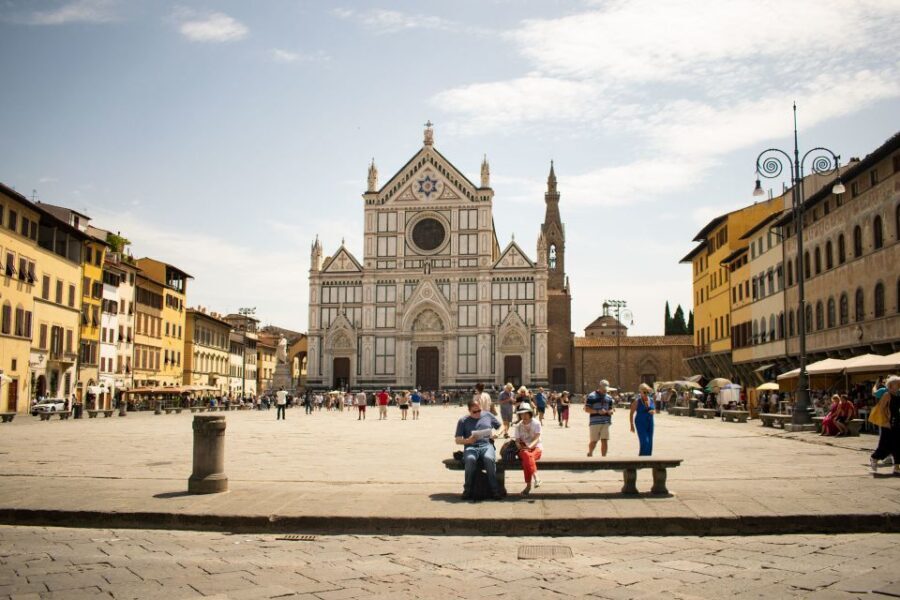
From the Signoria area, you head toward the renowned square of Santa Croce, and the vibe shifts quickly. The tour brings you into a place that’s famous for being both spiritual and deeply linked to the Renaissance’s famous names.
Santa Croce itself is described as a smaller version of Florence’s iconic Duomo, and the tour uses the church as a focal point for big Italian history. You’ll learn that it’s the final resting place of major figures including Dante Alighieri and Michelangelo. That’s the kind of detail that turns a church visit from pretty-and-passable into personal-and-meaningful.
What I like here is the way the guide ties individuals to the physical city. You’ll follow the trail of masters such as Dante, Michelangelo, and Leonardo da Vinci, so the Renaissance doesn’t stay trapped in books. Instead, you get a sense of how Florence celebrated genius in stone, ceremony, and memory.
There’s also a nice practical payoff at this stage. Santa Croce is in a square setting, which makes the transitions easier—less guesswork, more clear sightlines for the next leg. If you’re the type who likes to understand the “why” behind a landmark, this is one of the strongest parts of the route.
The main drawback, same as the whole tour: if you’re sensitive to longer walking and standing, pace yourself early. The tour is only 1.5 hours, but it’s still moving.
From the Vasari Corridor line to Ponte Vecchio’s goldsmith shops
Next comes one of the most Florence-feeling moments on the itinerary: the move from Ponte Vecchio area via the external path tied to the Vasari Corridor. Even though the corridor itself isn’t described as an interior visit here, the tour uses the corridor path as a “line in the city” concept—how power and patronage moved through Florence.
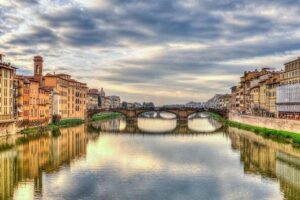
Then you reach Ponte Vecchio, described as a picturesque bridge with charming goldsmith shops. This is the part where your brain usually turns on the postcard filter, but a good guide keeps it grounded in context.
I like that the tour doesn’t just stop at the surface look of Ponte Vecchio. It frames the bridge area as part of Florence’s Renaissance story, not just a pretty photo spot. When you’ve already listened to connections around the Signoria and Santa Croce, the bridge feels like another page in the same book.
This stretch is also a good time to reset your attention. You’ll likely be walking a bit faster between points, and the bridge gives you a natural pause point where you can look up and around without needing to read a sign.
Wear shoes that you trust. This is a historic city, and Ponte Vecchio area streets and approaches can be uneven. Comfortable footwear is not a suggestion here—it’s the difference between enjoying the stops and counting down the minutes.
Oltrarno, S. Frediano, and Santo Spirito: artisan Florence in real life
After the big, famous landmarks, the tour turns toward the neighborhoods that feel more lived-in: Oltrarno, plus S. Frediano and Santo Spirito. This is where the experience becomes less about “top sites” and more about “how Florence behaves.”
You’ll pass through areas known for artisan shops and ancient tower houses. Those tower-house details matter because they hint at Florence’s older social rhythm—families, craft, and status written into architecture. The tour also describes this area as having an international flair mixed with local traditions, which is exactly the kind of contrast that keeps your walk from turning into a single-note sightseeing session.
This is also where I’d expect you to enjoy the tour most if you like street-level travel. Instead of every stop demanding your attention like a museum label, you get a sense of daily texture. The guide’s job becomes translating what you’re seeing into Renaissance and Medici-era context, and how it echoes in the neighborhoods around you.
One extra boost: in at least one recent run, the guide named Elisa was praised for showing the sights clearly, answering questions, and making the pace feel fun enough that people didn’t notice how far they walked. That kind of guiding style can make the difference between a tour that feels like homework and one that feels like you’re being let in on the city.
If you’re traveling solo, this neighborhood switch can also help you feel connected. You’re not just following landmarks; you’re experiencing a Florence “slice” that feels human.
Via Tornabuoni, Piazza della Repubblica, and the Cathedral of Santa Maria del Fiore
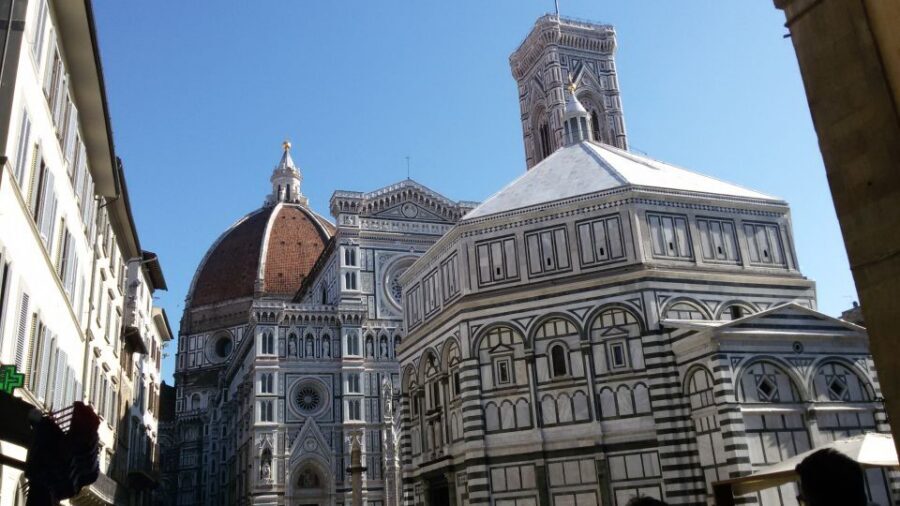
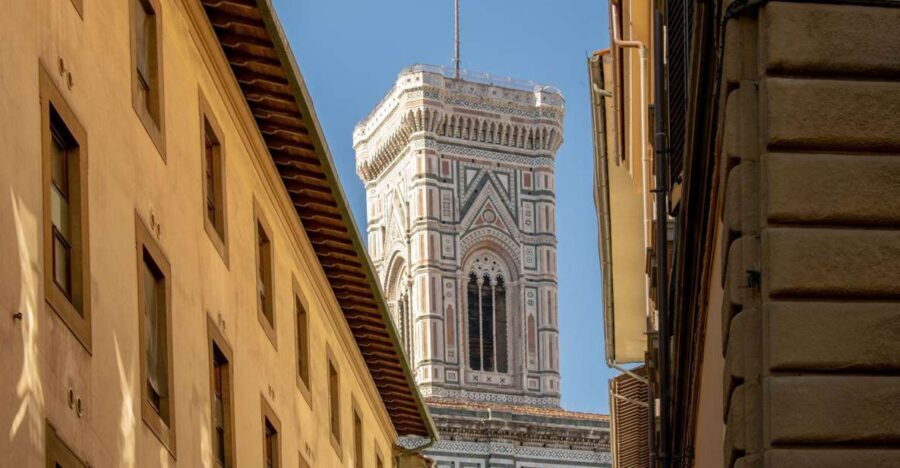
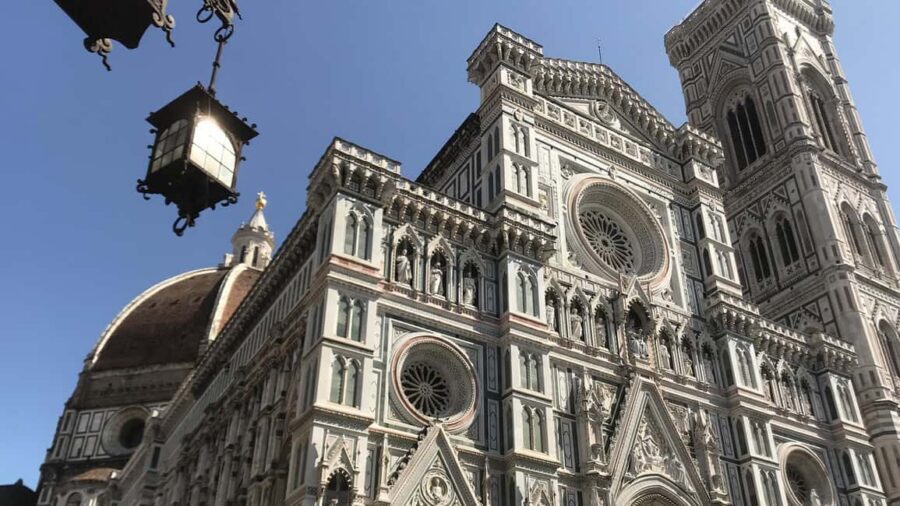
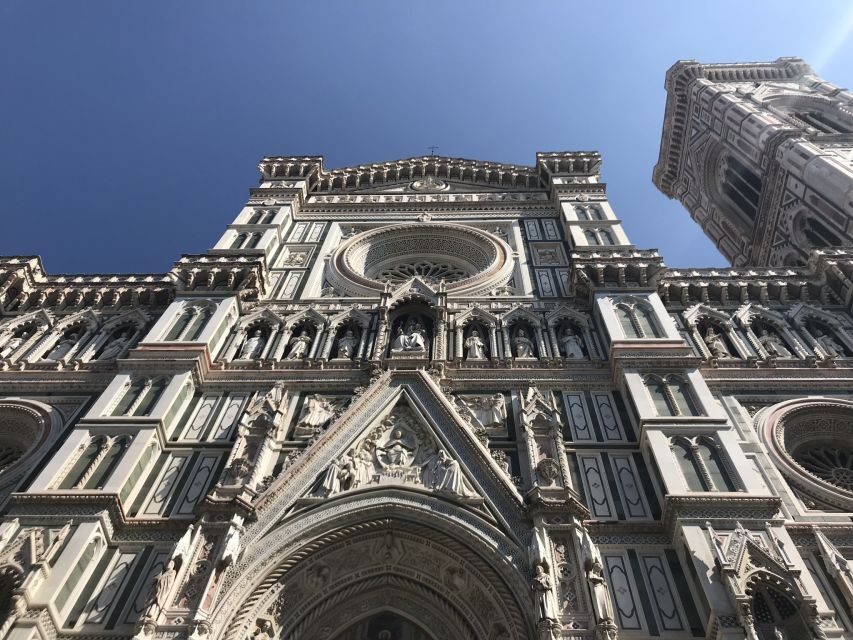
The route then moves from Ponte Santa Trinita to Via Tornabuoni, and you’ll stroll through Piazza della Repubblica before coming face to face with Santa Maria del Fiore, Florence’s Cathedral.
This last third is smart because it builds toward a big visual payoff. Early parts of the walk help you understand the Renaissance’s art-and-power framework, and then you see the cathedral once you already have that context in your head. The result is more than a photo moment—you’re seeing it as a centerpiece of Florence’s identity.
Via Tornabuoni and Piazza della Repubblica are described as part of the walk in between, which makes them useful in practice. They act like connective tissue: you’re not jumping directly from bridge-to-duomo without a breather. And you get to experience Florence in the “move-through” way, not just stationary looking.
A practical note for timing and energy: because the tour is only 1.5 hours, that finale can feel close together. If you want extra time at the cathedral viewpoint, arrive early to the start so you’re not already running out of steam.
You can also read our reviews of more city tours in Florence


Value for $40: what you get in 90 minutes (and what you skip)
At $40 per person for 1.5 hours, the value isn’t about squeezing in everything—it’s about guided meaning. You’re paying for a structured route that hits multiple heavyweight Renaissance nodes: Uffizi-area courtyards, Palazzo Vecchio and Loggia dei Lanzi, Santa Croce, the Vasari Corridor exterior path to Ponte Vecchio, Oltrarno/S. Frediano/Santo Spirito, and then the cathedral approach.
What you get included is straightforward:
- walking tour
- expert guide
- audio headset
What’s not included: refreshments. So if you’re the type who likes to buy a coffee halfway through, you’ll need to plan for it on your own.
I think the headset inclusion is quietly valuable. Florence streets can make it hard to hear, especially if you’re slightly off-center in a small group. With the headset, you can keep following the story without constantly turning your body to track the guide.
Also, consider the trade-off of a walking format. This is not presented as a sit-down museum visit. The tour is built around streets, squares, and viewpoints, and that’s a good thing if you like moving through a city rather than staying inside.
What to bring, and how to keep the walk comfortable
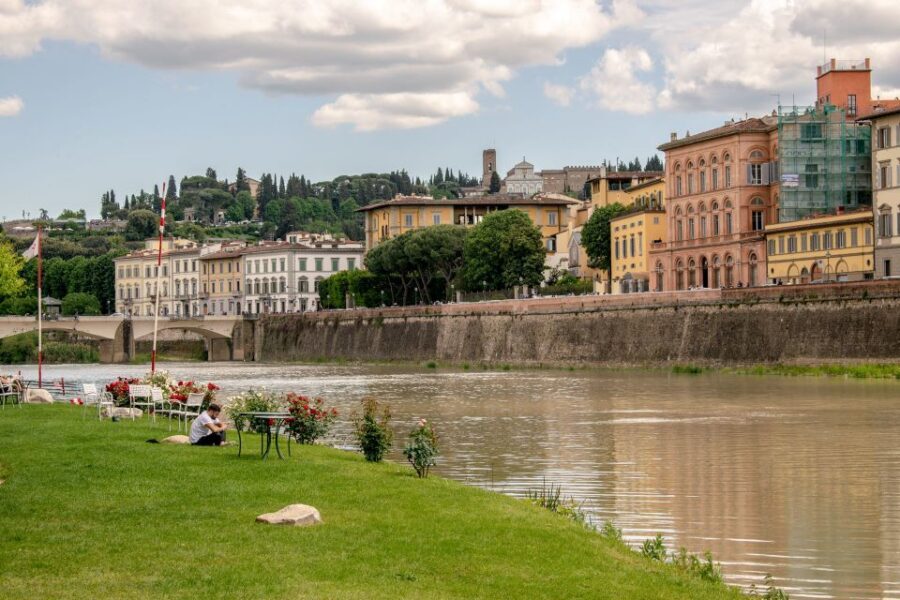
This tour asks for comfortable shoes, and I agree. You’re walking through narrow lanes and famous squares, so don’t bring the “pretty but questionable” footwear.
Bring a small, day-size bag. Luggage or large bags aren’t allowed, so it’s better to travel light. If you’re coming from another stop in the city, plan to store luggage somewhere else and arrive with only what you truly need for 90 minutes.
English is the language, and the guide is live. That matters for comprehension—Renaissance Florence is packed with names and connections, and the guide’s explanations are part of the product, not an optional extra.
Who this Florence walking tour suits best
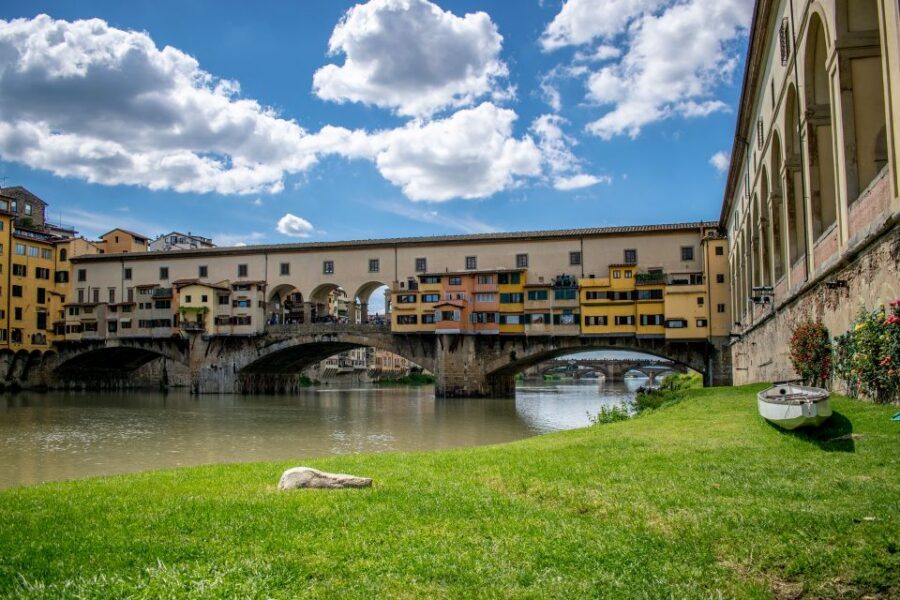
This is a great fit if you want an intro to Renaissance Florence with a clear storyline. The itinerary follows the trails of major figures such as Dante Alighieri, Michelangelo, and Leonardo da Vinci, and it highlights the Medici family’s influence. If those names mean something to you already—or you’re hoping to understand why they matter—this tour will feel like it has a point.
It also fits travelers who like “street Florence.” The switch into Oltrarno, and the specific mention of S. Frediano and Santo Spirito, is a strong clue that the guide wants you to see more than just the usual monument parade.
It may be less ideal if you:
- can’t handle a fair amount of walking
- need to bring luggage or large bags
- want refreshments provided as part of the tour
Should you book this Florence Renaissance City Walking Tour?
Book it if you want a time-efficient way to connect the biggest Florence Renaissance landmarks without turning it into a rushed self-guided scavenger hunt. The included audio headset plus an expert English guide makes the route feel organized, and the stops are chosen to tell a story: art and civic power, major tombs at Santa Croce, the Ponte Vecchio area via the Vasari Corridor path, then a neighborhood walk through Oltrarno and onward to the cathedral.
Don’t book it if walking a fair amount in old streets sounds like misery. This is 1.5 hours, but it’s still active travel. If you’re comfortable on your feet and you like explanations you can actually hear, it’s a smart use of your time.
FAQ
FAQ
How long is the Florence Renaissance City Walking Tour?
The tour duration is 1.5 hours. Starting times vary, so you’ll need to check availability for the schedule.
Where does the tour start?
It begins in the courtyard of the Uffizi Gallery and the Piazza della Signoria area.
What landmarks are included on the route?
You’ll pass the Uffizi Gallery, Piazza Santa Croce, the Oltrarno district, and key sights along the way. The route specifically mentions Palazzo Vecchio and the Loggia dei Lanzi, Santa Croce, the external path of the Vasari Corridor to Ponte Vecchio, Ponte Santa Trinita, Via Tornabuoni, Piazza della Repubblica, and the Cathedral of Santa Maria del Fiore.
Is the tour in English?
Yes. The live tour guide is English, and the listed language is English.
What’s included in the price?
The included items are the walking tour, an expert guide, and audio headset.
Are refreshments included?
No. Refreshments are not included.
Is this tour wheelchair accessible?
Yes, it is listed as wheelchair accessible.
What should I bring?
Bring comfortable shoes, since the tour involves a fair amount of walking.
Can I bring luggage or large bags?
No. Luggage or large bags are not allowed.
Is there free cancellation or a pay-later option?
Yes. You can cancel up to 24 hours in advance for a full refund. You can also reserve now and pay later, with the option to book your spot and pay nothing today.
You Might Also Enjoy

More Walking Tours in Florence


More Tours in Florence
- The Best tour in Florence: Renaissance & Medici Tales – guided by a STORYTELLER
★ 5.0 · 12,316 reviews



More Tour Reviews in Florence
- Tuscany Day Trip from Florence: Siena, San Gimignano, Pisa and Lunch at a Winery
★ 5.0 · 21,634 reviews - The Best tour in Florence: Renaissance & Medici Tales – guided by a STORYTELLER
★ 5.0 · 12,316 reviews