REVIEW · FLORENCE
Florence: Skip-the-Line Uffizi Gallery Small Group Tour
Book on GetYourGuide →Operated by CAF Tour & Travel · Bookable on GetYourGuide
Art without the line starts with one key choice.
This Florence Uffizi Gallery tour is built for people who want skip-the-line ease and a smart, guided route through a museum that can otherwise swallow your whole day. You’ll step into the 16th-century Vasari building, see the standouts up close, and get help turning art history into something you can actually remember.
What I like most: you get guaranteed entry time and your ticket is handled for you at the meeting point, so you’re not stuck at the ticket counters. And the guide-led focus on Renaissance masterpieces (especially Birth of Venus and Primavera) makes the famous paintings feel less like names on a wall and more like ideas, symbols, and stories you can follow.
The main thing to consider is the clock: the guided portion is only 1 to 1.5 hours, and later entry times can feel time-compressed because the museum sets firm exit rhythms.
In This Review
- Key Reasons This Uffizi Tour Makes Sense
- Why the Uffizi Feels Different With a Local Guide
- Entering the Uffizi Without Ticket-Counter Stress
- The Masterpieces Route: Botticelli, Michelangelo, Da Vinci
- Botticelli’s Birth of Venus and Primavera
- Other big names on your path
- Inside the Uffizi’s Vasari Building: More Than a Backdrop
- How the Guided Time Works (and How Not to Feel Rushed)
- The Uffizi Terrace: Your Florence Reward
- Small Group Size and Headsets: Why It Matters
- Price and Value: Is $75.90 Worth It?
- Who This Tour Is For
- Should You Book This Uffizi Skip-the-Line Tour?
- FAQ
- How long is the Uffizi skip-the-line tour?
- What group size is this tour?
- Do I need to buy tickets in advance?
- Which languages are available?
- What famous artworks will we see?
- Is there a free-entry option on any day?
- What items are not allowed?
Key Reasons This Uffizi Tour Makes Sense
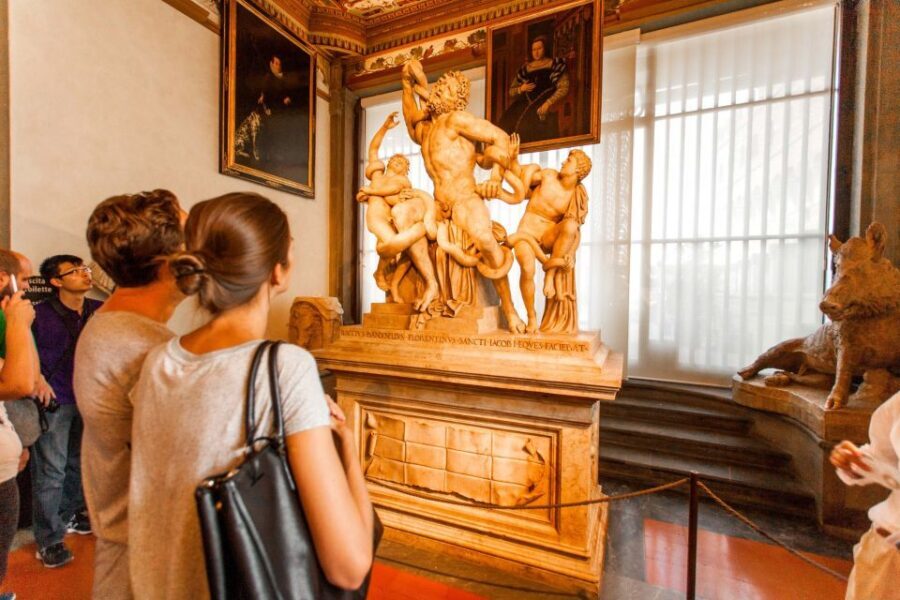
- Skip-the-line with guaranteed museum entry time, plus a reserved slot
- Small group of up to 9 people with headsets, so you can hear the guide
- Botticelli focus on Birth of Venus and Primavera, with symbolism explained
- Uffizi in Giorgio Vasari’s 16th-century building, not just a random museum stop
- Uffizi Terrace included after the guided visit for a rewarding Florence view
- Built-in pacing for seeing the essentials without trying to do everything at once
Why the Uffizi Feels Different With a Local Guide
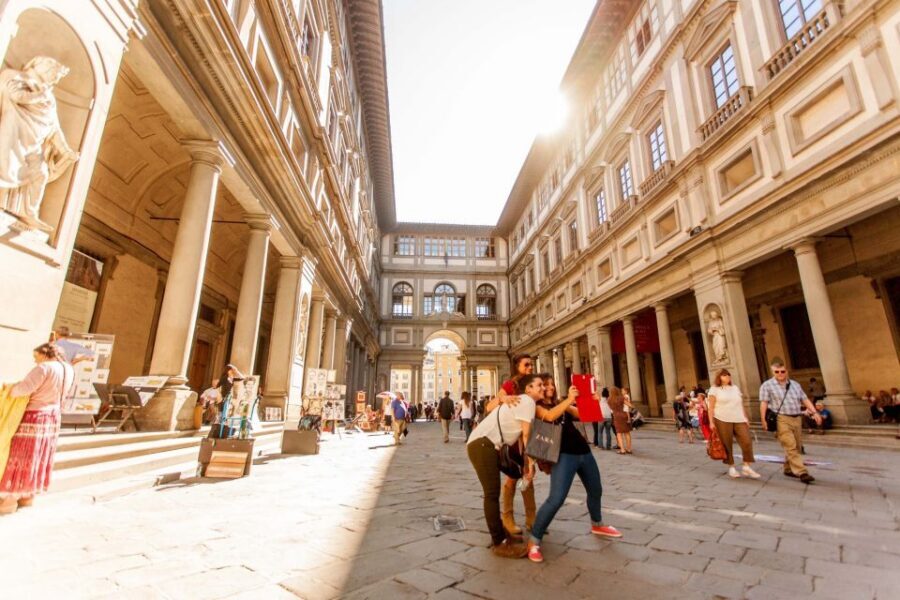
The Uffizi is one of those places that looks simple on paper—go in, look at paintings, leave happy. In real life, it’s huge, and your attention gets dragged in a dozen directions. A local guide helps you “read” the collection instead of just glancing at it.
I like that the guide doesn’t treat this as a checklist. The tour is designed as a story with stops that connect—Renaissance painters, the meaning behind the images, and why certain works became so influential. In the guided sessions I’ve seen described (including guides like Patrizia Ghiribelli and Antonio), the best tours use anecdotes and practical art cues so you notice things you’d otherwise miss.
You’ll also get a more manageable mental framework for what you’re seeing. For example, the tour highlights the Renaissance idea that beauty could point to spiritual purity—especially in the way Birth of Venus is presented. That kind of context turns a famous image into something with stakes, not just an iconic face.
You can also read our reviews of more museum experiences in Florence

Entering the Uffizi Without Ticket-Counter Stress
This is where the value shows up fast. You’re paying for more than words from a guide; you’re paying for a smoother entry process.
Here’s what that looks like on the ground: you meet at a check-in point near the museum (the exact location can vary by option). Your assistant then delivers your entrance ticket directly at the meeting point, in front of the museum. That matters because it cuts out the most painful part of museum mornings and afternoons: standing in a line that doesn’t move like you want it to.
Security rules are also part of the experience you should plan around. The tour doesn’t allow pets, and it also prohibits luggage or large bags. If you travel with a big daypack, be prepared to travel light so you don’t get snagged at security and lose precious minutes.
One more practical point: arriving late isn’t a small inconvenience here. You must arrive at the meeting point at the stated check-in time. If you’re delayed, you may not be able to join, and there’s no refund or reschedule for the guided visit. I’d rather you overestimate your walking time and get there early with time to spare.
The Masterpieces Route: Botticelli, Michelangelo, Da Vinci
The tour is organized around major Renaissance names, but it puts extra attention on Botticelli—right where most first-timers want their focus.
Botticelli’s Birth of Venus and Primavera
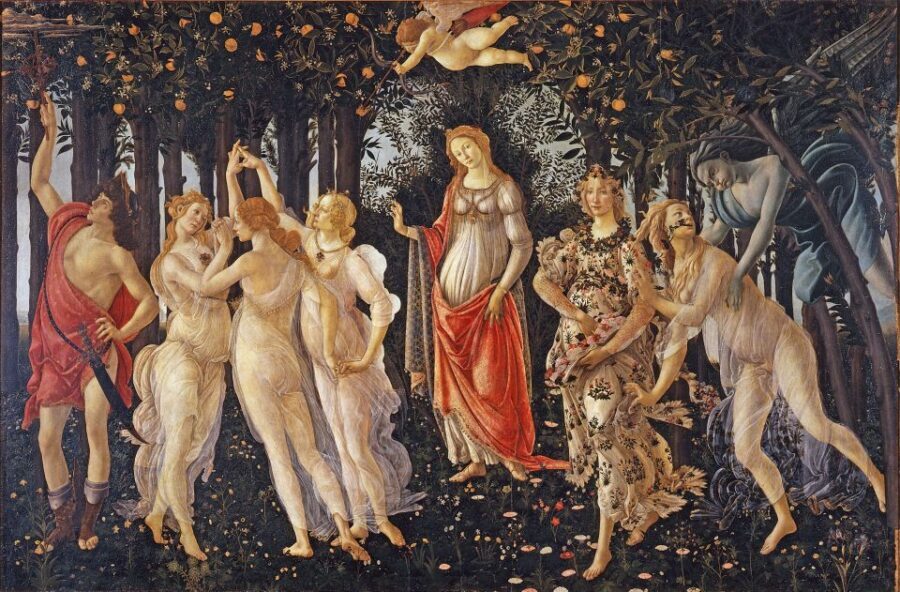
The highlight is Birth of Venus, described as the goddess emerging from the sea foam. The tour frames it through Renaissance Neoplatonic thinking—how beauty was often treated as a sign of spiritual essence and purity. That’s a big interpretive leap from just seeing a painting to understanding what Renaissance viewers were meant to feel.
And you’ll also get to Primavera. Even if you don’t consider yourself a “symbol person,” this is exactly the kind of artwork that benefits from a guided explanation. A good guide points out cues you’d miss: how figures relate to each other, what the imagery suggests, and why Botticelli’s choices mattered to the time.
Other big names on your path
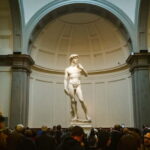
You should expect stops tied to Michelangelo, Giotto, and Leonardo da Vinci as part of the guided program. The tour aims to cover the central masters without turning your visit into a sprint through every room.
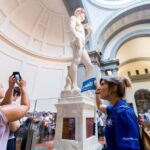
What helps: headsets. With a small group and headset audio, you’re not constantly trying to hear over crowds or from the back of the line. It makes the explanations easier to follow, especially if you want to ask a question or simply keep up with the guide’s pace.
You can also read our reviews of more tours and experiences in Florence


Inside the Uffizi’s Vasari Building: More Than a Backdrop
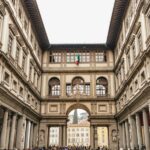
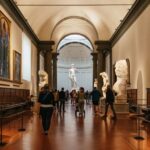
This museum isn’t just a box for art. You’re visiting a beautiful building designed by Giorgio Vasari, dating to the 16th century. That matters because architecture affects how you move and how rooms feel—especially in a place with dense collections and constant foot traffic.
What you’ll notice right away is how the building helps shape the flow of the visit. A guided tour uses that flow to keep you oriented, rather than leaving you to wander corridors that all start to look alike after a while.
I also appreciate that the tour doesn’t pretend you can see everything in a short window. It uses the space as part of the story and gives you a reason to pause at the most important works.
How the Guided Time Works (and How Not to Feel Rushed)
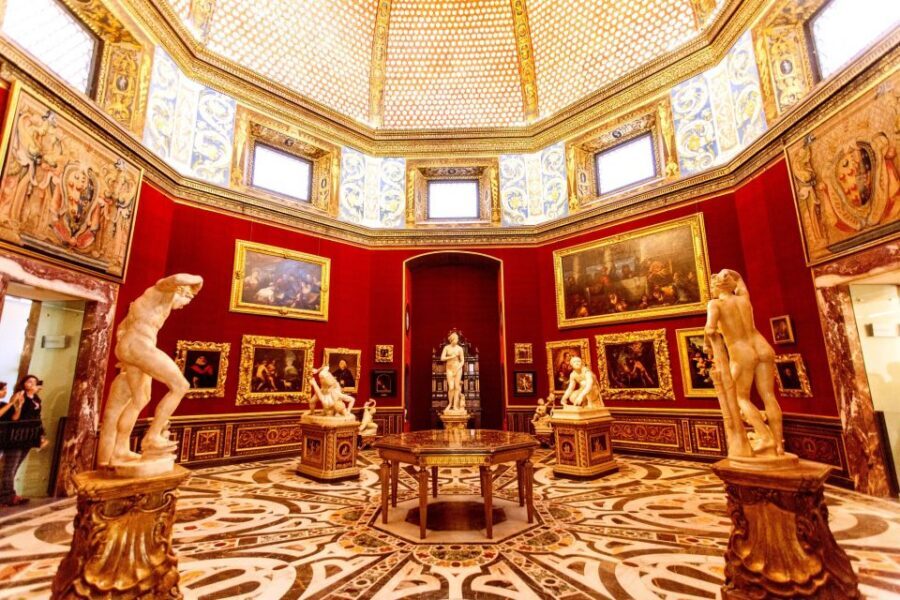
The tour runs 1 to 1.5 hours, which is a sweet spot if you want the headline masterpieces and a grounded explanation without spending your entire day inside.
Here’s the rhythm you can expect:
- You enter as a group at your reserved time
- You follow your local guide through selected highlights and major rooms
- You get headset audio and a planned route so you don’t bounce randomly
- After the guided part, you head to the Uffizi Terrace
- Then you explore the museum area at your own pace
That last piece is important. A guided tour can make you fall in love with a particular artist or theme, and you’ll have just enough freedom to go back and look again with fresh eyes.
The potential downside is timing pressure. One note to take seriously: in later time slots, the museum’s exit rules can limit how long your group stays. In other words, you might walk in ready to linger, and then you’re guided toward leaving when the staff schedule requires it. If you hate feeling rushed, choose an earlier departure time when you can.
The Uffizi Terrace: Your Florence Reward
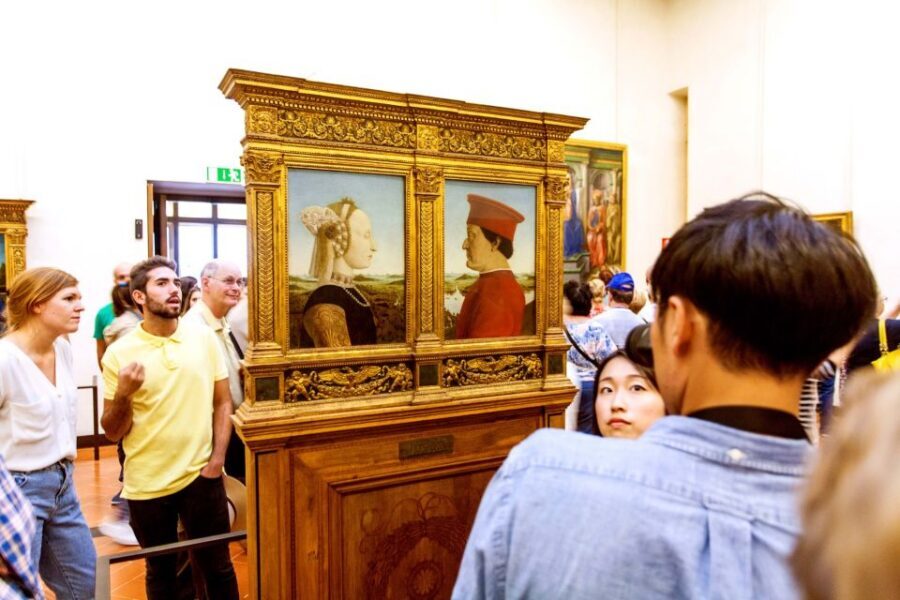
The best part of many museum visits is the moment your brain stops reading labels and starts looking outward.
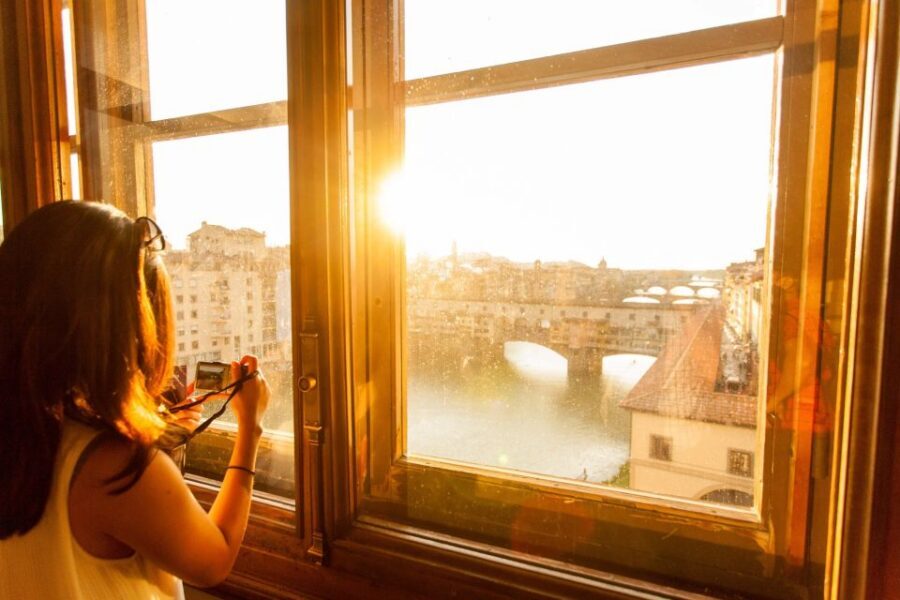
After the guided tour, you’ll go to the Uffizi Terrace for an exclusive view of Florence’s landmarks. I like this step because it “resets” your eyes. You come from paintings that are full of symbols and historical references, then you look at the city itself and it clicks—Florence wasn’t just a backdrop for Renaissance art. It was the stage.
It’s also a great photo pause that doesn’t require you to hunt for a separate viewpoint. If you’re doing other stops that day, this terrace moment gives you a tidy payoff right when you’re most likely to remember the experience.
Small Group Size and Headsets: Why It Matters
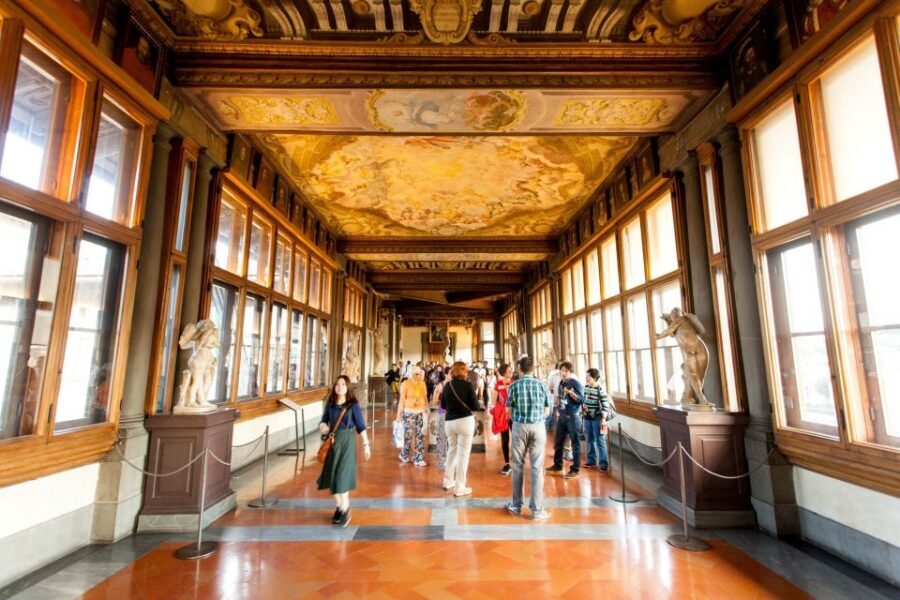
Small groups change the whole feel of a museum tour. With a limit of 9 participants, you get less crowd friction and better chances to hear the guide’s explanations without craning your neck all the time.
Headsets are another practical win. They keep the guide’s voice clear even when the room gets busy. That matters at the Uffizi, where the most popular rooms can feel like a slow-moving crowd. You can actually focus on the art and not just on noise control.
Also, small-group formats often make it easier for guides to adapt to the group’s energy. I’ve seen guides described as attentive to different ages and needs, which is a good sign if you’re not traveling with hardcore art history nerds but still want a meaningful experience.
Price and Value: Is $75.90 Worth It?
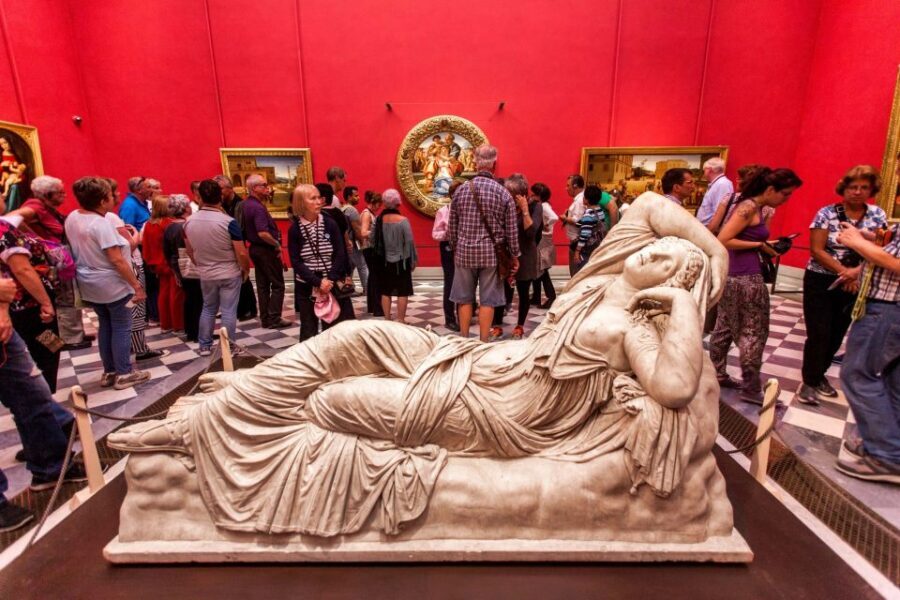
At $75.90 per person, this tour isn’t cheap, but it’s also not priced like a luxury add-on. The value is in what’s included and what it prevents.
What you’re paying for:
- Entrance ticket and reservation fee
- Guaranteed museum entry time
- A professional local guide with small-group pacing
- Headsets
- Ticket handling delivered at the meeting point (so you don’t hunt or queue)
If you’ve ever arrived at a major museum ready to see art and then lost time waiting for tickets, you already understand why skip-the-line products can be worth it. Here, you’re buying back time and reducing stress while still getting a guided narrative.
When it might not be worth it:
- If you’re traveling with a super flexible schedule and want to go at your own pace for several hours
- If you’re aiming to catch the first Sunday free entry rule (more on that below), where booking isn’t possible and entry can be uncertain
Who This Tour Is For
This tour works best if you fall into one of these groups:
- You want the Uffizi highlights in a short time window and don’t want to plan a whole route yourself
- You appreciate expert explanations of symbolism and context for famous works
- You’re traveling with mixed art interests—someone may care about Botticelli, someone else wants Da Vinci, and you can satisfy both in one guided loop
- You like the idea of a small group with headsets rather than a crowded scramble
If your priority is to study every painting slowly, you might need more time than the guided window provides. In that case, you may be better off with a longer independent plan and add a shorter paid guide elsewhere (or just accept that you’ll only see some of the Uffizi well in one visit).
Should You Book This Uffizi Skip-the-Line Tour?
Yes, I’d book it if you want a smart Florence art experience that doesn’t eat your whole day. The guaranteed entry time plus ticket handling is the practical engine here, and the guide-led focus on Birth of Venus and Primavera is what turns it from basic sightseeing into something you’ll remember.
Before you click confirm, do three things:
- Pick an earlier time slot if you tend to feel rushed later in the day.
- Bring comfortable shoes and keep your luggage/large bag plan simple to match security rules.
- Make sure you’ll arrive at the meeting point on time, because late arrivals can mean you miss the guided visit.
If you’re in Florence for a limited number of hours, this is one of the easiest ways to get the Uffizi essentials with less hassle and more meaning.
FAQ
How long is the Uffizi skip-the-line tour?
The tour lasts about 1 to 1.5 hours. Starting times vary, so you’ll need to check availability for the exact slot.
What group size is this tour?
It’s a small group limited to 9 participants.
Do I need to buy tickets in advance?
The entrance ticket and reservation fee are included. Your ticket is delivered directly at the meeting point in front of the museum by an assistant.
Which languages are available?
Live guided service is available in Spanish and English, and your specific language may vary depending on operational reasons. From November 1st, 2024 to March 31st, 2025, Spanish is confirmed with a minimum of 4 participants.
What famous artworks will we see?
The tour includes Renaissance highlights and focuses on works such as Botticelli’s Birth of Venus and Primavera, along with other masters like Michelangelo, Giotto, and Leonardo da Vinci.
Is there a free-entry option on any day?
Yes. On the first Sunday of each month, entrance is free of charge, but tickets can’t be reserved ahead of time, so entry isn’t guaranteed.
What items are not allowed?
Pets are not allowed, and luggage or large bags are not allowed.
You Might Also Enjoy


More Museum Experiences in Florence

More Tours in Florence
- The Best tour in Florence: Renaissance & Medici Tales – guided by a STORYTELLER
★ 5.0 · 12,316 reviews




More Tour Reviews in Florence
- Tuscany Day Trip from Florence: Siena, San Gimignano, Pisa and Lunch at a Winery
★ 5.0 · 21,634 reviews - The Best tour in Florence: Renaissance & Medici Tales – guided by a STORYTELLER
★ 5.0 · 12,316 reviews