REVIEW · FLORENCE
Florence walking guided tour with Uffizi & Accademia
Book on Viator →Operated by Paola Migliorini · Bookable on Viator
Florence can feel like a maze at first. This guided walking day turns the maze into a story, pairing Accademia and Uffizi with big-picture stops around the historic center. You’ll walk through the streets that made the Renaissance possible, then hit the museums where the artwork still shocks people into silence.
I especially like the way the day is built around two Michelangelo-and-Renaissance anchors: Michelangelo’s David at Galleria dell’Accademia and the painting heavyweights of Uffizi. Second, I like that it’s a private tour at a group price scale, so you get real guidance (not just a checklist) while still moving efficiently through the city.
One consideration: most of the big-ticket items are timed and admission-based, and entrance fees are not included, plus museum entry can mean queue pressure. Even the free Duomo interior depends on what the line looks like when you arrive, so the tour is best when you’re flexible about timing.
In This Review
- Key things I’d plan around
- Why this Florence tour clicks: two museums + a walk you can follow
- Meeting at 9:00 and how a private group of up to 15 plays out
- Accademia: going straight to David and the Michelangelo effect
- Palazzo Medici Riccardi (from the outside): Renaissance power in stone
- Duomo time: Santa Maria del Fiore, free entry, and the queue reality
- Piazza della Repubblica: the old forum vibe, with modern café life
- Piazza della Signoria: open-air museum square and the energy of the center
- Uffizi Gallery for 3 hours: how to survive painting overload
- Licensed guide impact: the difference between seeing art and understanding it
- Price and value: $820.61 per group, and where the real costs are
- What to bring (and what to plan for in Florence peak conditions)
- Who should book this tour
- Should you book Florence walking guided tour with Uffizi & Accademia?
- FAQ
- FAQ
- How long is the Florence walking tour with Uffizi & Accademia?
- What time does the tour start?
- Is this tour private or shared?
- Is pickup included?
- Are entrance fees included for the museums and cathedral?
- What language is the tour offered in?
- Are tickets mobile?
Key things I’d plan around
- David at Accademia first: you get the Michelangelo moment early, when your brain still has energy
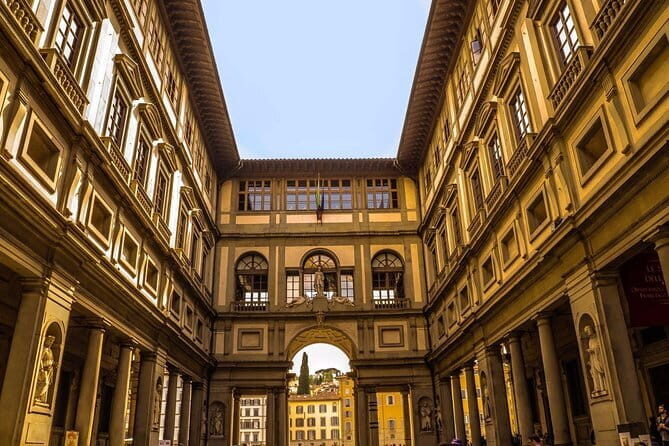
- Three focused hours at Uffizi: enough time for major works without feeling like you’re speed-running
- Classic Florence walking rhythm: Duomo views, Piazza della Repubblica, and Piazza della Signoria in one logical loop
- Licensed guide storytelling: you’ll understand what you’re looking at, not just where it is
- Pickup and small private group feel: up to 15 people, but only your group participates
Why this Florence tour clicks: two museums + a walk you can follow
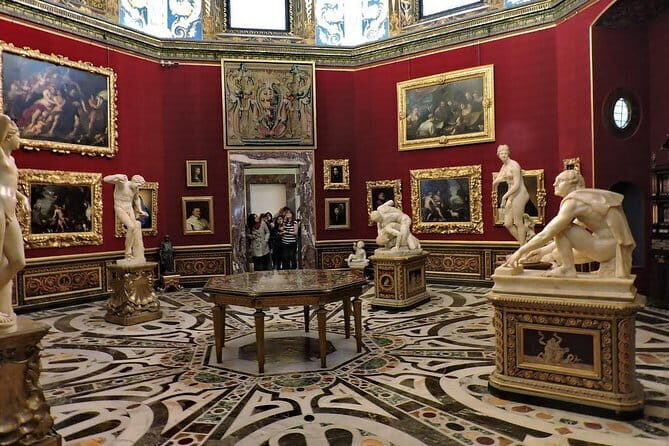
A single museum day in Florence can be overwhelming fast. This tour gives you a scaffold: you start with sculpture at Accademia, then shift to painting at Uffizi, and you keep connecting the art to the streets outside.
The payoff is practical. When you’re standing in front of David or a Botticelli or Raphael, you’re not doing guesswork. Your guide helps you connect the work to Florence’s political power, religious identity, and the kind of patronage that funded this stuff in the first place.
And because it’s a walking guided tour, you don’t just consume art inside walls. You also get the feel of the city between stops: stone façades, piazzas that still function like gathering rooms, and the urban layout that shaped how people moved and met.
You can also read our reviews of more walking tours in Florence

Meeting at 9:00 and how a private group of up to 15 plays out
The tour starts at 9:00 am and runs about 7 hours. That early start matters because Accademia and Uffizi can get crowded, and your guide needs time to manage pacing so you’re not always rushing.
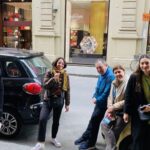
This is a private tour/activity with only your group participating, with a max size of up to 15. In real terms, that group size is large enough to feel social, but small enough that you can still ask questions and get attention when you need it.
You’re offered pickup, and the meeting point is near public transportation. Pickup can be a big win if you’re staying outside the main walking zones or if you’re arriving from somewhere like a cruise terminal and want a stress-free handoff. Just plan that you may still walk a fair bit, since the tour is designed around getting around Florence on foot.
Accademia: going straight to David and the Michelangelo effect
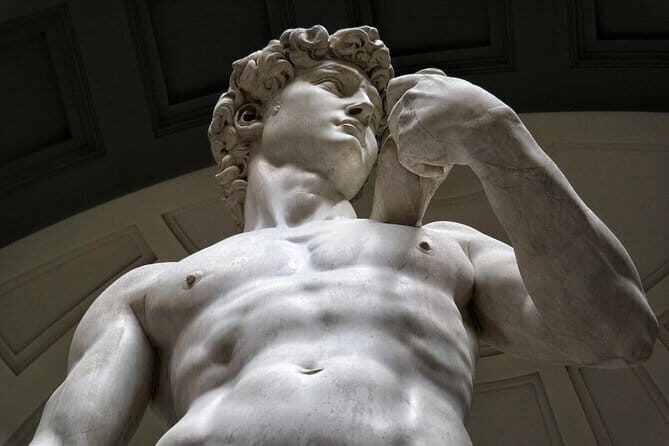
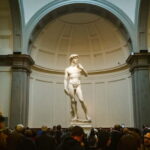
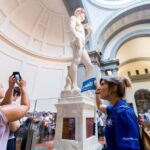
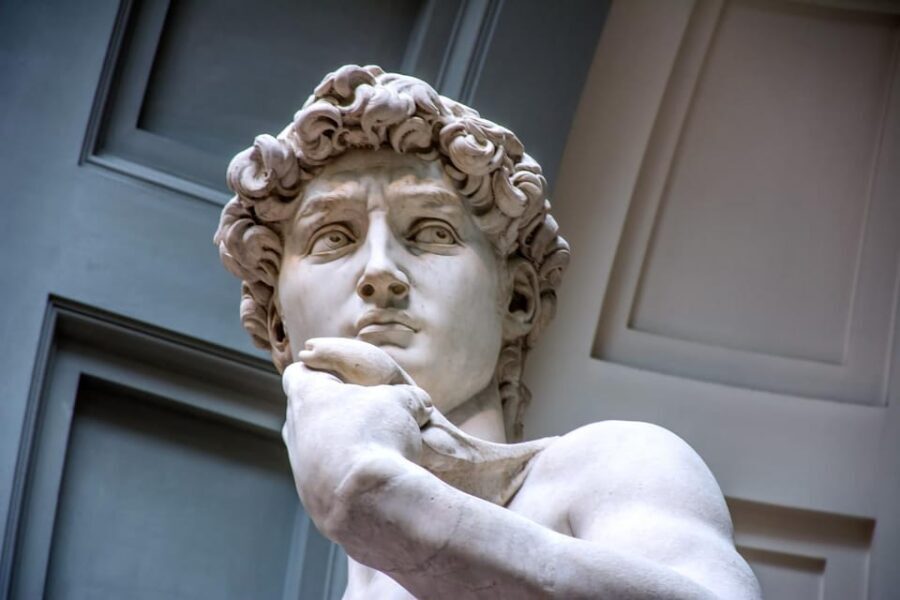
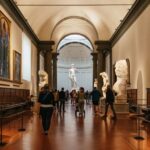
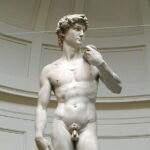
Stop 1 is Galleria dell’Accademia with about 1 hour 30 minutes inside. This is where you get the Michelangelo concentration everyone talks about, and yes, David is the headline—but the guide helps you look at it like a sequence, not a single photo spot.
What you should expect:
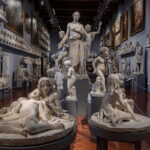
- You’ll be guided through the sculpture galleries with context tied to Michelangelo’s choices and the way this collection is arranged.
- You’ll likely spend enough time at the iconic David moment to actually take it in, not just glance and move on.
A small logistical note: the tour’s museum admission is not included, so you’ll pay for entry on your side. I recommend you budget for both museums early in your planning, because it’s easy to forget once you’re focused on the walk.
Also, if you’re the kind of person who likes to see the room before the highlight, this first stop can still work well. Going early means you’re less likely to be squeezed into awkward viewing positions around the most famous piece.
Palazzo Medici Riccardi (from the outside): Renaissance power in stone
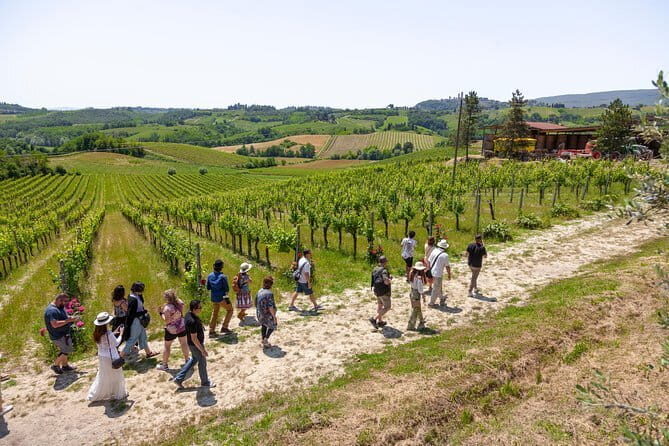
After Accademia, you get a 30-minute external stop at Palazzo Medici Riccardi, the Medici family’s first residence in a classic 15th-century Renaissance palace. You won’t be touring inside here, but that’s part of the value.
Outside stops are often where you learn the city’s visual language:
- You can spot how Renaissance patrons wanted to look permanent and in control.
- You get architecture cues that will make later stops at other buildings feel less random.
This kind of stop is also a breather. You’re not stuck in queue land, and it helps your legs reset before you head into the cathedral area.
Duomo time: Santa Maria del Fiore, free entry, and the queue reality
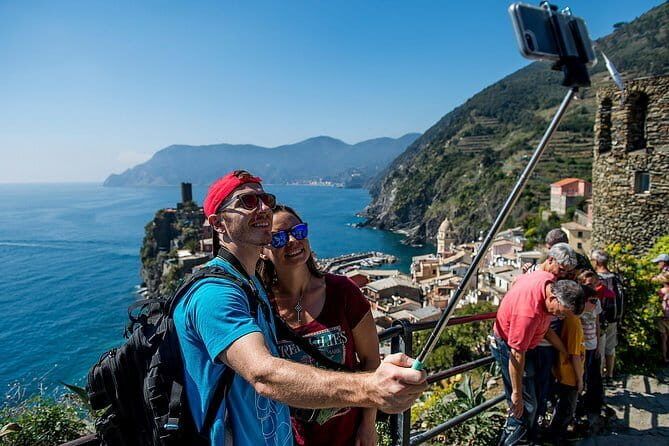
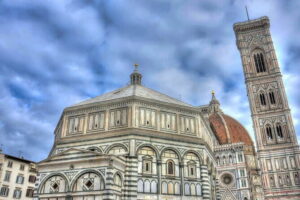
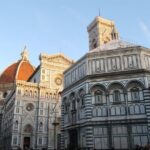
Next is Duomo – Cattedrale di Santa Maria del Fiore with about 30 minutes. The key detail here is simple: entrance to the church is free, but whether you get inside for your full visit depends on the line.
What I’d plan for:
- If the queue is long, you may spend more time in the square area than you hoped.
- If it’s manageable, you’ll get the inside look that makes Florence’s religious architecture feel so alive.
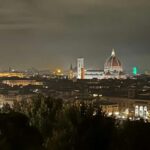
Why this matters in a guided day: the Duomo is not just a pretty stop. It’s a pivot point in the city’s identity. When your guide frames the building style (Gothic origins, Renaissance completion with Brunelleschi’s dome), the cathedral starts to make sense as a timeline of ideas, not just a skyline icon.
Practical tip: wear shoes that handle uneven stone and plan to move slowly if you’re entering crowded zones. Your guide will manage the pacing, but you’ll still feel the center-of-Florence foot traffic.
You can also read our reviews of more guided tours in Florence
- The Best tour in Florence: Renaissance & Medici Tales – guided by a STORYTELLER
★ 5.0 · 12,316 reviews
Piazza della Repubblica: the old forum vibe, with modern café life

Then you head to Piazza della Repubblica for about 20 minutes, and the tour frames it as the most central square tied to the old Roman forum. Today it’s known for its cafés and lively atmosphere, but the geometry of the place still carries historical weight.
This stop is less about strict facts and more about orientation. You’re building a map in your head: this square relates to the larger story of how Florence grew. When you later look back at buildings you’ve walked past, you’ll notice alignments and street patterns that used to feel like chaos.
It’s also a good “reset” stop. If you need water or a quick break, this is a more natural place to do it before moving on to the bigger sculpture-and-palazzo area.
Piazza della Signoria: open-air museum square and the energy of the center
Your next big open space is Piazza della Signoria, around 30 minutes. It’s described as Florence’s main square, known as an open-air museum space and named after the Palazzo della Signoria (also called Palazzo Vecchio).
This is one of those stops where your guide can turn what looks like a bunch of stones and statues into a political and artistic story. The square functioned as a stage—art wasn’t just for private viewing. It was part of public life.
Expect:
- You’ll see the setting that connects the city’s power buildings with the art placed in the open.
- You’ll get help interpreting what you’re looking at, so you don’t miss the “why” behind the placement.
This is a strong moment for photos, but I’d avoid treating it like a quick snapshot line. Give yourself time to look up and around, because the buildings wrapping the square are doing as much storytelling as the statuary.
Uffizi Gallery for 3 hours: how to survive painting overload

The final major anchor is Gallerie degli Uffizi, with about 3 hours inside. Admission fees are not included, so plan for that cost when you budget.
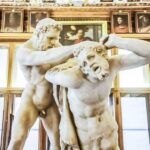
Uffizi is famous for major names, and the tour highlights include artists like Giotto, Botticelli, Raphael, Leonardo, and Caravaggio. That is a lot of visual impact in one place, and it can easily turn into overload if you don’t have a plan.
This is where a licensed guide earns their keep. With the right route and explanations, you’ll see:
- Key paintings grouped by theme and style rather than randomly
- Why certain artists matter in Florence’s Renaissance story
- How the city’s patrons and intellectual currents shaped what got painted
Three hours is a sweet spot. It’s long enough for real viewing, but not so long that you feel trapped. If you’re prone to museum fatigue, this tour is built to keep moving.
One more practical note: Uffizi timing matters. In peak season, you may still feel crowd pressure inside galleries, and sometimes the most famous rooms are bottlenecks. Your guide should help you shift to less-crowded angles and keep your viewing meaningful.
Licensed guide impact: the difference between seeing art and understanding it
The tour is led by a licensed local guide, and the quality shows in how the day flows. People consistently praise the way the guide picks out highlights rather than forcing a full survey of everything.
That approach is what makes the tour feel valuable. If you go without guidance, you can easily wander and miss the connective tissue. With a good guide, you get:
- Backstories that make the artwork feel less distant
- City context tied to what’s in front of you
- A pace that respects questions, bathroom stops, and picture moments
I also like that the day can stay flexible around you. The tour includes bathroom-friendly patience from past guests, and your guide’s communication seems to be a priority. That matters because Florence tours often fall apart when logistics get messy, not when the art is boring.
And in at least some cases, the guide has been known to adjust the plan to fit timing or interests, even swapping in the Vasariano corridor instead of Accademia. If there’s a specific experience you want most, it’s worth asking about options when you confirm.
Price and value: $820.61 per group, and where the real costs are
The price is $820.61 per group (up to 15 people) for about 7 hours. That’s not a cheap day on paper, so the question is: do you get enough private guidance and time to justify it?
Here’s how I’d think about value:
- If you fill close to the max group size, the per-person cost drops a lot because it’s priced per group.
- If your group is small, your effective cost per person rises, but you still get the advantage of a private guide for your people only.
Then factor the big missing line item: entrance fees are not included. Since you’ll be paying for Accademia and Uffizi, your total day cost will be higher than the base price alone. Lunch isn’t included either, though guides can help you find or reserve a place.
One review detail that’s useful: the guide arranged lunch at Hosteria Ganino for a group, which can save time when you’d rather keep walking and browsing. Lunch costs still remain your responsibility, but the help can reduce decision fatigue.
Bottom line: this is strongest value if you care about art and want someone to help you see it properly, without spending the whole day researching. If you’re just looking for a scenic stroll and museum tickets don’t matter to you, a self-guided approach might be cheaper.
What to bring (and what to plan for in Florence peak conditions)
Even with perfect planning, Florence can be hot and crowded. Past experiences in peak summer conditions have included long, thick crowds and lots of heat, so I’d treat comfort as part of your itinerary.
Bring:
- Water and a small snack you can keep for later
- Sun protection (hat, sunscreen)
- Comfortable walking shoes that work on stone sidewalks
Plan to move at a guided pace, not an individual one. You’ll be stopping at multiple key civic points—Duomo area, piazzas, and then two major museums—so it’s not a slow sit-in-a-café day.
Also plan for the Duomo interior variability. Even though the church is free, the queue controls your time, so don’t assume you’ll always get the full inside experience on your schedule.
Who should book this tour
This tour fits best if you:
- Are visiting Florence for the first time and want the city to come together logically
- Love Renaissance art and want connections between sculpture and painting
- Prefer a licensed guide who selects highlights instead of letting you drown in museum rooms
- Want a structured walking day that still feels tailored to your pace
It can also suit small groups who want privacy without going ultra-luxury. And because pickup is offered and the meeting point is near public transport, it’s easier to slot into most hotel locations.
Should you book Florence walking guided tour with Uffizi & Accademia?
If your priority is seeing both Michelangelo and the core Uffizi painting lineup in one day, this is a strong choice. The schedule hits the right anchors—Accademia’s David early, then Uffizi for sustained focus—while the piazzas and Duomo stops help you understand why Florence looked and sounded like this.
I’d book if you’re comfortable paying entrance fees separately and you want someone to steer you through crowds, queues, and museum overload. I’d think twice if you dislike line-dependent timing or you’re traveling with very limited mobility, since it’s a walking-centered itinerary with museum stops.
FAQ
FAQ
How long is the Florence walking tour with Uffizi & Accademia?
It’s about 7 hours (approx.).
What time does the tour start?
The start time is 9:00 am.
Is this tour private or shared?
It’s a private tour/activity, and only your group participates.
Is pickup included?
Pickup is offered.
Are entrance fees included for the museums and cathedral?
Admission tickets for Accademia and Uffizi are not included. The Duomo church entrance is free, but getting inside depends on the queue.
What language is the tour offered in?
The tour is offered in English.
Are tickets mobile?
Yes, the tour uses a mobile ticket.
You Might Also Enjoy

More Walking Tours in Florence
More Tours in Florence
- The Best tour in Florence: Renaissance & Medici Tales – guided by a STORYTELLER
★ 5.0 · 12,316 reviews

More Tour Reviews in Florence
- Tuscany Day Trip from Florence: Siena, San Gimignano, Pisa and Lunch at a Winery
★ 5.0 · 21,634 reviews - The Best tour in Florence: Renaissance & Medici Tales – guided by a STORYTELLER
★ 5.0 · 12,316 reviews