Florence makes sense after a guided walk. This 2.5-hour route gives you the lay of the land fast, threading together landmark sights and the streets between them so you stop seeing a map and start seeing the city’s logic. You’ll get an English-speaking guide and a maximum of 4 people, which makes it feel more like walking with a local than getting processed in a crowd.
I love how the walk is built for day-one orientation: Medici landmarks, major squares, and the big-name views are all connected into one sensible loop. I also love that guides often add real-world extras, like where to eat and even practical pointers such as public restroom locations, with guide examples including Armando, Manuel, and Elizabeth.
One thing to keep in mind: audio can be hit-or-miss. If the microphone system isn’t cooperating, you may struggle to catch every detail, so it helps to stand where you can hear well.
In This Review
- Key highlights to know before you go
- A Day-One Florence Orientation Walk That Actually Helps
- Starting at Piazza dell’Unità Italiana: Keep It Simple
- Medici Chapel, San Lorenzo Market, and San Lorenzo Church: Florence Through Power and Daily Life
- Duomo Cathedral, Baptistery, Orsanmichele, and Repubblica Square: The Sights You’ll Keep Recognizing
- Piazza del Porcellino, Signoria Square, and Uffizi Outside: Planning Your Next Visit
- Ponte Vecchio and Santa Croce Square: The Bridge Views and the Ending Energy
- Guides, Pace, and Group Size: What a Maximum of 4 Changes
- Price, Optional Tips, and Why This Is Such Good Value
- Practical Tips to Make the Route Click
- Weather, Comfort, and Who This Fits Best
- Should You Book This Florence Walking Tour?
- FAQ
- How long is the Florence walking tour?
- Is the tour in English?
- How much does it cost?
- What sights will I see during the walk?
- Where does the tour start?
- How many people are in the group?
- Does the tour allow service animals?
- What if I need to cancel?
Key highlights to know before you go
- Small group of up to 4 people, so questions feel easy
- Major Florence landmarks in one loop (from Medici Chapel area to Santa Croce Square)
- External views of the Uffizi area, good for planning what to visit next
- Free, no-entry-fee style walking format with a voluntary tip at the end
- English mobile ticket means you can travel light (and show it from your phone)
A Day-One Florence Orientation Walk That Actually Helps
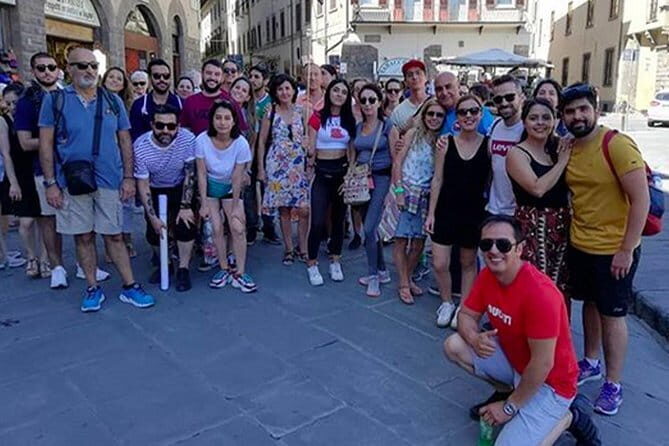
This tour works best when you treat it like your Florence “map in motion.” You’ll cover the high-impact sights people come for, but you’ll also connect them with the streets and squares between them. That’s the difference between seeing buildings and understanding where you are and why it matters.
The 2 hours 30 minutes timing is also smart. Long enough to feel like you did something meaningful, not so long that you burn your whole afternoon. And because the group is small, the guide can slow down when you’re looking at the right corner, the right facade, or the right square.
If you’re the type who likes to return later on your own with a plan, this walk gives you that plan. Afterward, you’ll know which areas you want to linger in and which ones are just good to have “seen once.”
You can also read our reviews of more walking tours in Florence

Starting at Piazza dell’Unità Italiana: Keep It Simple
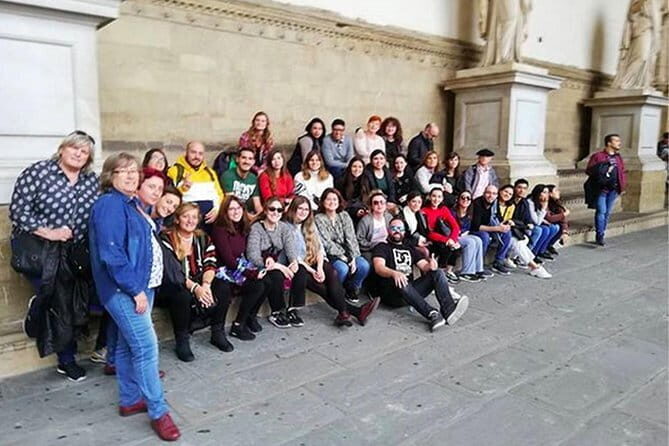
Your meeting point is Piazza dell’Unità Italiana, 50123 Firenze FI. Since the tour uses a mobile ticket, have your confirmation ready on your phone before you leave.
Florence is walkable, but it’s also easy to lose time if you start late or wander. So I suggest you aim to arrive a few minutes early, take one quick look at your meeting spot on maps, and then settle in. With a small group, you don’t want to be the person doing a frantic search while everyone else is already moving.
The tour is near public transportation, which helps if you’re coming in from elsewhere in the city. It’s also a good choice if you want an outing that doesn’t depend on buying timed entry tickets.
Medici Chapel, San Lorenzo Market, and San Lorenzo Church: Florence Through Power and Daily Life
The walk starts in the realm of the Medici. You’ll see the Medici Chapel and also pass by the Medici Riccardi Palace and the San Lorenzo Church area. Even if you don’t know the names already, the structure of this part of the city is easy to follow: it’s where Florence’s big patrons left their mark, and the streets around those landmarks show you how status, religion, and civic life braided together.
Then comes a big contrast: San Lorenzo Market. This stop is the kind of place that reminds you Florence wasn’t built only for museums and galleries. It’s also where locals shop, snack, and move through their day. A guide-led approach helps here because you’re not just looking at stalls—you’re learning what to notice and how the market fits into the wider neighborhood story.
What I like about this segment is that it prevents “museum tunnel vision.” You get both the grand and the everyday, and you can tell the city apart more easily after that.
A possible drawback: market areas can be crowded and noisy depending on the time of day. If you’re sensitive to bustle, try to position yourself where you can still hear the guide while stepping aside when people brush past.
Duomo Cathedral, Baptistery, Orsanmichele, and Repubblica Square: The Sights You’ll Keep Recognizing
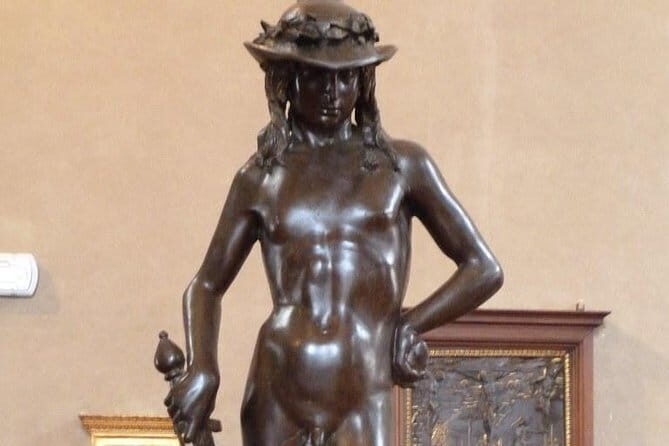
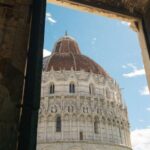
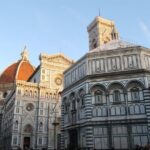
Next, the route heads toward the Florence most people picture first. You’ll visit the Duomo Cathedral area and see the Baptistery. This is the kind of stop that’s worth treating like orientation, not a photo frenzy. You’ll want to look around, notice the scale, and get a feel for how the cathedral complex anchors the city.
From there you’ll move through Piazza della Repubblica and the Orsanmichele Church. These stops matter because they show you Florence beyond one famous facade. Squares help you understand how crowds gather, how neighborhoods connect, and why certain intersections feel like natural meeting points.
If you’re planning museum time later, this part of the walk is also practical. You’ll start recognizing visual “anchors” on your self-guided strolls, which makes the rest of your trip smoother. You stop thinking, How do I get there? and start thinking, Oh, I already know where I am.
If audio is clear, this section is usually where guides shine, because it’s packed with symbolism and stories people actually care about.
Piazza del Porcellino, Signoria Square, and Uffizi Outside: Planning Your Next Visit

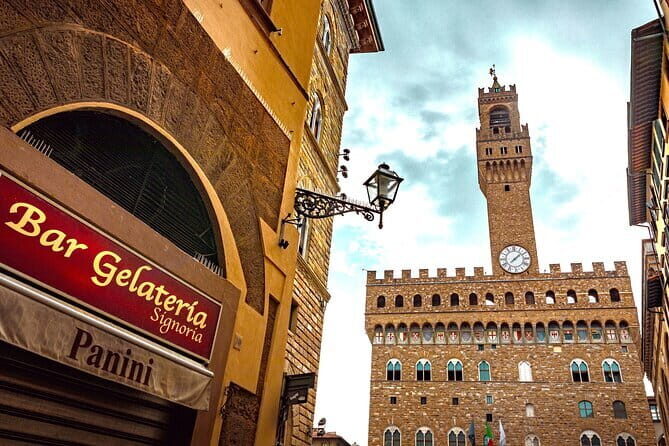
Then you’ll pass through Signoria Square and see Uffizi (external). The tour doesn’t ask you to buy entry tickets on the spot, which is a smart way to keep the experience flexible. Seeing the Uffizi area from the outside also gives you a real sense of where it sits in the broader city grid.
You’ll also encounter Porcellino, a classic Florence focal point that’s easy to notice even if you’re not deep into “must-see” lists. This is one of those spots where the guide’s explanations help you understand what you’re looking at and how the street scene is shaped around it.
Why I like this cluster: it’s where Florence shifts from religious landmarks to public life—politics, art, and major gatherings. That change helps you understand the city’s rhythm. One moment you’re tracking spiritual architecture; the next you’re in the squares where people felt like they were part of the show.
A small note: external-only stops mean you’re not getting the museum interior during this tour. Use what you learn here to decide whether you want to book a dedicated Uffizi visit later.
- Tuscany Day Trip from Florence: Siena, San Gimignano, Pisa and Lunch at a Winery
★ 5.0 · 21,634 reviews



Ponte Vecchio and Santa Croce Square: The Bridge Views and the Ending Energy
The route takes you over to Ponte Vecchio, one of the most recognizable bridge scenes in Florence. Here, the payoff is the Arno-area perspective. Even without stepping into a museum, you get that “this is why people come” feeling.
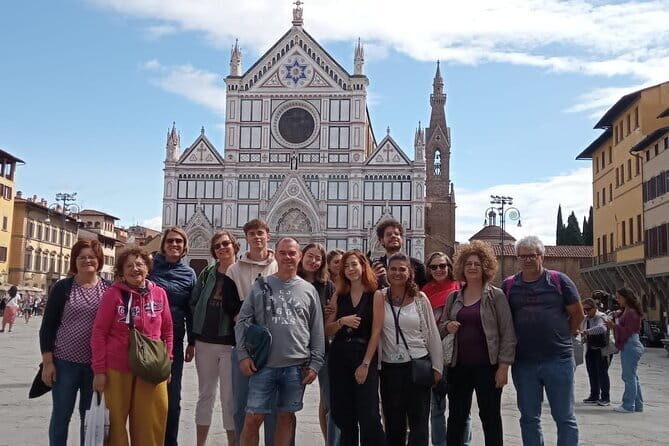
After that, you finish at Santa Croce Square. Ending at Santa Croce makes sense because it’s a space that feels lively and walkable, with plenty of options for what to do next. It also gives you a natural starting point for a later self-guided wander in that corner of the city.
If your goal is to get oriented and then keep exploring, this ending location helps. You won’t feel stuck back where you started.
Guides, Pace, and Group Size: What a Maximum of 4 Changes

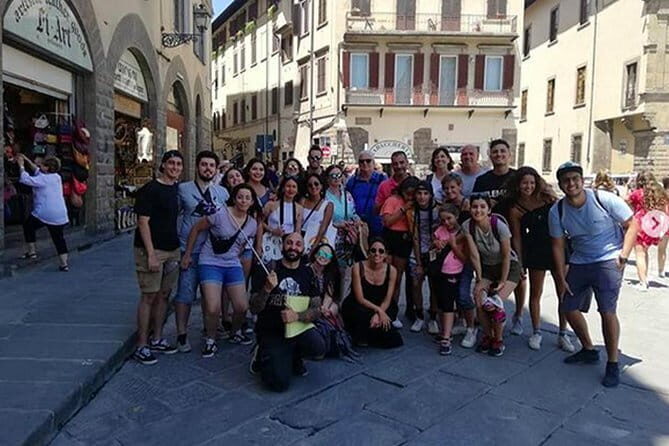
A maximum group size of 4 travelers is a big deal in Florence. It’s one thing to stand in a line of twenty people and hope you can hear; it’s another thing when you can actually ask, Where should we go next? What should we skip? What’s practical?
Guides like Armando, Alessandro, Gino, Deb, Simone, Barbara, and Manuel show up in the guide mix, and a common theme in the feedback is that the guide adds local perspective plus humor. You’re not just getting names of buildings—you’re getting a sense of how locals think about their city.
Pace can vary by guide and by the group, but the overall structure is designed to keep you moving while still stopping often enough to absorb the story behind each area. If you ask questions, small-group format makes it easier for the guide to answer without rushing.
One more practical thing: wear comfortable shoes. This is a walking tour built around recognizable sights, and you’ll cover ground quickly enough that sore feet can kill the fun.
Price, Optional Tips, and Why This Is Such Good Value
The price is $3.63 per person, and the tour is positioned as a low-cost option with a voluntary tip at the end. Even if you never plan to tip heavily, this structure can still be a great deal because you’re paying for orientation and local storytelling rather than expensive timed-entry access.
You also get “free admission” for the experience itself, and you’re seeing major highlights without committing to ticketed museum time. That matters if your schedule is tight, if you’d rather choose museum visits later, or if you’re traveling with a mix of art lovers and “I just want to see the city” people.
The value equation is simple: you’re getting an organized route, major visual anchors, and planning help in about two and a half hours. If you use that knowledge to book even one smart museum choice later, the tour pays for itself in time saved.
Practical Tips to Make the Route Click
A few things will help you get the most out of the day:
- Go early enough to keep your energy up. You’ll be walking between big areas, and Florence days can add up fast.
- Bring a charged phone. The tour uses a mobile ticket, and you’ll want battery for maps and confirmation.
- Stand where you can hear. If audio is unclear, pick a spot near the guide rather than at the edge of the group.
- Use the finish point as your next plan. Santa Croce Square is a good place to decide where to wander next without backtracking.
- Ask for food and practical pointers. Some guides are especially good about recommending nearby places to eat and where to find public restrooms.
If you’re worried about missing something, don’t. This tour is designed to give you a city framework. You’ll likely want to return to at least a couple of the spots on your own.
Weather, Comfort, and Who This Fits Best
This experience requires good weather. If Florence is giving you rain, plan on flexibility. When weather isn’t ideal, you may need to shift dates.
As for who should book: this is a strong fit if you’re arriving and want orientation fast, if you like walking with a local guide, or if you prefer learning through streets and squares rather than only museum rooms. It’s also a good choice if you want a low-cost introduction that won’t wreck your budget before you decide what you want to pay for later.
Most people can participate, and service animals are allowed. And because it’s near public transportation, it’s easy to plug into a day even if you’re not starting from your hotel.
Should You Book This Florence Walking Tour?
I’d book it if you want a smart first pass through Florence that helps you plan the rest of your trip. The small-group size, the English guide, and the way the route ties major landmarks together make it ideal for getting your bearings fast—especially at the start of your week.
Skip it only if you strongly dislike walking between multiple big sights in one outing, or if you’re the type who needs museum entry tickets during a single tour. This one is built for orientation, external landmark viewing, and story-based learning, not for long indoor museum time.
If you go, do it early in your trip, wear comfy shoes, and lean into the guide’s suggestions. That’s when this turns from a nice walk into an actual planning advantage.
FAQ
How long is the Florence walking tour?
It runs for about 2 hours 30 minutes.
Is the tour in English?
Yes, the tour is offered in English.
How much does it cost?
The price is $3.63 per person, with a setup that includes a voluntary tip at the end.
What sights will I see during the walk?
The route includes Medici Chapel, San Lorenzo Market, Medici Riccardi Palace, San Lorenzo Church, Duomo Cathedral, the Baptistery, Repubblica Square, Orsanmichele Church, Porcellino, Signoria Square, Uffizi externally, Ponte Vecchio, and Santa Croce Square.
Where does the tour start?
It starts at Piazza dell’Unità Italiana, 50123 Firenze FI, Italy.
How many people are in the group?
The group has a maximum of 4 travelers.
Does the tour allow service animals?
Yes, service animals are allowed.
What if I need to cancel?
Free cancellation is available. You can cancel up to 24 hours in advance for a full refund, and cut-off times are based on local time. If you cancel less than 24 hours before the start, the amount you paid will not be refunded.
You Might Also Enjoy



More Walking Tours in Florence
More Tours in Florence
- The Best tour in Florence: Renaissance & Medici Tales – guided by a STORYTELLER
★ 5.0 · 12,316 reviews


More Tour Reviews in Florence
- Tuscany Day Trip from Florence: Siena, San Gimignano, Pisa and Lunch at a Winery
★ 5.0 · 21,634 reviews - The Best tour in Florence: Renaissance & Medici Tales – guided by a STORYTELLER
★ 5.0 · 12,316 reviews