REVIEW · FLORENCE
Florence Walking Tour with Accademia, Uffizi & Lunch
Book on Viator →Operated by CAF Tour and Travel · Bookable on Viator
Michelangelo, then Botticelli, with lunch. This full-day Florence package strings together timed-entry museum visits, a guided stroll through major landmarks, and an included 3-course Tuscan lunch—so you don’t spend your limited hours just figuring things out.
I especially like the way the day treats the art like the main event. The Accademia portion zeroes in on David and other Michelangelo works, and in the best runs the guide style matters—a tour leader like Alicia can make the carving choices and details feel clear fast. I also like that the Uffizi is guided (not just handed to you): when a guide like Ilaria is on point, you get context that helps the paintings stick, even if you’re not an art-history machine.
One consideration: this day can feel like separate segments, with different guides and meeting moments for each venue. If you’re easily flustered by crowds, lines, or finding the next check-in point, plan to arrive early and keep your schedule tight.
In This Review
- Key things I’d circle before you book
- Full-Day vs Half-Day: pick the right Florence “speed”
- Meeting point reality: arriving on time matters
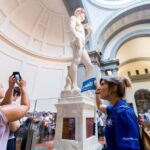
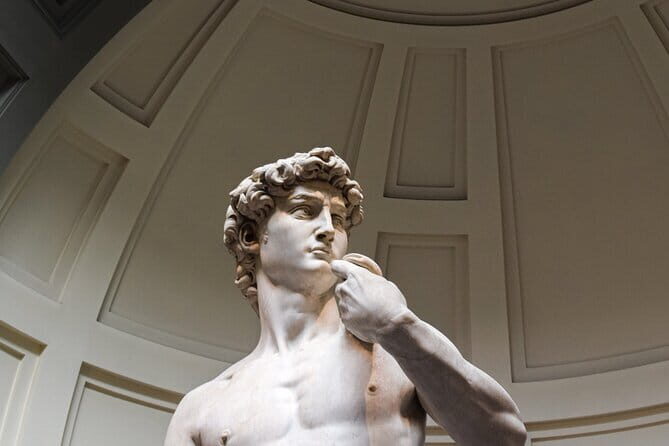
- Accademia Gallery: Michelangelo’s David gets the spotlight
- Palazzo Medici Riccardi and San Lorenzo: Medici power on your route
- Piazza San Giovanni: Duomo complex in bite-size form
- Piazza della Signoria, Loggia Lanzi, and Porcellino: Florence outdoors, on purpose
- Ponte Vecchio: your walking tour’s classic ending
- Uffizi Gallery after lunch: where the art history storytelling pays off
- The included 3-course lunch: a real break, with drinks extra
- Price and value: what you’re really paying for at $136.96
- Who this tour suits best (and who might want a different approach)
- Should you book this Florence walking tour with Accademia, Uffizi, and lunch?
- FAQ
- How long is the Florence tour?
- Where does the tour start, and where does it end?
- Does the tour include tickets for the Accademia and Uffizi?
- Is lunch included, and are drinks covered?
- What if I choose the half-day tour?
- Do I need to bring identification for the museums?
- How big are the groups?
Key things I’d circle before you book
- Timed-entry planning for big museums (Accademia always; Uffizi with the full-day option)
- Michelangelo focus at Accademia with time set aside for David and companion works
- Historic Florence stops that connect Medici power to the Duomo area and signorial politics
- Included 3-course lunch in the old town (drinks are extra)
- Small-group structure with a maximum of 25 people and English offered
- A classic Florence finish at Ponte Vecchio, not just another quick photo stop
Full-Day vs Half-Day: pick the right Florence “speed”
This tour comes in half-day and full-day versions. The full-day option is the one that gives you the full arc: Accademia first, then the broader historic-center walk, and—after lunch—the Uffizi. It also comes with timed entry planning, which is the whole point in Florence: the art is worth your time, but the lines are not.
If you choose half-day, you won’t get both big museums. The key detail: the half-day option excludes the Uffizi or the Duomo visit (depending on which half-day you pick). So if your “must-see” list includes both Michelangelo and Botticelli/Leonardo, commit to the full-day format.
Also note the order of visits may change. That’s normal with museum timing, lunch windows, and ticket access. What matters is that the package is designed to keep you moving through the right neighborhoods in the right order—so you’re not crisscrossing Florence like you’re trying to win a game of street-map Tetris.
You can also read our reviews of more walking tours in Florence
Meeting point reality: arriving on time matters
Your meeting point is Via Ricasoli 68, 50122 Firenze. From there, the day becomes a chain of scheduled stops. The experience is strict about timing: if you’re late to the check-in time, you may not be able to join and there won’t be refunds or rescheduling.
This matters more than people think. Florence’s center is walkable, but it’s also full of other tours, and the museum entrances can be confusing even when you’re close. If you like to stroll and take detours, you’ll want to “save your wandering” for after the guided stops.
The upside: once you’re in the program, the day is built around guide direction and museum reservation access. The downside: you can’t treat this like a flexible choose-your-own-day plan.
Accademia Gallery: Michelangelo’s David gets the spotlight
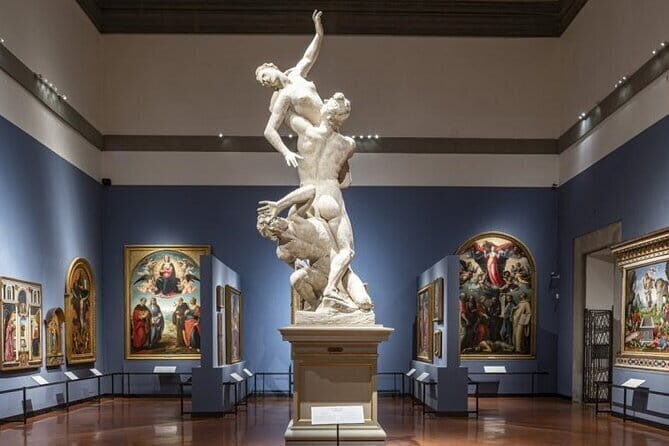
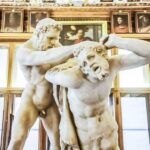
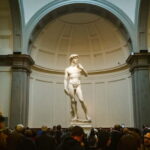
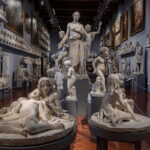
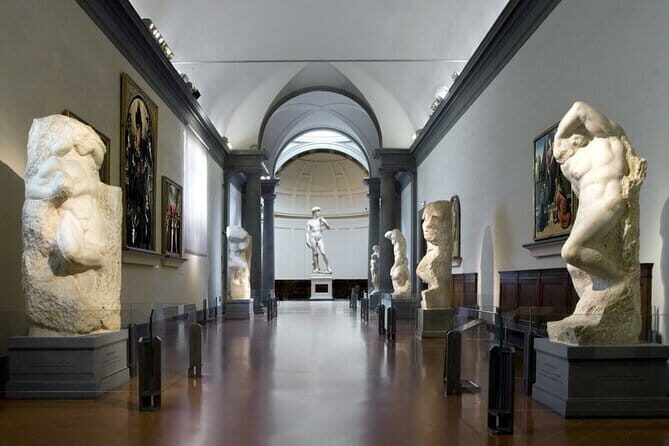
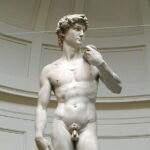
The day starts at the Galleria dell’Accademia with a guided visit focused on Michelangelo. You get about 1 hour inside, and it’s not just a pass-by. Expect a guided look at David plus related works such as I Prigioni (the Prisoners), San Matteo, and the Palestrina Pietà.
Why this works: David is famous, but it’s also easy to “see it like a landmark” instead of seeing it like a sculpture. A good guide helps you notice how the pose communicates movement, how the proportions are designed to read strongly from below, and how Michelangelo’s early career momentum shows up in the work. In reviews, guides like Alicia were called out for being sharp and engaging—exactly the kind of narration that turns David from impressive into understandable.
Two practical notes. First, you’ll likely want to arrive with a clear idea of what you’re hoping to learn, because an hour goes by quickly in a museum. Second, timed entry doesn’t mean instant freedom—you still share space with other groups. That’s why the guide’s pacing and focus matter.
Palazzo Medici Riccardi and San Lorenzo: Medici power on your route
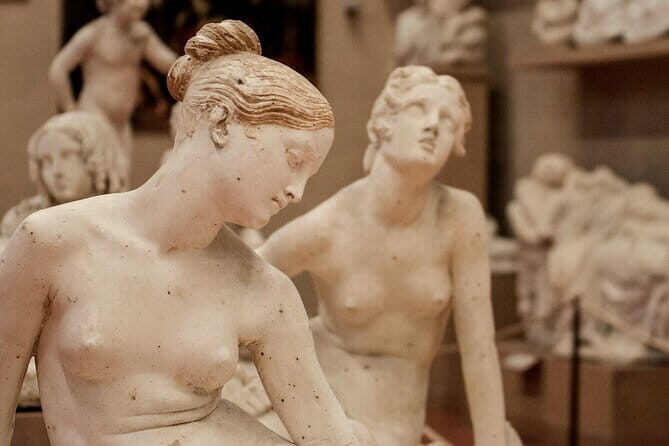
After Accademia, the walk connects you to the Medici story through the city’s architecture. You’ll stop at Palazzo Medici Riccardi, designed by Michelozzo di Bartolomeo for Cosimo de’ Medici. You won’t spend a long time inside—this is more about the exterior and the setting—but it’s an important link between banking power, political influence, and Renaissance art patronage.
Next is Basilica di San Lorenzo, the church tied to the Medici family. It’s known as a Renaissance masterpiece by Brunelleschi, and it also relates to the Medici tombs. Even if you don’t go in for long, the point of this stop is to connect the art you just saw to the people who made it possible.
A drawback of quick city-center stops: you’re seeing highlights, not doing deep dives. If you’re hoping to linger for long photos or slow reading, you may find your time here is a bit brief. Still, it’s a smart way to get context without sacrificing your museum hours.
Piazza San Giovanni: Duomo complex in bite-size form
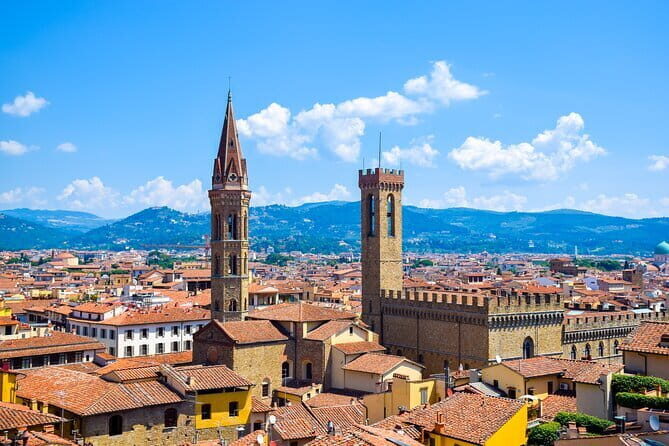
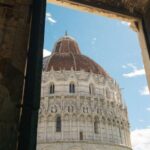
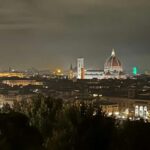
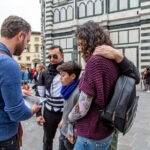
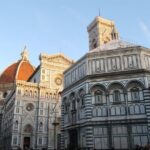
The tour then hits Piazza San Giovanni, also known as Piazza del Duomo. This is the square where the big skyline icons gather. In a compact window, you get views of the Cathedral’s complex elements, including Brunelleschi’s Cupola, Giotto’s bell tower, and the Baptistery of San John—famous for the Gates of Paradise.
This part is valuable even if you’re not planning to climb or enter everything. The Duomo area can feel like one massive visual wall until someone points out what you’re actually looking at. A guided orientation helps you recognize the pieces so that later, if you choose to return on your own, you’ll know where your photos should go.
Consider this if you’re Duomo-obsessed. The time here is intentionally short because the package also includes other major targets. You’re getting your bearings. For full immersion—like a climb or extended interior time—you’d likely need a separate plan.
You can also read our reviews of more tours and experiences in Florence
- Cooking Class and Lunch at a Tuscan Farmhouse with Local Market Tour from Florence
★ 5.0 · 4,831 reviews - San Gimignano, Siena, Monteriggioni, Chianti Day Trip with Lunch & Wine Tasting
★ 4.5 · 4,432 reviews

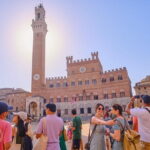



Piazza della Signoria, Loggia Lanzi, and Porcellino: Florence outdoors, on purpose
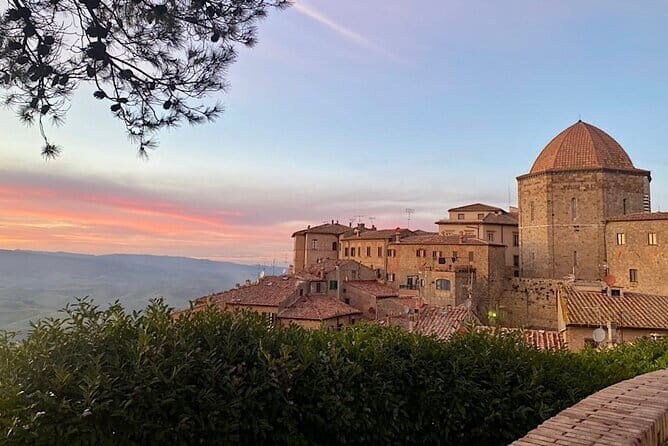
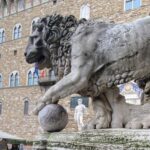
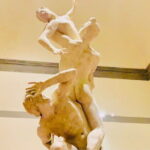
Next up is Piazza della Signoria, which is basically an outdoor sculpture museum with politics stitched into every corner. You’ll see the focus of the square, Palazzo Vecchio, and you’ll also encounter famous public artworks and structures like the Fountain of Neptune and the Loggia dei Lanzi.
This is one of my favorite parts of the route because it’s where Florence stops being “museum time” and becomes “city time.” The architecture and statues make more sense when you understand the function they played—public display of power, civic identity, and artistic legitimacy.
You’ll also pass the Porcellino Fountain (the wild boar). It’s the kind of tradition that’s simple and oddly fun: rubbing the boar’s snout for good luck and placing a coin in its mouth, hoping it means you’ll return to Florence.
If you prefer quiet, this is the opposite of quiet. The square draws people. But with a guide, it’s a calmer experience than trying to interpret everything alone while the crowd pushes in.
Ponte Vecchio: your walking tour’s classic ending
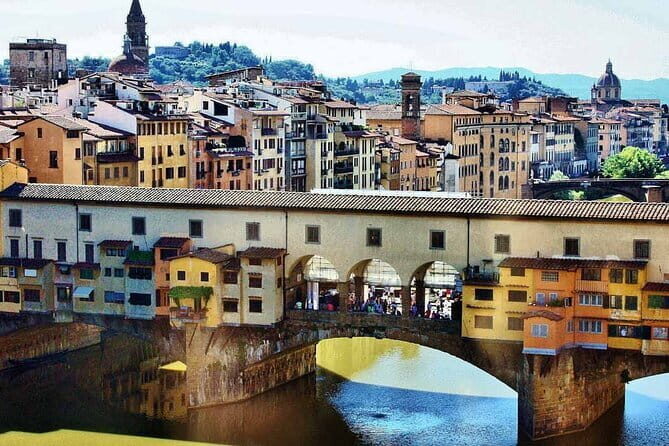
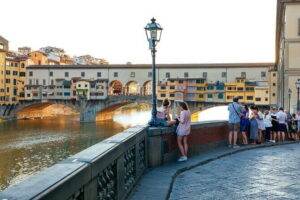
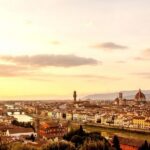
The walking portion ends at Ponte Vecchio, Florence’s famed bridge known for its long history and its jewelry shops along the span. It’s also a good “breathing checkpoint.” By the time you reach the bridge, you’ve already covered several landmark zones, and this finale gives you a sense of Florence’s everyday life woven into the famous landmarks.
Ponte Vecchio is also practical as an ending point: it’s central, iconic, and it gives you a natural place to regroup before the museum block after lunch.
One thing to keep realistic: this is an end cap, not a lingering event. You’ll likely get time for photos, but not a leisurely stroll with every detail on the railings and shop windows. If you want more time here, save it for later that day or the next.
Uffizi Gallery after lunch: where the art history storytelling pays off
After lunch, the tour shifts to the Uffizi Gallery with a guided visit. You’ll have about 1 hour 30 minutes inside. Tickets are included with the standard surcharge noted as €29.
The Uffizi is huge in reputation and huge in art. The guided portion helps you avoid two common problems: wandering without a plan and getting overwhelmed by how many masterpieces exist in one building.
The tour is designed around major artists and signature works—think Botticelli, Leonardo da Vinci, Michelangelo, Raffaello, and others—so the guide can connect the why of the collection, not just the what. In reviews, guides like Riccardo and Patricia were specifically praised for making art and history feel clear and engaging, which is exactly what you want in the Uffizi, where it’s easy to lose the plot if you go in cold.
Practical consideration: time pressure is real. If your morning section runs behind schedule, you can end up with a rushed finish. The Uffizi portion is still valuable, but if Uffizi is your top priority, you’ll benefit from arriving rested and keeping an eye on the day’s timing.
The included 3-course lunch: a real break, with drinks extra
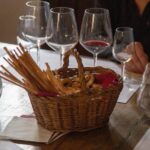
Lunch is a 3-course Tuscan set menu at a typical restaurant in the old town. Drinks are paid on the spot. In other words, you get food as part of the deal, but you still control your wine bill.
This is one of the main value drivers of the package. In Florence, coordinating a good lunch on your own around museum reservation times can be a hassle. An included lunch gives you a guaranteed reset point between Accademia and Uffizi.
That said, lunch experiences can be hit or miss, and some people have found the meal average. My advice is to treat it as fuel, not fine-dining fireworks. If you’re picky about pacing and courses, look at the set-menu format as part of the tradeoff: faster decision-making, less menu choice, and a smoother schedule overall.
Price and value: what you’re really paying for at $136.96
At $136.96 per person, you’re paying for more than a walking tour. This package includes:
- A professional local guide
- Guided Accademia entry with reservation handling
- A guided city-center overview
- A 3-course Tuscan lunch
- Uffizi guided entry if you pick the full-day option (with the noted €29 surcharge)
When you price those pieces separately in your head, the deal starts making sense. You’re buying time savings and direction at two of the biggest art bottlenecks—Accademia and Uffizi—plus the benefit of not having to stitch your own day together between entrances, meeting points, and tight museum windows.
The main reason some people rate it lower isn’t the destinations—it’s the day feel: multiple guides, multiple segments, and sometimes a pace that doesn’t slow down for your questions. If that sounds like your kind of structure, the price is easier to justify. If you want a single-guide “one story all day long” experience, you may find this format a little disjointed.
Who this tour suits best (and who might want a different approach)
Book this if you want:
- A fast orientation across Florence’s key historic areas
- A focused Michelangelo hit at Accademia
- A guided Uffizi experience after lunch
- A schedule that does the heavy lifting for you
Skip this or consider a different setup if:
- You hate switching between meeting points or doing your own navigation between segments
- You want more time in only one museum (like staying longer at Uffizi)
- You’re very sensitive to pace and prefer slow museum browsing
One small tip from the structure itself: if you’re especially focused on one museum, plan the rest as context. The walking stops are great for understanding the city, but your real payoff is the guided art time. Treat the route as the map; treat the museums as the goal.
Should you book this Florence walking tour with Accademia, Uffizi, and lunch?
I’d book it if your Florence trip is short and you want a guided day that hits the big names without wasting hours on logistics. The combination of timed-entry planning, guided storytelling at Accademia and Uffizi, and an included 3-course lunch is the kind of value you feel immediately when your itinerary is tight.
I’d hesitate if you’re the type who gets stressed by changing guides, schedules, and check-in points. For you, the best move might be booking Accademia and Uffizi tickets (with timed entry) on your own and then adding only the walking parts you want.
If you’re on the fence, your decision comes down to one question: do you want Florence packaged neatly for you, or do you want maximum freedom? This tour is built for the first answer—and it delivers when you show up on time and let the guides steer.
FAQ
How long is the Florence tour?
It runs for approximately 6 hours.
Where does the tour start, and where does it end?
The tour starts at Via Ricasoli, 68, 50122 Firenze FI, Italy. The activity ends in a different location (the exact end location is provided in the tour details).
Does the tour include tickets for the Accademia and Uffizi?
Yes. The Accademia Gallery admission ticket with a reservation fee is included. The Uffizi Gallery guided visit and standard surcharge ticket (€29) are included if you select the full-day option.
Is lunch included, and are drinks covered?
Lunch is included as a 3-course Tuscan set menu in a typical old-city restaurant. Drinks are not included and are paid on the spot.
What if I choose the half-day tour?
If you select the half-day tour, either the Uffizi Gallery or the Duomo visit is not included (depending on the option you choose).
Do I need to bring identification for the museums?
Yes. You must present an original identity document, and the ID must match the name provided at booking for Uffizi entry.
How big are the groups?
The tour has a maximum of 25 travelers.
You Might Also Enjoy
More Walking Tours in Florence
More Tours in Florence
- The Best tour in Florence: Renaissance & Medici Tales – guided by a STORYTELLER
★ 5.0 · 12,316 reviews
More Tour Reviews in Florence
- Tuscany Day Trip from Florence: Siena, San Gimignano, Pisa and Lunch at a Winery
★ 5.0 · 21,634 reviews - The Best tour in Florence: Renaissance & Medici Tales – guided by a STORYTELLER
★ 5.0 · 12,316 reviews