REVIEW · FLORENCE
Art and History in Florence: Small Group Walking Tour
Book on Viator →Operated by FLORENCE TOURS - ENJOY BIKING · Bookable on Viator
Florence has layers, and this tour tracks them. I like the small-group walking flow that hits major landmarks in one go, and I like the centuries-spanning context that ties the city’s art to who held power; the main drawback is the pace is tight, so you’ll likely want separate time for any spot you want to study slowly. With a mobile ticket and English guidance supported by an audioguide system, you can follow along without wrestling with a map all morning. At about $30.01 per person, it’s strong first-day value, but several stops don’t include museum or church entrances, so plan for extra tickets if you care about interiors.
Key points to know before you go
- One-hour-35-minute highlights loop across Florence’s most recognizable sights
- Medici power theme that shows up in palaces, churches, and civic art
- Audioguide support plus a live guide, so you get both big-picture and detail
- Some stops are free, but other major sites require your own entrance tickets
- Guide personality matters, and Florence Tours uses different instructors across dates
In This Review
- A fast Florence loop that still tells a connected story
- Meeting at Florence Tours: how to use your time well
- Palazzo Medici Riccardi: start where Medici prestige shows
- San Lorenzo: churches, ceremonies, and social gravity
- Santa Maria del Fiore: Duomo context in a tight window
- Museo Casa di Dante: literature meets Florence streets
- Palazzo Vecchio and Piazza della Signoria: Florence’s civic stage
- Le Gallerie Degli Uffizi: get oriented before you commit
- Ponte Vecchio: the bridge that became a symbol
- Palazzo Pitti and the Medici move to the big house
- How the guide style can change your whole day
- Price and value: when $30.01 makes sense
- Who should book this tour, and who should skip it
- Should you book this Art and History in Florence tour?
- FAQ
- How long is the Art and History in Florence small group walking tour?
- Is the tour offered in English?
- What is the price per person?
- Are museum and church entrances included?
- What stops are included on the walk?
- Where do I meet the group?
- Do I get an audioguide or mobile ticket?
- What is the cancellation policy?
A fast Florence loop that still tells a connected story
This is the kind of tour that helps you understand what you’re seeing right away. In about 1 hour 35 minutes, you move through a sequence of places tied to Florence’s ruling families, its religious center, and its public art. Instead of treating each stop as a disconnected photo-op, the story line keeps pointing back to status, patronage, and politics.
I love how practical the time frame is. You get orientation fast, which makes it easier to choose what to revisit later on your own. And because it’s a small-group style walk (with a maximum group size of 50), you can still hear the guide and ask basic questions without it turning into a shuffle.
The tradeoff is simple: ten minutes per stop is not “museum time.” If your goal is deep study inside palaces or galleries, use this as your starter course.
Meeting at Florence Tours: how to use your time well
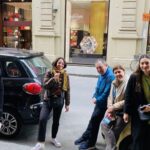
You start at Florence Tours Via Camillo Cavour, 21R, 50129 Firenze FI, Italy, and the tour ends back at the meeting point. The operator notes it’s near public transportation, which is helpful because Florence sidewalks can slow you down if you’re coming in from far away.
Since the tour uses audioguides, I suggest you treat the headset as your “second brain.” The guide is doing the live storytelling, but the audio helps you keep up when you’re pausing for photos or when the street gets noisy. In a city like Florence, that kind of redundancy matters.
Also, bring comfortable shoes. The route is compact, but you’re still walking between major sites that sit on busy streets and in crowded zones. If you’re traveling in rainy weather, one of the guides’ strengths (and this route’s strength) is that much of what you learn comes from the street and exterior views, not just indoor rooms.
You can also read our reviews of more walking tours in Florence

Palazzo Medici Riccardi: start where Medici prestige shows
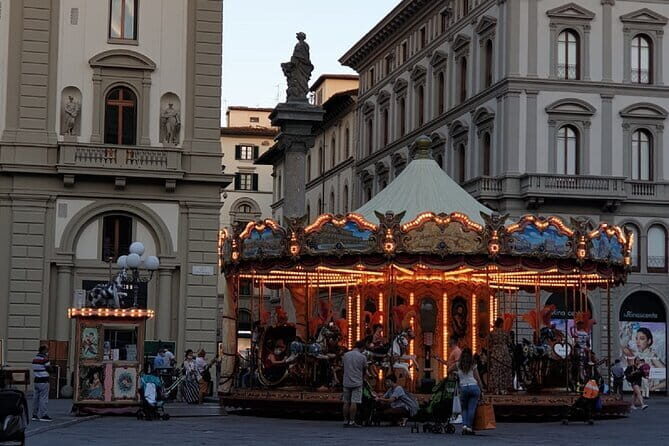
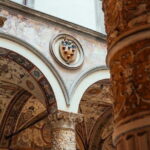
Your first stop is Palazzo Medici Riccardi, a smart opener because it puts you right in the Medici orbit. This is the kind of building where you start to see how Florentines used art and architecture to communicate rank. Even without going deep inside, the façade and setting give you cues about power and influence.
This is also a good moment to set your mental framework for the rest of the day. Once you understand the Medici as patrons and players, later stops like Palazzo Vecchio and Palazzo Pitti make more sense. I like tours that do that because it turns your photos into evidence, not just decoration.
What to watch for: how the building’s presence dominates its space. In Florence, scale is meaning. The palaces aren’t shy.
San Lorenzo: churches, ceremonies, and social gravity
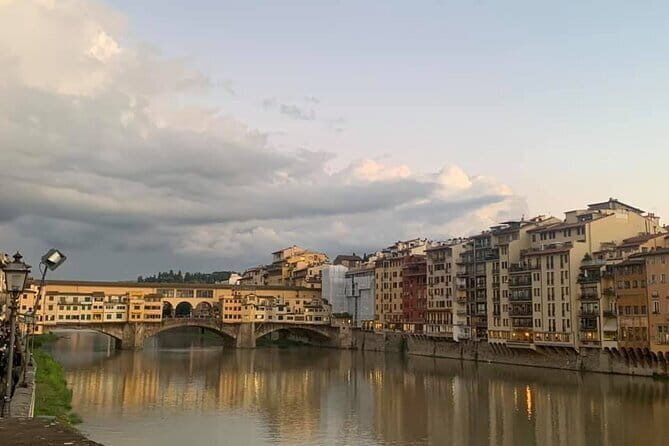
Next up is San Lorenzo, a stop with free admission listed for this tour. That matters because it lets you spend your money on your own priorities instead of forcing every landmark into an entrance-fee trap.
San Lorenzo is more than a church you pass by. It’s a reminder that Florence’s art didn’t happen in a vacuum. Religious spaces shaped commissions, artistic styles, and who got remembered. In practice, you’ll get context that helps you connect sacred art to the people financing it.
If you’re hoping for a lot of quiet interior time, adjust expectations. This stop is brief. Think orientation and interpretation, not a long museum-style visit.
Santa Maria del Fiore: Duomo context in a tight window

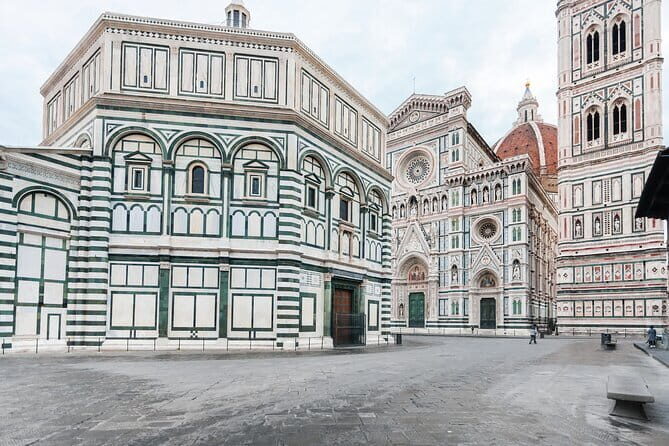
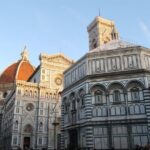
Then comes the Cathedral of Santa Maria del Fiore, another stop where admission isn’t included. The Duomo complex is where Florence’s religious and artistic ambition becomes hard to ignore. Even if you don’t enter, a guide can help you read what you’re seeing: why the cathedral matters, and how Florence used design to project confidence.
Here’s one practical tip based on past experiences: if you want a closer look inside, ask the guide when you arrive. One guide (Julia) was able to take the group inside the Duomo when the line was short, which shows there can be flexibility depending on conditions. No guarantee, but it’s worth bringing up.
Also, save energy for this segment. The area can be crowded, and the tour’s pace means you’ll want to move smoothly so everyone stays on time.
Museo Casa di Dante: literature meets Florence streets
At Museo Casa di Dante, the tour again doesn’t include admission. Still, this stop is valuable because it expands the story beyond rulers and churches. Florence’s cultural identity includes writers and ideas, not only painters and bankers.
If you buy tickets separately, this can become a powerful companion to everything else on the walk. Even in a short visit, you’ll likely learn how Dante connects to civic pride and the broader cultural mood of the city.
If you don’t enter, you can treat this stop as a way to understand why the city keeps celebrating its own voices. Florence loved self-mythmaking, and it didn’t start with the Medici.
You can also read our reviews of more historical tours in Florence




Palazzo Vecchio and Piazza della Signoria: Florence’s civic stage
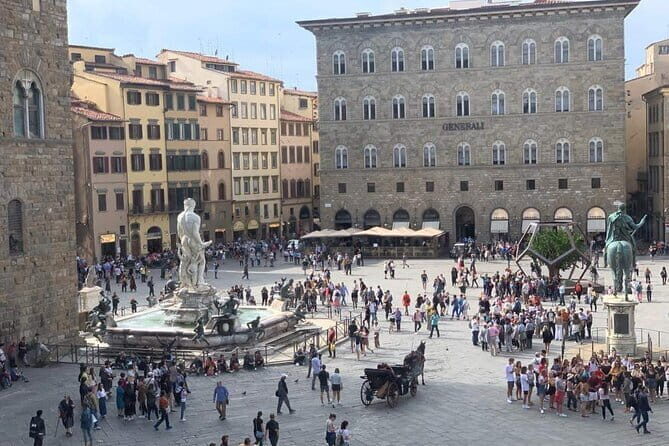
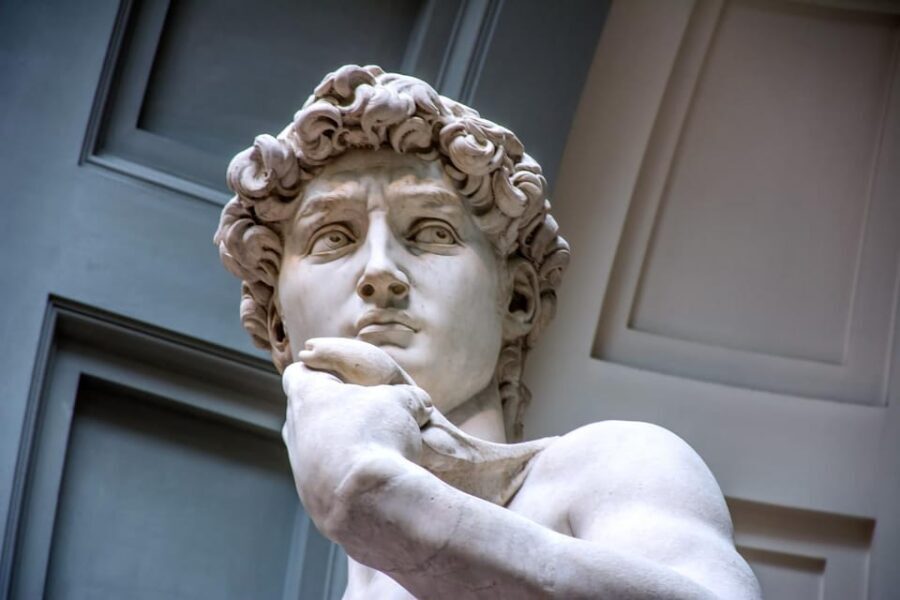
Next you’ll reach Palazzo Vecchio and then Piazza della Signoria. Both are major stops for understanding how Florence performed politics in public. Palazzo Vecchio signals authority and governance, and Piazza della Signoria is where that authority becomes visible through art and monuments in the open air.
Piazza della Signoria is listed as free for this tour, which is a win. You can spend your time focusing on the space rather than on ticket mechanics. And it’s one of those places where a guide can turn stone and statues into a timeline you can actually remember.
This is also a good place to slow your questions down. If you love “who built what and why,” this is the moment where the guide can connect family power to public decoration.
Le Gallerie Degli Uffizi: get oriented before you commit
Then the tour takes you to Le Gallerie Degli Uffizi, with admission not included. The Uffizi is one of those places you either visit with plans or you regret it later. Here, the tour gives you orientation, which can help you decide what to see if you book the full museum separately.
In a short window, you won’t get museum depth. Instead, you’ll likely get the historical setup: why the Uffizi matters, how it fits into Florence’s art legacy, and what themes you might notice when you’re inside.
One reason this stop works for many people: it saves you from the common mistake of entering the Uffizi without understanding how to look. A guide’s quick framing can make later ticketed time much more satisfying.
Ponte Vecchio: the bridge that became a symbol

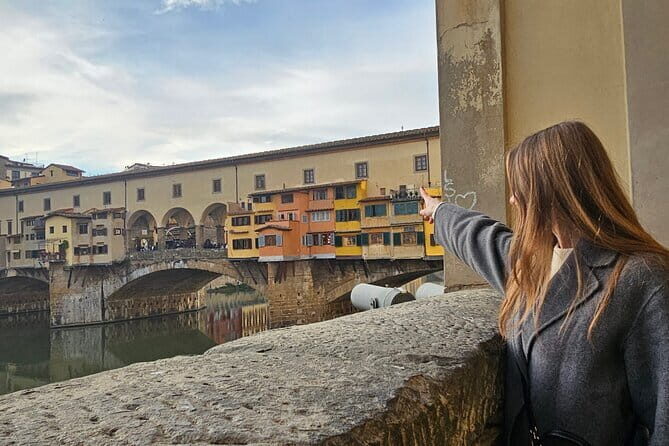
Next is Ponte Vecchio, listed as free. This bridge is practically a Florence logo, but it’s also a case study in how commerce and symbolism can blend. Florence didn’t just build art to admire; it built structures that kept working and kept attracting attention.
A good guide will connect the bridge to the broader city story. Think trade, power, and how everyday places can become iconic through repeated use and patronage.
Because this stop is free, it’s also a good “reset.” If you’ve spent the day juggling entrances elsewhere, this is a clean win. Take a moment here just to look upstream and downstream, then put the art into context once the guide explains it.
Palazzo Pitti and the Medici move to the big house
The final major stop is Palazzo Pitti, with a longer segment and no admission included for the palace itself. This is where Florence’s Medici story gets extra concrete.
Here’s the key context you’ll want to remember: the palace was built by the merchant Luca Pitti as a show of wealth against the Medici. In 1549, Eleanor of Toledo (wife of Cosimo I) bought the palace, expanded its magnificence, and laid out the Boboli Gardens behind it. Later, when Cosimo I moved, Palazzo Pitti became the official seat of the Medici dynasty of grand dukes. That’s a lot of political drama packed into one location.
The tour also points you toward the Galleria Palatina, Appartamenti Reali, Galleria D’Arte Moderna, Galleria del Costume, Museo degli Argenti, and the Boboli Gardens. Since admissions are not included, you’ll mainly get an orientation sense of scale and themes. But you’ll leave with a clearer sense of what you’d want to see if you return.
If you like gardens, Boboli is worth planning for separately. It’s one of the places where Florence art and power go beyond buildings and become designed experience.
How the guide style can change your whole day
Florence Tours uses different guides depending on the date. That variability is real, and it shows up in the experiences people share. Names like Francesco, Giovanni, Luigi, Carmen, Monica, Julia, Raffaello, Lorenzo, and Zeynep Arzu appear in past visits, and each guide’s style has a different flavor.
Some guides lean into teaching mode. One guide is described as an art history professor, with explanations that help you “read” statues and understand how families put crests on buildings. Others bring a more human story approach, with humor and fast context so the street scenes become memorable.
If you care about detail, this matters. If you care about pace and comfort, it matters too. One guide (Giovanni) was praised for choosing shaded spots for explanations, which can make a big difference when the sun is on you.
My practical advice: be ready with one question you actually want answered, like how the Medici used art for power or how civic spaces communicated status. With a small group, you’re more likely to get a direct, useful answer.
Price and value: when $30.01 makes sense
At $30.01 per person, the tour price is low enough that you can treat it like a smart orientation purchase. It includes a guided visit plus audioguide systems, so you’re paying for interpretation rather than for entrances.
Since several stops have admission marked as not included, the value depends on what you want to do after the walk. If you plan to buy tickets for interiors later, this tour helps you pick better. If you want purely indoor museum time, this won’t replace a ticketed museum visit.
This is also why the stop mix works. Some stops are listed as free (San Lorenzo, Piazza della Signoria, Ponte Vecchio). Others are not. That’s a realistic way to do Florence without paying entry fees for every single landmark.
So I see it as a first-day strategy: use the tour to decide where you want to spend your money next.
Who should book this tour, and who should skip it
This tour is ideal if you want a quick, high-impact introduction to Florence. You’ll enjoy it most if you like art and history but don’t want to plan a whole route yourself for the first day.
It’s also a strong pick for people who learn well through storytelling. Guides who can connect buildings to timelines help you make sense of what you’re seeing without drowning you in names.
Skip it if your vacation is built around long museum hours. The ten-minute stop rhythm won’t satisfy you if you want to sit with one collection for a couple of hours. In that case, you’ll be happier putting your time and money into one ticketed museum day.
Should you book this Art and History in Florence tour?
Book it if you want a guided orientation across Florence’s headline sights in about 90 minutes, with context that links palaces, churches, and public art. It’s good value for the price, and the audioguides plus live guide combo helps you keep up even when streets are busy.
Hold off or plan extra time if you know you want deep museum focus at the Uffizi or inside the Duomo. For those goals, treat this as the “map in your head” that makes your later ticketed visits more meaningful.
If you’re going for first impressions, I’d pick it. It helps you leave Florence with a cleaner story, not just a stack of photos.
FAQ
How long is the Art and History in Florence small group walking tour?
It runs for about 1 hour 35 minutes.
Is the tour offered in English?
Yes, the tour is offered in English.
What is the price per person?
The price is $30.01 per person.
Are museum and church entrances included?
No. Entrance to museums or churches is not included. Some stops are listed as free, but others require your own ticket.
What stops are included on the walk?
You’ll visit major landmarks including Palazzo Medici Riccardi, San Lorenzo, the Cathedral of Santa Maria del Fiore, Museo Casa di Dante, Palazzo Vecchio, Piazza della Signoria, Le Gallerie Degli Uffizi, Ponte Vecchio, and Palazzo Pitti (with multiple galleries/gardens in that complex).
Where do I meet the group?
The meeting point is Florence Tours, Via Camillo Cavour, 21R, 50129 Firenze FI, Italy, and the tour ends back at the meeting point.
Do I get an audioguide or mobile ticket?
Yes. It includes use of audioguide systems, and you receive a mobile ticket.
What is the cancellation policy?
Free cancellation is available up to 24 hours in advance of the experience for a full refund. If you cancel less than 24 hours before, the amount you paid is not refunded.
You Might Also Enjoy


More Walking Tours in Florence

More Tours in Florence
- The Best tour in Florence: Renaissance & Medici Tales – guided by a STORYTELLER
★ 5.0 · 12,316 reviews

More Tour Reviews in Florence
- Tuscany Day Trip from Florence: Siena, San Gimignano, Pisa and Lunch at a Winery
★ 5.0 · 21,634 reviews - The Best tour in Florence: Renaissance & Medici Tales – guided by a STORYTELLER
★ 5.0 · 12,316 reviews